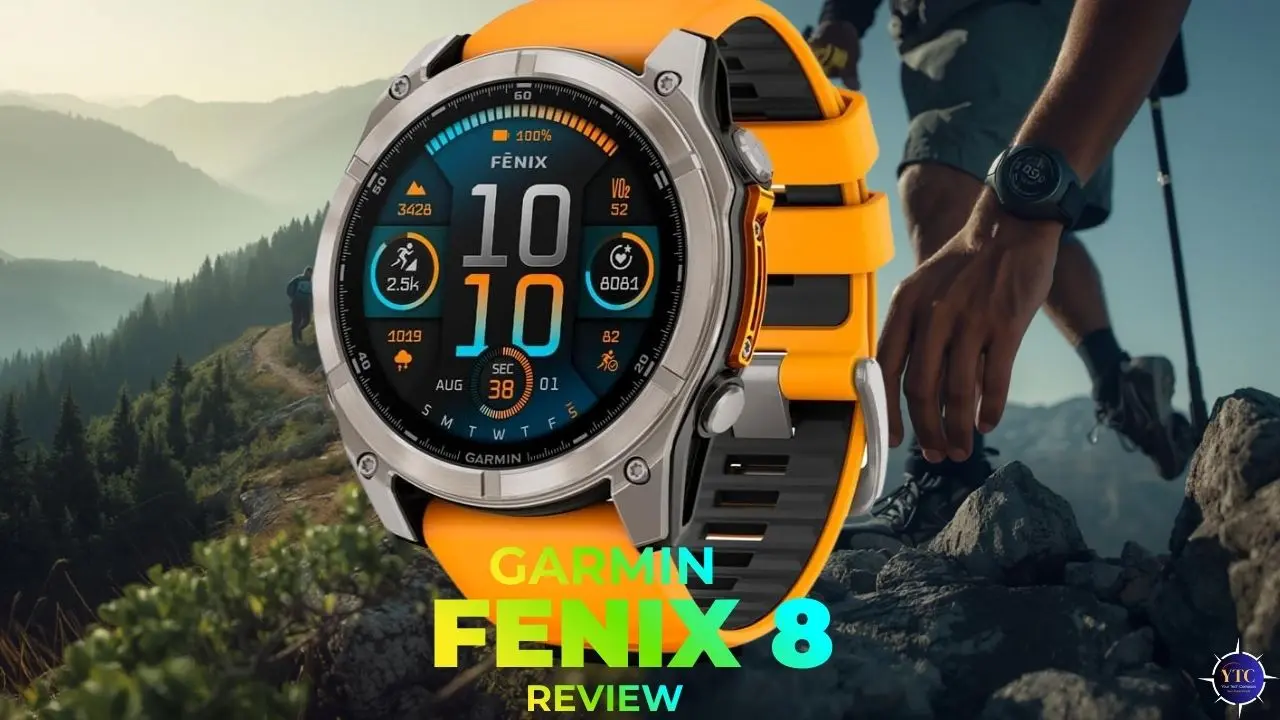
When it comes to premium multisport and outdoor smartwatches, the Garmin Fenix 8 stands out for blending rugged endurance, comprehensive activity tracking, and deep health insights. Unlike wearables that focus primarily on everyday convenience, the Fenix 8 is designed for athletes, outdoor adventurers, and users who want advanced training metrics, reliable GPS, and long battery life in one robust device. Whether you’re tackling trail runs, long cycling routes, or planning your next backpacking trip, this watch promises to keep up with the most demanding conditions while still serving as a capable everyday companion.
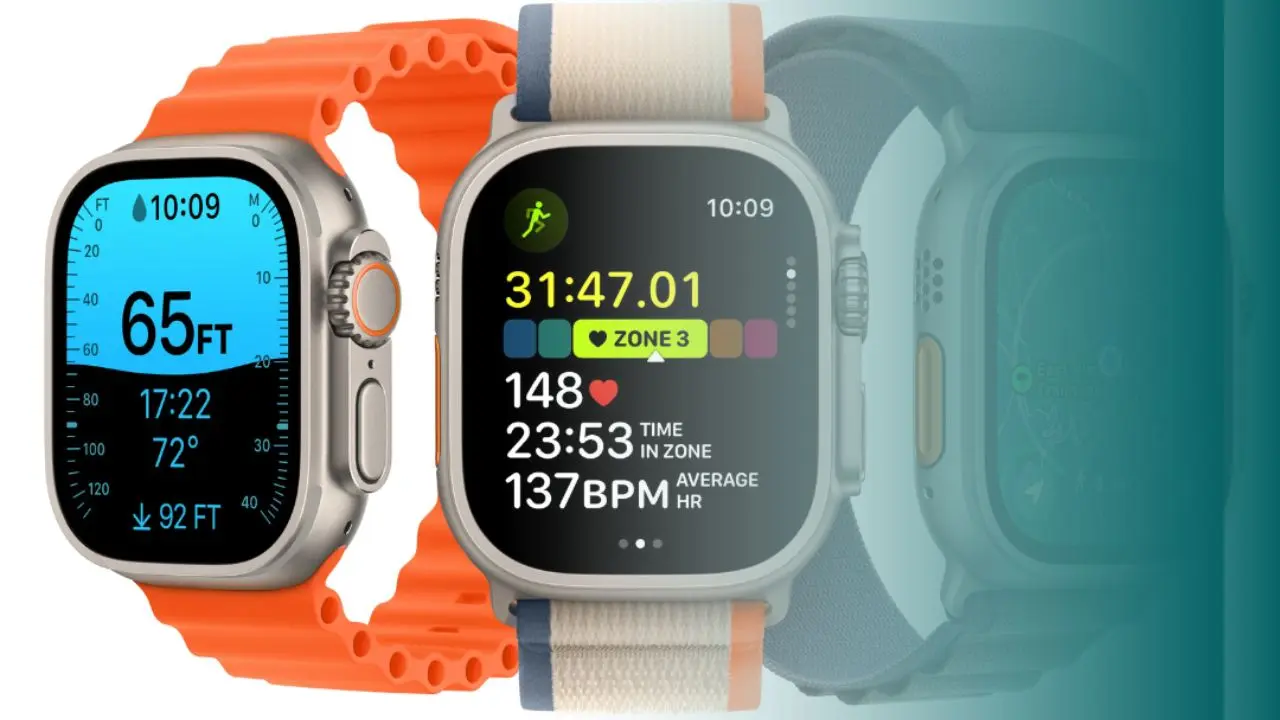
In this review, we’ll break down every major aspect of the Garmin Fenix 8, exploring its design, display, tracking capabilities, battery performance, and its fit in real-world use. Additionally, we’ll compare it to other high-end rugged smartwatches, such as the Apple Watch Ultra 2 and Samsung Galaxy Watch Ultra, to help you understand where the Fenix 8 excels and how it differs from these alternatives. By the end, you’ll know who this watch is best suited for and whether it’s worth your consideration.
Garmin Fenix 8 Overview
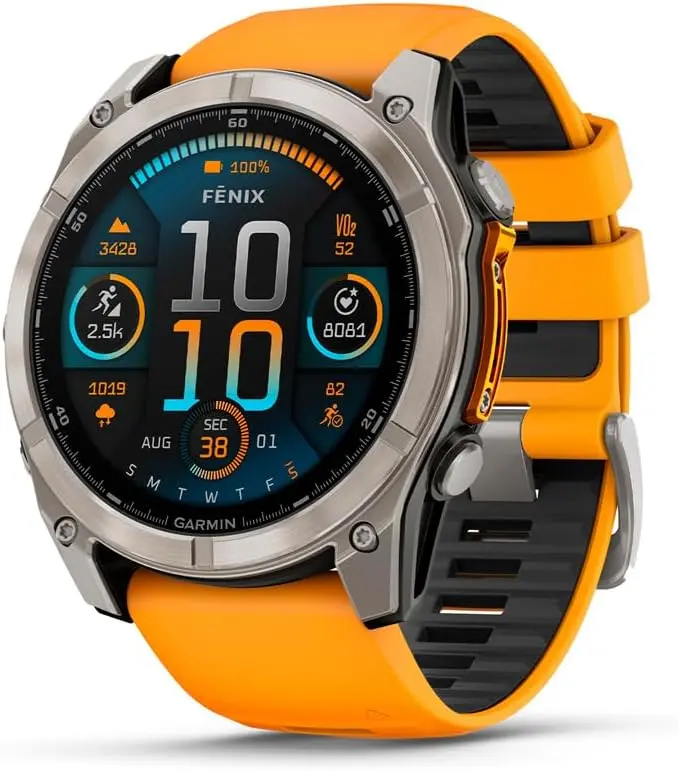
The Garmin Fenix 8 represents Garmin’s flagship offering in the multisport and outdoor wearable space. It builds on the legacy of the Fenix series by combining comprehensive performance tracking, reliable GPS navigation, and rugged construction, positioning it as a go-to device for serious athletes and outdoor enthusiasts alike.
Where many smartwatches emphasize lifestyle and notifications, the Fenix 8 leans into precision tracking and durability, creating a device that’s just as comfortable on a mountain trail as it is on your wrist during everyday life.
Design and Build Quality
At first glance, the Fenix 8 exudes durability. Its stainless steel or titanium bezel, reinforced housing, and rugged physical buttons make it feel ready for challenging environments. Unlike sleeker lifestyle watches, this construction prioritizes resilience against drops, dust, water, and temperature variation. Garmin rates the Fenix 8 for 10 ATM water resistance, meaning it’s suitable for swimming, snorkeling, and other wet environments without worry.
Despite its rugged build, Garmin has worked to keep the watch comfortable enough for daily wear. The band options are flexible, and the fit can be adjusted to suit everything from workouts to sleep tracking. However, users with smaller wrists might find the larger profile more noticeable than more compact smartwatches.
Display and Visibility
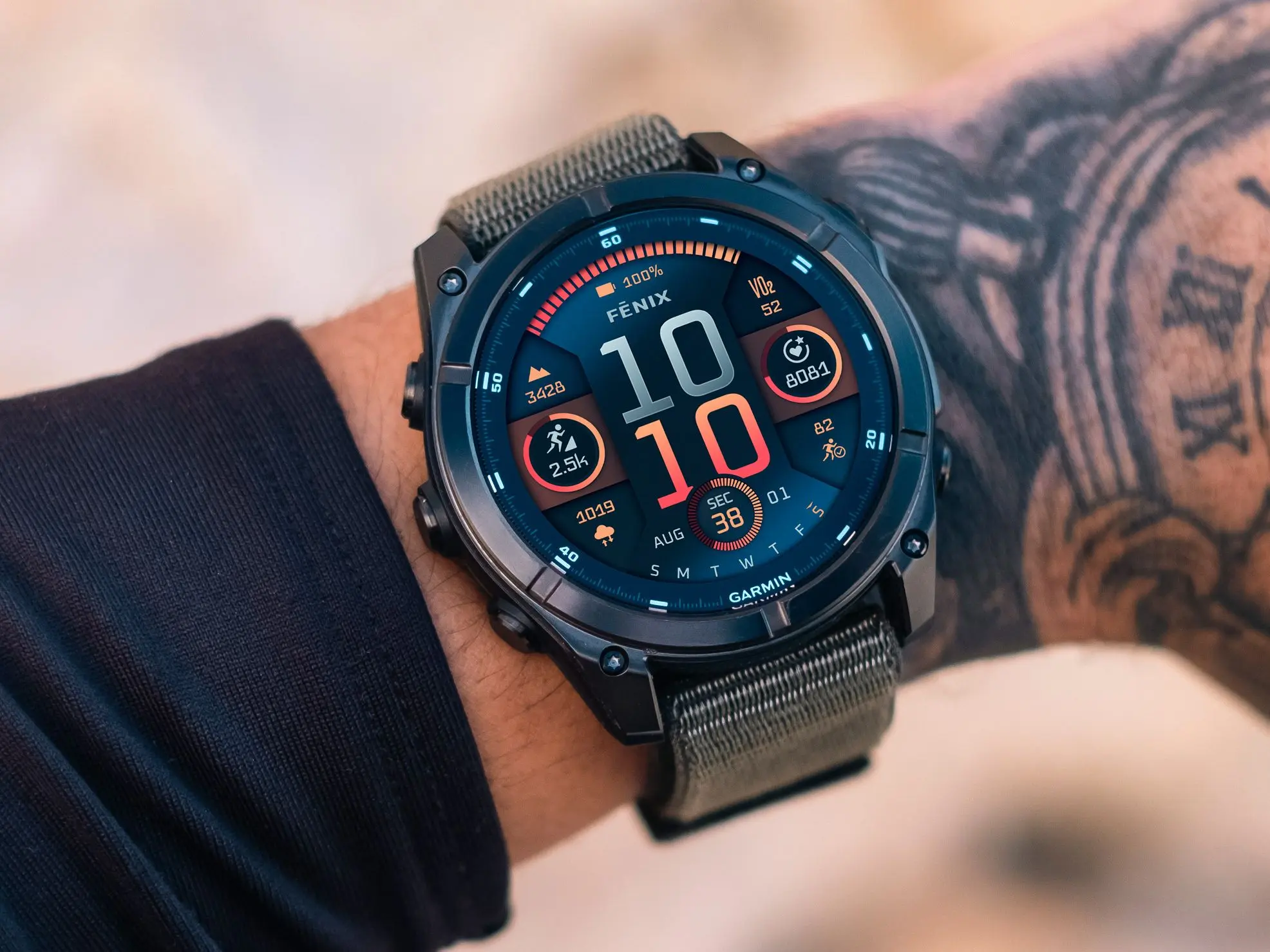
The Fenix 8 features a transflective memory-in-pixel (MIP) display, unlike the bright AMOLED screens found on devices like the Apple Watch Ultra 2 and Samsung Galaxy Watch Ultra. While the Fenix 8’s screen isn’t as punchy in contrast or color richness, it excels in sunlight readability, critical for outdoor workouts where glare can be a major hindrance.
Moreover, MIP screens are far more power-efficient than AMOLED, contributing to the Fenix 8’s exceptional battery life (a topic we’ll explore more shortly). Touch responsiveness and button navigation work together effectively, especially in extreme conditions where gloves or moisture might make touch-only interaction unreliable.
Health and Fitness Tracking Features
A cornerstone of the Garmin experience is its comprehensive health and fitness tracking suite. The Fenix 8 includes sensors and algorithms to measure:
- Heart rate and heart rate variability
- Sleep stages and duration
- Stress levels and recovery insights
- Body energy metrics (Body Battery)
- Respiration rate
For users focused on improving performance or monitoring overall health, these metrics provide rich insights that go well beyond simple step counting or basic activity summaries.
Sports and Outdoor Tracking Capabilities
This is where the Fenix 8 truly shines. Garmin equips the watch with multi-band GPS, GLONASS, and Galileo support, ensuring accurate location data even in challenging terrain. Whether you’re hiking in a dense forest or running coastal trails with limited signal, the Fenix 8 aims to maintain strong positional accuracy.
Moreover, it includes a wide range of sport profiles:
- Running and trail running
- Cycling and mountain biking
- Swimming (pool and open water)
- Hiking and climbing
- Triathlon and multisport modes
Each profile not only tracks distance and pace but also leverages advanced performance metrics, like VO₂ max estimation, training load, and race predictor data, allowing you to understand fitness progression with more context.
For navigation, the Fenix 8 comes with preloaded topographic maps and turn-by-turn routes, making it a viable standalone outdoor navigator. Whether you’re following a downloaded trail or creating a new route on the Garmin Connect app, the on-watch tools help you track progress without needing your phone.
Garmin Fenix 8 Review: Real-World Use

In actual use, the Fenix 8 feels like a smartwatch designed with purpose. During workouts, the GPS locks quickly and maintains consistency across varied terrain. Performance metrics sync well with Garmin Connect, Garmin’s companion ecosystem, and the watch’s data can be analyzed to understand trends over time.
For outdoor use, the rugged construction and reliable positioning provide peace of mind, while everyday features like step counting and basic notifications supplement the fitness experience without feeling tacked on.
Users coming from more lifestyle-focused smartwatches like the Apple Watch Ultra 2 or Samsung Galaxy Watch Ultra will notice that the Garmin experience feels more specialized and performance-centric than that of generalist, ecosystem-tied wearables.
Battery Life and Power Management
One of the Fenix 8’s standout attributes is its impressive battery life. Thanks to the power-efficient MIP display and optimized tracking modes, the watch can last many days between charges, even with frequent GPS usage. For serious adventurers and endurance athletes who don’t want to worry about daily charging, this is a significant advantage over many AMOLED-equipped competitors.
Battery performance varies by mode. Standard smartwatch, GPS mode, and expedition modes have distinct consumption profiles. Still, overall, the Fenix 8’s ability to last for multiple days (and even weeks in low-power settings) sets it apart from many premium smartwatches that require daily or near-daily charging.
Software, Maps, and Ecosystem
Garmin supports the Fenix 8 via Garmin Connect, a robust app and web platform that aggregates activity data, health metrics, and training insights. The software is powerful and deep, though it can feel overwhelming initially due to the volume of data presented.
Key features include:
- Detailed workout history
- Customizable activity profiles
- Route planning and map downloads
- Community challenges and insights
Firmware updates and on-device tools continue to evolve performance, ensuring the watch stays current with new activity types and usability improvements.
Connectivity and Smartwatch Features
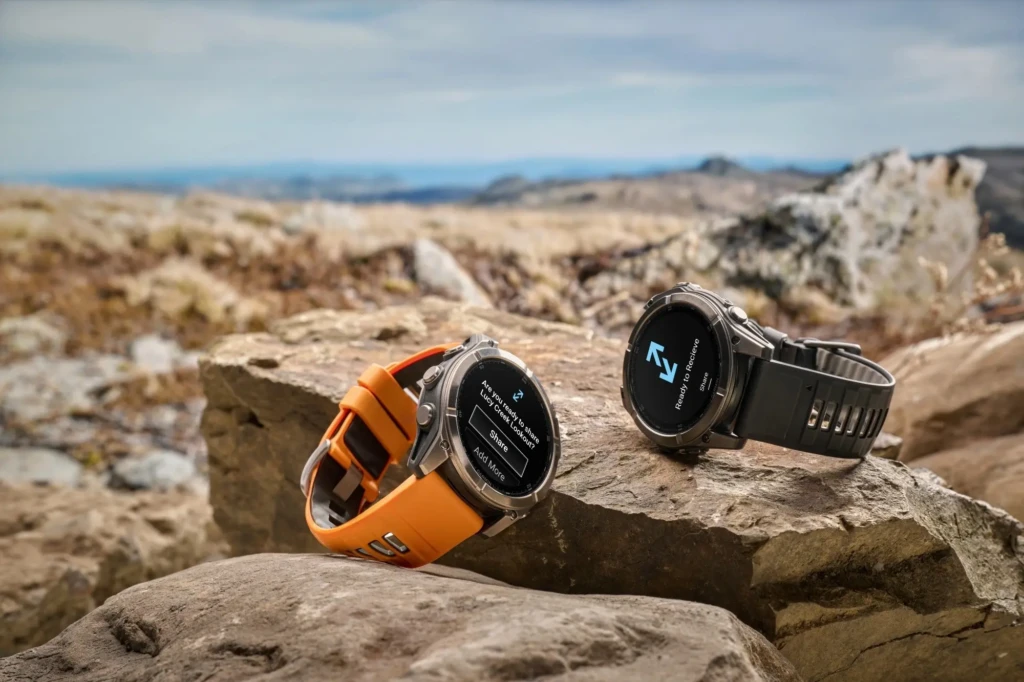
While the Fenix 8 emphasizes performance tracking, it doesn’t skip necessary smartwatch functionality:
- Smart notifications
- Music control and storage (on select models)
- Contactless payments via Garmin Pay
- Calendar and alerts
These features integrate smoothly with most Android and iOS devices, though the depth of integration can vary slightly compared to ecosystem-native watches like those optimized for Apple’s platforms.
Garmin Fenix 8 vs Competitors
Here’s how the Garmin Fenix 8 stacks up against other flagship rugged smartwatches in the market:
Feature / Aspect | Garmin Fenix 8 | Apple Watch Ultra 2 | Samsung Galaxy Watch Ultra |
Target Audience | Outdoor/athletes | Adventure/Apple users | Outdoor/fitness |
Display Type | MIP (high visibility) | Retina (AMOLED) | AMOLED |
Battery Life | Excellent | Very Good | Excellent |
GPS Accuracy | Strong | Very strong | Strong |
Fitness Insights | Extremely comprehensive | Very strong | Strong |
App Ecosystem | Garmin Connect | Apple ecosystem | Wear OS/Samsung |
Rugged Build | Very robust | Very robust | Very robust |
This table highlights that while each rugged smartwatch has strengths, the Fenix 8 distinguishes itself with comprehensive training and outdoor tools, particularly for users who prioritize data and durability over a wide range of lifestyle apps.
Pros and Cons of Garmin Fenix 8
The Pros
- Exceptional battery life for extended adventures
- Highly accurate GPS and multisport tracking
- Extensive health and fitness metrics
- Rugged construction built for demanding environments
The Cons
- Less colorful display compared to AMOLED competitors
- Garmin Connect has a steeper learning curve
- Not as tightly integrated with phone ecosystems
Who the Garmin Fenix 8 Is Best For
The Garmin Fenix 8 is ideal for:
- Outdoor enthusiasts and adventurers
- Serious runners, cyclists, and multisport athletes
- Users needing accurate GPS and long training sessions
- Individuals who prefer deep performance data over lifestyle app variety
It’s less suited for users who prioritize:
- Consumer app ecosystems and lifestyle integrations
- Compact or minimal smartwatch designs
Final Thoughts
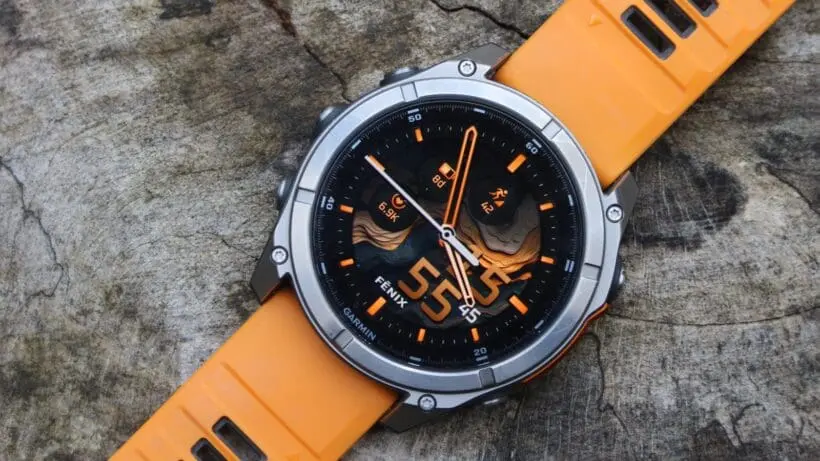
The Garmin Fenix 8 sets a high bar for premium multisport and outdoor smartwatches. Its blend of rugged design, comprehensive tracking tools, and industry-leading battery life makes it a top choice for athletes and adventurers who demand performance without compromise. While it doesn’t compete with some consumer-oriented smartwatches on ecosystem depth, it delivers where it counts most: accuracy, durability, and intelligence tailored to serious training and exploration.
If extended battery life, detailed fitness insights, and dependable tracking matter in your daily routine or outdoor pursuits, the Fenix 8 is one of the most compelling options available. Whether you’re planning long hikes, intricate training cycles, or steady performance improvements, this watch stands ready to support your journey, and I hope this review provides the clarity you need to make a confident choice.
FAQs
For users who already have a capable sports watch and want more ruggedness and data depth, yes. For casual users, the gains may feel incremental.
The multi-band GPS and satellite support help maintain strong positional accuracy across most environments.
While it performs well, its focus remains on fitness and outdoor tracking rather than lifestyle apps.
Yes, Garmin supports both platforms, though integration nuances vary.
At Your Tech Compass, we publish detailed tech guides, reviews, and comparisons to help users choose the right devices and tools.