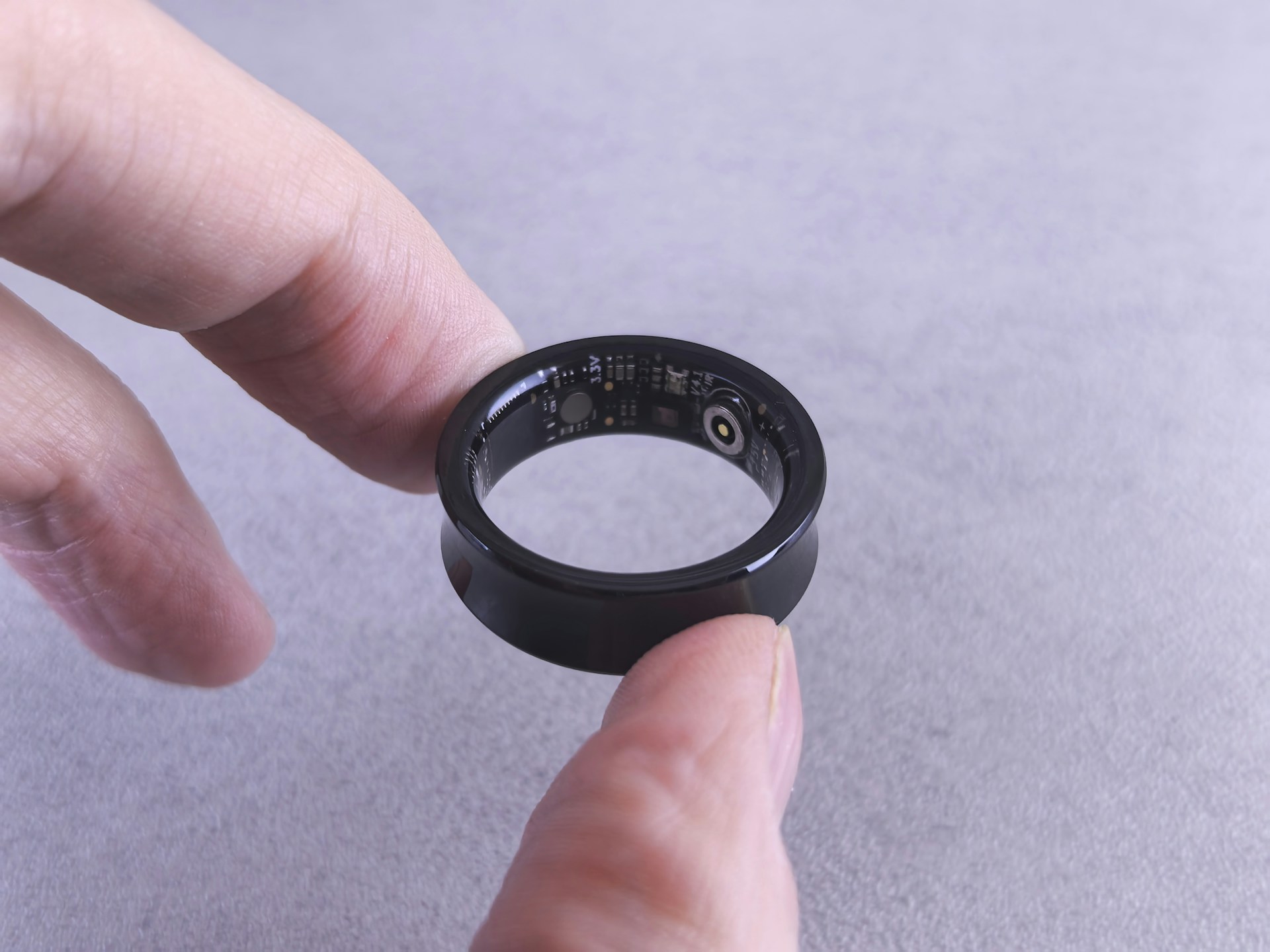
Smart rings occupy a specific and underserved niche in the wearable market. They do less than a smartwatch on purpose as they have no display, no notifications, and no GPS, but what they give you in return is health tracking that runs silently and continuously, with a week of battery life and a form factor small enough that most people forget they’re wearing it. For sleep tracking, recovery monitoring, and passive health data, they’re genuinely better than most smartwatches at those tasks.
The category has matured quickly over the past two years. Where Oura once had the market largely to itself, there are now credible alternatives at different price points, with Samsung’s entry in 2024 bringing mainstream retail presence and ecosystem integration that the category hadn’t seen before. Choosing between them comes down to what you actually want the ring to do and how much the ongoing subscription cost matters to your decision.
Quick Comparison: Best Smart Rings
Smart Ring | Best For | Battery | Subscription | Price |
Sleep & recovery depth | 4–7 days | Yes (~$6/month) | ~$299+ | |
Samsung ecosystem users | 6–7 days | No | ~$399 | |
Daily tracking, best value | 6–7 days | No | ~$199 | |
Women’s health focus | 4–5 days | No | ~$269 |
Smart Rings vs Smartwatches for Fitness: The Honest Comparison
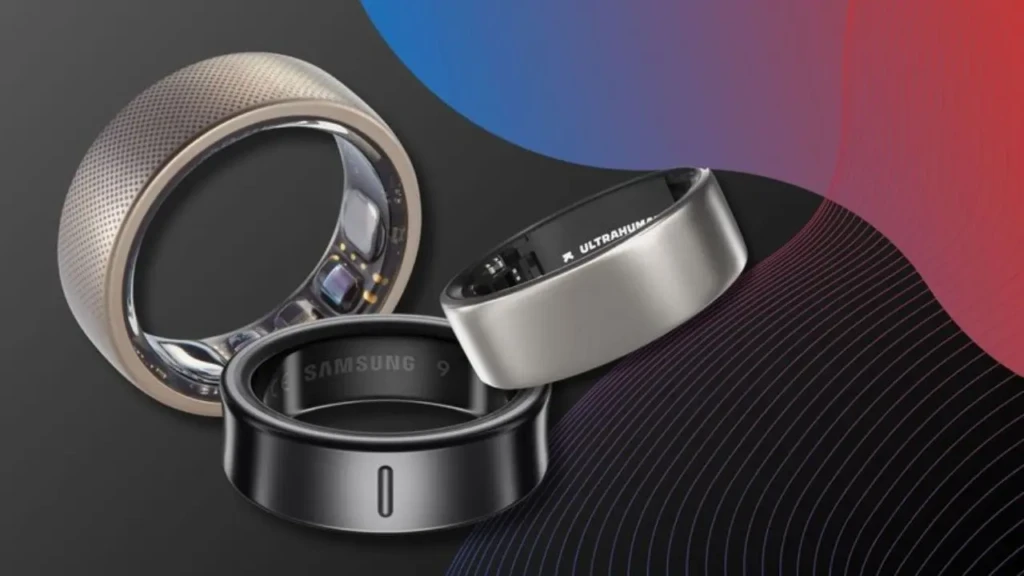
Smart rings and smartwatches aren’t really competing for the same job, despite what marketing suggests. Smartwatches are better for real-time workout tracking; they have GPS, workout modes, interval timers, and can display your pace mid-run. For active sessions that require live data, a smartwatch wins.
Smart rings are better for passive, continuous health monitoring, particularly sleep tracking, resting heart rate trends, HRV measurement, and recovery scoring. The reason is physiological: the finger has a denser capillary network than the wrist, making optical heart rate and SpO₂ sensors more accurate at rest. Combine that with all-day comfort, the absence of a screen that might disturb sleep, and battery life that doesn’t require nightly charging, and a smart ring does the passive health tracking job better than most smartwatches.
The most practical approach for serious health trackers is to use both (a ring for continuous baseline data and a watch for workouts). If you’re choosing just one, the decision is whether you want a device that’s best during workouts (smartwatch) or best the rest of the time (smart ring). For the broader question of how smartwatches compare to fitness bands, our smartwatch vs fitness band guide covers the considerations in detail.
What to Look for Before Buying
- Subscription Model: This is the most important factor that many buyers miss before purchasing. Oura charges a monthly subscription fee for full access to health insights; the ring itself is just a sensor without it. Ultrahuman and RingConn are subscription-free, with all data accessible via their apps at no ongoing cost. Samsung Galaxy Ring is subscription-free for Galaxy phone users. Know what you’re committing to before buying.
- Sizing: Smart rings come in fixed sizes, typically EU ring sizes 6 through 13. Most manufacturers provide a free sizing kit before shipping the final ring. Always use it. A ring that’s even half a size too large can lose sensor contact during sleep, significantly degrading data quality.
- Sensor Accuracy: Optical heart rate sensors in rings are most accurate at rest and during sleep. During high-intensity workouts with significant wrist or hand movement, accuracy drops across all smart rings. If workout heart rate is your primary use, a chest strap or smartwatch is more reliable.
- Ecosystem Integration: Samsung Galaxy Ring integrates natively with Samsung Health and Galaxy AI features, but optimally only on Samsung Galaxy phones. Oura integrates with Apple Health, Google Fit, and several third-party apps. RingConn and Ultrahuman use proprietary apps with more limited third-party sync. Check your phone ecosystem before buying.
Best Smart Rings Reviewed
1. Oura Ring Gen 4: Best for Sleep and Recovery Tracking
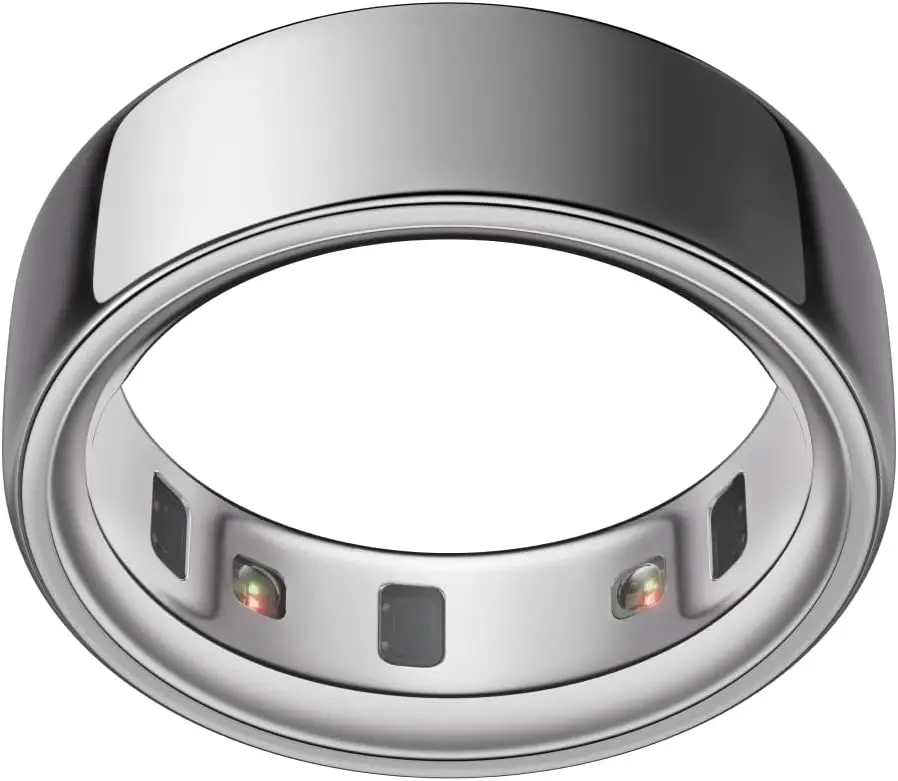
The Oura Ring established the smart ring category as a serious health tracking platform, and the Gen 3 remains the reference point against which everything else is measured. Its sleep staging, breaking down light, deep, and REM sleep into a timeline with detailed transitions, is the most accurate available in a consumer wearable, and multiple peer-reviewed studies have validated Oura’s HRV and resting heart rate data against medical-grade equipment. The Readiness Score synthesises overnight HRV, resting heart rate, body temperature variation, and sleep quality into a single daily number that regular users describe as reliably predictive of how they actually feel and perform that day.
The ongoing subscription (required for full access to Readiness scores, sleep staging detail, and trend analysis) is the most common source of buyer frustration, and it’s worth being clear about: without the subscription, the ring is a basic activity tracker. The Gen 3 is still actively sold at a lower price and uses the same core tracking platform.
For buyers whose priority is data quality over hardware novelty, it remains an excellent value. However, for buyers who want the latest hardware, the Gen 4 is worth the premium.
Key Specs
- Sizes: US 6–13
- Battery: 4–7 days
- Sensors: Heart rate, HRV, SpO₂, skin temperature, accelerometer
- App: Oura (iOS and Android), subscription required for full features (~$6/month)
- Water Resistance: 100m
- Materials: Titanium (Silver, Black, Gold, Stealth finishes)
Why It Stands Out
- Most extensively validated sleep staging accuracy of any consumer wearable.
- Readiness Score integrates 5+ data points into a single actionable daily metric.
- 100m water resistance, deeper than most competitors.
- Gen 3 is available at a reduced price alongside Gen 4, on the same tracking platform, with older hardware.
Best For: Anyone whose primary use case is sleep quality analysis and recovery optimisation, and who is comfortable with a monthly subscription as part of the total cost of ownership.
2. Samsung Galaxy Ring: Best for Samsung Ecosystem Users
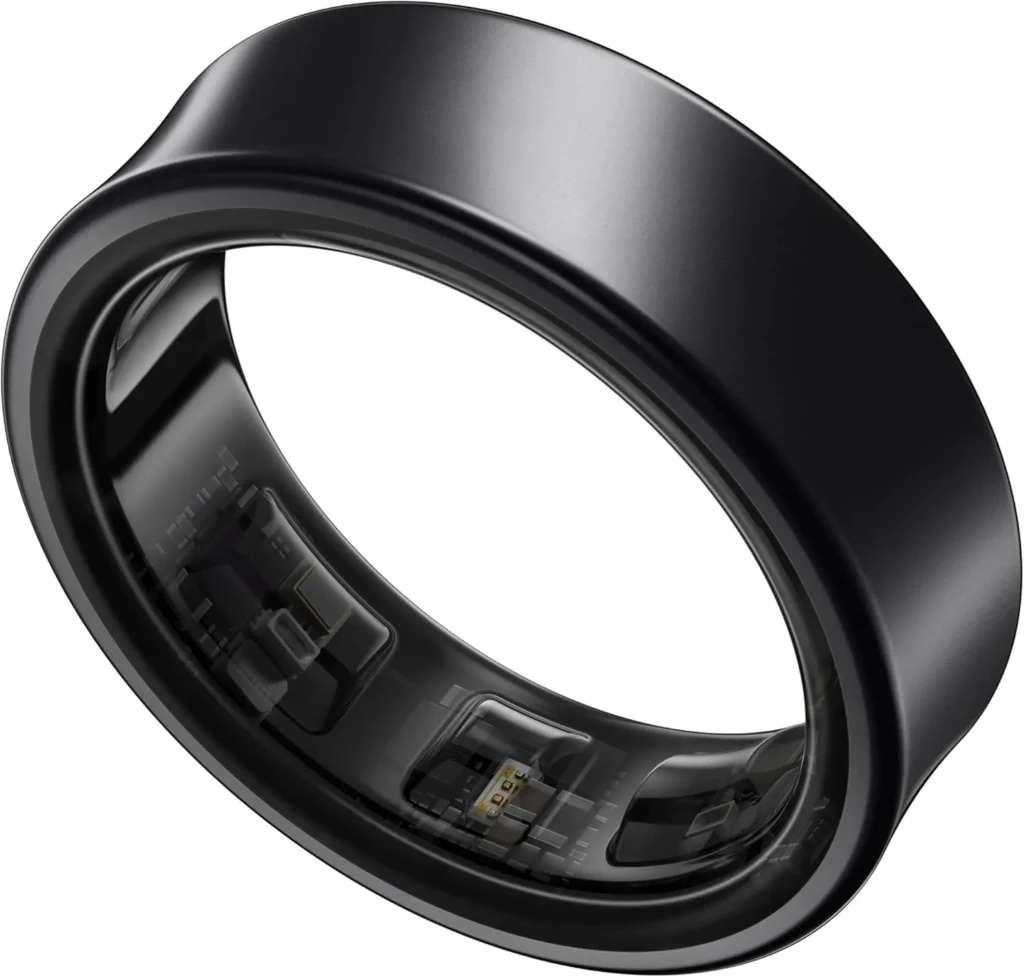
Samsung’s entry into the smart ring market in 2024 brought two things the category had been missing: mainstream retail availability and deep ecosystem integration with one of the world’s most popular Android platforms. The Galaxy Ring connects natively to Samsung Health, with Ring data feeding directly into Galaxy AI’s Energy Score, Samsung’s equivalent of Oura’s Readiness Score, and integrating with other Galaxy wearables and the Galaxy phone interface without any additional setup. For Samsung Galaxy phone users who already live in that ecosystem, the pairing is seamless, unlike third-party rings.
The hardware is strong across the board. Seven days of battery life at typical use consistently outperforms the Oura Gen 3. The titanium body is lighter than it looks, and Samsung’s sizing system, with a free sizing kit included, is among the better ring-sizing experiences available. The limitation is the Samsung ecosystem dependency; certain Galaxy AI features require a Samsung Galaxy phone, and non-Samsung Android users and iPhone users get a reduced feature set. But for the Samsung-heavy household, this is the most complete subscription-free smart ring available.
Key Specs
- Sizes: US 5–13
- Battery: ~7 days
- Sensors: Heart rate, HRV, SpO₂, skin temperature, accelerometer
- App: Samsung Health (Galaxy AI features require a Samsung Galaxy phone)
- Subscription: None
- Water Resistance: 10ATM
- Materials: Titanium (Black, Silver, Gold)
Why It Stands Out
- No subscription (full feature access permanently included).
- 10ATM water resistance (highest in this guide).
- Native Samsung Health and Galaxy AI Energy Score integration.
- 7-day battery life consistently outperforms Oura Gen 3.
Best For: Samsung Galaxy phone users who want a no-subscription smart ring with deep ecosystem integration and the longest battery life in this category.
3. RingConn Gen 2: Best Value
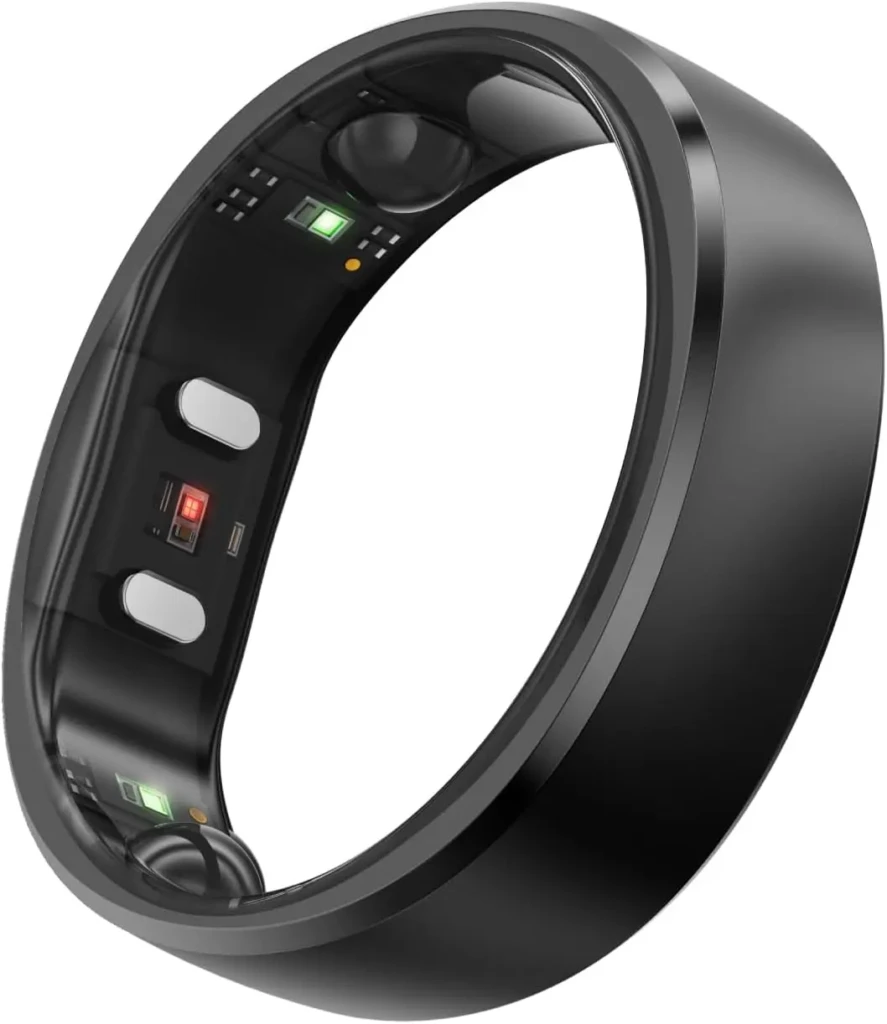
The RingConn Gen 2 makes a compelling case for itself with one headline advantage over the Oura and Ultrahuman: sleep apnea screening. Most consumer wearables don’t attempt this; the RingConn Gen 2 uses continuous SpO₂ and heart rate monitoring during sleep to flag potential obstructive sleep apnea events, presenting them as a breathing disturbance index in the app. It’s not a medical diagnosis, but for users who suspect sleep-disordered breathing and want a monitoring baseline before pursuing clinical testing, it’s a genuinely useful feature at a price well below the premium options.
The rest of the package is solid rather than exceptional. Health tracking covers the core metrics (heart rate, HRV, SpO₂, steps, sleep staging, stress), and the app is clean and readable. Battery life is among the best in the category at six to seven days.
Key Specs
- Battery: 6–7 days
- Sensors: Heart rate, HRV, SpO₂ (continuous), accelerometer, breathing disturbance index
- App: RingConn (iOS and Android); no subscription
- Water Resistance: 10ATM
- Materials: Titanium
Why It Stands Out
- Sleep apnea screening via breathing disturbance index (unique at this price point).
- Continuous SpO₂ monitoring throughout the night.
- 10ATM water resistance at a sub-$200 price.
Best For: Budget-conscious buyers who want subscription-free smart ring tracking with sleep apnea screening capability. This is the strongest overall package under $200.
4. Evie Ring: Best for Women’s Health Tracking
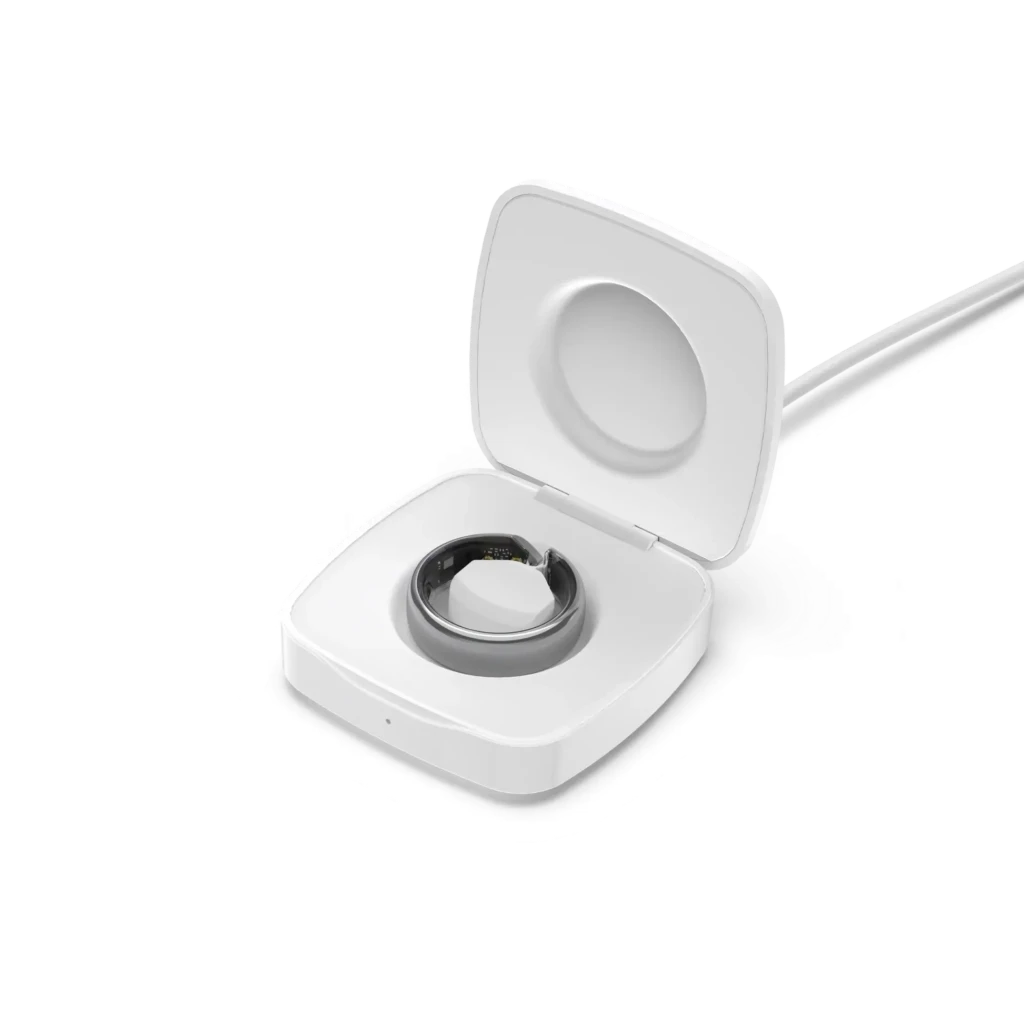
The Evie Ring is the only smart ring in this guide designed specifically for women’s health, and it offers features that no other ring in the category currently matches. Menstrual cycle tracking, using temperature variation, resting heart rate patterns, and HRV data, provides a physiologically grounded basis for cycle prediction rather than simple calendar-based estimates. The Evie app contextualises all health data relative to the cycle phase, surfacing genuinely useful insights: why your resting heart rate is elevated in the luteal phase, how sleep quality typically varies across the cycle, and when HRV readings should be interpreted differently.
Key Specs
- Battery: 4–5 days
- Sensors: Heart rate, HRV, SpO₂, skin temperature, accelerometer
- Tracking: Menstrual cycle, all standard health metrics
- App: Evie (iOS and Android), no subscription
- Water Resistance: IP68
Why It Stands Out
- Only a smart ring purpose-built around women’s physiological health data.
- Cycle-contextualised health insights (heart rate and sleep data interpreted relative to cycle phase).
- No subscription required.
Best For: Women who want health tracking that accounts for hormonal cycle variation, and who find generic ring data less useful without that context.
Which Smart Ring Should You Choose?
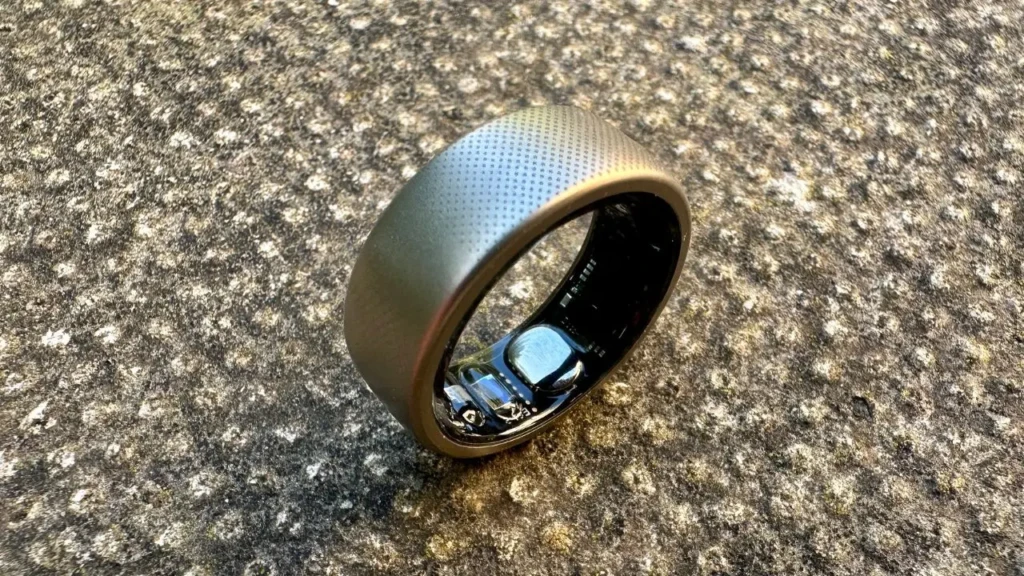
The subscription question is usually the first real filter. If you’re comfortable with an ongoing monthly fee in exchange for the best sleep and recovery analysis available, the Oura Ring Gen 3 is the reference product in this category. If subscriptions are a dealbreaker, the Samsung Galaxy Ring (for Samsung phone users) delivers comparable tracking quality at no ongoing cost.
For the best value under $200, the RingConn Gen 2’s sleep apnea screening and 7-day battery make it the most practical budget pick. For women’s health tracking specifically, the Evie Ring is the only option that genuinely integrates cycle data into the full picture of health.
If Your Priority Is… | Choose… |
Best sleep and recovery analytics | Oura Ring Gen 4 |
No subscription + Samsung phone | Samsung Galaxy Ring |
Best value under $200 | RingConn Gen 2 |
Women’s health and cycle tracking | Evie Ring |
FAQs
No, smart rings are consumer wellness devices, not medical instruments. Their heart rate and SpO₂ data are useful for tracking trends and flagging potential issues, but they lack the precision and regulatory certification of medical-grade equipment. Oura’s HRV and sleep staging have been validated in academic studies, but the data should inform lifestyle decisions rather than medical ones. If a smart ring consistently flags abnormal readings, use that as a prompt to see a doctor rather than a diagnosis.
Yes, all four rings in this guide are water-resistant and durable enough for gym use and outdoor workouts. However, optical heart rate accuracy during high-intensity exercise (running, HIIT, weightlifting with heavy grip) is lower than at rest across all smart rings. For real-time heart rate during workouts, a chest strap or a smartwatch with a tighter wrist fit is more reliable. Smart rings are best used to capture resting and recovery data rather than peak workout metrics.
Oura, Ultrahuman, and RingConn work equally well on both iOS and Android. The Samsung Galaxy Ring works on both platforms but delivers its full feature set, including Galaxy AI Energy Score and deeper health integrations, only on Samsung Galaxy phones. The Evie Ring supports both platforms. No smart ring in this guide is iOS-exclusive.
Final Thoughts
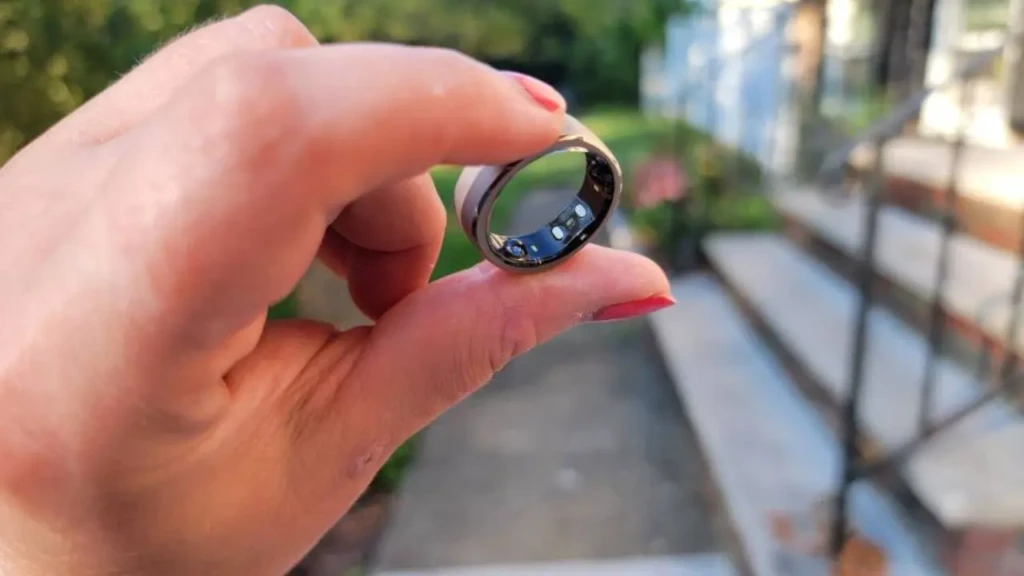
Smart rings have moved from a niche novelty to a genuinely competitive product category in two years, and the options now cover every combination of budget, ecosystem preference, and health-tracking priority. For most buyers, the subscription and ecosystem questions narrow the field quickly. Once those are settled, the remaining differences between the top picks are relatively small.
The Oura Gen 3 remains the benchmark for sleep and recovery depth. The Samsung Galaxy Ring is the most practical subscription-free option for Android users. And the RingConn Gen 2 makes the category accessible at a price that removes most of the hesitation. If you’re deciding between a smart ring and a smartwatch, our smartwatch vs fitness band guide covers how to think about that trade-off.
Ready to explore more? Visit YourTechCompass for hands-on reviews, buying guides, and how-to articles that cut through the noise and give you exactly what you need.