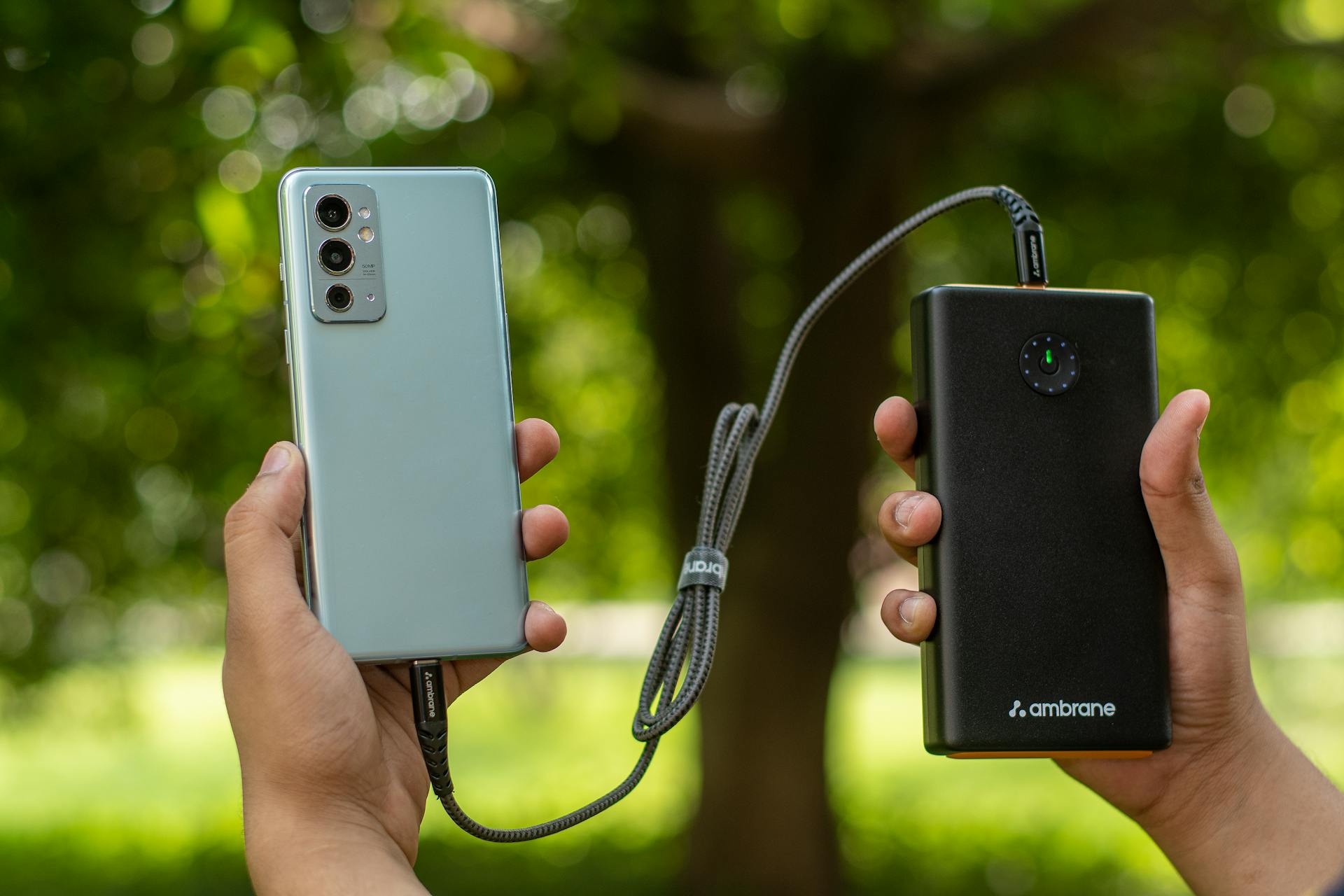
A dead phone mid-trip isn’t just inconvenient; it means no boarding passes, no maps, no hotel confirmation, and no way to call anyone. A good travel power bank is one of those purchases that quietly earns its keep every single time you travel, and yet most people either skip it entirely or grab whatever’s cheapest without understanding what they’re actually buying.
I’ve tested power banks across dozens of trips, and the differences between a good one and a mediocre one are real, in charging speed, in actual capacity versus advertised capacity, in whether it survives an aggressive TSA bag check, and in whether it can charge your laptop when the airport lounge is full. This guide covers seven picks for different travel scenarios, explains the specs that actually matter, and tells you exactly what the TSA rules are so you don’t get your charger confiscated at the gate.
What to Look for in a Travel Power Bank
Before diving into product picks, here are the specs that actually matter in practice.
- Capacity (mAh): This is the amount of energy the bank stores. A 10,000mAh bank will charge a modern smartphone roughly two to two-and-a-half times. Advertised capacity is always higher than real-world output due to conversion losses, typically 20–30%, so factor that in when comparing options.
- Watt-hours (Wh): Airlines and the TSA measure power banks in Wh, not mAh. The standard carry-on limit is 100Wh. To convert mAh to Wh, divide by 1,000 and multiply by 3.7V. A 20,000mAh bank is approximately 74Wh, well within limits. A 27,000mAh bank sits right on the boundary and requires attention.
- Charging speed (Watt output): The single most underrated spec. A 10W charger takes three-plus hours to charge a modern phone. A 20W charger does it in about an hour. Look for USB-C Power Delivery (PD) support; the universal fast-charging standard that works across iPhones, Android phones, tablets, and most modern laptops.
- Ports: A USB-C PD port is essential for fast charging. A mix of USB-C and USB-A lets you charge different devices simultaneously. If you travel with a laptop, you need at least one port capable of 65W or higher.
- Size and weight: A 10,000mAh bank typically weighs 180–220g and fits in a jacket pocket. A 20,000mAh bank is closer to 350–400g and needs a bag pocket. Weight adds up on travel days; factor it in honestly.
TSA and Airline Rules: What You Need to Know

Power banks contain lithium batteries, which aviation authorities classify as hazardous materials. The rules are consistent across most airlines and the TSA:
- Power banks must always go in your carry-on; never in checked luggage. Lithium batteries in checked bags pose a fire risk and will be confiscated, or your bag will be pulled from the flight.
- The standard carry-on limit is 100Wh. Most power banks under 27,000mAh fall within this limit. Banks with a capacity between 100Wh and 160Wh require airline approval in advance. Anything over 160 Wh is entirely prohibited on passenger aircraft.
- Before any international trip, check your specific airline’s lithium battery policy; some carriers have stricter rules than the TSA minimum. Always pack your power bank in a place that’s easy to remove for security screening, since you’ll often need to take it out separately, like a laptop.
Best Power Banks for Travel: A Quick Comparison
Power Bank | Capacity | Max Output | Ports | TSA Status | Best For |
10,000mAh | 18W PD | USB-C + USB-A | ✅ Safe | Every day travel, one phone | |
10,000mAh | 45W PD | USB-C + 2× USB-A | ✅ Safe | Fast charging phones and tablets | |
20,000mAh | 100W PD | 2× USB-C + 2× USB-A | ✅ Safe | Laptop charging on the go | |
10,000mAh | 20W PD | USB-C + USB-A | ✅ Safe | Budget-conscious travellers | |
20,000mAh | 45W AC + USB-C | USB-C + USB-A + AC outlet | ⚠️ Carry-on only | Heavy-duty power users | |
20,000mAh | 100W PD | 2× USB-C | ✅ Safe | Tech enthusiasts, multi-device | |
10,000mAh | 20W | USB-C + USB-A | ✅ Safe | Eco-conscious travellers |
Best Power Banks for Travel Reviewed
1. Anker PowerCore 10000 PD Redux: Best Everyday Travel Pick
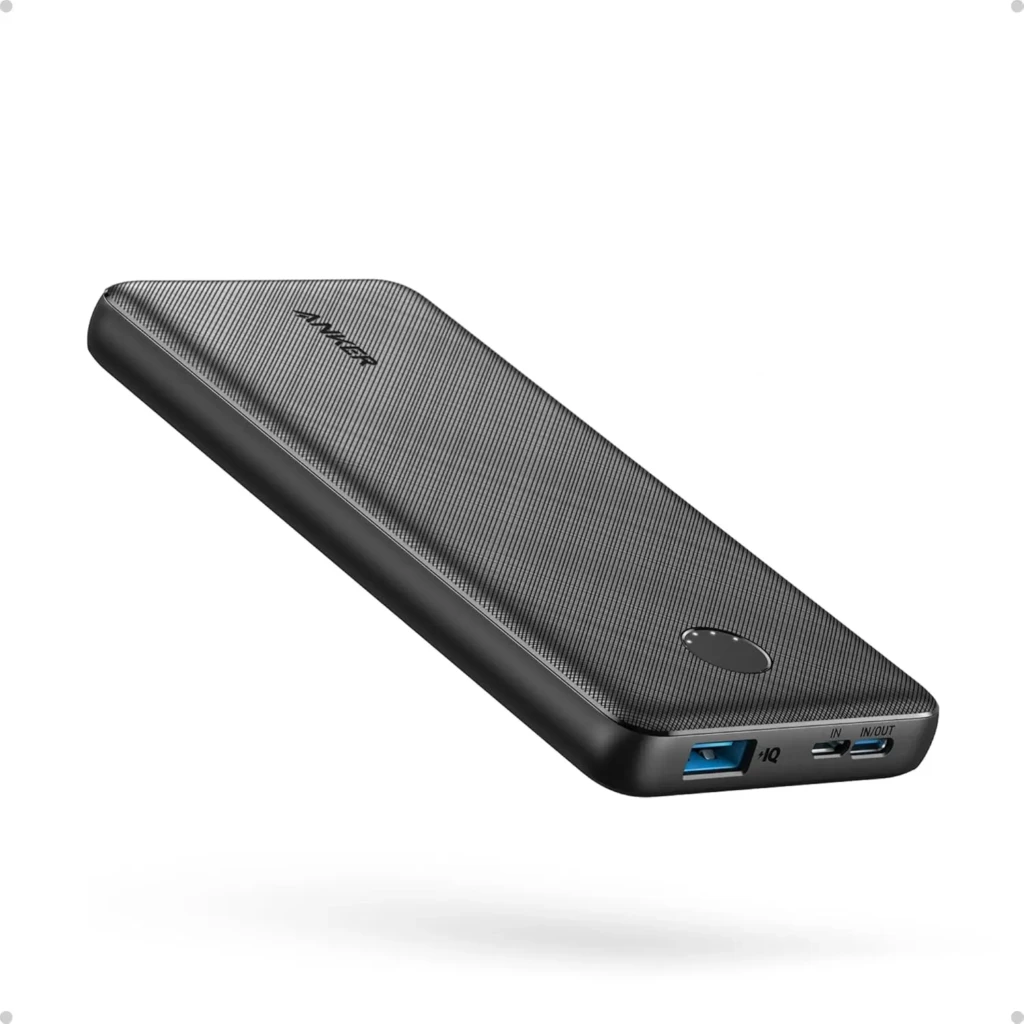
The Anker PowerCore 10000 PD Redux is the power bank I’d recommend to most travellers without hesitation. It hits the sweet spot between capacity, charging speed, portability, and price, and it’s backed by Anker’s reliability track record, which genuinely matters for a device you’re depending on mid-trip.
At 10,000mAh with 18W USB-C PD output, it gives you roughly two full phone charges and tops up a modern iPhone or Android in about an hour. The matte finish handles scratches well, and the form factor is genuinely pocket-sized at under 200g.
Key Specs
- Capacity: 10,000mAh
- Output: 18W USB-C PD
- Ports: USB-C (input/output) + USB-A
- Weight: ~194g
- Recharge Time: ~3.5 hours (with 18W charger)
Why It Stands Out
- Industry-leading reliability at this price point.
- Genuinely pocket-sized without sacrificing charging speed.
- Anker’s MultiProtect safety suite protects devices from overcharging.
Best For: Solo travellers doing trips of one to three days who need a light, fast, and trustworthy charger for a single phone.
2. Zendure SuperMini X3: Best for Fast Charging
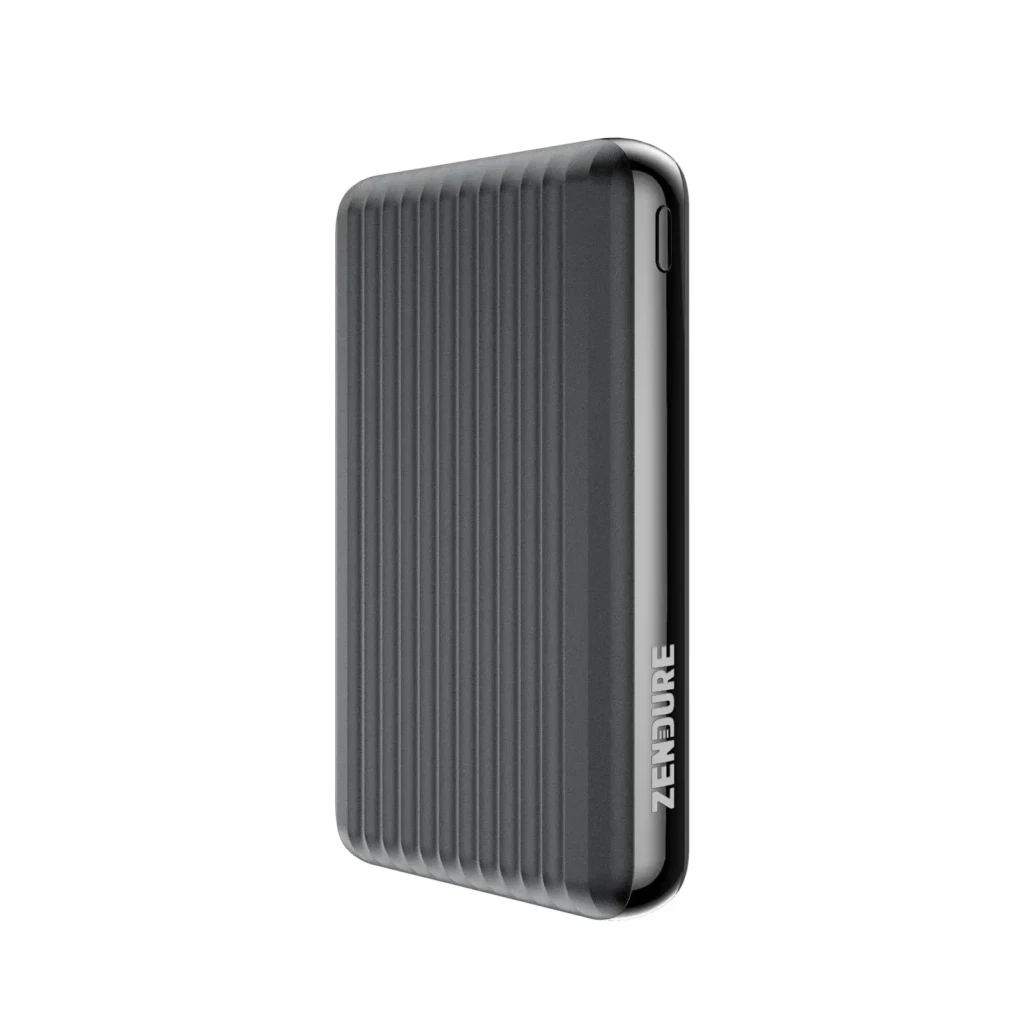
The Zendure SuperMini X3 matches Anker’s 10,000mAh capacity but offers more than twice the charging speed with 45W USB-C PD output. That gap matters more than it sounds; 45W is enough to charge an iPad Pro or a small laptop meaningfully, and it charges most modern smartphones faster than their included chargers.
The aerospace-grade aluminium shell feels noticeably more durable than plastic power banks at this price, and Zendure’s thermal management system keeps it cool under sustained load. Three ports let you charge multiple devices simultaneously without adapters.
Key Specs
- Capacity: 10,000mAh
- Output: 45W USB-C PD
- Ports: 1× USB-C + 2× USB-A
- Build: Aerospace-grade aluminium
Why It Stands Out
- 45W output covers phones, tablets, and small laptops.
- Premium thermal management under heavy load.
- Three ports in a compact, pocket-friendly body.
Best For: Travellers who carry a phone and tablet and want the fastest possible charging in a compact form factor.
3. Baseus Blade 100W: Best for Laptop Charging
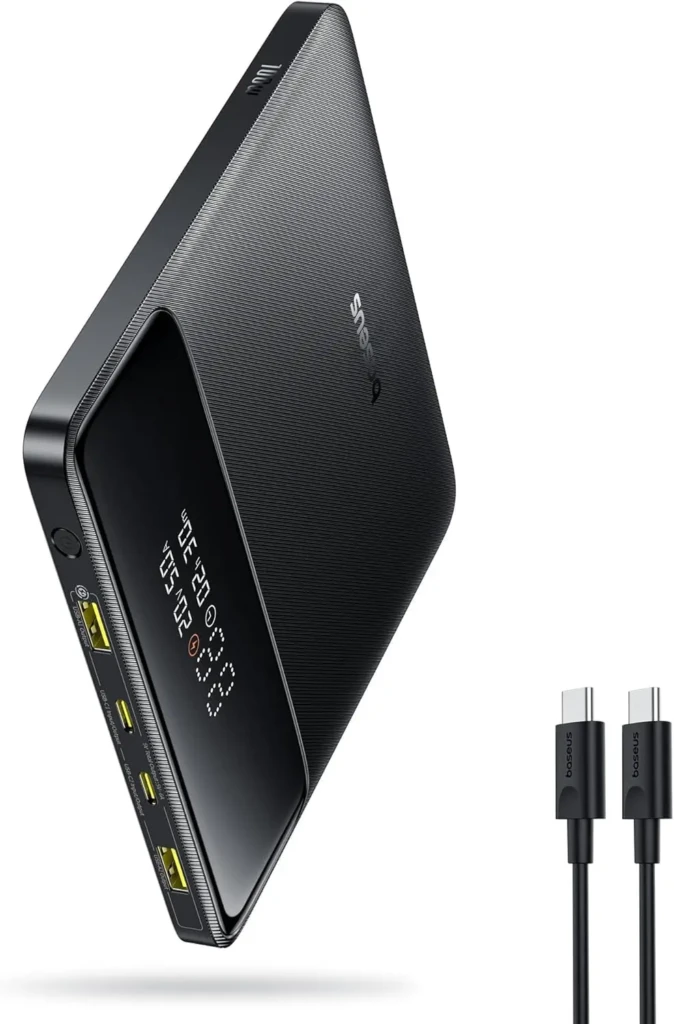
The Baseus Blade 100W is the standout choice for travellers who need to charge a laptop away from a wall socket. At 100W USB-C PD output from a 20,000mAh bank, it can match most wall chargers, including the one that shipped with your MacBook or Dell XPS.
The “Blade” name refers to its unusually slim profile for a 20,000mAh bank. It slides flat into a laptop bag without creating a bulge, and the digital LED display shows real-time battery percentage and wattage output for precise monitoring. Dual USB-C ports allow simultaneous charging of a laptop and a phone.
Key Specs
- Capacity: 20,000mAh (~74Wh)
- Output: 100W USB-C PD
- Ports: 2× USB-C + 2× USB-A
- Display: Digital LED battery and wattage readout
- TSA: ✅ Approved
Why It Stands Out
- 100W output rivals wall chargers for MacBooks and ultrabooks.
- Ultra-slim profile despite 20,000mAh capacity.
- A real-time digital display shows the exact wattage being delivered.
Best For: Professionals and remote workers who regularly need to charge a laptop between meetings or during long travel days without access to a wall socket.
4. INIU 20W Power Bank: Best Budget Pick
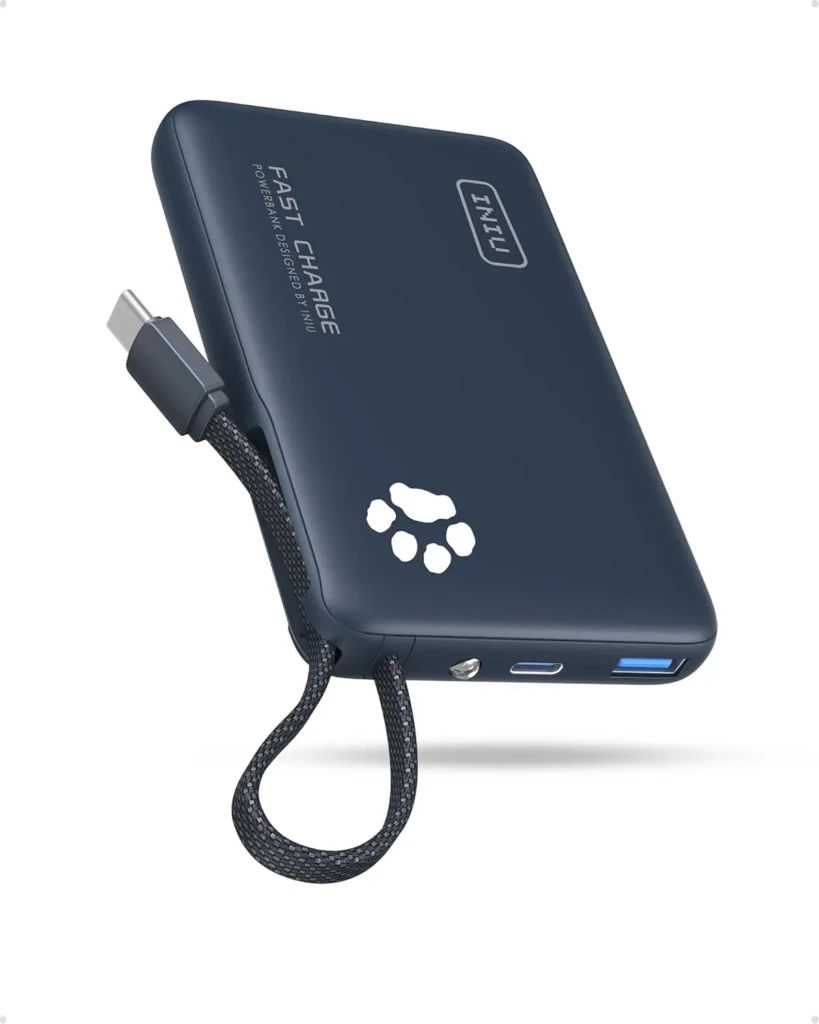
The INIU 20W is the most honest budget recommendation available. At 20W PD, it charges modern smartphones at their full rated speed, something many budget banks at similar prices can’t match because they only output 10–15W. The digital battery indicator shows a percentage readout rather than just LED dots, which is a more useful feature than it sounds when you’re checking how much charge is left mid-flight.
The build is simple but functional, and INIU backs it with a three-year warranty, genuinely unusual at this price point and a meaningful signal of build confidence.
Key Specs
- Capacity: 10,000mAh
- Output: 20W USB-C PD
- Ports: USB-C + USB-A
- Warranty: 3 years
- TSA: ✅ Approved
Why It Stands Out
- Full 20W fast charging at a budget price point.
- Percentage-based digital battery indicator (not just LED dots).
- A 3-year warranty is rare at this price.
Best For: Students, casual travellers, or anyone who wants a reliable, fast-charging backup charger without spending much.
5. Mophie Powerstation Pro AC: Best for Heavy Power Users
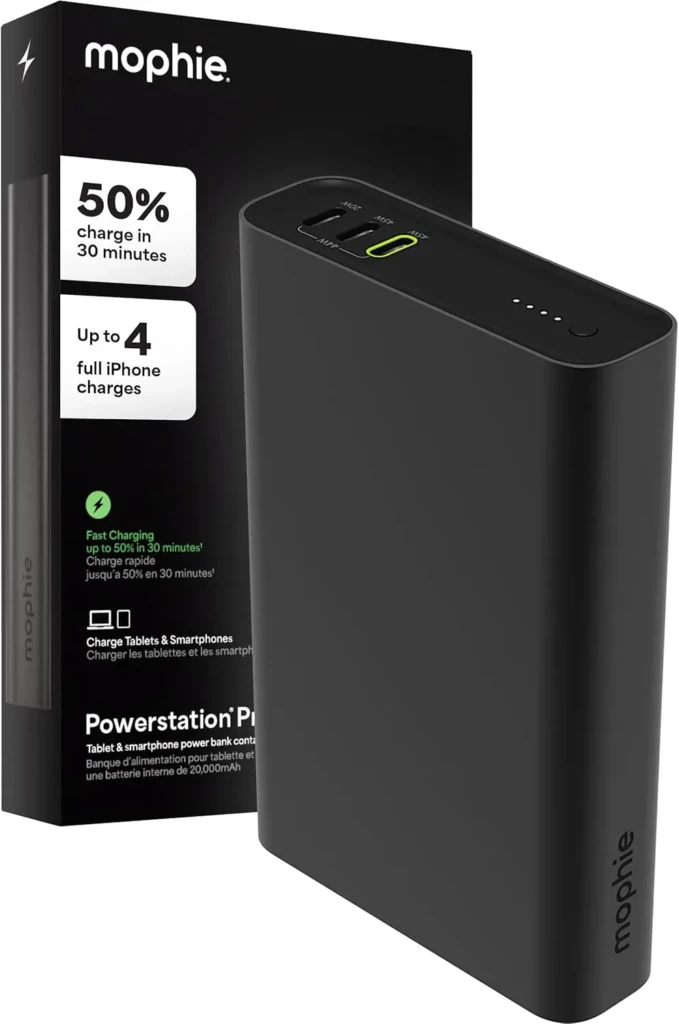
The Mophie Powerstation Pro AC occupies a category almost entirely to itself: a portable power bank with a genuine AC outlet built in. That single feature makes it capable of charging devices that don’t accept USB power, older camera batteries, specialised equipment, and certain medical devices, without needing the device-specific charging brick.
At 20,000mAh and approximately 45Wh, it sits right at the TSA carry-on threshold and is always carry-on only. The weight is substantial, making this a device for travellers already carrying a heavy kit who need maximum power and flexibility, rather than those prioritising lightweight packing.
Key Specs
- Capacity: 20,000mAh (~100Wh)
- Output: 45W AC outlet + USB-C PD
- Ports: USB-C + USB-A + full AC outlet
- TSA: ⚠️ Carry-on only (confirm with airline for international travel)
Why It Stands Out
- It’s the only portable bank on this list with a built-in AC outlet.
- Handles non-USB devices that other portable chargers can’t power.
- Advanced power management prevents overheating at full output.
Best For: Photographers, videographers, and professionals who travel with equipment that requires AC-powered charging bricks.
6. Shargeek Storm 2 Slim: Best for Tech Enthusiasts
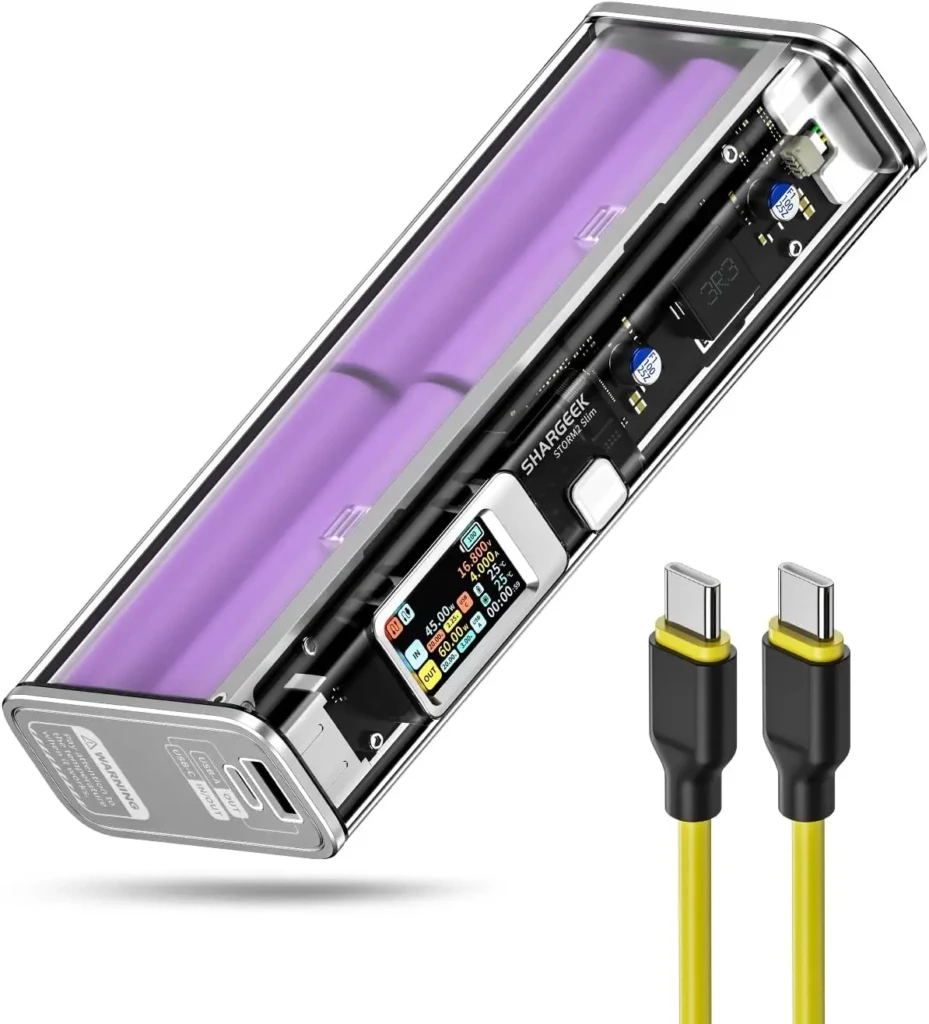
The Shargeek Storm 2 Slim is genuinely unlike any other power bank on this list. Its transparent polycarbonate shell exposes the internal circuitry, and an OLED screen displays real-time input and output wattage with greater precision than any other portable charger of this size. For tech-focused travellers who want to know exactly what their devices are drawing at any moment, this level of visibility is both useful and satisfying.
Performance matches the design: 100W PD output, dual USB-C ports for simultaneous high-speed charging, and an aluminium frame that feels more durable than typical plastic banks. It recharges itself from empty in under two hours with a 130W charger, faster than most competitors at this capacity.
Key Specs
- Capacity: 20,000mAh (~74Wh)
- Output: 130W USB-C PD
- Ports: 2× USB-C
- Display: OLED real-time power monitor
- Build: Aluminium frame with transparent polycarbonate shell
- TSA: ✅ Approved
Why It Stands Out
- The OLED screen shows live input and output wattage, providing the most detailed monitoring available.
- Transparent design exposes high-efficiency internal components.
- Recharges in under 2 hours with a 100W charger.
Best For: Tech enthusiasts and power users who want the best-performing 20,000mAh bank available and appreciate precision monitoring alongside a premium design.
7. Nimble Champ: Best Eco-Conscious Pick
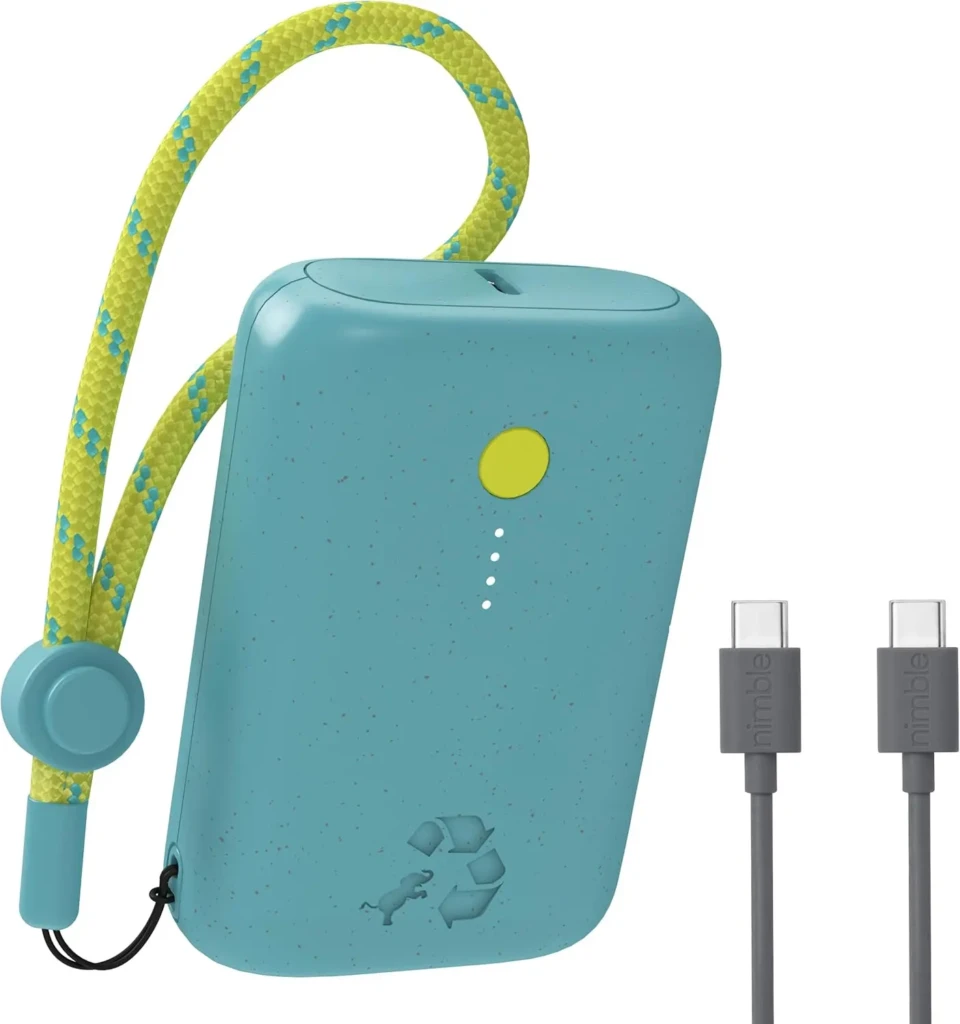
The Nimble Champ is the only power bank on this list that makes sustainability a genuine part of its identity rather than a marketing footnote. The housing is made from recycled aluminium and plant-based bioplastics; the packaging is plastic-free; and Nimble runs a trade-in recycling programme for old electronics, including its own products.
On performance, it holds its own against the other 10,000mAh options; 20W output, USB-C and USB-A ports, and a lightweight form factor that’s TSA-compliant without compromise. It doesn’t ask you to sacrifice function to make an ethical purchase.
Key Specs
- Capacity: 10,000mAh
- Output: 20W
- Ports: USB-C + USB-A
- Materials: Recycled aluminium + plant-based bioplastics
- Packaging: Plastic-free
- TSA: ✅ Approved
Why It Stands Out
- Built from recycled and plant-based materials, certified eco-responsible.
- Plastic-free packaging throughout.
- Trade-in recycling programme for responsible end-of-life disposal.
Best For: Eco-conscious travellers who want reliable, fast charging without compromising on environmental responsibility.
How to Choose the Right Power Bank for Your Trip

Matching the power bank to the trip type removes most of the decision complexity.
- For a weekend city trip with one phone, the Anker PowerCore 10000 or INIU 20W is everything you need: small, light, fast enough, and affordable. There’s no reason to carry a 20,000mAh bank on a two-day trip where you’ll have access to outlets at your hotel.
- For multi-day travel or trips where outlet access is uncertain, such as festivals, long train journeys, or back-to-back flights, move up to a 20,000mAh option like the Baseus Blade. The extra capacity covers multiple days and handles tablets alongside your phone.
- For work travel where you’re regularly charging a laptop between meetings, the Baseus Blade 100W or Shargeek Storm 2 Slim is the right choice. Both output enough wattage to meaningfully charge a MacBook Air or similar ultrabook simultaneously with your phone.
- For heavy professional travel with non-USB equipment, the Mophie Pro AC is the only portable battery that supports AC-powered devices without a wall outlet.
One Universal Tip: Always fully charge your power bank the night before travel, not the morning of. Recharging a 20,000mAh bank from empty takes two to three hours; time you rarely have on a travel day.
FAQs
No. Power banks must always go in your carry-on. Lithium batteries in checked luggage are a fire hazard and will be removed, or your bag will be pulled from the flight.
The standard carry-on limit is 100 Wh (approximately 27,000 mAh at 3.7V) without special approval. Banks with a capacity between 100Wh and 160Wh require airline approval in advance. Anything over 160Wh is prohibited on passenger aircraft.
A modern smartphone battery is typically 4,000–5,000mAh. A 10,000mAh bank gives you roughly two full charges, enough for a heavy day. If you’re charging multiple devices or don’t have access to an outlet, a 20,000mAh bank is the safer choice.
Yes, if the power bank outputs at least 45W USB-C PD and your laptop accepts USB-C charging, which most modern laptops do. For MacBook Pros and other demanding laptops, the Baseus Blade or Shargeek Storm 2 Slim charge at wall-charger speed. For laptops with only a barrel or proprietary connector, the Mophie Pro AC with its AC outlet is the only portable solution.
Yes, noticeably. A low-quality USB-C cable can bottleneck charging speed regardless of how capable your power bank is. Use the cable that came with your bank, or a well-made third-party cable rated for at least 60W for fast-charging applications.
Final Thoughts
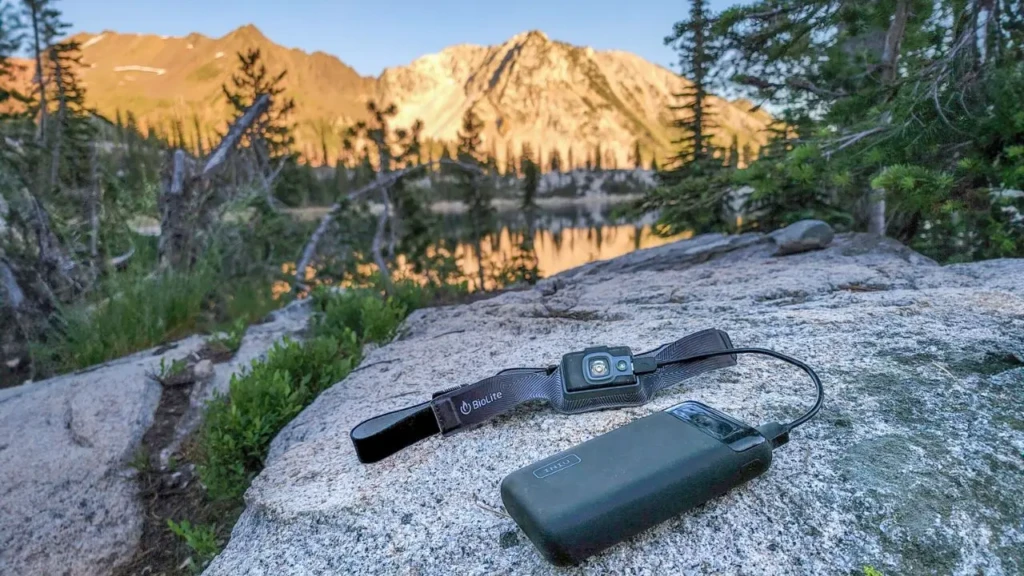
The right travel power bank quietly removes one of the most consistent small stresses of travel, the background anxiety of watching your battery percentage tick down with hours still left in your day. It’s a purchase that pays for itself on the first trip, and it saves you from a dead phone.
For most travellers, the Anker PowerCore 10000 is the right answer: compact, reliable, fast enough, and affordable. If you regularly travel with a laptop, move up to the Baseus Blade 100W; the extra capacity and 100W output are worth the slightly larger form factor. And if you run into any tech issues while you’re on the road, our Tech Guides section covers everything from fixing Android app crashes to troubleshooting Mac performance issues.
At YourTechCompass, every guide is written to give you accurate, practical information; no sponsored fluff, no vague advice. Explore more and find the answers you’re actually looking for.