Janitor AI is a character-based chatbot platform that lets you build or choose from thousands of AI personas, each with its own name, personality, backstory, and conversational style, and then have an extended conversation with them. It’s built for roleplay, collaborative storytelling, and character-driven interaction rather than the task-focused assistance you’d get from ChatGPT or Claude.
What makes it different from most AI chatbots isn’t the underlying model; it connects to third-party LLMs, including OpenAI’s API and Kobold AI, it’s the character layer on top. Every conversation happens through a specific persona, and those personas are persistent, community-created, and customisable. If you’ve heard of Character.AI, the concept is similar. But if you haven’t, this guide covers what the platform actually is, how to use it, and how to think about it honestly before spending time on it.
What Janitor AI Actually Is
Janitor AI is a web-based platform where users can chat with AI characters built on top of large language models. The platform itself doesn’t run its own model; instead, it acts as a front-end that connects to external AI APIs, most commonly OpenAI’s GPT models or Kobold AI, depending on whether you’re using the platform’s built-in option or bringing your own API key.
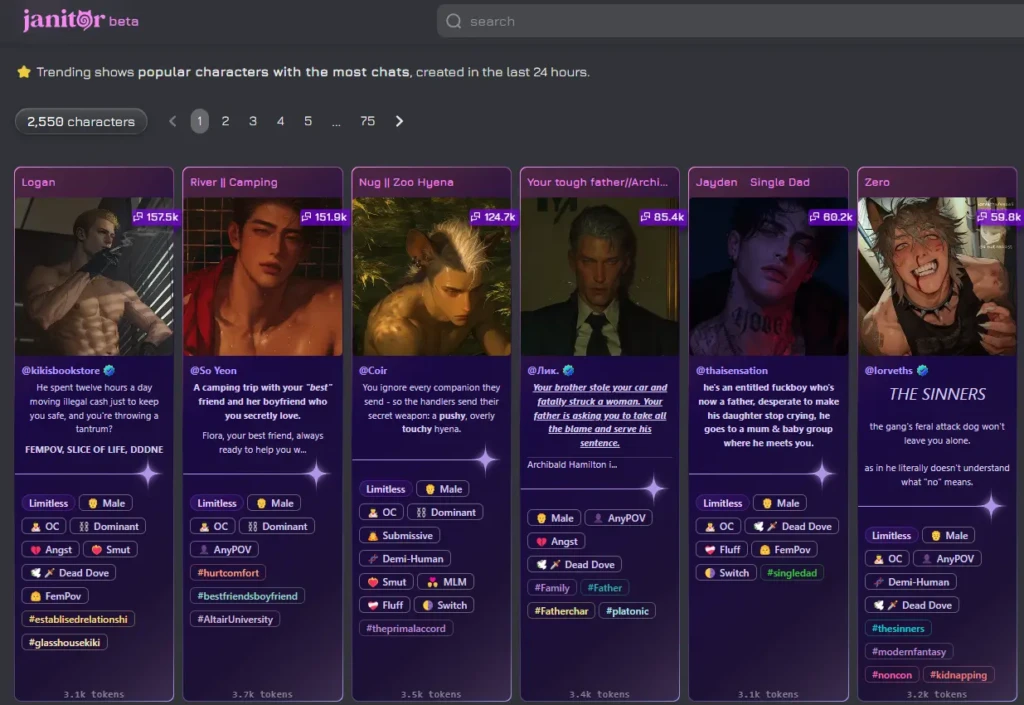
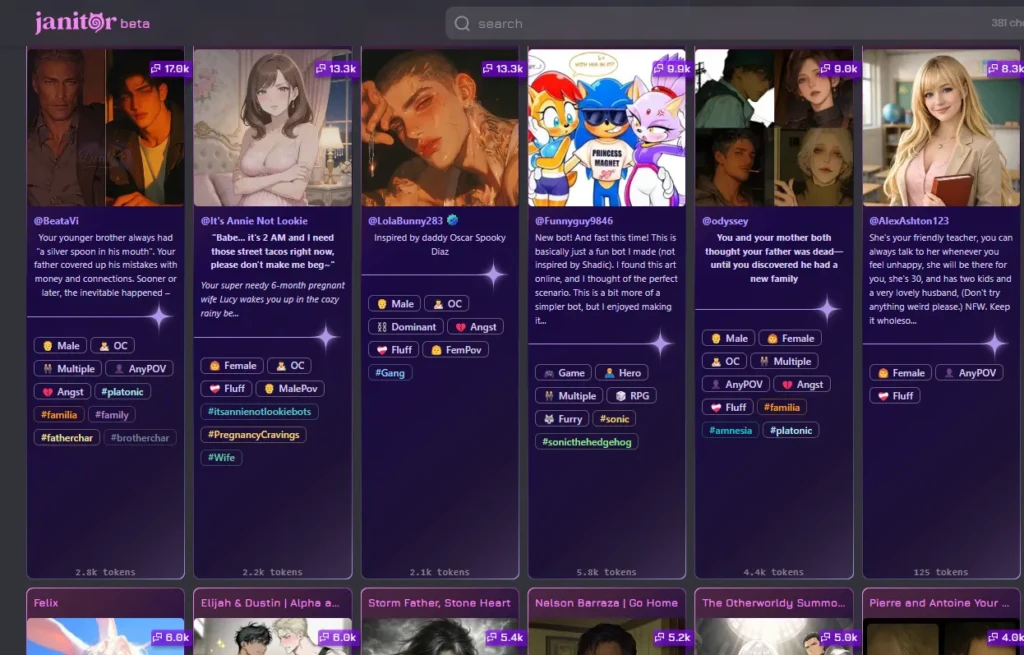
The defining feature is the character system. Rather than chatting with a generic AI assistant, every conversation on Janitor AI happens through a character, a persona with a defined name, personality description, communication style, and backstory. The platform hosts thousands of community-created characters, ranging from original fictional personas to those based on existing media. Users can also create their own characters from scratch using the character builder tool.
The use cases are intentionally creative rather than productive. Janitor AI is built for roleplay scenarios, collaborative fiction writing, character exploration, and entertainment, not for answering research questions, writing professional emails, or debugging code. Understanding this distinction upfront saves a lot of confusion about why it behaves the way it does.
How It Works
When you start a conversation on Janitor AI, you’re not just sending messages to an LLM. You’re sending messages to an LLM with a system prompt that defines the character’s personality, speech patterns, and context. The model then generates responses that stay consistent with that character definition, maintaining the persona’s voice, relationships, and established backstory throughout the conversation.
The technical setup works like this: Janitor AI connects to your chosen AI backend (either via its own API integration or a key you supply), passes the character’s definition and conversation history to the model with each message, and returns the character-consistent response. Because the full conversation history is included in each request, the character maintains continuity; it remembers what you discussed earlier in the session.
Users who connect their own OpenAI API key gain access to GPT-4-class responses, which produce noticeably more coherent, contextually aware character conversations than the default free tier. Kobold AI is an alternative backend option that supports locally run or open-source models, giving more technical users control over the underlying model without ongoing API costs.
Key Features
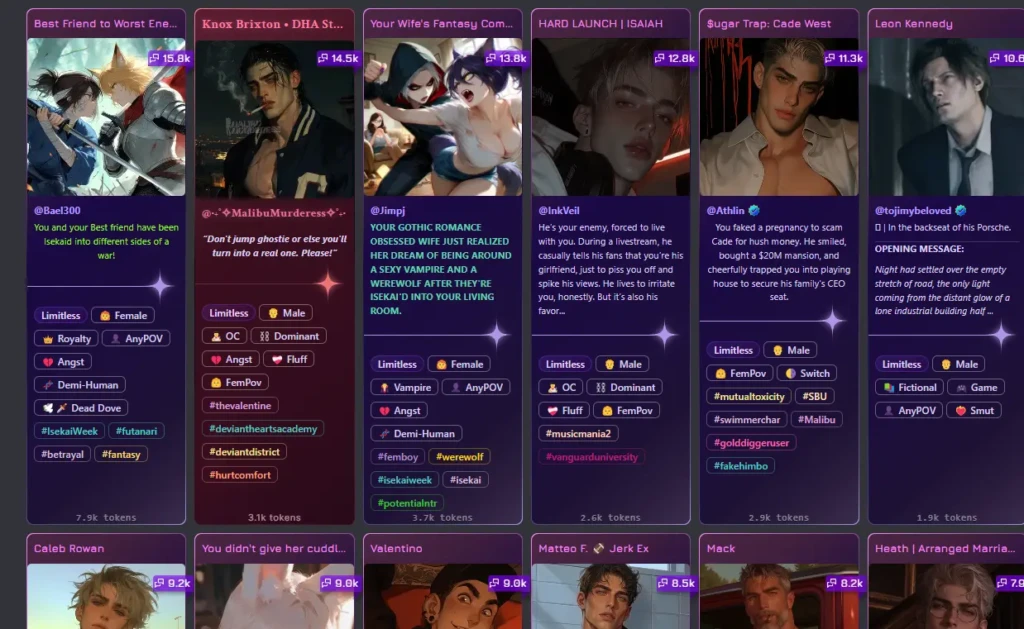
- Character Library: Thousands of community-created characters are available to chat with immediately, ranging from original personas to fandom-based characters and archetypes across many genres and styles. Quality varies widely; some are detailed and well-crafted, others are bare-minimum entries.
- Character Creation Tool: You can build your own characters by defining their name, personality traits, example dialogue, and relationship context. The more detailed the character definition, the more consistent and interesting the resulting conversations. A well-written character prompt makes a significant difference to the quality of conversation.
- Roleplay and Scenario Support: Conversations can be structured around specific scenarios. You can set the scene, establish a relationship context between your user persona and the character, and develop extended narratives across a session. This is the core use case the platform is designed around.
- Content Filters. The platform offers both standard (safe-for-work) and adult content modes. The adult content mode is age-gated and requires account verification. Standard mode keeps conversations within the parameters of general audience content.
- Multi-Model Support. Rather than locking you into one AI backend, Janitor AI lets you choose between its integrated options and your own API key. This gives more technically inclined users flexibility over response quality and cost.
- Browser-Based Access: No download or installation required; the platform runs entirely in the browser.
How to Get Started
Getting started on Janitor AI is straightforward. Visit the official site and create a free account using an email address. Free accounts have access to the character library and basic conversation features, but response quality on the free tier depends on Janitor AI’s own API allocation, which can be slow or limited during peak times.
For better response quality, go to Settings → API and connect your own OpenAI API key. This uses your OpenAI credits directly and produces faster, more capable responses, particularly with GPT-4. You’ll need an OpenAI account and to have added billing details there, but the cost for casual use is typically low.
Once you’re in, browse the character library and start a conversation with any character that interests you. The first message sets the tone. Be specific about the scenario or context you want to explore, and the conversation will be more engaging than if you open with a generic greeting.
If you want to create your own character, use the Create Character button. The most important fields are the personality description and the example dialogue section; these are what the model uses to calibrate the character’s voice. Spending time on these produces better conversations than a minimal entry.
Janitor AI vs ChatGPT
These two tools solve different problems, and comparing them directly is only useful up to a point, but the comparison is worth making because many users consider both.
Feature | Janitor AI | ChatGPT |
Primary Purpose | Character roleplay and creative fiction | General-purpose assistant |
Persona System | Core feature (thousands of characters) | Limited (custom instructions, no persistent personas) |
Content Filters | User-controlled, adult mode available | Strictly enforced safe content policy |
Free Tier | Available, limited response quality | Available, GPT-4o access included |
Bring Your Own API | Yes (OpenAI or Kobold AI) | No (ChatGPT uses OpenAI’s own infrastructure) |
Best For | Creative writing, storytelling, character interaction | Productivity, research, coding, and professional tasks |
The Honest Summary: ChatGPT is a significantly more capable general-purpose AI tool. Janitor AI is a more capable tool for roleplay and character conversations. If you’re trying to use Janitor AI for research, writing assistance, or problem-solving, you’ll be frustrated; it’s not built for that. If you’re trying to use ChatGPT for extended character roleplay with persistent personas, you’ll hit content policy limitations and the absence of a character system quickly.
Best Alternatives
Character.AI is the most direct comparison, a character-based conversation platform with a large community, polished interface, and its own proprietary model. It has stricter content filters than Janitor AI, but a more active character community and more reliable free access. For users primarily interested in fandom characters and character-driven conversation without adult content, Character.AI is worth comparing directly.
Chub.ai (now Venus Chub AI) caters to a similar audience as Janitor AI, with a focus on collaborative storytelling and a large character library. It supports multiple AI backends, including Claude and GPT models.
Pygmalion AI is an open-source option built specifically for roleplay and character interaction. It’s aimed at more technical users who want to run models locally or contribute to open-source development. The quality ceiling is lower than API-backed options, but there are no content restrictions and no ongoing costs.
Perplexity AI is a different tool entirely, an AI-powered research assistant rather than a character platform, but worth mentioning because users who come to Janitor AI for information-seeking rather than creative interaction will get better results from Perplexity dramatically.
Is Janitor AI Safe?
A few practical considerations worth knowing before using the platform.
- Data Privacy: Conversations on Janitor AI are sent through whichever AI backend you’ve connected; if you’re using your own OpenAI API key, your conversations are subject to OpenAI’s data handling policies. If you’re using the platform’s built-in option, you’re subject to Janitor AI’s policies. Avoid sharing personally identifiable information, financial details, or sensitive personal information in conversations, regardless of the platform.
- Account Security: Use a unique password for your Janitor AI account. Because the platform can be connected to a paid OpenAI API key, a compromised Janitor AI account could expose your API key to unauthorised use and generate charges on your OpenAI account. Treat the API key connection with the same care as any financial credential.
- Age Gating: Adult content mode requires account verification for age. The standard mode is designed for general audiences, but content filtering is less strict than platforms like ChatGPT, so parental awareness is reasonable if younger users have access to the account.
- Character Quality Control: Community-created characters are not moderated for accuracy or quality. Characters based on real people or intellectual property exist in the library; engaging with them raises the usual questions about consent and appropriateness that apply to AI-generated content involving real individuals or copyrighted personas.
FAQs
Yes, there’s a free tier with access to the character library and conversations. Free-tier response quality depends on Janitor AI’s API allocation and can be slow. Connecting your own OpenAI API key gives better performance; GPT-4 API costs on OpenAI’s side are typically low for casual use, usually a few dollars a month or less depending on usage volume.
No, the free tier works without one. However, response quality is noticeably better with your own key, particularly a GPT-4 key. If you find the free responses slow or inconsistent, connecting an API key is the recommended fix.
The platform is browser-based and works on mobile browsers, though there’s no dedicated mobile app. The mobile experience is functional but less smooth than on a desktop; the character browser and creation tools, in particular, work better on a larger screen.
The two platforms share a similar concept. Character.AI has stricter content filters, its own proprietary model, and a larger active community. Janitor AI offers more flexible content settings, supports external API connections, including GPT-4, and provides greater control over character creation parameters. Character.AI is generally more beginner-friendly; Janitor AI gives users more control when they want it.
Yes, characters you create can be set to private, and conversations are not publicly visible. Review Janitor AI’s current privacy policy for specifics on data storage and retention, as these details can change.
Final Thoughts
Janitor AI is a genuinely useful tool for its intended purpose, character-based roleplay, collaborative fiction, and creative conversation, and it does that more flexibly than most alternatives thanks to the external API support and detailed character creation system. The free tier is a reasonable starting point, and connecting a GPT-4 API key significantly raises the quality ceiling.
It’s not a general-purpose AI assistant and doesn’t try to be. If your interest is in AI tools for research, writing, or productivity rather than creative character interaction, the Perplexity AI guide or a direct comparison of task-focused AI tools will be more relevant to what you’re looking for.
For more tech guides and honest reviews, visit YourTechCompass.