Discoverability in the App Store is one of the toughest challenges for developers today. With millions of apps competing for attention, even the best products can get lost if they don’t show up prominently in search results. That’s where Apple Search Ads come in: a channel that puts your app in front of users who are actively searching for related terms, essentially connecting demand directly to supply at the moment of intent.
After years of observing and testing various user acquisition strategies, it has become clear that Apple Search Ads warrant specific consideration because they drive high-intent traffic. I’ve evaluated how Apple Search Ads perform across categories, from gaming to utilities, and will break down how the platform works, what it costs, and when it’s genuinely worth using as part of your app marketing strategy.
What Are Apple Search Ads?
Apple Search Ads are a paid marketing channel within the App Store that allows advertisers to promote their apps at the top of relevant search results. Unlike typical social media ads or display networks, these ads appear inside the App Store itself, giving them a unique advantage: they reach users at the exact moment they’re searching for an app or solution.
These ads operate on a keyword-driven model similar to traditional search advertising. However, because the placement occurs at the moment of intent, when a user already wants to find or download an app, the conversion rates tend to be higher. In contrast, channels like social ads rely on generating demand before intent is established.
This positioning makes Apple Search Ads a powerful acquisition tool for developers looking to efficiently scale their install base. However, not every app or campaign performs well with Search Ads unless the strategy is built around keyword intent and conversion optimization.
How Apple Search Ads Work
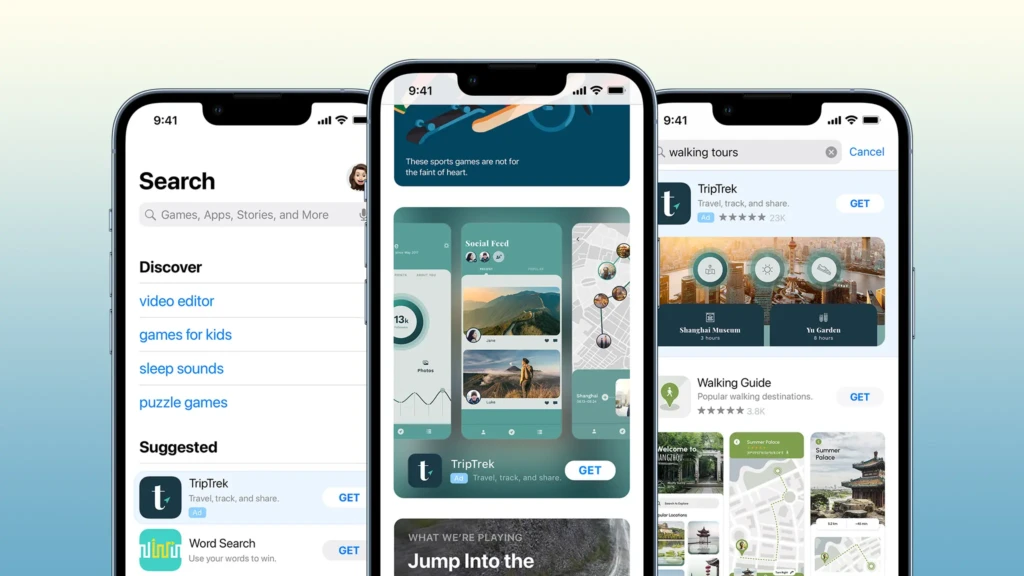
At its core, Apple Search Ads operates through a keyword auction system. Advertisers bid on terms that users are likely to search for in the App Store. When a user types a term that matches one of the bidder’s keywords, an ad may appear above the organic results.
This auction-based model means:
- Bids influence ad placement, but Apple still prioritizes relevance and expected performance.
- Advertisers pay only when a user taps the ad, a model known as Cost Per Tap (CPT).
- High-intent keywords often cost more because of greater competition.
Unlike general display advertising, where users may see an ad passively, Apple Search Ads targets users actively looking for apps. That’s why conversion rates and downloads per ad click tend to outperform channels like social media and display ads.
Furthermore, Apple Search Ads automatically adjusts ad creatives by pulling app metadata, such as screenshots, icons, and descriptions, from the App Store listing. This ensures that the user experience remains consistent and visually coherent.
Apple Search Ads Ad Placements Explained
Apple Search Ads offer several distinct placements within the App Store, each with unique opportunities:
Placement | Where It Appears | Best For |
Search Results | Top of the App Store search results | Broad intent + new campaigns |
Search Tab | Featured on the App Store Search tab | Brand visibility |
Today Tab | On the App Store Today feed | High exposure |
Product Page | Within specific app product pages | Cross-sell or competitor conquest |
Search Results is the most common and most impactful placement, as it directly targets users already searching for relevant terms.
Apple Search Ads Campaign Structure
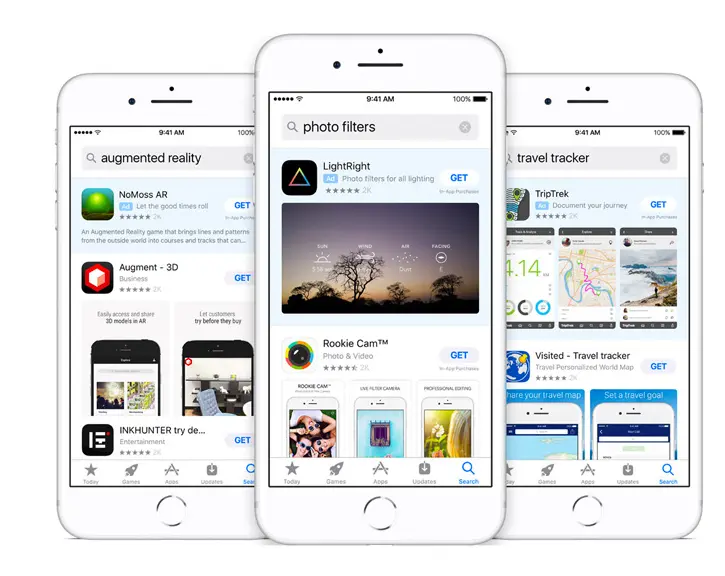
Successful Apple Search Ads campaigns hinge on solid structure:
- Campaigns: Strategic objectives (e.g., new installs, re-engagement)
- Ad Groups: The sets of keywords that match user intent
- Keywords: Targeted terms users search for in the App Store
- Match Types: Exact, Broad, and Search Match
- Exact: Highest control, most precise
- Broad: Wider reach with less control
- Search Match: Apple uses metadata to match user intent automatically
Apple also uses Creative Sets that pull rich visuals from the app’s App Store listing (such as screenshots or videos) to tailor ad appearances and increase relevance.
Together, this structure allows advertisers to balance reach, control, and optimization as they scale campaigns.
Apple Search Ads Costs and Bidding Model
Apple Search Ads operate on a bidding model where advertisers pay when a user taps their ad (Cost Per Tap). Unlike traditional impression-based costs, CPT ensures advertisers pay only when users demonstrate interest by clicking.
Several factors influence Apple Search Ads costs:
- Keyword Competition: Popular keywords cost more
- User Intent: High-intent keywords usually have higher CPT
- Seasonality: Costs may spike during competitive periods
- Country and Category: Different geographies and verticals have varying cost profiles
Typical CPTs can range from a few cents for niche keywords to several dollars for highly competitive terms. While this may seem high compared to social or display ads, the conversion rate from tap to install is often significantly higher. Industry research suggests that Apple Search Ads often deliver higher ROI for first-time app installs than many alternatives (e.g., Meta Ads, Google App Campaigns).
Apple Search Ads Performance and ROI

Apple Search Ads tend to have strong conversion rates precisely because they target users who have already expressed intent. In many cases:
- Click-to-install rates are significantly higher than other channels
- Cost per install (CPI) can be lower even with higher CPT
- Users acquired through Search Ads demonstrate better engagement patterns
For example, a gaming app may find that players acquired through Apple Search Ads show higher first-week retention than those acquired through social traffic. However, not every app category sees the same benefit. Brands with strong organic search visibility often get better marginal ROI because Search Ads reinforce existing demand.
When evaluating ROI, advertisers must consider not only paid acquisition costs but also users’ lifetime value (LTV). Paid search installs that lead to higher retention and in-app purchases often justify higher upfront acquisition costs.
Apple Search Ads Pros and Cons
Every acquisition channel has trade-offs. Apple Search Ads are no exception.
The Pros
- High-intent audience
- Strong conversion rates
- Native placement within the App Store
The Cons
- Limited targeting controls compared to social channels
- Rising competition increases CPT
- Costs concentrated in a closed ecosystem
The platform’s biggest strength, high intent, can also be a limitation if advertisers don’t optimize for relevance or bid aggressively enough.
Who Should Use Apple Search Ads?
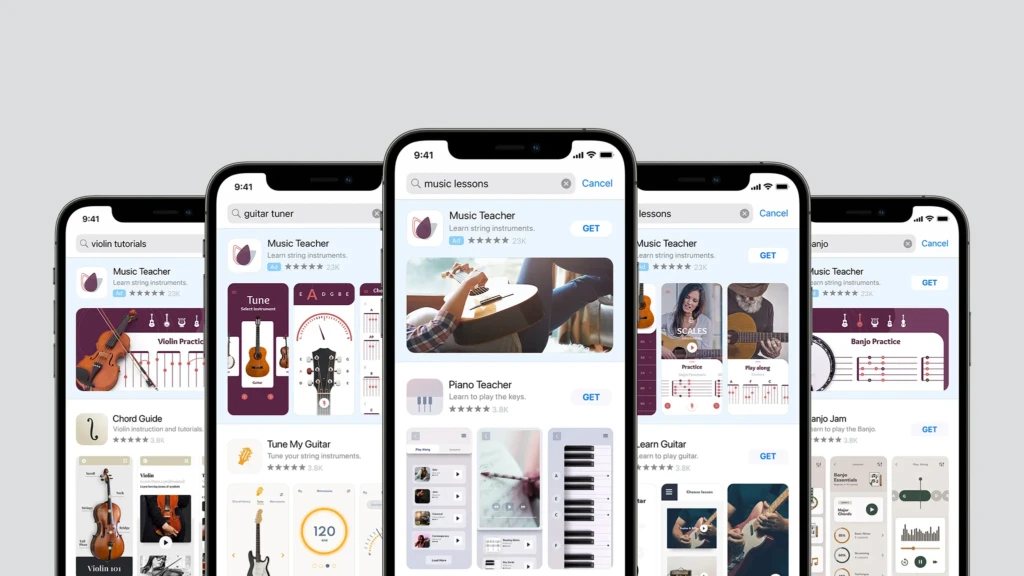
Apple Search Ads are particularly effective for:
- Apps with strong organic visibility
- Subscription-based services seeking high-quality users
- Apps with clear keyword intent (e.g., “budget planner,” “puzzle game”)
- Brands looking to complement other channels, like social or display
However, smaller developers with limited budgets may struggle to compete for high-demand keywords, and brands with weak App Store optimization may face higher costs and lower returns.
Apple Search Ads vs Other Acquisition Channels
A side-by-side comparison helps clarify where Apple Search Ads fit in the broader advertising ecosystem:
Channel | Targeting | Intent Level | Typical Use Case |
Apple Search Ads | Keyword, relevance | High | App Store installs |
Meta Ads | Demographic + interest | Medium | Brand awareness, broad reach |
Google App Campaigns | Algorithmic mix | Medium | Broad install scaling |
Apple Search Ads outperforms when intent is clear and the keyword strategy is strong. In contrast, Meta Ads often excel at early-funnel awareness in visual-heavy categories, while Google App Campaigns provide broad coverage across Search and YouTube.
Together, these channels can form a complementary acquisition stack when aligned with campaign goals and budgets.
Common Apple Search Ads Mistakes to Avoid
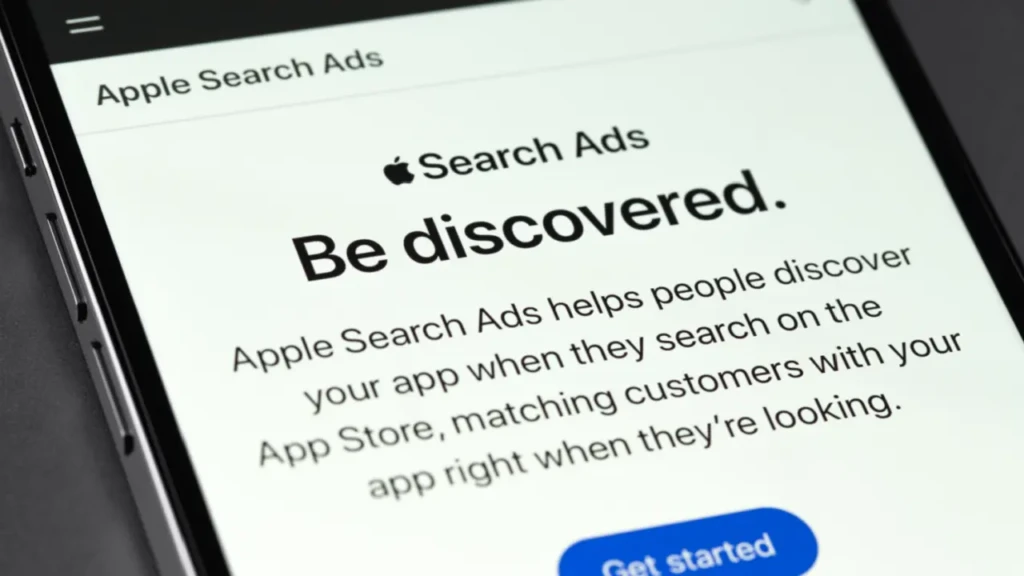
Many advertisers make these avoidable mistakes:
- Bidding only on broad generic keywords
- Ignoring Search Match data
- Failing to optimize App Store metadata (title, subtitle, screenshots)
- Expecting immediate returns with insufficient testing
Just as optimally pairing devices matters for user experience, like using the right iPhone with the right accessories, aligning campaign strategy with platform strengths determines success.
For example, see how product refinement influenced user engagement and review perception in this iPhone 14 review guide and this iPhone 16 Pro Max review.
Best Practices for Apple Search Ads Success
To get the most out of Apple Search Ads:
- Invest in Keyword Research: Identify high-intent terms
- Use Search Match Early: Let Apple data guide keyword discovery
- Optimize Metadata: Strong titles and screenshots improve relevance
- Adjust Bids Based on Performance: Allocate budget to top-performers
- Track LTV, Not Just Installs: Focus on quality users over volume
These tactics push campaigns beyond surface-level wins into sustainable growth channels for apps.
FAQs About Apple Search Ads
Apple Search Ads targets users directly in the App Store while they’re searching for apps, so traffic has higher intent than general display or social ads.
Cost varies by keyword competition and intent level. Advertisers pay only when a user taps the ad (CPT), with costs influenced by competition and campaign targeting.
Indirectly, yes. Increased downloads and engagement from Search Ads can improve organic visibility over time, though this is not guaranteed.
Yes, but success depends on strategy and budget. Smaller developers should focus on niche, high-intent keywords and closely evaluate LTV.
Final Verdict: Is Apple Search Ads Worth It?
Apple Search Ads are among the most effective acquisition channels when the strategy aligns with user intent and app positioning. For brands that depend on strong App Store visibility, especially those with optimized listings, Search Ads can be a core part of scaling installs efficiently.
Nevertheless, it’s not a silver bullet. Search Ads require ongoing strategy, careful bidding, and frequent refinement of assets and keywords. When paired with a holistic acquisition stack that includes channels such as social and broad network campaigns, Apple Search Ads become a reliable driver of high-quality user growth, much like device ecosystems such as the one seen with modern iPhones (e.g., iPhone 17 review guide).