Disclosure: I was given free access to Soaak to test and review. Therefore, all opinions in this article are my own, based on actual use.
I’ll be upfront with you: I was skeptical. Sound frequency therapy sounds like something you’d see on a wellness TikTok with a crystal bowl and vague promises of “healing vibrations.” But when I got access to the Soaak app to test it properly, I decided to go in with an open mind, use it consistently for several weeks, and report back honestly on what I actually experienced. What I found surprised me, and I want to share it with you in a way that’s real, not promotional.
Soaak is a sound frequency wellness app built by Soaak Technologies, a healthtech company that has turned clinical sound therapy into an accessible mobile product available on iOS, Android, and even Alexa. It’s not a meditation app, it’s not a white noise generator, and it’s not a music streaming service. It’s a library of clinically curated sound-frequency compositions designed to target specific outcomes, including sleep, focus, energy, stress relief, and more, that you can layer directly beneath your own music, podcasts, or any other audio you’re already listening to. That last part genuinely impressed me the most, and I’ll explain exactly why.
What Is Soaak?
Soaak was built on the concept of sound frequency therapy, which uses specific audio frequencies to influence the body’s physiological and psychological state. The science behind it draws on a principle called sympathetic resonance: the idea that the body’s malleable frequencies can align with the fixed frequencies delivered through the app, thereby facilitating targeted benefits such as improved sleep, reduced anxiety, enhanced focus, and increased energy. According to Soaak co-founder and executive chairman Henry Penix, the compositions are built from between 5 and 15 frequencies, layered into a single composition designed for a specific outcome.
The clinical foundation behind Soaak’s library is worth knowing about before you dive in.
The company claims the app’s compositions are based on over 80,000 clinical hours of research, with 120 clients tested extensively over six-month periods covering specific issues like fitness, migraines, hormonal imbalances, sleeplessness, and anxiety, and positive outcomes reported in 78% of clients, with no adverse side effects documented. That’s not the same as a peer-reviewed pharmaceutical trial, and I want to be honest with you about that distinction.
The scientific evidence for sound frequency therapy is promising but still developing. What I can tell you is what I personally experienced, which was meaningful enough to keep me coming back.
My First Impressions: Getting Started
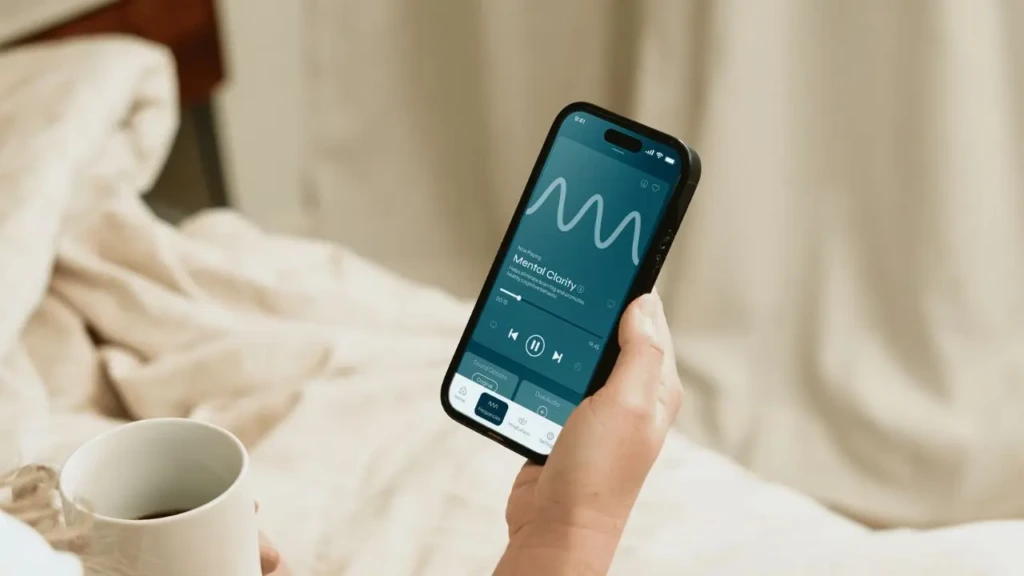
Setting up the app was genuinely easy, and I say that as someone who tests tech tools regularly and has a low tolerance for onboarding friction. You download the app, create an account, browse the frequency library, and you’re listening within a few minutes.
There’s no complicated setup, no wearable required to start (though you can connect one), and no lengthy tutorial forcing you through screens before you can actually use the product. That simplicity matters more than it sounds when you’re trying to build a daily wellness habit. This is because the more steps between you and the experience, the less likely you are to do it consistently.
The interface is clean and well-organized. And frequencies are grouped by category (Sleep, Energy, Focus, Stress Relief, Mood Boost, and more), making it easy to know where to start based on how you’re feeling at any given moment.
Within the first few days of use, I had already settled into a pattern: Focus frequency in the morning while working, and the Sleep frequency in the evening wind-down. What I noticed almost immediately was that the frequencies produced a subtle but distinctly physical sensation, something I can best describe as a gentle warmth or mild vibration in the ears and chest when listening through headphones. It wasn’t unpleasant at all; it felt like the audio equivalent of a weighted blanket.
The Dual Audio Feature: The Standout That Sets Soaak Apart
If I had to name the single feature that made me genuinely enthusiastic about Soaak rather than just interested, it’s Dual Audio, and I want to explain exactly why this matters.
Most sound therapy apps require you to listen to their frequencies exclusively, which means giving up your music, your podcast, your audiobook, or whatever you normally have playing. Additionally, Soaak’s Dual Audio feature lets you layer the therapeutic frequencies beneath any audio you’re already listening to, such as your Spotify playlist, a YouTube video, or a podcast, so the frequencies play in the background without interrupting your normal listening.
In practice, this means I was getting the frequency experience while listening to my usual morning playlist, not instead of it. The frequencies don’t need to be loud to work; you can bring them down until they’re barely perceptible in the background, almost subliminal, while your music plays at normal volume. That’s a completely different usage model from anything else in the wellness audio space, and it’s the feature that makes daily consistency actually achievable. You’re not carving out separate “frequency listening time,” you’re simply enhancing whatever you’re already doing.
I tested Dual Audio across several different contexts: working at my desk with lo-fi music, going for a walk with a podcast, and winding down in the evening with ambient sound. And across all three, the experience held up.
The frequencies layered naturally, and I noticed the same sense of calm focus or restfulness I’d felt when listening to them alone. Whether that’s the frequencies doing their work or simply a strong placebo effect, the outcome (feeling more focused, calmer, and better rested) was real and consistent.
The Frequency Library: What You Actually Get
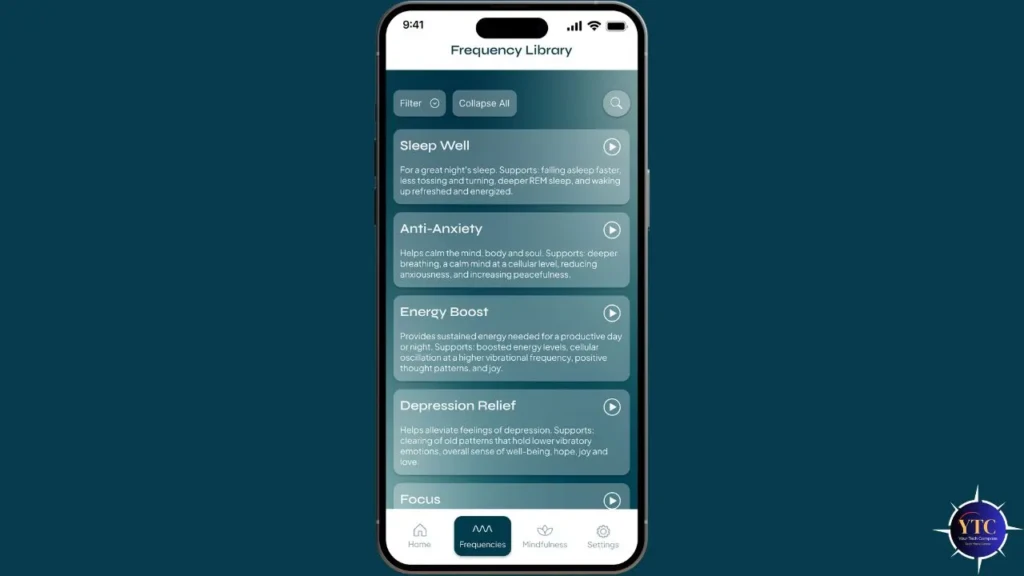
Soaak’s library contains 30 clinically curated sound frequency compositions, each targeting a specific wellness outcome. Here’s a breakdown of the main categories you’ll find in the app:
Category | Example Frequencies |
Sleep | Sleep Well, Deep Sleep, Restful Sleep |
Energy | Morning Energy, High Vibration, Exercise Enhancement |
Focus | Mental Clarity, Concentration, Brain Power |
Stress & Anxiety | Stress Relief, Anti-Anxiety, Calm |
Mood | Mood Boost, Emotional Balance, Positivity |
Health Support | Cardiovascular Health, Immune Support, Allergy Support |
Specialized | Female Hormonal Health, Migraine Relief, Pain Management |
Each composition is available in multiple formats: Original (tonal, slightly sci-fi sounding), Nature (water, wind, rain-based), and Music (gentle acoustic instrumentation), which is a genuinely thoughtful design choice. If the original frequency tones feel too clinical or unusual on first listen, the nature and music formats deliver the same frequency content in a much more familiar and relaxing wrapper.
I personally found the Original format for Focus to be my most-used combination. That’s because there’s something about those tones specifically that I found genuinely conducive to deep work sessions.
My most-used frequencies during testing were Focus, Stress Relief, and Sleep Well, and those are also the three where I noticed the most consistent, tangible difference in how I felt. The Stress Relief frequency, in particular, was the one I reached for when I felt a tense afternoon starting to build, and the shift in my physical tension within 10 to 15 minutes was noticeable enough that I started treating it as my go-to tool for that situation.
Additional Features Worth Knowing About
Find My Frequency™
Find my Frequency™ is Soaak’s AI-powered personalization tool. It asks you how you’re feeling across three dimensions (mental clarity, emotional state, and physical energy), and generates a customized frequency session matched to your current state rather than a fixed pre-set.
I used this on days when I wasn’t sure what I needed, and the recommendations it generated were consistently well-matched to what I was experiencing. It’s a genuinely useful addition for anyone who doesn’t want to manually navigate the library every session.
Wearable Connectivity
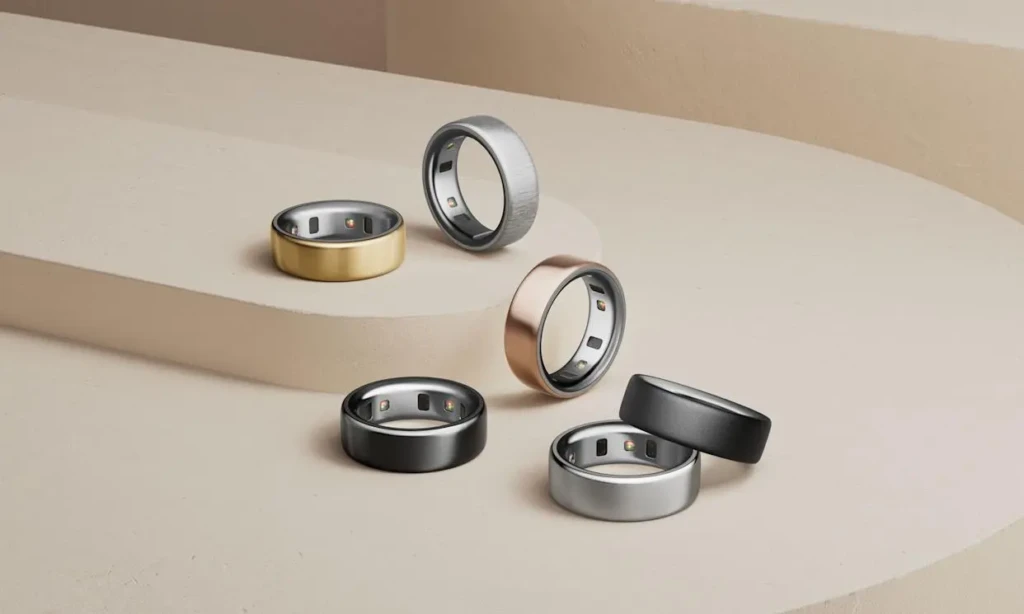
Soaak integrates with ŌURA, Apple Watch, and Apple HealthKit, syncing heart rate and sleep cycle data to personalize frequency recommendations based on your actual biometrics. Therefore, if you’re already tracking your health data through Apple Health, the integration is seamless and adds a layer of personalization that moves beyond self-reported mood. However, the wearable integration currently works only with ŌURA and Apple devices, which is a limitation worth noting if you’re in the Garmin or Fitbit ecosystem, though broader wearable support is described as in development.
Mindful Intentions™
Every day in the app, you get access to Mindful Intentions™, daily affirmations designed to help you set a purposeful tone at the start of your day. These are short, audio-guided statements that pair well with a morning frequency session, and I found them a surprisingly useful addition to a morning routine, even as someone who would previously have said affirmations weren’t my thing.
21-Day Programs
Soaak offers structured 21-day programs led by expert practitioners covering areas like health, relationships, finances, and personal growth. These are essentially guided masterclass series, where each day unlocks a new session that combines frequency therapy with expert instruction.
I dipped into the health-focused program during my testing period. The structure was clear, and the content was grounded, and the combination of frequency and guided audio created a noticeably different experience than either element alone.
Gratitude Journal and Calendar Reminders
Built into the app is a gratitude journal for daily reflection and calendar reminder functionality to schedule your frequency sessions. These are small features, but they matter for consistency.
Having a scheduled reminder paired with a journaling habit creates a complete daily wellness ritual rather than a standalone listening session. Additionally, offline listening is supported, so your scheduled session isn’t dependent on a strong internet connection.
Soaak Pricing: What Does It Cost?
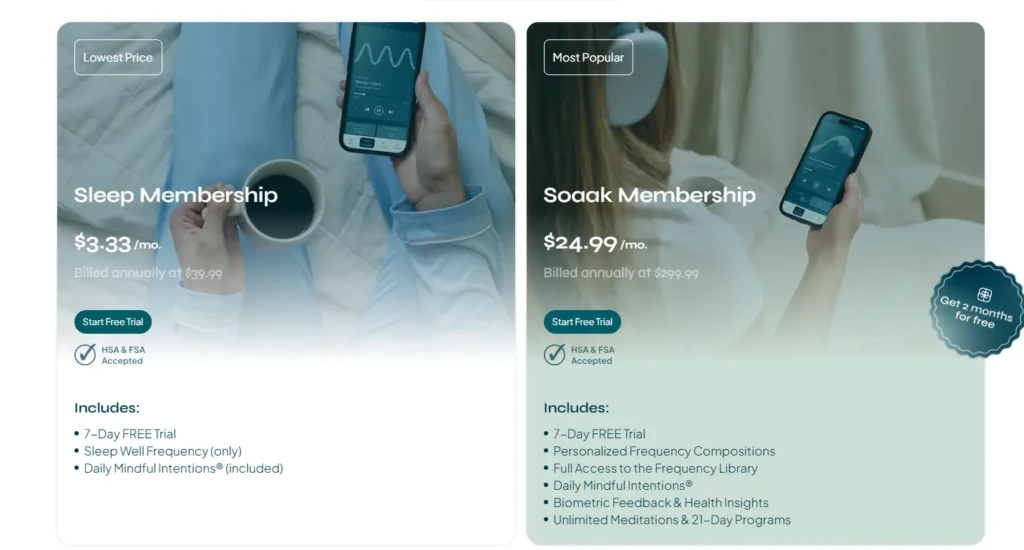
Plan | Price | What’s Included |
Sleep Well | $4.99/month | Sleep-focused frequencies only |
Full Access | $24.99/month | All 30 frequencies, all features, programs |
Annual (Full Access) | $299.99/year (~$24.99/month) | Same as Full Access, billed annually |
Free Trial | 7 days | Full Access features to try before committing |
The pricing is the most common point of hesitation in user reviews, and it’s a fair conversation to have directly. At $24.99 per month, Soaak costs more than most wellness apps and sits closer to a premium subscription tier. The honest value assessment depends entirely on how consistently you use it: if you’re integrating it into a daily routine across focus, sleep, and stress management, the per-day cost breaks down to roughly $1, comparable to a wellness supplement or a premium sleep aid. However, if you’re a casual, occasional user, the math is harder to justify.
The Sleep Well plan at $4.99/month is worth considering if sleep is your primary interest and you want to test its value before committing to the full tier. The 7-day free trial is genuinely the right place to start; it gives you full access to test every frequency category and every feature before spending anything.
HSA and FSA cards are accepted, which is a meaningful detail for anyone using those accounts for wellness-related expenses. For comparison, alternatives like binaural beats on Spotify are free but lack the clinical curation, personalization, and Dual Audio layering that define Soaak’s experience.
What I Like and What Could Be Better
This Is What Genuinely Works
- The Dual Audio feature is a category-defining differentiator. No other app I’ve used integrates therapeutic frequencies with personal music this smoothly.
- The frequency library covers enough specific outcomes that you can genuinely tailor sessions to what you’re experiencing moment to moment.
- The app interface is clean, well-organized, and easy to navigate from day one. I never felt lost or confused about where to find something.
- The multiple format options (Original, Nature, Music) make the experience accessible even if the tonal frequencies feel unfamiliar at first.
- Find My Frequency™ takes the guesswork out of session selection on days when you’re not sure what you need.
What Could Be Improved
- The full subscription at $24.99/month will feel steep to users who primarily want access to the frequency library without the broader feature suite. A mid-tier option would better serve that audience.
- Wearable integration is currently Apple-only; Android users with Garmin, Fitbit, or Pixel Watch wearables can’t yet take advantage of biometric personalization.
- The white-on-blue text contrast in the app can be difficult to read in certain lighting conditions, a point raised consistently in App Store reviews.
Who Is Soaak Best For?

Soaak is best suited for you if you’re already building a wellness routine and want a structured, science-backed audio layer that fits inside it rather than replacing it. If you meditate, exercise regularly, prioritize sleep, or manage daily stress as an active practice, Soaak slots in naturally alongside those habits, and the Dual Audio feature means it adds to your routine without disrupting it.
It’s also worth your time if you’ve tried binaural beats or white noise for focus or sleep and found them helpful but limited. This is because Soaak’s clinically curated multi-frequency compositions go meaningfully deeper than single-frequency alternatives.
If you’re a complete skeptic about sound therapy with no interest in exploring the category, Soaak probably won’t convert you, and that’s okay. The science is promising rather than conclusive, and the app is honest enough about that framing that you’re not being sold a medical cure. But if you’re open to exploring sound as a wellness tool and want something built with clinical rigor rather than wellness trend aesthetics, this is the most serious version of that product available as a consumer app right now.
FAQs
Soaak offers a 7-day free trial with full access to all features and frequencies. After the trial, plans start at $4.99/month for the Sleep Well plan (sleep frequencies only) or $24.99/month for full access to all 30 compositions and every feature.
Yes, Soaak is available on both iOS and Android via the App Store and Google Play. Wearable connectivity currently works with Apple Watch and Apple HealthKit; Android wearable support is not yet available.
Yes, this is Soaak’s Dual Audio feature. You can layer the therapeutic frequencies underneath any music, podcast, audiobook, or other audio playing on your device, with the frequency volume adjustable independently of your main audio.
Sound frequency therapy has a growing body of supporting research. Soaak cites over 80,000 clinical hours and a 78% positive outcome rate among 120 clients tested. The broader science is still developing, and the app should be treated as a wellness tool rather than a medical treatment. It is not a substitute for professional medical advice.
Yes, HSA and FSA cards are accepted for Soaak subscriptions, which may make the cost more accessible for users who allocate health spending accounts to wellness tools.
Soaak’s compositions layer between 5 and 15 frequencies per composition and are clinically curated by a team of doctors to achieve specific outcomes. Binaural beats, on the other hand, are a single two-tone frequency method typically not curated for specific goals. Soaak also adds the Dual Audio layering feature, wearable personalization, AI-powered session matching, and structured programming, all of which go beyond what a standard binaural beats playlist offers.
Final Verdict
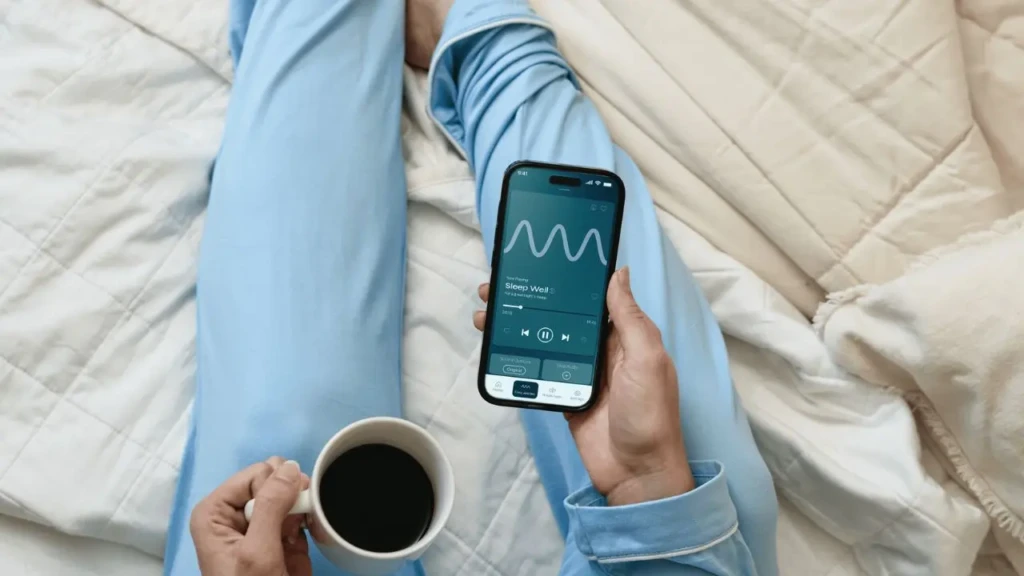
After several weeks of consistent daily use, my honest assessment of Soaak is this: it works, at least for the outcomes I was specifically targeting. Focus during work sessions was more sustained. Sleep onset on evenings when I used the Sleep Well frequency felt faster and less restless. Stress on difficult afternoons felt more manageable when I had the Stress Relief frequency running in the background. Whether the mechanism is the frequencies themselves, a well-calibrated placebo effect, or simply the habit of pausing to invest in my own well-being, the outcomes were real and repeatable.
The Dual Audio feature alone makes Soaak different from anything else I’ve used in the wellness audio category. The ability to have therapeutic frequency sessions without giving up your own music fundamentally changes how accessible daily use becomes. If you’re curious, the 7-day free trial is genuinely the right starting point; use it across at least three different frequency categories, try Dual Audio with your usual music, and let your own experience tell you whether the value proposition holds up for your specific life and habits.
For more tech guides and honest reviews, visit YourTechCompass.