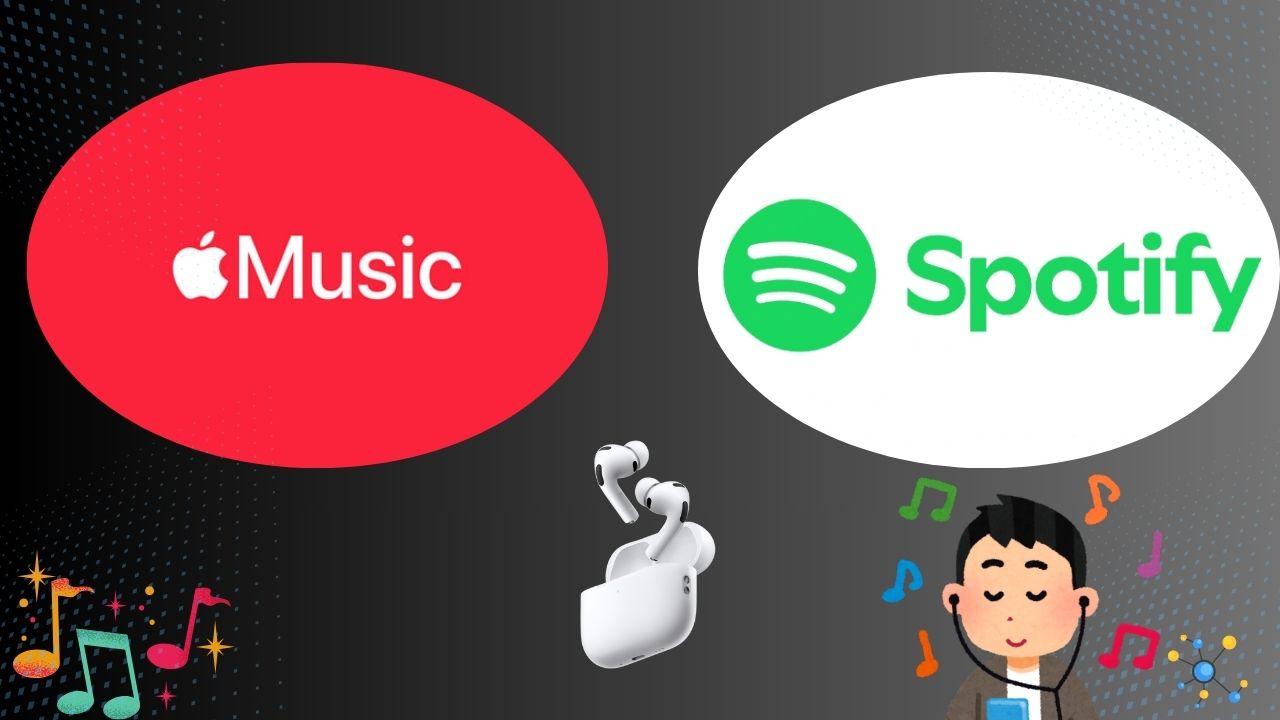
Most people pick Spotify or Apple Music based on whichever one they signed up for first, and never seriously revisit the decision. That’s a reasonable approach when both services cost the same and play music reliably, but it means many people are paying for the wrong service based on their actual listening habits. Spotify’s strengths are discovery and flexibility; Apple Music’s strengths are audio quality and the depth of the Apple ecosystem. If you’re using the wrong one, you’re either missing better-sounding music or missing a smarter recommendation engine, and at $10.99 a month, that adds up.
This guide compares Spotify and Apple Music across every dimension worth considering: catalog size, audio quality, algorithms and discovery, offline listening, device compatibility, family plan pricing, podcast support, and free-tier access. Whether you’re deciding for the first time, reconsidering your current subscription, or trying to figure out which service to recommend to someone else, you’ll have a clear answer by the end.
Spotify vs Apple Music: Quick Overview
Before we get into the details, here’s the essential difference between these two services in plain terms.
Spotify is the world’s most popular music streaming service with over 600 million users globally. It’s known for its exceptional music discovery, AI-powered playlist recommendations, and compatibility with virtually every device ever made, from iPhones to Android phones to smart TVs to gaming consoles.
Apple Music, on the other hand, is Apple’s music streaming service, known for superior sound quality, tight integration with Apple devices, and features like Spatial Audio and lossless playback that Spotify doesn’t currently offer.
Both services are strong competitors; the right choice depends almost entirely on what devices you use and what you value most in a music app.
How Much Do They Cost?
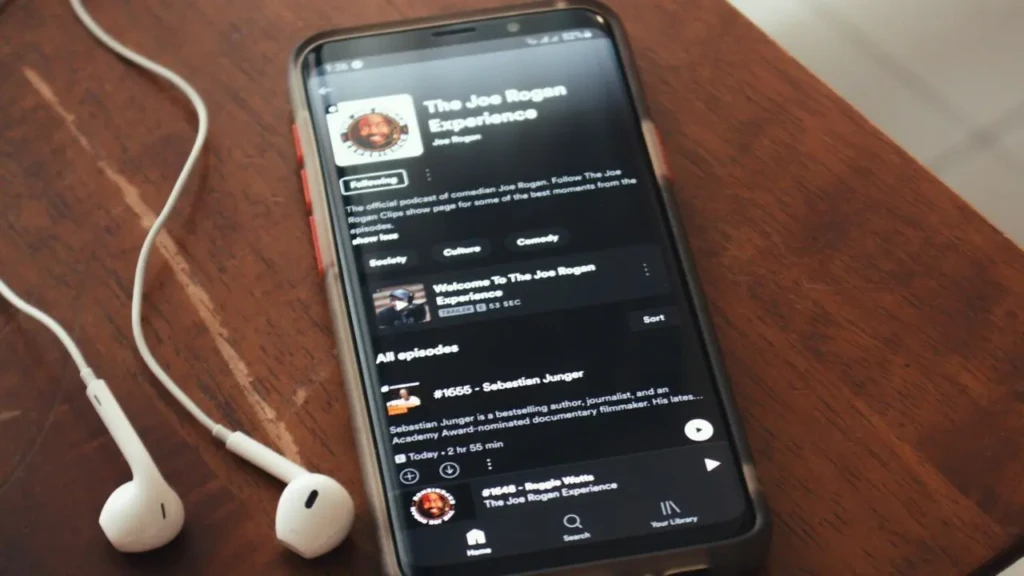
Pricing is nearly identical between the two services, which makes this decision harder and the feature differences more important.
Plan | Spotify | Apple Music |
Individual | $11.99/month | $10.99/month |
Student | $5.99/month | $5.99/month |
Family (up to 6) | $19.99/month | $16.99/month |
Free Tier | ✅ Yes (with ads) | ❌ No |
Annual Plan | ❌ Not available | ✅ $109.99/year |
Apple One Bundle | ❌ | ✅ Included |
The biggest pricing difference is that Spotify has a free tier, where you can use Spotify with ads and shuffle-only listening at no cost. Apple Music has no free option beyond a trial period. If you’re not ready to pay for music, Spotify is your only choice here.
Apple Music has a slight edge on the individual plan at $10.99 vs $11.99, and it’s meaningfully cheaper on the family plan at $16.99 vs $19.99 for the same six people. If you’re already paying for Apple One (which bundles Apple Music, Apple TV+, iCloud storage, and other services), Apple Music essentially comes at no extra cost.
Sound Quality: Which One Sounds Better?
This is the most important question for anyone who cares about how their music actually sounds, and the honest answer is that Apple Music wins clearly on technical audio quality, but with an important caveat.
Audio Feature | Spotify | Apple Music |
Standard Quality | 128 kbps | 256 kbps AAC |
High Quality | 320 kbps Ogg Vorbis | 256 kbps AAC |
Lossless Audio | ❌ Not available | ✅ ALAC up to 24-bit/192kHz |
Hi-Res Lossless | ❌ Not available | ✅ Available |
Spatial Audio | ❌ Not available | ✅ Dolby Atmos |
Apple Music includes lossless audio at no extra charge, so you hear the music exactly as it was recorded in the studio, with no compression artifacts. Spotify still doesn’t offer lossless streaming despite promising a HiFi tier for years. This is a genuine, audible difference on good headphones or speakers.
The caveat is this: if you listen on Bluetooth headphones, which most people do, the Bluetooth connection itself compresses the audio before it reaches your ears, which reduces the practical difference between the two services. On wired headphones, high-quality speakers, or Apple’s own AirPods (which use Apple’s AAC codec optimized for Apple Music), the quality difference becomes clearly noticeable.
Spatial Audio and Immersive Listening

Spatial Audio is one of Apple Music’s most impressive features, and it’s something Spotify simply doesn’t offer right now.
With Spatial Audio and Dolby Atmos support, certain Apple Music tracks play in a three-dimensional sound field, instruments feel like they’re positioned around you, vocals feel separated and placed in space, and the overall experience feels more like being in a room with the music than listening through earbuds. Thousands of albums and tracks on Apple Music support this format, and the number continues to grow.
Spotify has no equivalent feature. It compensates with excellent EQ presets and AI-based audio normalization that keeps volume levels consistent across tracks, which is genuinely useful for long listening sessions, but it doesn’t come close to the immersive experience Spatial Audio provides on compatible headphones and speakers.
Music Library: Who Has More Songs?
Both services have massive libraries that cover virtually every genre, artist, and era of music you’d ever want to listen to.
Spotify has approximately 100 million tracks. Apple Music has approximately 100 million tracks. In practice, you’re extremely unlikely to search for a song and find it on one service but not the other; the catalogs are nearly identical at this scale.
Where they differ is in exclusive and early-release content. Apple Music has historically secured exclusive releases and early access to some albums, particularly from major artists. Spotify, on the other hand, focuses more on podcast and audiobook exclusives. However, neither advantage is large enough to be a deciding factor for most listeners.
Music Discovery and Playlists
This is the category where Spotify wins by the largest margin, and it’s not close.
Spotify’s music discovery algorithm is widely considered the best in the industry. Features like Discover Weekly (a personalized playlist of 30 songs updated every Monday), Daily Mixes (six playlists blending your favorites with similar music), and Daylist (a playlist that changes throughout the day based on your listening habits) are genuinely excellent at introducing you to music you’ll love. The more you use Spotify, the better its recommendations get, and after a few months, it feels like it knows your taste better than you do.
Apple Music’s personalization has improved significantly in recent years, but it still lags behind Spotify. Its “For You” section and station-based recommendations are decent, but they don’t have the same sense of genuine discovery that Spotify consistently delivers. If finding new music you love is important to you, Spotify is a better tool.
Offline Listening
Both services let you download music for offline playback, so you can listen without an internet connection on planes, during commutes, or anywhere with unreliable data.
On Spotify, you can download up to 10,000 songs across five devices on a Premium subscription. On Apple Music, you can download an unlimited number of songs from the Apple Music catalog directly to your device. Apple Music also lets you upload your own music files (up to 100,000 songs from your personal collection) to iCloud Music Library and access them alongside your Apple Music tracks anywhere, a feature Spotify doesn’t offer.
If you have a large personal music collection you want to integrate with a streaming service, Apple Music’s ability to host your own files alongside the streaming catalog is a genuinely unique advantage.
Device Compatibility: Where Can You Use Each?
This is a critically important factor and one of the clearest reasons to choose one service over the other.
Device | Spotify | Apple Music |
iPhone | ✅ | ✅ |
Android | ✅ | ✅ |
Mac | ✅ | ✅ |
Windows PC | ✅ | ✅ |
Smart TVs | ✅ Most brands | ✅ Select brands |
PlayStation / Xbox | ✅ | ❌ |
Amazon Echo / Alexa | ✅ | ✅ |
Google Nest / Home | ✅ | Limited |
Sonos speakers | ✅ | ✅ |
Apple Watch | ✅ | ✅ (deeper integration) |
CarPlay | ✅ | ✅ (seamless) |
Android Auto | ✅ | ✅ |
Spotify works everywhere. Gaming consoles, smart TVs, smart speakers, Android devices. If a device plays audio, there’s almost certainly a Spotify app for it. Apple Music works excellently on Apple devices and has expanded to Android and Windows, but it still has gaps, particularly on gaming consoles and some smart home devices.
If you use a mix of devices, say an iPhone, a Windows PC and a PlayStation, Spotify’s universal compatibility makes it the more practical everyday choice.
Interface and User Experience
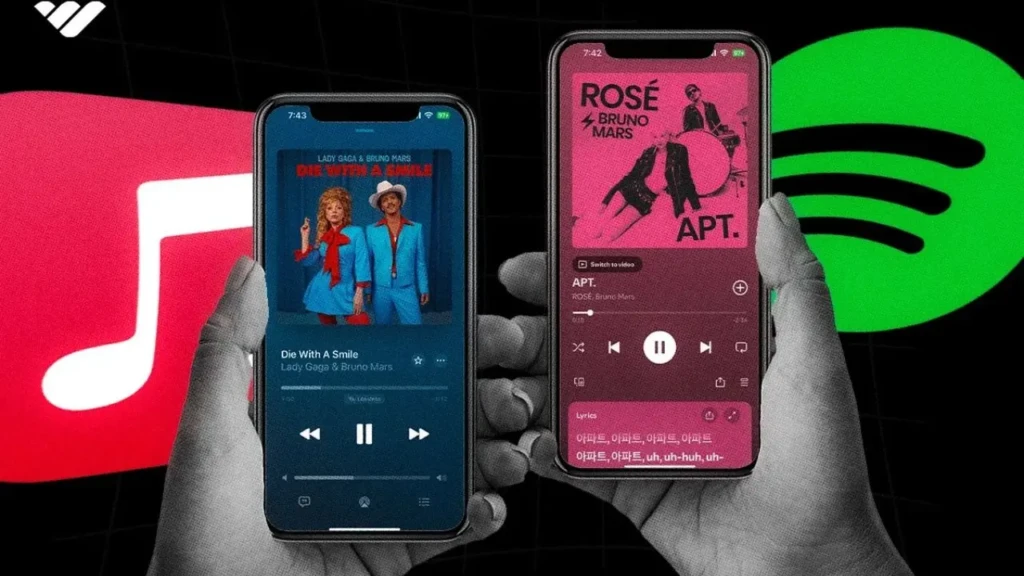
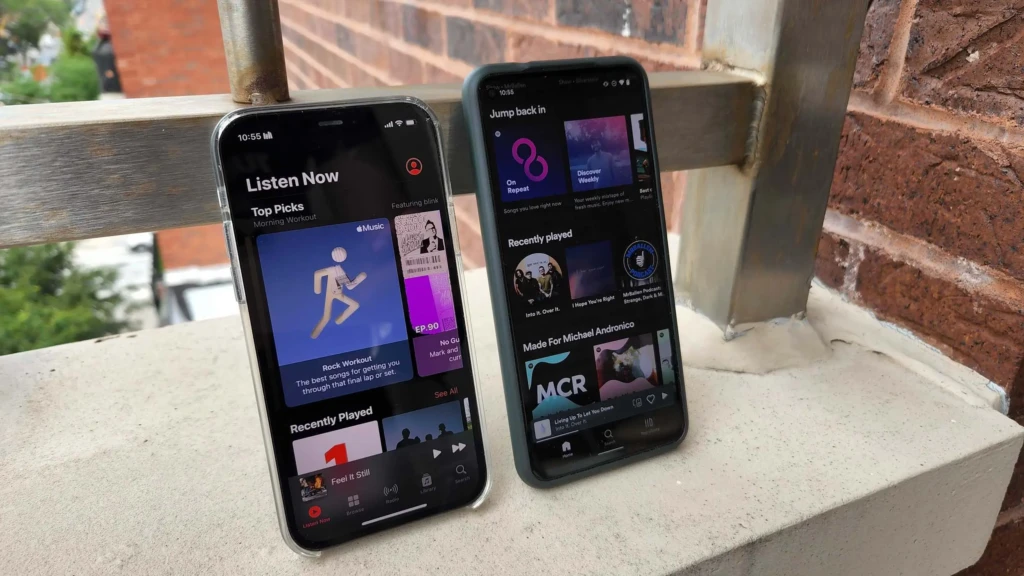
Both apps are well-designed and easy to navigate, but they have noticeably different personalities.
Spotify’s interface is dark, visual, and organized around discovery. The home screen surfaces new music, podcasts, and recommendations based on what you’ve been listening to. Everything feels dynamic and alive; it’s designed to keep you exploring. The app is consistent across every platform, so switching from your phone to your computer feels instantly familiar.
Apple Music has a cleaner, more traditional feel to its music library. It prioritizes your personal collection and recent listening at the top, with browsing and discovery available but not pushed as aggressively. On iPhone and Mac, it feels deeply native; it uses the same design language as every other Apple app, which makes it feel premium and polished. On Android and Windows, it’s fully functional but feels slightly less at home.
Podcasts and Other Content
Spotify has made a massive investment in podcasts and audiobooks over the past few years, acquiring exclusive shows and becoming the world’s largest podcast platform. If you want music and podcasts in one app, Spotify covers both exceptionally well, and its podcast discovery is as good as its music discovery.
Apple Music is music only; it doesn’t include podcasts or audiobooks. Those live in separate Apple apps (Apple Podcasts and Apple Books). If you’re an iPhone user already using those separate apps, this may not bother you at all. If you want everything in one place, Spotify wins this category easily.
Spotify vs Apple Music: Full Comparison Table
Feature | Spotify | Apple Music |
Price (Individual) | $11.99/month | $10.99/month |
Free Tier | ✅ Yes | ❌ No |
Family Plan | $19.99/month | $16.99/month |
Sound Quality | Up to 320 kbps | Up to 24-bit/192kHz lossless |
Spatial Audio | ❌ | ✅ Dolby Atmos |
Music Library | ~100 million tracks | ~100 million tracks |
Music Discovery | ⭐⭐⭐⭐⭐ Excellent | ⭐⭐⭐ Good |
Offline Downloads | Up to 10,000 songs | Unlimited |
Personal Library Upload | ❌ | ✅ Up to 100,000 songs |
Podcasts | ✅ Excellent | ❌ Separate app |
Device Compatibility | Universal | Apple-optimized |
Apple Device Integration | Basic | Deep and seamless |
Android Support | ✅ Full | ✅ Full |
Windows Support | ✅ Full | ✅ Full |
Gaming Consoles | ✅ | ❌ |
Affiliate / Referral Program | ✅ Available | ❌ |
Free Trial Opportunities
Both services offer free trials that are worth taking advantage of before committing to a subscription.
Spotify offers a free tier permanently, no trial needed, no credit card required. Spotify Premium also offers a one-month free trial for new subscribers. If you want to try the premium experience, you can do so at no cost for 30 days and cancel anytime.
Apple Music offers a one-month free trial for new subscribers (three months if you’ve just bought a new Apple device). If you’re an Apple One subscriber, Apple Music is included in the bundle alongside other Apple services.
Both are risk-free to try; there’s no reason not to test both services for a month before choosing one.
Which One Should You Choose?
Here is my honest recommendation based on different types of users.
Choose Spotify if:
- You use a mix of devices such as Android, Windows, gaming consoles, or smart TVs.
- Discovering new music you love is important to you.
- You want podcasts and music in a single app.
- You’re on a budget and want a free option before paying.
- You share the service across a family with mixed devices.
Choose Apple Music if:
- You use iPhone, iPad, Mac, or AirPods exclusively.
- Sound quality matters to you, and you want lossless audio.
- You want Spatial Audio and Dolby Atmos for immersive listening.
- You already pay for Apple One and want to maximize value.
- You have a large personal music collection that you want to integrate with streaming.
My Honest Take: For most people on Apple devices who care about audio quality, Apple Music is the better value, especially since it’s slightly cheaper and includes lossless and Spatial Audio that Spotify doesn’t offer. For anyone on mixed devices or who values music discovery and podcasts in one place, Spotify is the more flexible and practical choice. However, if you’re genuinely unsure, start with Spotify’s free tier, use it for a month, then try Apple Music’s free trial and compare the experience directly on your own ears with your own music.
FAQs
Apple Music is better for sound quality. It offers lossless audio (ALAC) and Hi-Res Lossless at no extra cost, along with Spatial Audio with Dolby Atmos. Spotify’s maximum quality is 320 kbps Ogg Vorbis, which is good but doesn’t match Apple Music’s lossless format on quality headphones or speakers.
Not yet. Spotify announced a HiFi lossless tier years ago, but has not released it as of 2026. Apple Music has offered lossless audio at no extra charge since 2021.
Yes. Apple Music has a fully functional Android app available on the Google Play Store. It works well on Android, though it doesn’t have the same deep integration as on Apple devices.
Spotify is significantly better for music discovery. Its Discover Weekly, Daily Mixes, and Daylist features are widely considered the best recommendation systems in music streaming. Apple Music’s recommendations have improved, but still lag behind Spotify’s personalization.
Not directly. There’s no built-in transfer tool between the two services. However, third-party apps like Soundiiz and TuneMyMusic can transfer your playlists and liked songs between Spotify and Apple Music in a few minutes. The process is straightforward and free for basic transfers.
Apple Music is cheaper for families at $16.99/month for up to six people, compared to Spotify’s $19.99/month. Both plans give each family member their own account with individual recommendations and history.
Final Thoughts
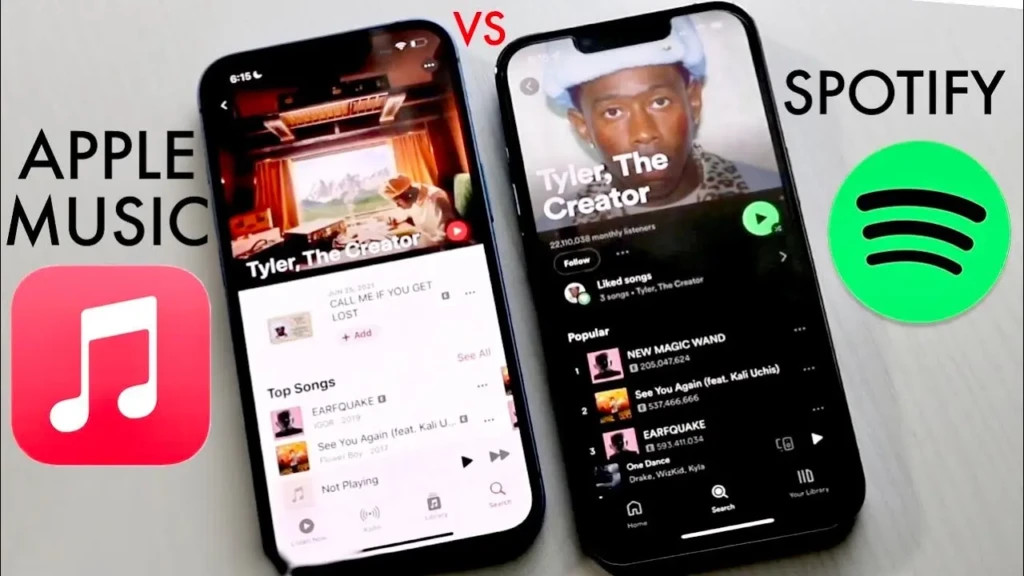
Spotify and Apple Music are both excellent services; the difference lies in where each excels. Spotify wins on discovery, cross-platform flexibility, podcast integration, and free tier access. Apple Music wins on audio quality, catalog size, and depth of the Apple ecosystem. If you listen to multiple device brands, value algorithm-driven recommendations, or use podcasts and audiobooks in the same app, Spotify is the better $10.99. If you’re fully in the Apple ecosystem, care about lossless audio, and want a larger catalog, Apple Music earns the subscription without question.
The honest advice: try both before committing. Spotify offers a free tier with no time limit, and Apple Music offers a one-month free trial. Run them side by side for a week, with the same playlists and listening habits, and the right choice will be obvious. Whichever you land on, you’re paying for one of the two best music streaming services available anywhere.
Ready to explore more? Visit YourTechCompass for hands-on reviews, buying guides, and how-to articles that cut through the noise and give you exactly what you need.