
Tracking body composition has been frustrating for decades, not because the science doesn’t exist, but because the tools that actually work have always been expensive, inconvenient, or impossible to use consistently. A bathroom scale tells you your total weight, but nothing about what that weight is made of. A DEXA scan provides genuine insight, but it costs $100 to $300 per visit and requires a clinic appointment; most people end up rescheduling indefinitely. The result is a category where tools that are easy enough to use daily are too imprecise to be useful, and those that are precise enough to be useful are too impractical to use regularly. Artificial intelligence is beginning to close that gap, and the implications for anyone tracking fitness progress are significant.
This article covers exactly what AI-based body composition tracking does, why it solves a problem that traditional methods couldn’t, what the real limitations are, and where this technology is headed. Whether you’re a fitness enthusiast trying to understand whether you’re actually leaning out or a health-conscious person who’s tired of a scale being your only data point, the AI tools emerging in this space are worth understanding before they become mainstream.
Why Traditional Body Composition Methods Fall Short
To understand why AI matters here, you need to understand exactly what’s wrong with the current options, because each method has a specific failure mode that makes it unreliable for the use case most people actually have.
- Scales measure total body weight — nothing more. When your weight stays flat for three weeks while you’re training hard, a scale gives you zero information about whether you gained muscle, lost fat, or both simultaneously. That ambiguity leads to discouragement and to fitness programs being abandoned more often than any actual lack of progress.
- BMI (Body Mass Index) is calculated by dividing your weight by your height squared and produces a single number that health systems have used for decades as a proxy for health risk. The fundamental problem is that BMI cannot distinguish between fat and muscle; a 200-pound professional athlete and a 200-pound sedentary person of the same height receive identical BMI scores despite completely different body compositions and health profiles. Consequently, BMI-based classifications mislead in both directions, flagging muscular people as overweight and missing meaningful fat accumulation in people who happen to be lighter.
- Bioelectrical Impedance Analysis (BIA), the technology in most smart scales and handheld body-fat devices, sends a small electrical current through the body and estimates fat mass based on how quickly the signal travels. The limitation is that hydration level significantly affects conductivity, which means your BIA reading can shift by several percentage points depending on whether you’re dehydrated, just exercised, or recently ate a salty meal. That variability makes consistent tracking difficult.
- DEXA scans (Dual-Energy X-ray Absorptiometry) are the gold standard for measuring body composition; they distinguish among fat mass, lean mass, and bone density with high precision. The problem is accessibility. Most people can’t walk into a clinic for a DEXA scan every four to six weeks, and the cost makes frequent use impractical for anyone outside a clinical research setting. Accuracy without repeatability has limited real-world value for tracking progress over time.
The gap these methods collectively leave is clear: people need something accurate enough to be meaningful, cheap enough to use regularly, and simple enough to fit into a normal routine. That combination didn’t exist until AI-based image analysis entered the picture.
What AI Actually Does for Body Composition Tracking
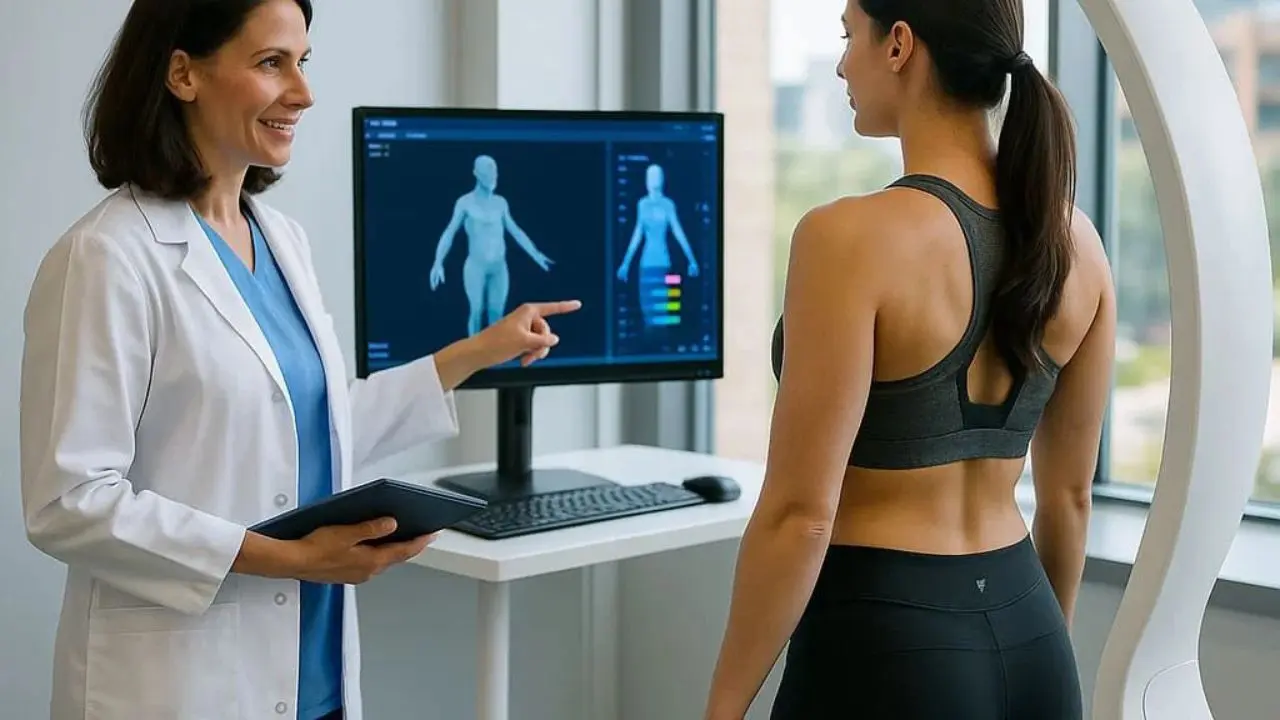
AI-based body composition tools work by analyzing photographs, typically front, side, and back photos taken on a standard smartphone, and producing estimates of body fat percentage and lean mass distribution. The models behind these tools are trained on large datasets that pair images with verified body composition measurements from methods such as DEXA, allowing the AI to learn visual patterns that correlate with specific fat and muscle distributions across different body types.
The output isn’t a number pulled from a table; it’s a pattern-recognition estimate calibrated against the visual markers that correlate with body composition across thousands of training examples. Tools like Body Fat Estimator use this approach to generate body fat estimates from a single photo, making the kind of assessment that previously required a clinic visit accessible from a phone in under a minute.
Three things distinguish AI-based tracking from traditional methods in ways that matter for real-world use:
Transforming Simple Inputs Into Meaningful Data
A photograph requires no specialized equipment, no calibrated device, no hydration protocol, and no clinic visit. The fact that an AI model can extract body composition estimates from an image that most people would already take as a progress photo represents a genuine democratization of data that previously existed only in clinical settings.
Increasing Reproducibility Over Precision
This is the insight most people miss about why AI tracking matters. Perfect accuracy on a single measurement is less useful than consistent accuracy across many measurements.
Therefore, if an AI tool is off by two percentage points but is consistently off by two percentage points, you can track your direction of change with meaningful confidence. Trend data beats snapshot data for anyone trying to understand whether their training and nutrition are working.
Shifting from Numbers to Patterns
AI-based tracking lets you ask better questions. Instead of “What is my body fat percentage today?” you can ask “Am I leaning out even though the scale hasn’t moved?” and “Is my trend moving in the right direction over the past eight weeks?” That shift from single-point measurement to pattern recognition is more aligned with how fitness progress actually works: gradually and non-linearly, not in clean weekly steps.
The Standardization Problem AI Solves

Most people who track fitness progress informally already take progress photos. The problem with informal photo comparison is that it’s surprisingly unreliable.
Lighting differences between two photos taken three months apart can make visible progress disappear or create the illusion of change that isn’t there. In addition, variations in angle, posture, and posing compound the problem. Therefore, two photos of the same person, taken under different lighting conditions, can appear to show different bodies.
AI brings structure to visual tracking by analyzing the underlying patterns in an image rather than the surface appearance. The estimate generated from a well-lit, consistently angled photo is calibrated against the same model as the estimate generated three months later, making the comparison meaningful in a way that a subjective before-and-after comparison simply isn’t.
Additionally, because the same tool generates both estimates, the methodology is consistent even when the photos are taken in slightly different conditions. This standardization is the core practical value proposition of AI body composition tools, not because they’re more accurate than DEXA, but because they’re consistent and accessible enough to generate the kind of regular data that meaningful progress tracking requires.
For a broader look at how AI tools are transforming health, fitness, and everyday technology, the AI Unboxed section covers the full landscape of emerging AI applications worth understanding.
Honest Limitations of AI Body Composition Tracking
AI-based body composition tools are significantly better than nothing and genuinely useful for trend tracking. Still, they’re not perfect, and understanding where they fall short prevents misplaced confidence in specific numbers.
Image Quality Affects Accuracy
Poor lighting, blurry photos, or images taken at inconsistent distances reduce the quality of the estimate. This is because the model can only work with the information in the image. Therefore, a low-quality input produces a lower-quality output.
Unique Body Types Can Fall Outside Training Distributions
AI models are trained on datasets that may not fully represent every body type, ethnicity, or body composition profile. Consequently, estimates for bodies that differ significantly from the training distribution are less reliable than estimates for bodies well-represented in the training data.
Angle and Posing Inconsistency Introduces Variability
Even small differences in how you stand, where you hold your arms, or how you position the camera affect the estimate. Therefore, using consistent protocols (the same distance, lighting setup, and posing) significantly improves the reliability of comparisons over time.
AI Is a Tracking Tool, Not a Ground Truth
The appropriate use of AI body composition estimates is to understand directional change and trend over time, not to know with certainty that your body fat is exactly 18.4% versus 19.1%. That level of precision requires a DEXA scan.
AI’s strength is in making consistent, practical measurements accessible to everyone, not in replacing clinical-grade assessment for contexts where precision is required.
Where AI Body Composition Tracking Is Headed

The trajectory of AI in this space points toward tools that are more automated, more personalized, and more integrated into everyday health monitoring. AI is already being used in clinical settings to analyze body composition from medical imaging (CT scans and MRIs) with efficiency and scalability that previously required specialized radiologist analysis. As those models improve and the underlying technology becomes cheaper, the gap between clinical precision and consumer accessibility will continue to narrow.
For everyday users, the practical near-term development is better standardization protocols: tools that guide you through consistent photo capture, automatically correct for angle and lighting variations, and generate estimates calibrated across longer time windows rather than point-in-time snapshots. Incorporating wearable data, movement patterns, and dietary context into the estimation model will further improve both accuracy and personalization over time.
The broader implication is that body composition tracking is moving from something you do occasionally at a clinic to something you do regularly at home, with data quality that makes the results genuinely actionable rather than just vaguely interesting.
FAQs
Not yet. And for most practical purposes, that’s the wrong comparison. DEXA scans provide clinical-grade precision that AI image analysis doesn’t match for a single measurement. However, AI tools are consistent enough to track meaningful change over time, which is the use case most people actually need. For understanding whether you’re losing fat or gaining muscle over eight weeks, AI-based trend tracking is genuinely useful.
Weekly to biweekly is the most practical cadence for most users. Daily measurement introduces noise without adding meaningful information. Body composition changes happen over weeks and months, not days. Consistent weekly photos in the same conditions give you a trend line that’s actually interpretable.
No. A standard smartphone camera in reasonable lighting is sufficient. The key is consistency: the same distance from the camera, the same lighting setup, and the same time of day (ideally, the same conditions each time) to make your comparison meaningful across measurements.
Use a tripod or a stable surface to hold your phone at the same height each time. Natural lighting or consistent indoor lighting works well. Taking photos at the same time of day, first thing in the morning, before eating or drinking, is a common standard. Front, side, and back photos give the model the most information to work with.
Conclusion
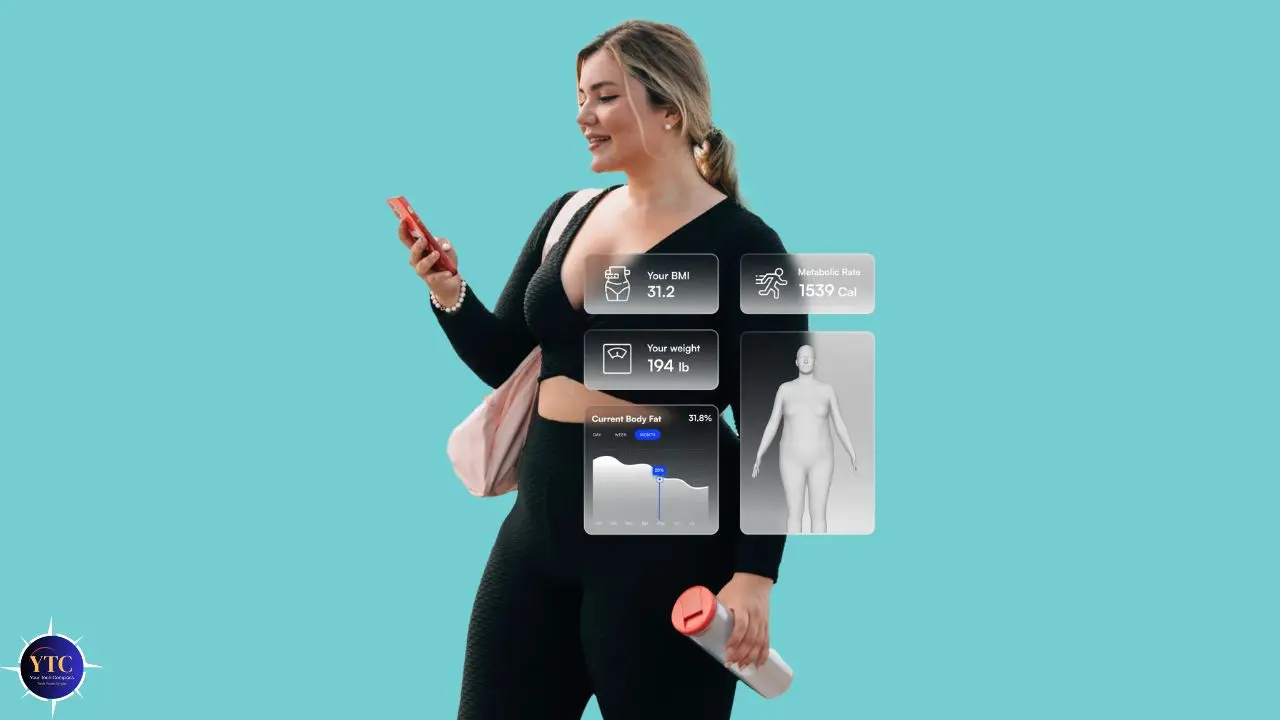
AI isn’t making body composition tracking perfect; it’s making it practical enough to use. For years, the choice was between an accurate method you’d use twice a year and an inaccurate method you’d use every day. AI closes that gap by making consistent, repeatable body composition estimates accessible from a smartphone photo, meaning the people who benefit most are those who previously had no good option at all.
The real breakthrough isn’t the technology itself; it’s what the technology enables. When tracking is easy enough to do regularly, people actually do it. And when people track consistently, they make better decisions about their training and nutrition because they have data rather than guesswork to guide them. AI body composition tools won’t replace clinical measurement for medical contexts. Still, for the vast majority of people who simply want to understand whether their effort is producing results, they represent a genuinely meaningful step forward.
About the Author: Matt Phelps is a Body Composition Expert and the creator of Body Fat Estimator, a free AI-powered tool that generates body fat estimates from a single photo.
For more AI tool reviews and honest breakdowns of emerging technology, visit YourTechCompass.com.