Tinder is the world’s most downloaded dating app, and by a margin that no competitor has come close to closing. With over 50 million monthly active users across 190+ countries and over 100 billion total matches since launching in 2012, Tinder’s scale is in a league of its own compared to any other dating platform. That scale is both its biggest strength and the reason so many people have questions about it: with that many users, the app works very differently depending on where you live, your age, your profile, and which tier you’re on.
This guide covers the complete picture: how Tinder actually works from the first swipe to the first message, what each subscription tier genuinely adds versus what you’re paying to remove friction you shouldn’t have had in the first place, and the honest verdict on whether Tinder belongs on your phone right now. If you’ve already read the best dating apps guide and decided Tinder is your starting point, this is where you get the full breakdown of how to use it effectively.
A note before we begin: every YTC score is earned, never negotiated. If you want to understand exactly how we evaluate apps & tools and how we handle affiliate relationships, our Review Methodology lays it all out.
What Is Tinder?
Tinder launched in 2012, built by Sean Rad, Justin Mateen, and Jonathan Badeen at Hatch Labs, a startup incubator connected to IAC, in Los Angeles. What made Tinder different from every dating site that existed before it wasn’t the matching; it was the interface.
The swipe-right/swipe-left mechanic reduced the friction of expressing interest to a single physical gesture, made the experience feel more like a game than a form, and introduced the mutual-match requirement: neither person can message the other until both have swiped right. That requirement fundamentally changed online dating by eliminating unsolicited messages. It’s been copied by virtually every dating app launched since.
Today, Tinder is owned by Match Group, the same company that owns Hinge, OkCupid, Match.com, and Plenty of Fish. That context matters because Match Group deliberately positions its apps to serve different audiences rather than compete directly with each other.
Tinder is the high-volume, broad-appeal, swipe-first platform. Hinge is the relationship-focused, prompt-based alternative for users seeking greater intentionality. They’re owned by the same parent company and engineered to push different users toward different products. Tinder is available on iOS, Android, and web browsers, and the mobile app is where the full experience lives.
How Does Tinder Work?
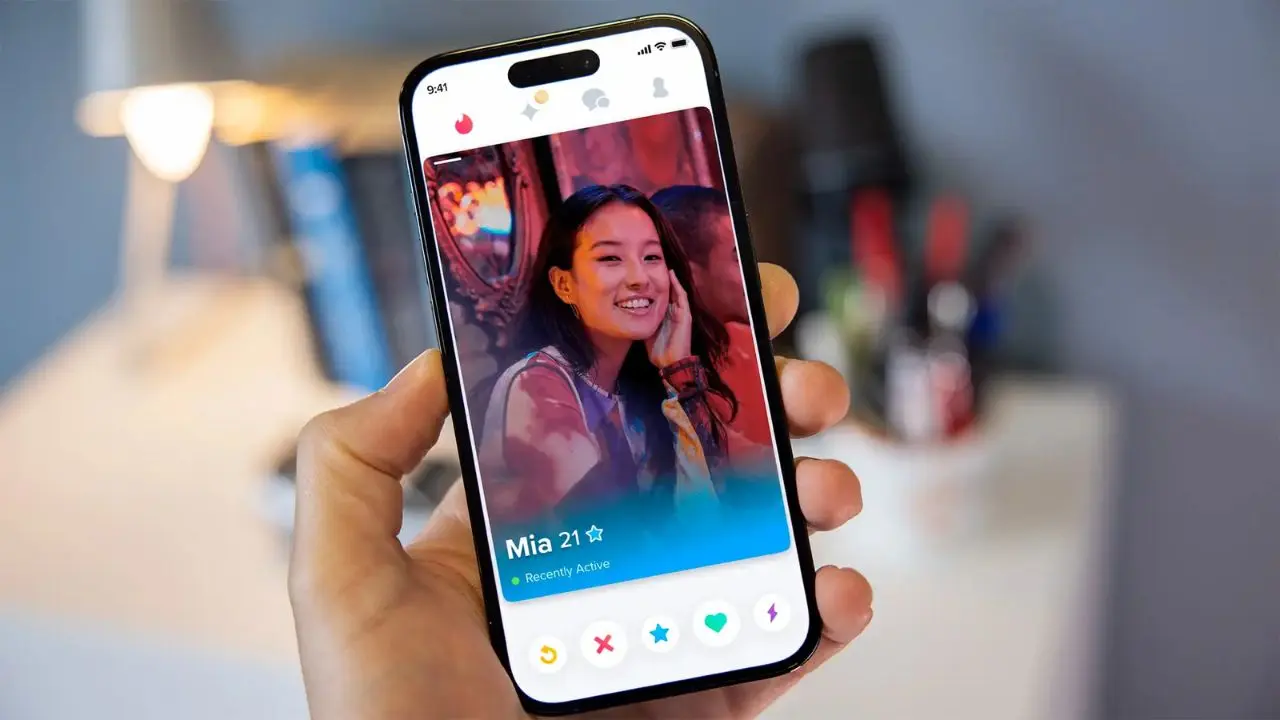
Understanding Tinder’s mechanics before you start swiping makes a meaningful difference in how you use it. The core loop is simple, but the details of how the algorithm responds to your behavior are worth knowing.
Setting Up Your Profile
Download the app and sign in using your phone number, Google account, or Apple ID. From there, you build your profile: up to 9 photos, a bio up to 500 characters, and optional details such as job, education, height, distance preference, age range, relationship goal, and personal interests.
The profile setup takes about five minutes, but the quality of what you put in determines a disproportionate share of your results. Tinder’s algorithm weights profiles with multiple clear, varied photos and a complete bio significantly higher than profiles with a single photo and no bio. Profile quality is genuinely the most important variable in your results on Tinder, more so than any subscription tier you might pay for.
Tinder’s Smart Photos feature automatically rotates your photos to lead with the one generating the most right swipes in real time, a genuinely useful passive optimization that requires no effort from you after initial setup.
The Swiping Experience
Your Discovery feed shows profiles within your set distance and age range. You swipe right to Like someone, swipe left to Pass, or swipe up to Super Like.
A Match happens only when both of you have swiped right on each other. At that moment, a chat thread opens, and either person can send the first message. Until that mutual match exists, neither person can contact the other.
The free tier limits your right swipes to approximately 50 per 12 hours; this is not officially confirmed, but it is widely consistent with user testing. That limit is deliberately set to create pressure to upgrade, not because the app genuinely needs to restrict swipes. However, paid tiers remove that limit entirely.
The Algorithm
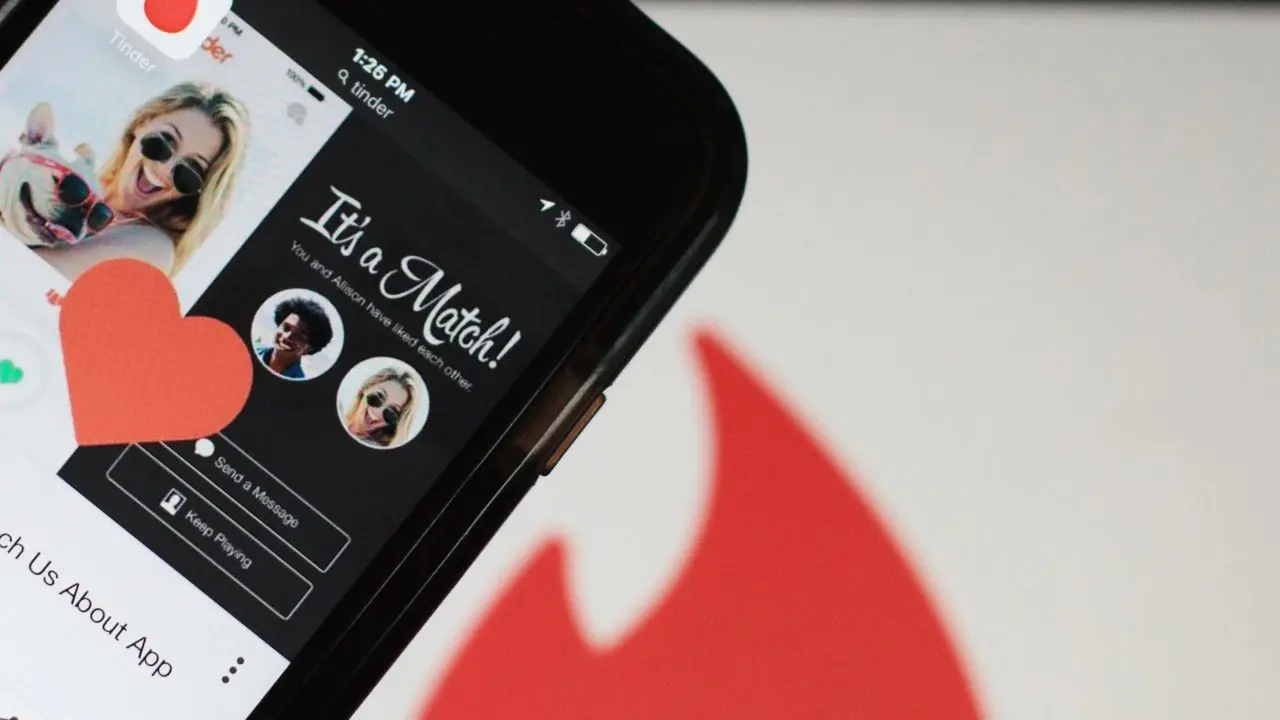
Tinder’s algorithm evolved beyond the original ELO-style scoring system to a more nuanced model. It weighs multiple signals simultaneously: how often your profile receives right swipes, your profile completeness, the recency of your activity, and how quickly you respond to matches.
Active users with complete profiles who respond to matches promptly are shown more potential matches; the algorithm rewards engagement over mere attractiveness. Consequently, a user with moderate photos who is active daily can outperform a user with excellent photos who opens the app once a week.
Tinder also introduced AI Chemistry matching in late 2025, an AI layer that analyzes your photos and behavioral patterns to suggest better-fit matches and automatically highlight your strongest photo. Additionally, the app now surfaces your bio and prompts more prominently on the first profile card, a design change aimed at reducing the shallow first-impression problem that has followed Tinder since its launch.
After Matching
Once matched, either person can send the first message, unlike Bumble, where women must initiate in heterosexual matches. The messaging interface supports text and GIFs; audio messages are available in some regions.
Matches don’t expire, but inactive conversations drift to the bottom of the list, and ghosting is a real and common experience on every dating app, including Tinder. However, the honest reality is that getting a match is not the same as getting a conversation, and getting a conversation is not the same as getting a date; each step requires its own effort.
Tinder Key Features
Super Like
A Super Like immediately notifies the person and places a blue star on your profile when they view it, signaling that you expressed stronger-than-standard interest before they swiped on you. Free users get 1 Super Like per day. However, Gold users get 5 per day, and Platinum users get 3 per week, and can attach a message to each.
Super Likes work when they signal genuine, specific interest. Therefore, using them strategically on profiles where you see a real connection outperforms using them on every profile you find attractive. In addition, overusing them dilutes the signal and can come across as indiscriminate.
Boost
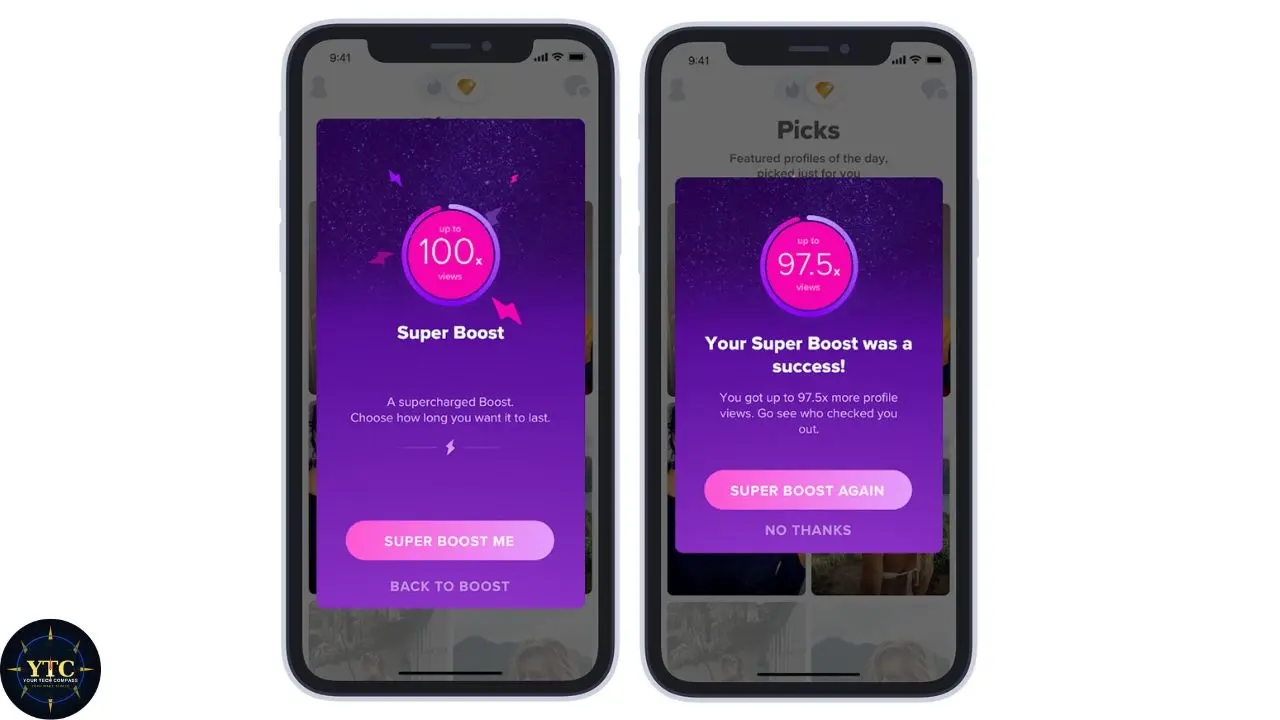
Boost pushes your profile to the top of the Discovery feed in your area for 30 minutes, significantly increasing visibility and match rate during that window. The most effective time to use a Boost is Tuesday through Thursday evenings between 6 pm and 9 pm, when Tinder usage is at its peak and the most users are actively swiping.
A Boost used during peak hours delivers dramatically more profile views than the same Boost used on a Sunday morning. Some subscription plans include 1 free Boost per month; additional Boosts cost approximately $7.99 each or less in packs.
See Who Likes You
This is Tinder’s most commercially important feature and the primary reason most users upgrade to Gold. On the free tier, people who have liked you appear as a permanently blurred grid. You can see they exist, but cannot identify them without liking them back through the standard Discovery feed.
However, Gold and Platinum reveal the grid completely, letting you proactively like back and convert existing interest into matches without swiping through the entire Discovery pool. The honest caveat: if you have few or no likes waiting in that grid, revealing it changes nothing. This is because the feature is most valuable for users who are already generating interest through a strong profile.
Rewind
Undo your last swipe. This is useful when you accidentally swipe left on someone you meant to Like. However, it’s available only on Gold and Platinum.
The free tier has no undo functionality.
Passport
Change your location to anywhere in the world and swipe in that city before you arrive. However, this feature is available on Gold and Platinum.
It’s genuinely useful for travelers who want to set up conversations with locals before landing. Tinder’s global user base makes this feature meaningfully valuable in a way that competing apps’ location features aren’t.
Message Before Matching (Platinum Only)
Send a short message with a Like before a match to make it mutual. The recipient sees your message alongside your profile when deciding whether to match with you.
Tinder’s own data suggests this feature increases match rates by approximately 25% when the message references something specific in the recipient’s profile; generic openers produce minimal improvement. This feature is most effective in dense urban markets where standing out from the volume of competing profiles matters.
Priority Likes (Platinum Only)
Your likes appear before those of non-Platinum users in the potential matches queue. In cities with very high user density, this means the person you liked sees your profile sooner, before their attention shifts elsewhere and before the queue of competing likes grows further.
The value of this feature scales directly with market density. Therefore, in smaller markets, it provides minimal advantage.
Tinder Pricing and Subscription Plans
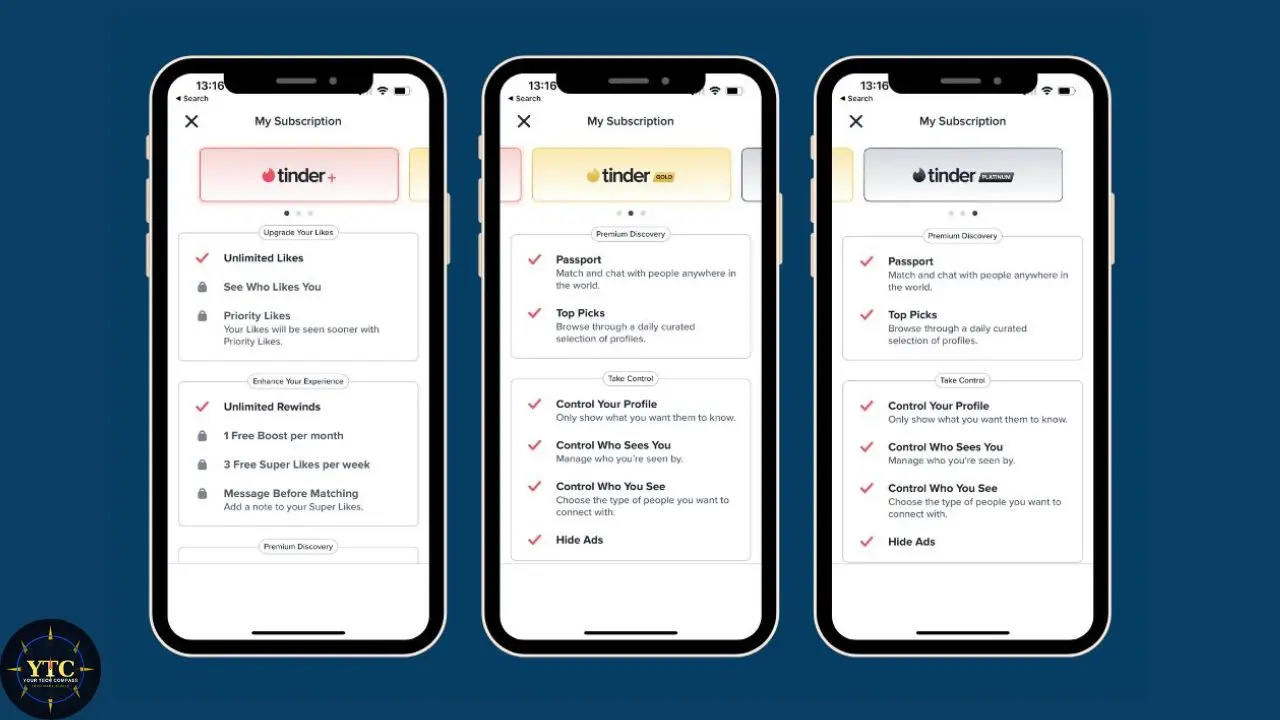
Tinder’s pricing structure is deliberately complex, and costs vary by age, region, and whether you’re a new or returning user. Here’s the framework you need to understand before paying anything.
Plan | Monthly Cost | Key Features Added |
Free | $0 | ~50 likes/12hrs; 1 Super Like/day; blurred likes grid; basic messaging |
Tinder Plus | ~$24.99/month | Unlimited likes; Rewind; Passport; 5 Super Likes/week; no ads |
Tinder Gold | ~$39.99/month | All Plus features + See Who Likes You; Top Picks; 1 Boost/month |
Tinder Platinum | ~$49.99/month | All Gold features + Message Before Matching; Priority Likes; Read Receipts |
Important Pricing Notes
Monthly billing is significantly more expensive than 6- or 12-month plans. Additionally, annual commitments can reduce the effective monthly cost by 50–67%.
Tinder uses dynamic pricing: users over 30 are charged more than users under 30 for the same tier, and returning subscribers sometimes pay more than new users. Therefore, always check the app directly for your current pricing before purchasing.
Introductory promotional pricing for new users is common and worth waiting for if you’re not in a rush.
The Honest Breakdown
Tinder Plus is the right starting tier if you primarily need unlimited swipes and Passport. However, Gold is the tier most paying users should be on. In addition, See Who Likes You is the only feature that fundamentally changes how you use the app, and Top Picks plus the monthly Boost add meaningful value.
Platinum makes sense specifically in competitive urban markets where Priority Likes and Message Before Matching provide a measurable edge over the field. However, for rural users and smaller markets, the incremental benefit of Platinum over Gold rarely justifies the price difference.
Tinder vs Competitors
Feature | Tinder | Hinge | Bumble |
Monthly Active Users | ~50 million+ | ~30 million+ | ~40 million+ |
Free Tier Quality | ⚠️ Limited (50 likes/12hrs) | ✅ Strong (8 likes/day + see 1 like) | ✅ Solid (matching + messaging) |
Who Messages First | Anyone | Anyone | Women first (heterosexual) |
Subscription Price | ~$40/month (Gold) | ~$30/month (Hinge+) | ~$25/month (Boost) |
Algorithm Focus | Volume + engagement | Compatibility (Gale-Shapley) | Volume + women-first filter |
User Intent | Mixed (casual + serious) | 87% serious relationships | Relationship-focused |
Best For | Maximum user pool | Intentional dating | Women’s inbox control |
Countries | 190+ | 20+ | 150+ |
Tinder vs Hinge
Tinder’s advantage is raw scale: 50+ million monthly users versus Hinge’s 32 million, which means a larger local pool in virtually every market. However, Hinge’s 87% serious-relationship user base and prompt-based profile format produce higher-quality conversations from first contact. Additionally, Hinge’s free tier is more generous: 8 likes per day and the ability to see who liked you one at a time without paying.
The choice depends on whether you prioritize volume (Tinder) or intent and conversation quality (Hinge). Research shows that 35% of app-met married couples used Hinge, compared with 25% for Tinder, reflecting a difference in user intent.
Tinder vs Bumble
Bumble’s 55% female / 45% male gender ratio is significantly more balanced than Tinder’s 67% / 33% male-skewed split, which matters practically for male users. Additionally, Bumble’s women-message-first rule reduces the volume of low-effort messages women receive and produces more intentional opening conversations.
Tinder, however, allows anyone to message first and has a substantially larger global user base. Bumble’s paying user base declined by 16% in Q3 2025, signaling platform challenges Tinder doesn’t currently face on the same scale. Therefore, for users who want maximum options, Tinder is the stronger choice; for women who want more control over their inboxes, Bumble is the stronger choice.
Tinder Safety Features
Tinder has invested significantly in safety infrastructure over the past few years, more so than its earlier reputation suggested. Here’s what’s actually available.
Photo Verification is available via a selfie-based process in which you take a real-time photo matching a specific pose. Verified profiles display a blue checkmark, which signals to other users that the profile photo matches the person in real life. Tinder is also piloting government ID verification in select markets as of 2025, a significant step toward reducing fake profiles. Bumble’s research on a comparable feature found that verified profiles are 56% more likely to receive matches, which means verifying your own profile benefits you and helps protect others.
Noonlight Integration (US) is a safety check-in system available through the Tinder app before first dates. You share date details (who you’re meeting, where, and when), and a discreet alert system monitors your safety during the meeting.
Share My Date lets you share those same details with a trusted contact through the app. In addition, LGBTQ+ Traveler Alerts warn users in regions with laws criminalizing same-sex relationships and offer the option to hide their profile automatically in those areas.
Beyond in-app tools, the standard safety practices apply regardless of which platform you use: meet first dates in busy public locations, tell someone where you’re going before you go, and trust your instincts if a conversation or situation feels wrong. For more practical tech guides on staying safe and organized across digital platforms, our tech guides section covers a broad range of relevant topics.
Tips for Getting Better Results on Tinder
Profile quality drives more of your results on Tinder than any subscription tier does, and most users underinvest in their profiles while overinvesting in paid features. These are the changes that actually move the needle.
Your First Photo Is Your Most Important Decision
It needs to be clear, well-lit, recent, and show you as the only person in the frame. No sunglasses; eye contact builds connection, and sunglasses eliminate it.
Additionally, a genuine smile outperforms a posed expression. This single photo determines whether someone stops to look at your profile or swipes left in half a second.
Include At Least 4 to 6 Photos
A smiling headshot, an activity photo, a social context photo, and a full-body photo together tell a more complete story than four similar selfies. Profiles with 6 or more varied photos perform measurably better than profiles with 1 to 3 photos across every metric Tinder tracks. Additionally, write a bio that gives someone a specific reason to swipe right. For instance, “I make a genuinely good risotto” or “Ask me about my worst hiking decision” creates a conversation hook that generic statements like “love to travel, good vibes” never do.
Use Your Boost Strategically, Not Impulsively
Tuesday through Thursday evenings between 6 pm and 9 pm are peak hours for Tinder usage across most markets. A Boost used at 10 pm on a weeknight reaches more active users than the same Boost used on a Saturday afternoon when your target demographic is doing something other than swiping. Additionally, respond quickly to new matches; the algorithm rewards active engagement and keeps active conversations higher in both users’ feeds.
Is Tinder Worth It?
The honest verdict varies significantly by how you use the app and where you live. Therefore, for:
Free Users
Start here before paying anything. The free tier is deliberately limited, but two weeks on it in your local market tell you more about whether Tinder is worth paying for than any review can.
If you’re matching on the free tier, a subscription will accelerate those results. However, if you’re matching on nothing, a subscription will reveal why (either the market is thin, or the profile needs work), and knowing which one saves you from paying repeatedly for the wrong reason.
Gold Subscribers
Gold is worth it specifically for See Who Likes You; that single feature changes how you use the app from passive and uncertain to active and informed. And, if you’re in an active urban market and generating interest, Gold converts that interest into matches more efficiently than swiping through the Discovery feed alone.
Gold also includes 1 monthly Boost and 5 weekly Super Likes, which add genuine value for consistent users. Gold at $39.99/month on a monthly plan is expensive; the 6- or 12-month commitment significantly lowers the effective monthly cost and is the right choice if you know you’ll use the app consistently.
Platinum
Platinum’s Message Before Matching is a meaningful advantage in competitive markets like New York, London, or Sydney, where your profile competes with a very high volume of other users in your target’s feed. The 25% increase in match rate that Tinder associates with the feature is real when the message is specific and compelling; generic messages produce no improvement.
For users outside dense urban markets, the incremental benefit of Platinum over Gold rarely justifies the $10+ monthly premium.
The Geographic Reality
Tinder’s value scales directly with local user density. In major cities and university towns, it’s one of the most effective ways to meet people. In rural areas and smaller cities, the active pool thins significantly, and no subscription changes that fundamental constraint.
FAQs
Yes, Tinder’s core features are free. You get approximately 50 likes per 12 hours, 1 Super Like per day, and messaging with mutual matches at no cost. The free tier deliberately blurs who liked you and limits swipes to push users toward paid tiers. The paid experience is meaningfully better, but the app is functional without paying.
Tinder’s algorithm weighs profile completeness, how often your profile receives right swipes, the recency of your activity, and how quickly you respond to matches. Active, complete profiles with strong photos are shown to more users. The algorithm learns from your swiping patterns to show you profiles similar to the ones you’ve liked before. Therefore, paying for Gold or Platinum does not directly improve your algorithmic ranking; only Boosts and Platinum’s Priority Likes change your visibility in other users’ feeds.
Both. But the culture skews casual in most markets. Tinder’s 2026 updates, including “dating modes” and AI Chemistry matching, are deliberate attempts to serve relationship-seeking users more explicitly. Whether Tinder works for relationships depends more on how you use it than on the platform itself. However, for a platform with a more explicitly relationship-focused user base, Hinge’s 87% serious-relationship user intent makes it the stronger choice. Our best dating apps guide covers that comparison in full detail.
The most common reasons are: your first photo isn’t compelling, your profile has fewer than 4 photos, your bio is blank or generic, you’re in a market with a thin active user base, or you’re outside the age range most active in your area. No subscription fixes a weak profile; paid features amplify what’s already working. They don’t create results from nothing. Therefore, focus on photos and bio first before spending money.
Final Thoughts
Tinder is the world’s largest dating app for reasons that remain entirely clear today; the user pool is unmatched, the swipe mechanic is intuitive and fast, and the global reach through Passport makes it the only platform that functions meaningfully across virtually every country on the planet. The free tier is available to paying users in active markets.
Gold’s See Who Likes You is the most commercially impactful single feature in any dating app subscription and is genuinely worth paying for if your profile is already generating interest. Platinum makes sense in competitive urban markets where Message Before Matching provides a specific, measurable edge. The honest limitation is the deliberate pay-to-win structure that frustrates free users more than it should, and the reality that subscription upgrades amplify results; they don’t create them.
If Tinder is your first dating app, start with the free tier for two weeks, invest in your photos and bio before touching your wallet, and upgrade to Gold only once the free tier is producing results worth accelerating. If you’re evaluating Tinder alongside alternatives, our apps and tools section covers the full landscape of apps worth comparing, and our best Google Play Store apps guide is worth exploring if you’re building out your phone’s app setup more broadly.
Ready to explore more? Visit YourTechCompass for hands-on reviews, buying guides, and how-to articles that cut through the noise and give you exactly what you need.