Choosing the right domain registrar can make or break your long-term website strategy. And with so many registrars offering confusing pricing, hidden add-ons, and upsells, it’s easy to feel overwhelmed. That’s where Cloudflare Registrar stands out. It promises no markup on domain registration and renewal fees while also giving you access to Cloudflare’s security-first ecosystem. This combination has made it one of the most talked-about registrars among developers, businesses, and website owners seeking a transparent, performance-focused solution.
In this detailed Cloudflare Registrar review, I’ll walk you through how it works, what makes it different, and whether it truly lives up to its “no-nonsense” reputation. You’ll also see how it compares to popular alternatives and whether it works well for beginners, small businesses, and large-scale site owners.
What Is Cloudflare Registrar?
Cloudflare Registrar is the domain registration service offered by Cloudflare, the same company known for its CDN, DNS, and web security infrastructure. Unlike traditional registrars that often add markups, upsells, and hidden renewal fees, Cloudflare Registrar operates on a wholesale model: you only pay what the registry and ICANN charge.
That pricing philosophy means registration and renewal costs remain stable over time. Additionally, Registrar integrates natively with Cloudflare’s DNS, CDN, and security stack, giving you a streamlined, security-first setup if you’re already using Cloudflare’s other tools.
Key Features of Cloudflare Registrar
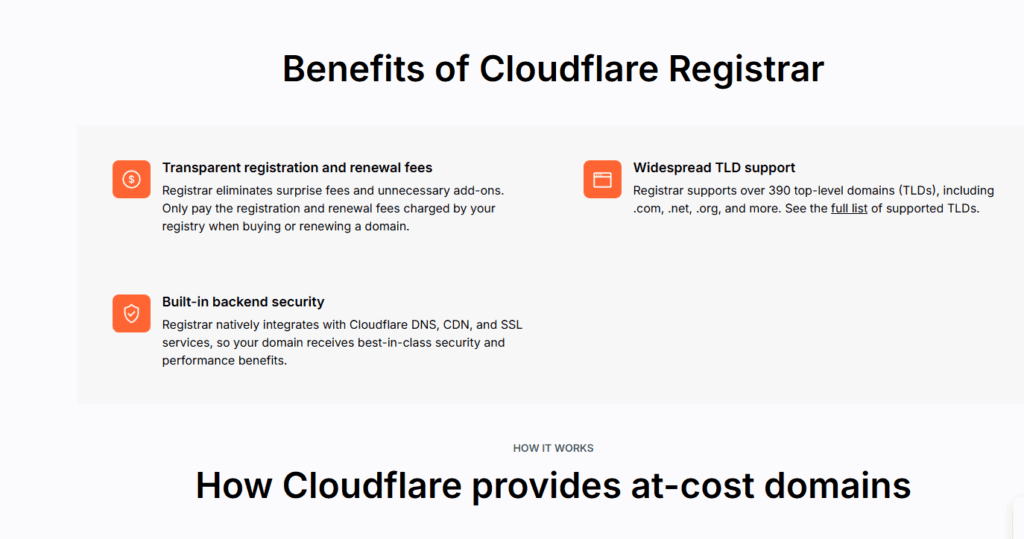
Here are the main benefits that set Cloudflare Registrar apart:
- Wholesale Pricing with No Markup: You pay only the registry and ICANN fees, both at registration and renewal.
- Free Automatic DNSSEC: One-click DNSSEC activation for all domains, protecting against DNS spoofing and man-in-the-middle attacks.
- Free WHOIS Privacy / Privacy Protection (where supported): Hides your personal registrant information from public WHOIS databases.
- Seamless Integration with Cloudflare DNS, CDN, and Security Stack: Ideal if you already use Cloudflare for hosting, performance, or security.
- Auto-Renewal at Wholesale Price: No surprise renewal hikes, avoiding a common trap many registrars use to squeeze users later.
- Registry Lock and Strong Registrar-Level Security Features: Helps prevent unauthorized domain transfers or hijacking.
Cloudflare Registrar Pricing Explained
Cloudflare Registrar’s main selling point is transparent pricing. Because Cloudflare does not add a markup, you pay only the base registry price plus any required ICANN fees. For many common domains (like .com), that translates into one of the lowest ongoing costs among domain registrars.
This “at-cost” model differs markedly from many registrars who offer low first-year prices but raise renewal fees significantly, sometimes doubling or tripling them over time.
Because renewal costs remain predictable, Cloudflare Registrar is particularly attractive to site owners managing multiple domains or long-term projects, where compounding increases from other registrars add up.
Comparison Table: Cloudflare Registrar vs Other Popular Registrars
Feature / Registrar | Cloudflare Registrar | Typical Registrar (e.g., Namecheap, GoDaddy) |
Pricing Model | Wholesale (no markup) | Markup + promotional pricing |
Renewal Price | Same as registration cost | Often much higher than the promo rate |
WHOIS Privacy | Included (where allowed) | Often extra cost |
DNSSEC | Free, one-click | May require manual setup or a paid add-on |
Upsells / Add-ons | None | Frequent (SSL, hosting, privacy, upsells) |
Integration with CDN/DNS/Security | Tight (if using Cloudflare) | Separate services or add-ons |
Nameserver Flexibility | Must use Cloudflare DNS | You can usually choose any DNS provider |
Best For | Developers, security-conscious, multi-domain users | General users, beginners, and domain investors |
This comparison highlights where Cloudflare Registrar shines: cost predictability, security, and a clean, minimal approach. Meanwhile, traditional registrars offer more flexibility and broader TLD support, but often at the cost of complexity, recurring expenses, and upsells.
Ease of Use and User Experience

If you’re already familiar with Cloudflare’s dashboard, perhaps you’re using their CDN or DNS; moving into Registrar feels natural and clean. The interface is minimal and developer-friendly; there are no flashy upsells or bundled extras pushing you into unnecessary add-ons.
Registering a new domain or transferring an existing one involves the standard domain-transfer steps (unlock the domain at the existing registrar, obtain EPP code, initiate transfer, wait for confirmation). Cloudflare handles renewal and management automatically with consistent pricing, a notable advantage for long-term domain management.
On the downside, this minimalism may feel bare-bones to beginners who expect bundled extras like email hosting, domain-based email, or one-click website builders. If you prefer a “full service” registrar experience with hosting/email bundles, Cloudflare Registrar might feel too stripped-down.
Performance & Security Benefits
Because Cloudflare Registrar is part of the broader Cloudflare ecosystem, your domain directly benefits from Cloudflare’s global Anycast network, fast DNS resolution, DDoS protection, and security infrastructure.
Activating DNSSEC is easy and free, which helps guard against DNS spoofing attacks by cryptographically signing your DNS records. This layering of security is especially important if you’re running sensitive services, handling user data, or operating in a high-risk niche.
For websites that care about performance and security, such as news sites, SaaS platforms, or business portals, having registrar, DNS, and CDN under one roof simplifies administration and reduces the attack surface.
Pros & Cons of Cloudflare Registrar
The Pros
- Transparent wholesale pricing, no hidden fees or renewal markups.
- Free WHOIS privacy (when supported) and DNSSEC protection.
- Seamless integration with Cloudflare DNS, CDN, and security tools.
- Clean, no-upsell user experience, ideal for developers and security-conscious site owners.
- Stability and predictability: renewal costs don’t spike.
The Cons / Limitations
- You must use Cloudflare’s nameservers and DNS; no third-party DNS support while using Cloudflare Registrar.
- Not all top-level domains (TLDs) are supported; some rare or country-specific extensions may be excluded.
- No bundled services: no hosting, no email, no website builder; you may need additional services elsewhere.
- Less friendly for beginners who expect “all-in-one” domain + hosting + email services.
Should You Use Cloudflare Registrar?
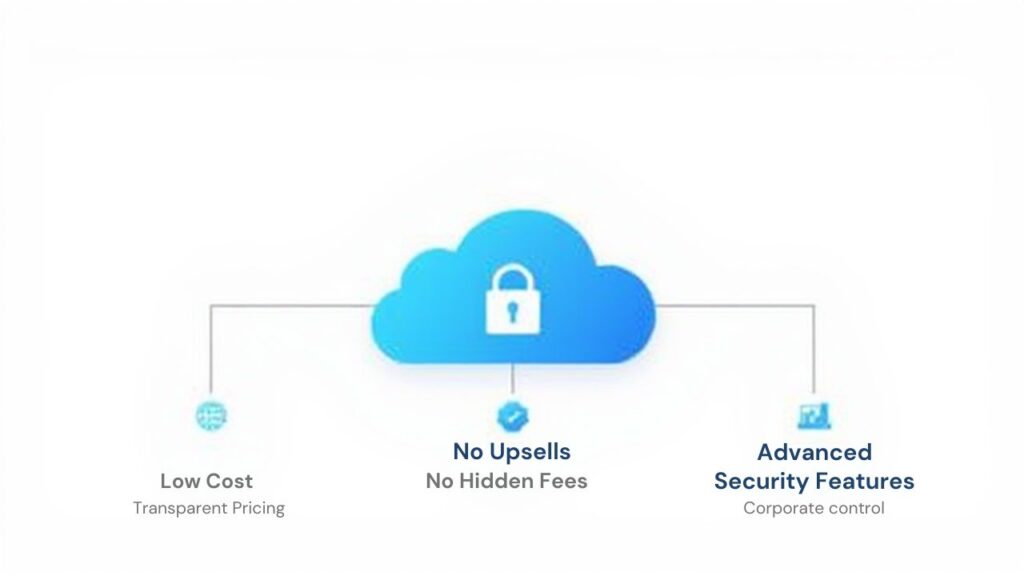
If you value cost-effectiveness, security, and simplicity, Cloudflare Registrar is an excellent choice. It’s especially compelling if:
- You already use Cloudflare DNS/CDN/security.
- You manage multiple domains and want to avoid renewal price hikes.
- You prioritize domain security (DNSSEC, WHOIS privacy, registry lock).
- You are comfortable managing DNS records yourself (A, MX, etc.).
On the other hand, if you need full-featured services like email hosting, website builders, or flexibility with nameservers and TLDs, or if you prefer bundled extras, you might consider a more traditional registrar.
How Cloudflare Registrar Differs from Cloudflare DNS (Important Distinction)
It’s important to understand that Registrar and DNS are separate services, although Cloudflare offers both. Registrar handles domain ownership and renewal, while DNS handles how the domain resolves to your site. Using Cloudflare Registrar locks you into Cloudflare’s DNS by default, which provides tight integration and security. But if you prefer a different DNS provider, Cloudflare Registrar may not fit your needs.
That coupling makes sense if you want a unified infrastructure. But it’s a trade-off: you lose some flexibility in nameserver choice, which can matter for advanced hosting setups or migrations.
How to Move Your Domain to Cloudflare Registrar
If you decide to move your domain to Cloudflare Registrar, here’s a quick summary of the steps:
- Unlock your domain at your current registrar and get the EPP (authorization) code.
- Initiate transfer in Cloudflare Registrar: Enter the EPP code and pay the wholesale fee.
- Wait for Confirmation: Transfer typically completes within a few days.
- Update DNS Records If Necessary: Ensure A, MX, CNAME, and other records are correctly configured.
- Enable DNSSEC and other security options within Cloudflare’s dashboard for immediate protection.
After that, your domain will renew each year at the same wholesale cost, with no surprise markups or hidden charges.
Alternatives Worth Considering
If Cloudflare Registrar doesn’t meet your needs (due to unsupported TLDs, need for email/hosting, or more DNS flexibility), other registrars remain strong contenders. Namecheap, for example, offers wide TLD coverage, domain-based email hosting, frequent promos, and a classic all-in-one registrar experience.
Meanwhile, registrars like Porkbun might offer more niche services or additional features, though often with the usual upsells and renewal markups common in the industry.
Conclusion
Cloudflare Registrar stands out as one of the most honest, security-focused domain registration services available today. With its wholesale pricing, free WHOIS privacy and DNSSEC, seamless Cloudflare integration, and zero upsells, it’s ideal for developers, security-minded site owners, and anyone managing multiple domains on a budget.
However, its limitations, namely fixed nameserver usage, limited TLD support, and lack of bundled extras like hosting or email, mean it may not suit everyone. If you value control, cost stability, and a streamlined, security-first setup, Cloudflare Registrar is worth serious consideration.
If you need a full-service package with hosting or more flexibility, a traditional registrar may suit you better. I recommend carefully evaluating your goals and, if they align with Cloudflare’s strengths, making the switch could save you money while improving security and simplifying your setup. For other tech news, check out the FBI warning to smartphone users & India’s Atomesus AI.
At Your Tech Compass, we publish practical guides and honest tech reviews to help users make smarter decisions.