Artificial intelligence is reshaping creative expression in ways many of us only imagined a few years ago, and one of the most intriguing developments in this space is Sora AI. This tool takes simple text prompts and transforms them into compelling video sequences. Whereas traditional video creation requires cameras, editing software, and extensive technical know-how, Sora AI leverages generative models to automatically translate written ideas into motion, sound, and imagery.
In this article, we’ll take a comprehensive look at what Sora AI is, how it works, its key features, practical applications for creators and businesses, limitations to keep in mind, and where it sits compared with other text-to-video systems. By the end, you’ll understand not just the mechanics but the real-world implications of using Sora AI in your creative workflow.
What Is Sora AI?
At its simplest, Sora AI is an OpenAI artificial intelligence system that generates video content from written text prompts. Instead of capturing footage with a camera or piecing clips together in complex editing programs, you provide Sora AI with a description of what you want to see, and the system uses generative modeling techniques to create moving imagery that matches your vision.
This capability marks a significant step beyond static image generators and text-based assistants, seamlessly blending narrative understanding, visual synthesis, and temporal coherence to produce short video sequences. In contrast to tools intended solely for text generation (like Claude AI) or research-centric tools (such as Perplexity AI), Sora AI focuses specifically on transforming ideas into motion, opening new creative possibilities for storytellers, marketers, educators, and everyday users alike.
How Sora AI Works
Under the hood, Sora AI relies on complex deep learning architectures trained on vast amounts of video and audio data, though the specific details may vary by implementation. Broadly speaking, these models learn to associate patterns in text with visual and temporal patterns in video, enabling them to generate coherent sequences that match the structure of your prompt.
Here’s how the process typically unfolds:
- Input Interpretation: The AI first parses your text prompt, identifying objects, actions, emotions, and context.
- Scene Generation: It uses learned representations of motion, object behavior, and framing to plan out visual sequences.
- Rendering: The model synthesizes pixels and frames that evolve over time to reflect movement, lighting, and scene transitions.
- Audio (Optional): Some implementations can generate or suggest accompanying soundtracks or effects to enhance the experience.
While this might sound magical, it’s actually grounded in the same generative modeling principles that power modern image and text generators, such as the multimodal capabilities discussed in our How Gemini AI Works article, but extended to capture time as well as space.
Key Features of Sora AI
Sora AI brings several distinct capabilities to the forefront of creative automation:
Text-To-Video Generation
The core appeal of Sora AI is its ability to translate written ideas into moving visuals. You describe a scene, perhaps a sunset over rolling hills with gentle music, or an animated character delivering a message, and Sora AI interprets and renders that into video.
Contextual Coherence
Unlike early generative systems that produced short, disjointed clips, Sora AI focuses on temporal understanding, meaning it maintains consistency of objects, motion, and narrative flow over multiple seconds or minutes of footage.
Adjustable Parameters
Many models allow you to fine-tune stylistic elements such as pace, mood, and visual style, giving you greater control over the final output.
Rapid Prototyping
Sora AI can help creators iterate quickly, producing drafts of video concepts without the time and cost requirements of traditional production.
Together, these features make the platform more than a novelty; it becomes a functional tool for video conceptualization and storytelling.
What Sora AI Is Best Used For
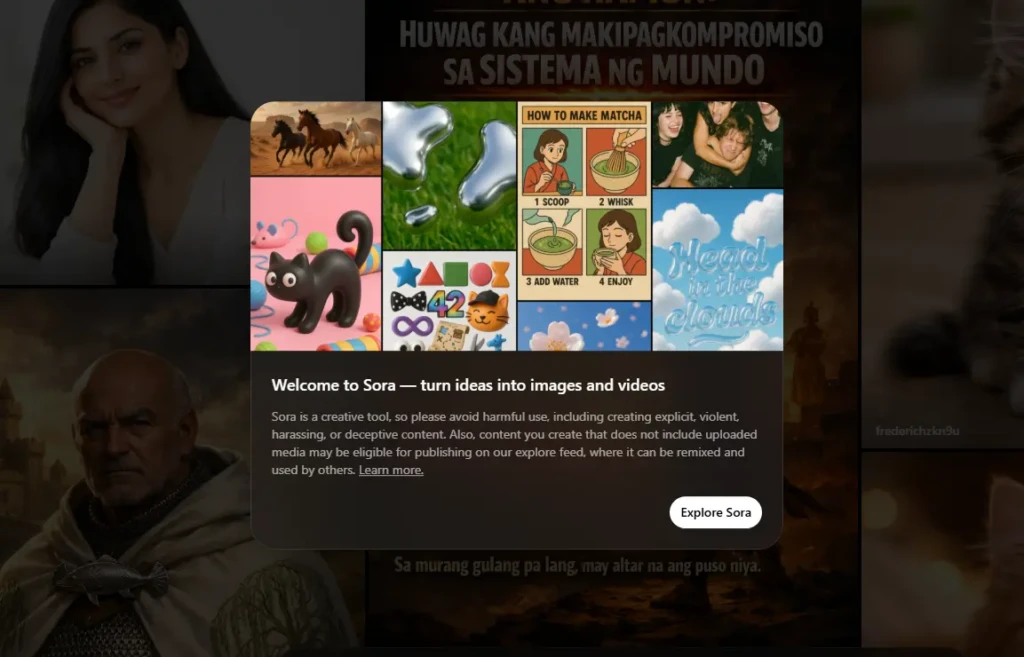
Although Sora AI isn’t poised to replace professional filmmakers overnight, it excels in several high-value creative tasks:
Creative Storytelling
For writers and creators, Sora AI can generate visual interpretations of written scenes, assisting with storyboarding or conceptual visualization.
Marketing And Advertisements
Brands can use these models to rapidly produce short promotional videos without needing a full production crew or complex editing pipeline.
Educational Videos
Teachers and creators can generate explanatory videos that bring abstract concepts to life, making lessons more engaging and accessible.
Concept Visualization
Startups, architects, and designers can use Sora AI to communicate ideas to stakeholders without waiting for professional video production.
By reducing barriers to visual creation, Sora AI democratizes access to compelling video content.
Sora AI for Creators and Businesses
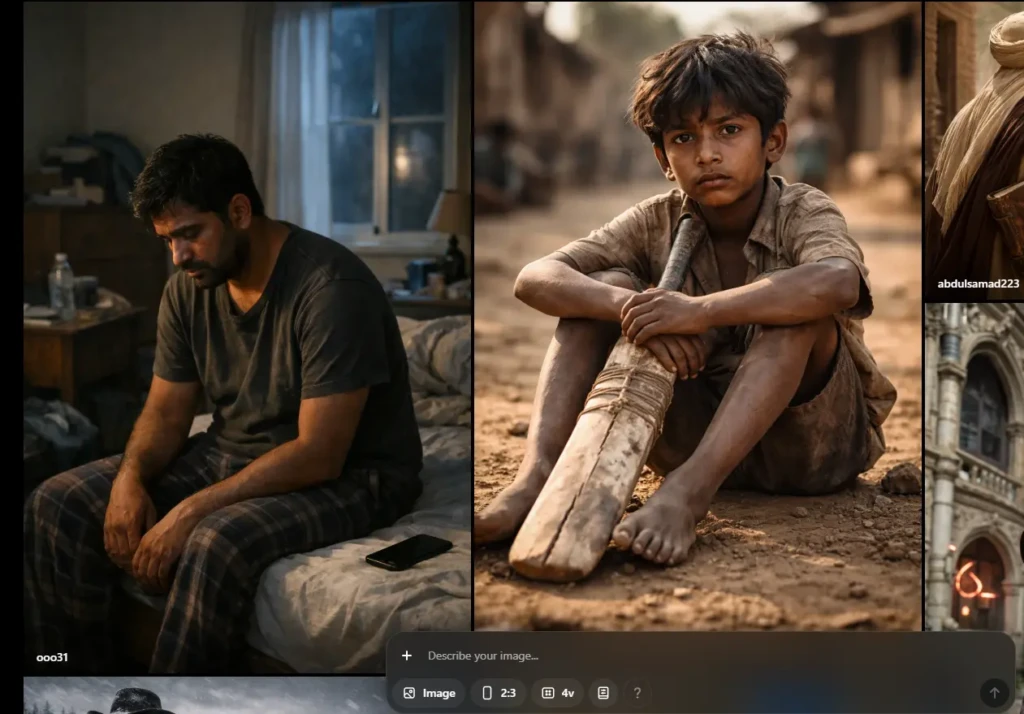
In practical terms, Sora AI can signal a shift in how content is produced:
- Content creators can experiment with narrative ideas quickly, enabling more iteration and creativity at lower cost.
- Small businesses and agencies can prototype marketing material without contracting external video producers.
- Educators and trainers can make dynamic learning materials with less technical overhead.
Compared with traditional video production, where scripting, filming, and editing can take days or weeks, the ability to generate video from text in minutes is transformative.
However, real-world usage also brings trade-offs, such as fine-tuning outputs and ensuring generated content aligns with messaging goals.
Sora AI Limitations and Challenges
Despite its promise, Sora AI has real limitations:
Realism and Fidelity
Text-to-video models still lag behind human-produced footage in lifelike animation and detail, especially in complex scenes.
Prompt Sensitivity
The quality of output often hinges on how well you craft prompts. Vague or overly broad descriptions can yield incoherent or unhelpful results.
Output Length
Most current implementations produce short sequences; generating longer narratives with consistent quality remains a challenge.
Understanding these limitations helps set reasonable expectations and informs the workflows where Sora AI delivers the most value.
Ethical, Copyright, and Safety Considerations

As with all generative AI, Sora AI raises ethical questions:
- Deepfake Concerns: If misused, text-to-video tools could create misleading or harmful content.
- Copyright and Training Data: Many generative models are trained on large datasets with unclear licensing parameters, raising questions about ownership and reuse rights.
- Content Moderation: Platforms must implement safeguards to prevent harmful or inappropriate output.
Responsible use means applying these tools for constructive purposes and remaining aware of legal and ethical boundaries.
Sora AI vs Other AI Video Tools
To help clarify Sora AI’s position, here’s a comparison with other leading tools and approaches:
Feature | Sora AI | Traditional Video Production |
Ease of Use | High (text prompts) | Low (requires camera/editing) |
Speed | Fast | Slow |
Output Quality | Moderate | High |
Cost | Lower | High |
Creativity Control | Moderate | High |
Traditional video production still leads in visual fidelity and control. Still, Sora AI and other text-to-video systems offer speed and accessibility that are compelling for rapid prototyping and conceptual work.
Sora AI Pricing and Access
Access models vary by provider, but most platforms offer:
- Free trial or limited access to experiment with basic prompts.
- Subscription tiers that unlock longer sequences, higher resolution, and priority usage.
- Enterprise options for business users needing advanced features or custom integrations.
As the space evolves, pricing and capabilities are likely to change rapidly, so checking the official Sora AI provider page for current plans is recommended.
Is Sora AI Worth Paying Attention To?
If you’re a creator, storyteller, marketer, or educator, Sora AI represents a new frontier in creative tooling. Its ability to generate video from text can accelerate ideation, save production costs, and expand the range of content you can produce.
However, it’s not a replacement for traditional tools when high production value or nuanced control is essential. Instead, think of Sora AI as a powerful complement, ideal for early drafts, prototypes, and exploration.
Final Thoughts
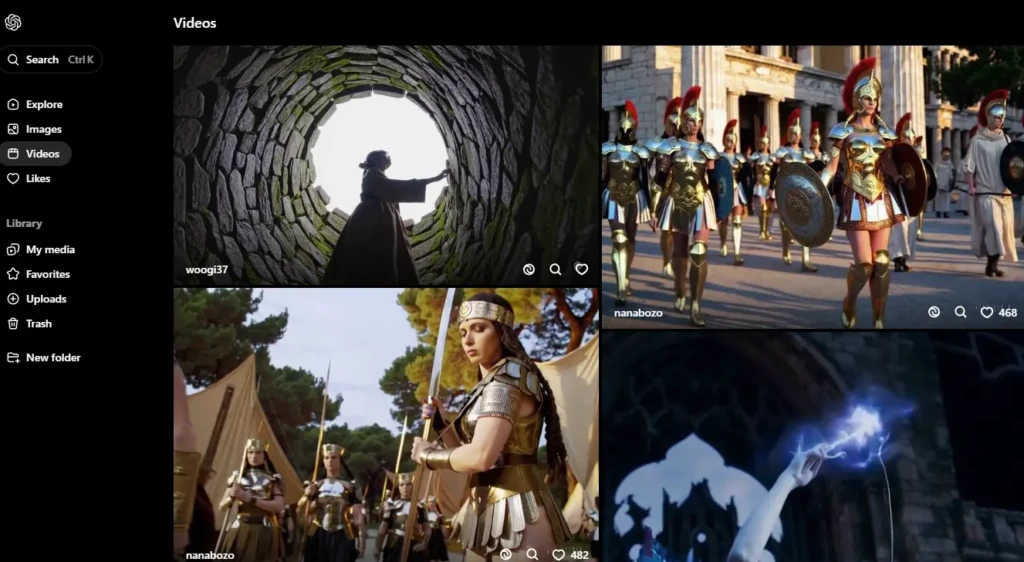
Sora AI marks a meaningful step forward in how we create, visualize, and communicate ideas through video. By translating natural language directly into motion, it offers an accessible, fast, and imaginative way for creators and businesses to bring stories to life without traditional barriers.
While it isn’t a wholesale replacement for professional filmmaking, it expands the toolkit available to anyone who thinks visually. When paired with other AI tools, whether for research, reasoning, or structured text generation, it becomes part of a broader ecosystem that reshapes our creative workflows. Looking ahead, the continued evolution of video generation will likely make tools like Sora AI even more capable, and I hope this guide gives you a grounded understanding of how it works and where it can add real value.
FAQs
Sora AI generates short videos from text prompts, combining motion, visuals, and sometimes sound based on descriptive input.
Access may vary depending on the provider or platform offering Sora AI services; some offer limited free access, while others require subscription plans.
Not entirely. Traditional production still delivers the highest fidelity and control, but Sora AI can greatly reduce time and cost for early concept creation.
Like all generative AI, it should be used responsibly, respecting copyrights and avoiding the creation of harmful or deceptive content.
At Your Tech Compass, we publish detailed tech guides, reviews, and comparisons to help users choose the right devices and tools.