Artificial intelligence assistants have rapidly shifted from novelty to necessity, and among the newer wave of models, Claude AI stands out for its blend of power, safety, and conversation quality. Unlike early assistants that felt scripted or limited, Claude AI aims to interpret complex prompts, handle long context, and assist with tasks ranging from writing and summarization to research and collaboration. As the AI landscape grows more crowded, with tools like Perplexity AI, Character AI, and Gemini AI offering complementary capabilities, understanding where Claude fits can help you choose the right assistant for your needs.
This guide gives you the version of Claude AI that actually exists right now; the current model lineup (Opus, Sonnet, and Haiku), what each one actually costs, the 1-million-token context window that changes what’s practically possible in a single conversation, Claude Code and how it’s reshaping AI-assisted software development, and the honest comparison against ChatGPT, Gemini, Perplexity, and Character AI that tells you which tool actually fits which job. By the end, you’ll understand not just what Claude does, but specifically which version of Claude you should be using and what it should reasonably cost you.
A note before we begin: every YTC score is earned, never negotiated. If you want to understand exactly how we evaluate apps & tools and how we handle affiliate relationships, our Review Methodology lays it all out.
What Is Claude AI?
Claude AI is a family of large language models developed by Anthropic, a research company founded specifically to focus on AI safety and alignment. Available as a chatbot and assistant at claude.ai (directly comparable in everyday use to ChatGPT), Claude has become one of the two or three AI assistants that serious developers and businesses actually rely on daily, not as a backup option but as their primary tool.
What distinguishes Claude’s design philosophy is the deliberate blend of raw capability with caution: Anthropic has consistently optimized for fewer hallucinations and more reliable outputs rather than simply chasing the highest benchmark score at any cost. That approach has paid off specifically in two areas that matter enormously in practice: coding and long-document work, which is precisely where Claude has built its strongest reputation among professional users.
In the broader AI landscape, Claude sits alongside tools like Perplexity AI (focused on research and source citation), Character AI (focused on persona-driven roleplay), and Gemini AI (Google’s multimodal generalist). Claude’s specific position in that landscape is as the generalist most trusted for coding, long-context reasoning, and nuanced writing, a reputation earned through measurable benchmark performance rather than marketing positioning.
The Claude Model Family: Opus, Sonnet, and Haiku Explained
This is the section most “Claude explained” content skips entirely, and it’s the single most practically important thing to understand before you use the product at all. Claude isn’t a single model; it’s three, each built for a different job and priced dramatically differently.
Claude Opus

This is the most capable tier built for complex reasoning, advanced coding, and long-horizon agentic tasks where raw intelligence matters more than speed or cost. The current flagship, Opus 4.8, was released in late May 2026 with adaptive thinking capabilities and a new Fast Mode that makes premium-speed inference meaningfully cheaper than previous Opus generations. Opus’s GPQA Diamond score (a graduate-level science reasoning benchmark) is the highest published score among comparable models, reflecting genuinely frontier-level reasoning capability.
Claude Sonnet
This is the balanced workhorse, and for most people and most tasks, it’s the right default. Sonnet 4.6, released in February 2026, delivers strong coding performance and computer-use capabilities at roughly five times the cost of Opus. Notably, according to Anthropic’s own announcement, developers using Claude Code preferred Sonnet 4.6 over the previous flagship Opus 4.5 in most head-to-head comparisons, a meaningful signal that “more expensive” doesn’t automatically mean “better for your specific task.”
Claude Haiku
This is the fastest and cheapest tier, built for simple, high-volume tasks where speed and cost matter more than maximum reasoning depth. It supports classification, routing, extraction, and summarization at scale. Haiku 4.5 delivers near-frontier intelligence at the lowest price point in the current generation, making it the right choice for production workloads processing large volumes of straightforward requests.
The Practical Decision Framework
Use Opus when the task genuinely requires the deepest reasoning available and cost is secondary. Use Sonnet as your default for the large majority of writing, coding, and analysis work. Use Haiku when you’re processing high volumes of simpler tasks where latency and cost dominate the decision.
How Claude AI Works
Claude operates on a large language model architecture: neural networks trained on extensive text data that learn to interpret input, reason about context, and generate coherent, contextually appropriate responses, rather than relying on fixed rules or scripted templates.
Several specific mechanisms define how Claude approaches a request. They include:
- Natural language comprehension breaks complex, multi-part queries into structured components rather than treating them as a single undifferentiated block of text.
- Context retention maintains coherence across long conversations or extended documents without losing track of earlier details, a capability that becomes dramatically more powerful with the context window improvements covered next.
- Safety and alignment filtering reduce harmful, biased, or inappropriate outputs, reflecting Anthropic’s founding focus.
- Task generalization allows the same underlying model to move fluidly between storytelling, code generation, data analysis, and structured business writing without needing separate specialized tools for each.
The 1 Million Token Context Window: Why It Actually Matters
This is the single most consequential technical capability in Claude’s current generation, and it deserves a direct explanation of what it means in practice. Opus 4.8 and Sonnet 4.6 both support a 1-million-token context window, roughly equivalent to 3,000 pages of text, or an entire mid-sized software codebase, at standard pricing, with no special surcharge for using the full window.
In practical terms, this eliminates a problem that has long defined working with AI: chunking. Previously, if you wanted an AI to understand an entire codebase, a full textbook, or months of accumulated business data, you had to break it into pieces and hope the model could reconstruct the full picture from fragments, often using a separate retrieval system to manage the process. With a 1-million-token window, you can simply hand Claude the entire codebase, the entire textbook, or the entire dataset in one conversation; no chunking, no retrieval pipeline, no lost context between fragments. For anyone doing serious document analysis, codebase-wide refactoring, or research synthesis across many sources, this is a genuinely different category of capability, not an incremental improvement.
Claude Code: Claude’s Dedicated Coding Product
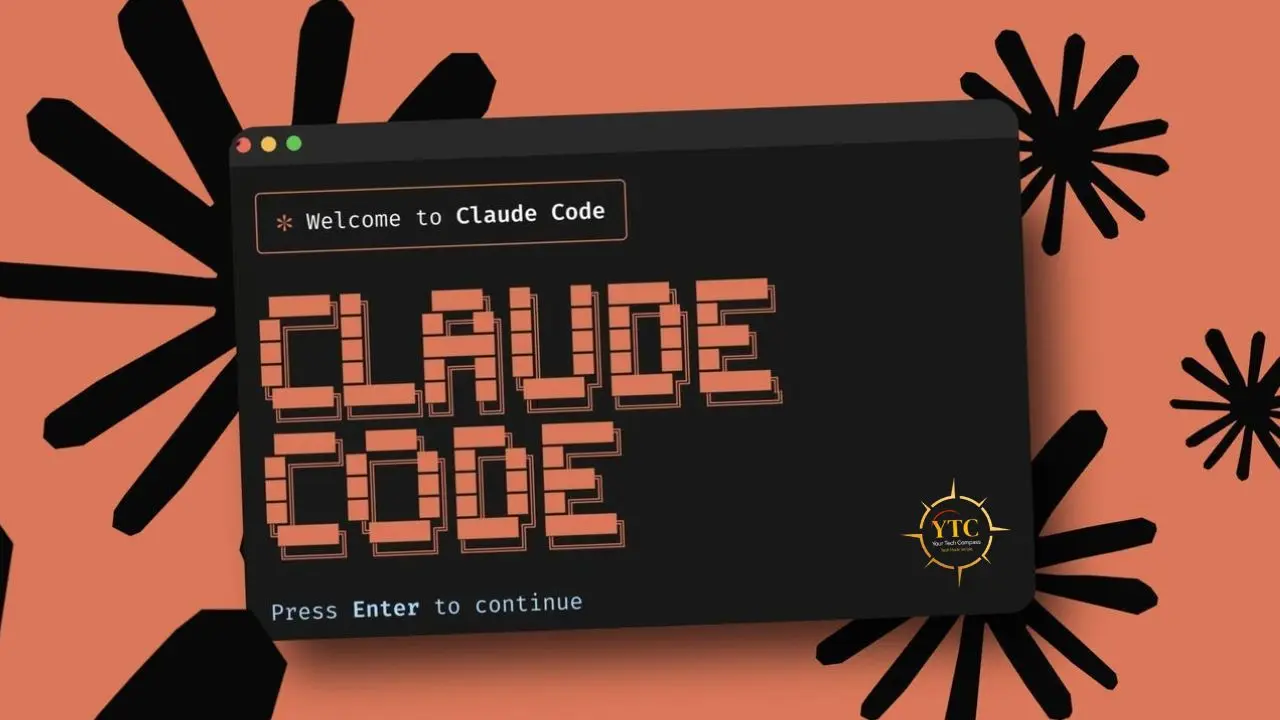
This is the feature most conspicuously missing from older explanations of Claude, and it’s become one of Anthropic’s most important products. Claude Code and Computer Use are production-ready in 2026: agentic coding now scores 80.8% on SWE-bench Verified, the industry-standard benchmark for real-world software engineering tasks, and computer use capability has reached 72.5% on OSWorld, up from under 15% just two years earlier in 2024.
Claude Code functions as an agentic coding assistant, not simply autocompleting individual lines, but capable of understanding an entire project, planning multi-step changes, writing and testing code, and iterating based on results, much closer to a junior developer working through a ticket than a traditional autocomplete tool. The leap in OSWorld computer-use performance, specifically from under 15% to over 72% in two years, reflects how rapidly Claude’s ability to actually operate software interfaces, not just generate text about them, has matured.
MCP: The Model Context Protocol
Alongside Claude Code, the Model Context Protocol (MCP) is the architectural development that turns Claude from a standalone chatbot into a genuine integration hub. MCP connects Claude to more than 6,000 applications (GitHub, Slack, Jira, Google Drive, Stripe, and thousands more), allowing Claude to read from and act within the tools you already use, rather than requiring you to copy and paste information back and forth manually. For technical teams, this is the difference between “an AI you talk to” and “an AI that’s genuinely embedded in your actual workflow.”
Key Features of Claude AI
Beyond the model family and Claude Code specifically, several capabilities define the everyday Claude experience.
- Natural language understanding handles multi-layered, nuanced prompts with genuine clarity, making Claude useful for everything from casual questions to deep, exploratory, multi-part requests that lesser models lose the thread on.
- Long-context handling, now dramatically extended by the 1-million-token window, makes Claude particularly strong at summarizing, rewriting, analyzing, and extracting insights from extended text: research papers, contracts, full books, or sprawling business documents.
- Writing, summarization, and analysis span drafting emails, revising copy, condensing chapter-length text into key points, and analyzing tone or structure, and are flexible enough to serve students, professional writers, and business users without requiring separate, specialized tools for each task.
- Safety-focused design remains a genuine differentiator. Anthropic’s engineering consistently prioritizes minimizing harmful or fabricated outputs, which (while no AI model is perfect on this front) measurably reduces risk in ambiguous or sensitive use cases compared to models optimized purely for raw capability.
What Claude AI Is Best Used For
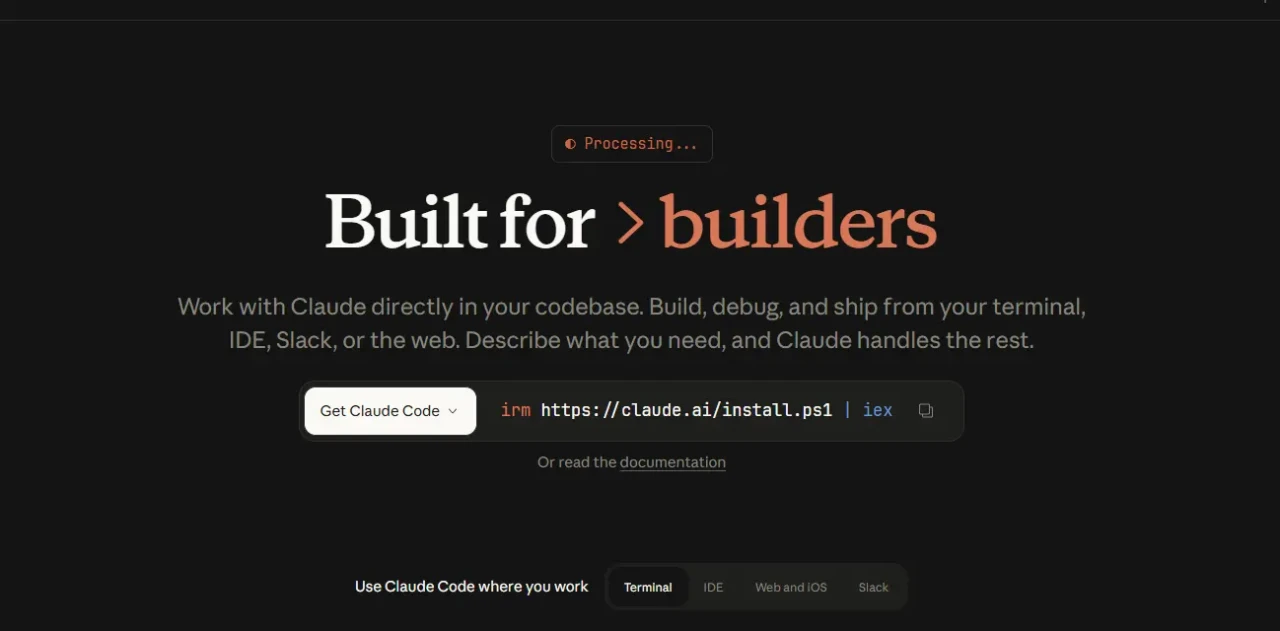
Claude’s strengths cluster around tasks that reward thoughtful interpretation, structured output, and genuine context retention rather than quick, shallow answers.
- Writing and editing are core strengths. You can, therefore, use it for drafting essays, polishing professional communication, or generating creative content while preserving your own voice and intent rather than flattening everything into generic AI-sounding prose.
- Research and document summarization play directly to Claude’s long-context strength. It’s ideal for parsing dense white papers, extracting key arguments, and synthesizing insights across multiple sources. For fact-specific extraction with live source citations, a tool like Perplexity AI remains a useful complement, but for narrative synthesis and genuine understanding of complex material, Claude is particularly effective.
- Coding and technical assistance have moved from a secondary strength to one of Claude’s defining capabilities, reflected directly in Claude Code’s SWE-bench performance covered above. Whether you’re debugging a specific function or planning a multi-file refactor across an entire codebase, Claude now handles both the conversational explanation and the actual implementation work. UI/UX designers are also using AI tools to streamline their workflow. Tools like Pixelait’s UI Auditor use AI to catch design issues before launch, a practical example of how AI is moving beyond text generation into visual analysis.
- Business and productivity tasks (summarizing meeting notes, generating structured action lists, drafting business communications) fit naturally into existing digital workflows without requiring specialized setup or training.
Claude AI for Everyday Users
For personal, non-technical use, Claude functions like a meaningfully smarter, more flexible version of basic chat or search tools. You can ask for clear explanations of complex concepts, get help organizing personal documents or plans, write or edit casual communication, and generate brainstorming ideas for anything from a trip to a personal project. This accessibility is precisely why Claude appeals not only to developers and technical users but to anyone who wants an assistant that genuinely understands context without requiring you to learn special prompting syntax first.
Claude AI for Work and Teams
In professional settings, Claude’s strengths are most evident in tasks that demand clarity, structure, and nuance rather than rote output. Teams use Claude to draft and refine documentation, generate reports or summaries from raw data, support collaborative writing workflows, and provide structured decision support during planning. With MCP integration, those workflows can now extend directly into the tools a team already uses daily, pulling context from Slack conversations, GitHub issues, or shared documents without manual copy-paste.
That said, real limitations remain. Claude is not a substitute for domain-specific, purpose-built systems in heavily regulated environments, and wherever precision or verified, citation-backed sourcing is genuinely mission-critical, supplementary tools remain necessary alongside it rather than instead of it.
Claude AI vs Other AI Assistants

Feature / Capability | Claude AI | ||||
Natural Language Generation | Excellent | Excellent | Good | Good | Excellent |
Coding (agentic, SWE-bench) | 80.8% (Claude Code) | Strong (Codex) | N/A | N/A | Strong |
Long-Context Handling | 1M tokens | 128K tokens (standard) | Good | Moderate | Strong |
Research & Citation | Strong | Good | Exceptional | Moderate | Strong |
Persona-Driven Interaction | Moderate | Moderate | Low | Excellent | Good |
Safety / Guardrails | High | Moderate-High | Moderate | Variable | Moderate |
Integration Ecosystem | MCP (6,000+ apps) | Broad plugin ecosystem | Limited | Limited | Google Workspace native |
Cheapest tier (API, per Mtok) | $1/$5 (Haiku) | Comparable | N/A | N/A | $2/$12 (comparable tier) |
Claude outperforms ChatGPT in coding tasks (Claude Code vs. OpenAI’s Codex), long-document analysis (1M context window vs. ChatGPT’s standard 128K), and nuanced writing quality. ChatGPT’s advantages remain real, however: a broader third-party plugin and tool ecosystem, native image generation through DALL-E, and the largest consumer brand recognition of any AI assistant.
Perplexity AI continues to lead in research, with live citations and web source aggregation. Character AI remains the clear choice for persona-driven, roleplay-style interaction, an area where Claude deliberately doesn’t compete. Gemini pushes furthest on native multimodal reasoning and deep Google Workspace integration.
The Honest Takeaway
Which tool is “best” depends entirely on your specific task, and many serious users, including professional teams, keep more than one of these tools active simultaneously rather than forcing every task through a single assistant.
Claude AI Pricing and Access

Claude is available through both a consumer subscription model at claude.ai and a usage-based API for developers building Claude into their own products. Here’s exactly what each costs.
Consumer Plans (claude.ai)
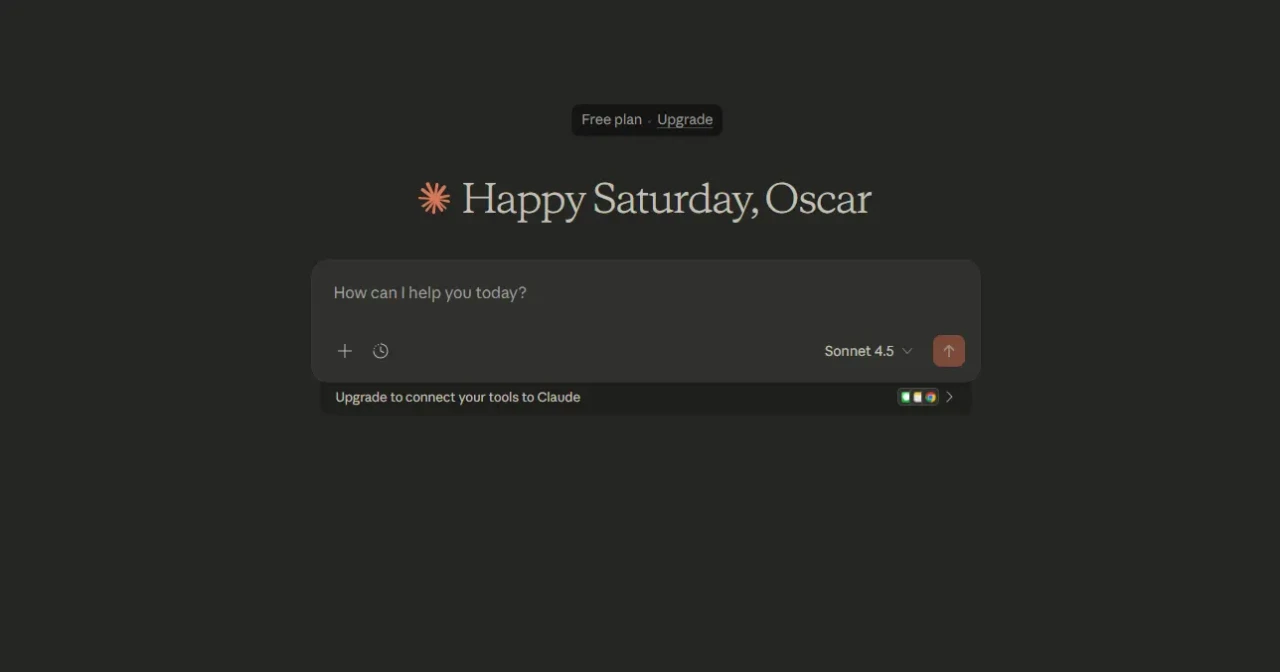
Claude offers a genuine free tier, with paid consumer plans ranging from free to $200 per month for the highest-usage tier, providing a realistic entry point for casual users and a serious option for power users who use Claude as a daily professional tool. Paid tiers unlock access to more capable models (including Opus), higher usage limits, and priority access during peak demand periods.
API Pricing (Per Million Tokens)
For developers and businesses building on Claude directly, current pricing as of mid-2026 breaks down as follows:
Model | Input (per Mtok) | Output (per Mtok) | Context Window | Best For |
Claude Haiku 4.5 | $1.00 | $5.00 | 200K | High-volume, latency-sensitive tasks |
Claude Sonnet 4.6 | $3.00 | $15.00 | 1M (standard pricing) | The default for most production workloads |
Claude Opus 4.7 | $5.00 | $25.00 | 1M (standard pricing) | Vision and long-horizon agentic tasks |
Claude Opus 4.8 | $5.00 | $25.00 | 1M (standard pricing) | Newest flagship: adaptive thinking, best coding |
Pricing spans a 75x range from the cheapest to the most expensive current model, which is precisely the point; Anthropic has deliberately built tiers for every budget and use case rather than a single one-size-fits-all price point. For cost-conscious developers, Anthropic also offers prompt caching, which can reduce costs by up to 90% for frequently reused context, such as system prompts and reference documents, and a Batch API that offers roughly 50% savings on non-real-time workloads. Combining both can cut total costs by up to 95% for the right kind of workload.
As pricing and model availability continue to evolve, the most reliable approach is to check Anthropic’s official pricing page before making a purchasing decision. However, starting with the free tier remains the right first step for most individual users evaluating whether upgrading is genuinely worth it for their specific needs.
Claude AI Limitations and Trade-Offs

No AI model is without real limitations, and Claude’s are worth naming directly rather than glossing over.
Accuracy and Hallucination
Despite Anthropic’s strong emphasis on safety and reliability, Claude, like every current language model, can still generate plausible-sounding but factually incorrect information, particularly on niche or rapidly evolving topics. Cross-checking important claims against trusted, current sources remains an essential best practice regardless of which AI model you’re using.
Integration and Tools
While MCP has meaningfully expanded Claude’s reach across thousands of applications, Claude still doesn’t integrate as natively into every consumer workflow as some competitors with longer-established, broader plugin ecosystems do. ChatGPT, in particular, has a head start here in raw third-party plugin volume. For highly specialized or niche workflow needs, a purpose-built complementary tool may still outperform a general-purpose assistant.
Enterprise Features
For large organizations with strict requirements around audit trails, regulatory compliance controls, or fine-grained administrative governance, Anthropic’s enterprise offerings have matured significantly but should still be evaluated directly against your organization’s specific compliance requirements rather than assumed to cover every regulated use case out of the box.
Understanding these boundaries helps set realistic expectations and use Claude precisely where it genuinely excels, rather than forcing it into roles it isn’t built for.
Claude AI Privacy and Safety
Data privacy and safety sit at the center of Claude’s design philosophy, reflecting Anthropic’s founding mission. The model includes meaningful guardrails designed to reduce harmful, biased, or inappropriate content, and Anthropic has built its reputation specifically around taking these concerns more seriously than the industry baseline.
That said, privacy guarantees vary meaningfully depending on the product tier and deployment model you use. Consumer claude.ai usage, standard API access, and enterprise deployments all have different data-handling terms. As with any AI tool, it is essential to review Anthropic’s current terms of service and data-handling policies directly before using Claude for sensitive personal information or proprietary business data, rather than assuming a uniform privacy standard applies across all access tiers.
Is Claude AI Worth Using?
Claude AI is a genuinely strong choice if you want a versatile assistant that handles long context and complex documents exceptionally well, a safety- and reliability-oriented alternative to models optimized purely for raw output volume, and a single tool that credibly bridges writing, research, coding, and creative tasks without requiring you to switch platforms constantly.
If your needs center on structured text generation, complex multi-step drafting, genuine codebase-level technical work, or deep contextual reasoning across long documents, Claude delivers excellent, measurable value, and the benchmark data backs that up rather than relying purely on reputation. For highly specialized live-citation research, persona-driven roleplay engagement, or workflows already deeply embedded in Google’s ecosystem, a complementary mix that includes Perplexity AI, Character AI, or Gemini AI alongside Claude will likely serve you better than relying on any single tool.
AI is also reshaping physical security. Tools like AI-powered surveillance cameras, such as those offered by CCTVCamera.sg, use machine learning to detect unusual activity in real time, a practical example of AI moving well beyond chatbots.
FAQs
Yes. Claude AI offers a genuine free tier at claude.ai with access to core chat functionality. Paid consumer plans range from a mid-tier subscription up to $200 per month for the highest-usage tier, unlocking access to more capable models, including Opus, higher usage limits, and priority access during peak demand. For developers, API access is usage-based per million tokens, with no permanent free tier for production API usage, though trial credits are sometimes available for new accounts.
Opus is the most capable tier, built for complex reasoning, advanced coding, and long-horizon agentic tasks, and priced at the highest level. Sonnet is the balanced workhorse, with strong coding and reasoning at roughly one-fifth of Opus’s cost, and the right default choice for most everyday and production use cases. Haiku is the fastest and cheapest tier, optimized for high-volume, simpler tasks like classification, extraction, and summarization, where speed and cost matter more than maximum reasoning depth.
Claude generally outperforms ChatGPT on agentic coding tasks (Claude Code’s SWE-bench scores lead OpenAI’s Codex), long-document analysis (Claude’s 1-million-token context window versus ChatGPT’s standard 128K), and nuanced writing quality. ChatGPT maintains advantages in the breadth of its third-party plugin ecosystem, native image generation, and broader mainstream consumer adoption. Both are genuinely strong general-purpose assistants; the right choice depends heavily on whether your priority is coding and long-context work (Claude) or ecosystem breadth and image generation (ChatGPT).
Yes, this is one of Claude’s clearest strengths at the moment. Opus 4.8 and Sonnet 4.6 both support a 1-million-token context window at standard pricing, roughly equivalent to 3,000 pages of text or an entire mid-sized codebase, in a single conversation with no chunking or separate retrieval system required.
Claude Code is Anthropic’s dedicated agentic coding product, distinct from the general-purpose chatbot. It’s capable of understanding an entire software project, planning multi-step changes, writing and testing code, and iterating based on results, functioning much closer to an autonomous coding agent than a simple code-completion tool. It currently scores 80.8% on SWE-bench Verified, the industry-standard benchmark for real-world software engineering performance.
Claude incorporates meaningful safety guardrails reflecting Anthropic’s core mission, and data privacy protections vary depending on whether you’re using the free consumer tier, a paid subscription, standard API access, or an enterprise deployment. Before using Claude for genuinely sensitive personal information or proprietary business data, it is strongly recommended that you review Anthropic’s current terms of service and data-handling policy for your specific access tier, rather than assuming uniform protection across all plans.
Final Thoughts
Claude AI in 2026 represents a fundamentally different proposition from the “safety-focused alternative to ChatGPT” framing that defined its earlier reputation. With Anthropic now valued at roughly $380 billion and generating $30 billion in annualized revenue, a model family spanning Opus, Sonnet, and Haiku at genuinely differentiated price points, a 1-million-token context window that eliminates chunking for serious document and codebase work, and Claude Code delivering measurable, benchmark-verified leadership in agentic software development, Claude has moved from underdog to standard, a tool serious developers and businesses now build their daily workflows around, not just a curiosity worth occasionally trying.
Claude earns its place among the leading AI models by combining genuine power with a level of restraint and reliability that makes it trustworthy across both personal and professional workflows, and the benchmark data backs that claim up directly rather than asking you to take it on faith. No single AI tool is right for every task, and Claude is no exception: pairing it with Perplexity for live-citation research, Character AI for persona-driven interaction, or Gemini for deep Google ecosystem work will likely serve most people better than relying on any single assistant exclusively. But for coding, long-document analysis, and nuanced writing specifically, Claude has built a case that’s increasingly difficult to argue against.
The AI assistant landscape keeps moving, and knowing which tool actually fits your specific task, not just which one has the loudest marketing, is exactly what this site is built to help with. Visit YourTechCompass.com for more honest, detailed AI tool guides and comparisons.