When you hear the term IBM AI, you’re not looking at a single chatbot or consumer app. You’re looking at a full enterprise-grade artificial intelligence ecosystem built for businesses that operate at scale. IBM’s approach to AI is designed for organizations that need reliability, compliance, explainability, and hybrid cloud flexibility, not just text generation or automation shortcuts.
However, enterprise AI can feel abstract if you don’t work inside large organizations. Instead of vague claims, this guide breaks down exactly what IBM AI includes, how it works, the problems it solves, and how it compares to other AI platforms. By the end, you’ll understand where IBM AI fits, whether you’re a business leader, tech strategist, or simply trying to make sense of the enterprise AI landscape.
What Is IBM AI?
IBM AI refers to the suite of artificial intelligence tools, platforms, and enterprise services developed by IBM. Over the years, IBM’s AI strategy evolved from the early Watson brand into a more modular, scalable ecosystem built for enterprise deployment.
Unlike consumer AI tools such as generative writing platforms, IBM AI focuses on operational intelligence, data governance, predictive analytics, and responsible AI. If you need a refresher on how generative systems differ from enterprise AI tools, this 👉 breakdown of generative AI clarifies foundational concepts.
In short, IBM AI is built for organizations, not individual users.
IBM AI Platforms and Products
IBM’s AI ecosystem is built around several key components:
1. IBM Watsonx Platform
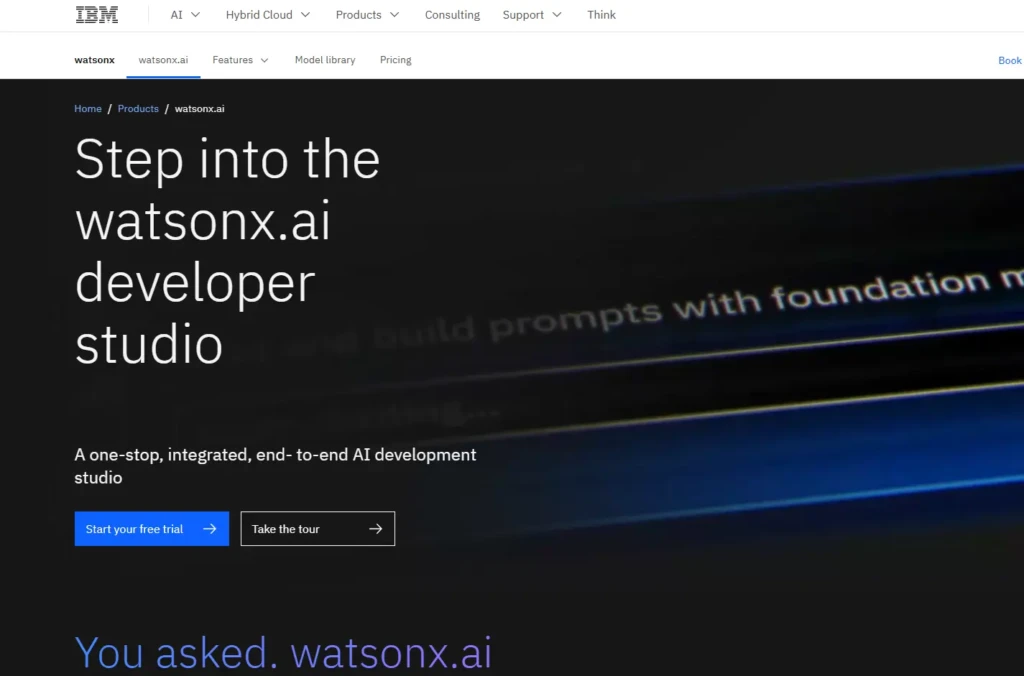
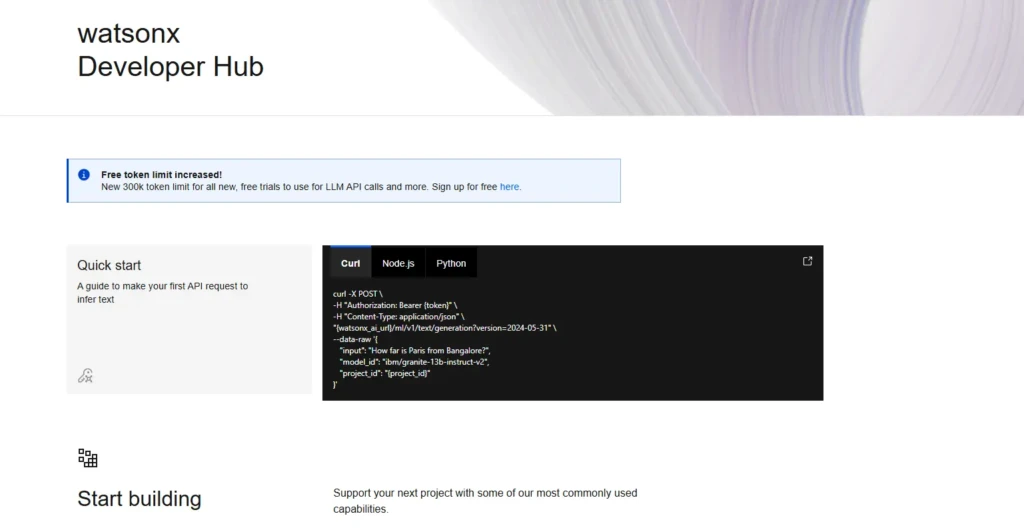
IBM’s modern AI strategy centers on Watsonx, a platform designed to build, deploy, and govern AI models across hybrid cloud environments.
Watsonx includes:
- watsonx.ai: AI model development and training
- watsonx.data: Data management and integration
- watsonx.governance: Responsible AI oversight and compliance tools
You can review IBM’s official platform documentation for up-to-date details on Watsonx capabilities via the IBM Watsonx official page.
2. IBM Watson (Legacy and Ongoing Tools)
Watson remains part of IBM’s broader AI ecosystem, especially in analytics, automation, and conversational AI for enterprise use.
3. Hybrid Cloud AI Integration
IBM AI is designed to run across:
- On-premises systems
- Private cloud
- Public cloud (AWS, Azure, Google Cloud)
This flexibility matters if you operate in regulated industries where data cannot simply be moved into public cloud infrastructure.
How IBM AI Works
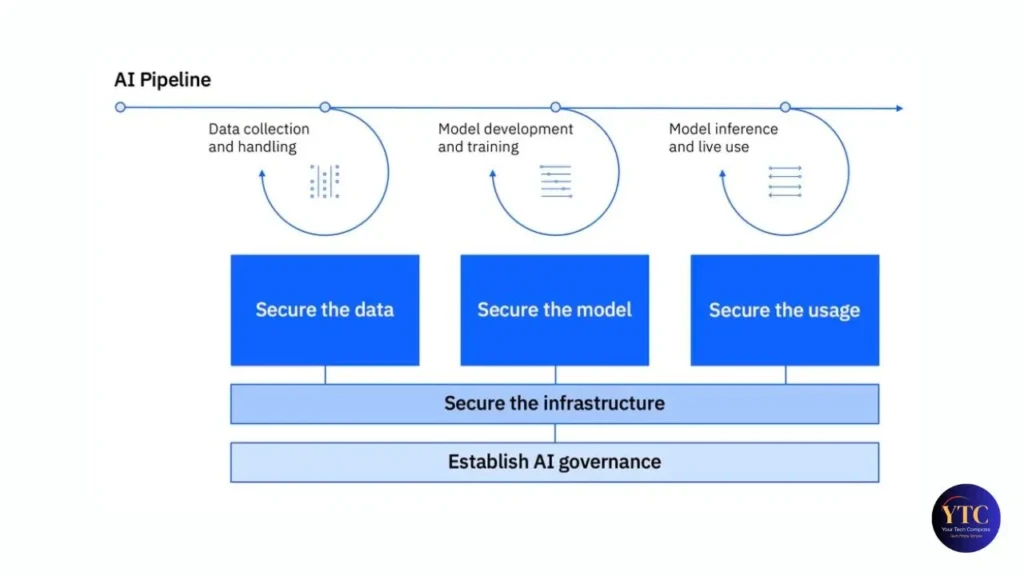
IBM AI operates in four major stages:
- Data Ingestion & Integration: Enterprise data is collected from internal systems, IoT devices, CRM platforms, financial databases, and operational logs.
- Model Development: Data scientists train predictive or generative models within the Watsonx environment.
- Deployment Across Hybrid Infrastructure: AI applications are securely deployed to production environments.
- Governance & Monitoring: IBM emphasizes model explainability, bias monitoring, and compliance tracking.
This governance-first approach differentiates IBM AI from many consumer platforms. For comparison, enterprise AI providers such as C3 AI also prioritize scalable data architecture, though IBM places greater emphasis on hybrid cloud governance.
IBM AI and Generative AI
IBM has incorporated generative AI into watsonx.ai, allowing enterprises to build and fine-tune large language models for internal use. However, unlike consumer-facing tools, IBM AI emphasizes:
- Private data environments
- Model transparency
- Regulatory compliance
- Controlled training environments
If you’re familiar with creative generative tools such as Tome AI, you’ll notice a clear distinction: Tome focuses on presentation storytelling, while IBM AI focuses on enterprise-grade data workflows.
Understanding this difference helps you avoid confusing enterprise AI infrastructure with consumer AI applications.
Real-World Use Cases of IBM AI
- Healthcare: IBM AI assists with clinical workflow optimization and patient data analytics.
- Financial Services: Banks use IBM AI for fraud detection, risk modeling, and compliance automation.
- Supply Chain Optimization: AI models forecast demand fluctuations and optimize logistics planning.
- Energy & Utilities: Predictive maintenance and grid optimization reduce operational downtime.
- AI in Financial Markets: For readers exploring algorithmic models in finance, IBM AI operates in a similar analytical territory as broader AI-driven forecasting. Explore foundational AI finance principles in this 👉 guide to AI trading.
IBM AI vs Other Enterprise AI Platforms
To help you evaluate IBM AI clearly, here’s a comparison table:
Feature | IBM AI | C3 AI | Azure AI | Consumer LLMs |
Hybrid Cloud Support | ⭐⭐⭐ | ⭐⭐⭐ | ⭐⭐ | ⭐ |
Governance Tools | ⭐⭐⭐ | ⭐⭐ | ⭐⭐ | ⭐ |
Generative AI | ⭐⭐ | ⭐⭐ | ⭐⭐ | ⭐⭐⭐ |
Industry-specific Templates | ⭐⭐ | ⭐⭐⭐ | ⭐ | ❌ |
Enterprise Compliance | ⭐⭐⭐ | ⭐⭐ | ⭐⭐ | ⭐ |
IBM AI stands out in governance and hybrid deployment, while C3 AI often leads in industry-specific predictive templates.
Strengths of IBM AI
- Enterprise credibility
- Hybrid cloud deployment
- Strong governance framework
- Focus on explainability
- Broad industry reach
If compliance and security are top priorities, IBM AI offers structured oversight tools that many competitors lack.
Limitations and Considerations
However, you should also understand potential trade-offs:
- Complex implementation
- Higher cost compared to lightweight AI tools
- Requires internal technical teams
- Longer enterprise sales cycles
IBM AI is not designed for small teams looking for quick automation wins.
Who Should Consider IBM AI?
IBM AI makes sense if:
- You operate in regulated industries (finance, healthcare, defense).
- You require a hybrid cloud infrastructure.
- You need AI governance and compliance auditing.
- You are scaling predictive analytics enterprise-wide.
If you’re simply looking for creative content generation or lightweight automation, IBM AI may be overpowered for your needs.
Frequently Asked Questions
IBM AI is used for enterprise predictive analytics, generative AI workflows, governance, and hybrid cloud deployment.
Watson is part of IBM’s AI ecosystem, but IBM AI now centers on the Watsonx platform.
Yes, through watsonx.ai, IBM provides generative AI capabilities tailored for enterprise environments.
IBM emphasizes governance and hybrid deployment, while C3 AI emphasizes predictive industry templates.
Conclusion
IBM AI represents one of the most structured and governance-focused enterprise AI ecosystems available today. If you operate in complex data environments, regulatory frameworks, or multi-cloud infrastructures, IBM’s hybrid, compliance-first design offers meaningful advantages.
However, it’s essential to match the tool to the task. IBM AI excels in enterprise-scale predictive and generative workflows, but it is not intended to replace lightweight consumer AI platforms. When you clearly understand where IBM AI fits alongside tools such as C3 AI, generative platforms, and domain-specific AI systems, you make more informed, strategic technology decisions.