I want to take you back to a specific week in January 2025 because it explains why DeepSeek matters more than any feature list could. A relatively unknown Chinese AI lab released a model called R1, and within days, it had shot to the top of app store download charts worldwide, displacing ChatGPT, while Nvidia’s stock dropped by hundreds of billions of dollars in market value in a single trading session. The shock wasn’t that DeepSeek built a good model. It was that DeepSeek built a genuinely competitive frontier model at a training cost reportedly a fraction of what OpenAI, Google, and Anthropic were spending, and then gave the weights away for free. That moment fundamentally changed how the entire industry thinks about the relationship between compute spending and AI capability.
Fast forward to today, and DeepSeek has continued that trajectory in a way most casual coverage hasn’t caught up with. The R1 and V3 models that made headlines in 2025 have already been fully retired, replaced by DeepSeek V4 (released April 24, 2026), which ships with a 1-million-token context window as the default, not a premium add-on, open weights under the genuinely permissive MIT license, and per-token pricing that undercuts Claude Opus 4.8 by roughly 28 times on output cost. This guide gives you the complete, current picture: what DeepSeek actually is, how its architecture achieves this level of cost efficiency, what V4 specifically offers, how it stacks up honestly against ChatGPT, Claude, and Gemini, and the real privacy and reliability tradeoffs worth understanding before you build anything serious on top of it.
A note before we begin: every YTC score is earned, never negotiated. If you want to understand exactly how we evaluate apps & tools and how we handle affiliate relationships, our Review Methodology lays it all out.
What Is DeepSeek?
DeepSeek is an artificial intelligence company and model family built around large language models designed for natural language understanding, advanced reasoning, and code generation. The company originates from Hangzhou, China, with roots in quantitative trading research that shaped its early focus on computational efficiency, building models that achieve frontier-level capability without frontier-level training budgets. That efficiency-first philosophy is the throughline connecting everything DeepSeek has released since.
What most clearly distinguishes DeepSeek from competitors like OpenAI, Anthropic, and Google is its open-weight approach. Rather than keeping its most capable models entirely closed and accessible only through a paid API, DeepSeek releases the actual model weights publicly, currently under the MIT license, one of the most permissive open-source licenses available, allowing free commercial use, modification, and self-hosting with no royalties or usage restrictions. This is a fundamentally different commercial strategy from closed labs, and it’s a major reason DeepSeek has become the default reference point for “how cheap can frontier AI actually get.”
DeepSeek’s rise has not been without genuine controversy. Its rapid ascent in app store rankings in early 2025 triggered immediate scrutiny over data handling and privacy practices in multiple countries, with several governments restricting or banning DeepSeek’s app on official devices. That scrutiny is real and ongoing, and it’s covered honestly later in this guide, but it shouldn’t obscure the genuine technical achievement underneath it, which is what the rest of this article focuses on first.
DeepSeek V4: The Current Model Family
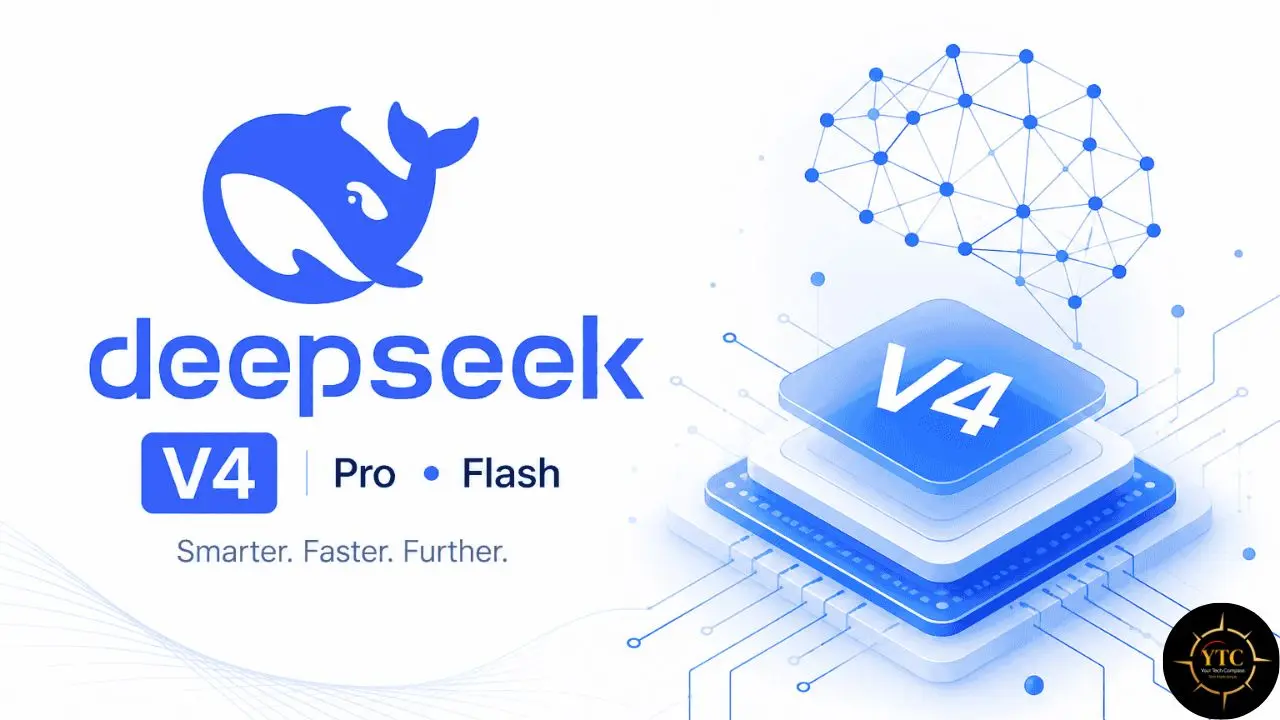
This is the section most existing DeepSeek coverage gets wrong by simply not updating: R1 and V3 are not DeepSeek’s current models. They’ve been fully consolidated into DeepSeek V4, released April 24, 2026, and the legacy API model names (deepseek-chat and deepseek-reasoner) are scheduled for complete retirement on July 24, 2026, after which they will simply stop working with no fallback. If you’re evaluating DeepSeek today, you’re actually getting V4.
V4 ships as two distinct models built on the same underlying architecture, optimized for different priorities.
- DeepSeek V4-Pro is the flagship, a Mixture-of-Experts model with 1.6 trillion total parameters and 49 billion active parameters per token. It targets frontier-level reasoning, advanced coding, and long-horizon agentic workflows. On SWE-bench Verified, the industry-standard benchmark for real-world software engineering tasks, V4-Pro scores 80.6%, the highest score among any open-weight model, tied with Google’s Gemini 3.1 Pro and within 0.2 percentage points of Claude Opus 4.6. That’s a genuinely remarkable result for a model whose weights you can download and run yourself.
- DeepSeek V4-Flash is the cost-optimized variant, with 284 billion total parameters and 13 billion active per token, trading some benchmark headroom for dramatically lower latency and cost. It still scores 79% on SWE-bench Verified and 91.6% on LiveCodeBench, genuinely strong results for its price class, which makes it the practical default for high-volume production workloads where Pro-level capability isn’t strictly necessary.
Both models default to a 1-million-token context window with a maximum output of 384,000 tokens, a dramatic jump from V3’s 128K ceiling, which previously forced developers to chunk large codebases and long documents into smaller pieces. Both support thinking and non-thinking modes, JSON output, and tool calling, and both natively support the OpenAI ChatCompletions and Anthropic API formats, meaning V4 can often be dropped into existing tooling, including Claude Code, with a one-line configuration change rather than a full integration rebuild.
How DeepSeek Works
DeepSeek’s models are built on a transformer-based neural architecture conceptually similar to GPT and Gemini, but with specific engineering choices designed to reduce computational cost without sacrificing capability. Understanding those choices helps explain the pricing gap covered later in this guide.
The foundational technique is the Mixture-of-Experts (MoE) architecture, in which only a fraction of the model’s total parameters are active for any given input, rather than engaging every parameter on every request. V4-Pro’s 1.6 trillion total parameters, with only 49 billion active per token, is the clearest illustration of this principle: you get the knowledge representation of an enormous model while paying the compute cost of a much smaller one. The IBM explainer on Mixture-of-Experts architecture covers the general mechanism in more technical depth if you want the underlying theory.
V4 adds a further architectural innovation on top of MoE: a hybrid attention system, referred to in DeepSeek’s technical materials as Compressed Sparse Attention combined with Heavily Compressed Attention, specifically engineered for efficient long-context processing. The practical effect is substantial: this hybrid system reduces the memory required to maintain context (the KV cache) to roughly 10% of what the previous V3 generation needed at equivalent context length. That’s the specific engineering breakthrough that makes a 1-million-token context window economically viable as a default setting rather than an expensive premium tier reserved for special requests.
From a user’s perspective, none of this complexity is visible. You experience it as a model that handles very long documents and codebases in a single pass, responds with genuine reasoning depth when needed, and costs a small fraction of what comparable closed-source frontier models charge per token.
DeepSeek’s Key Features
Advanced Reasoning and Thinking Mode
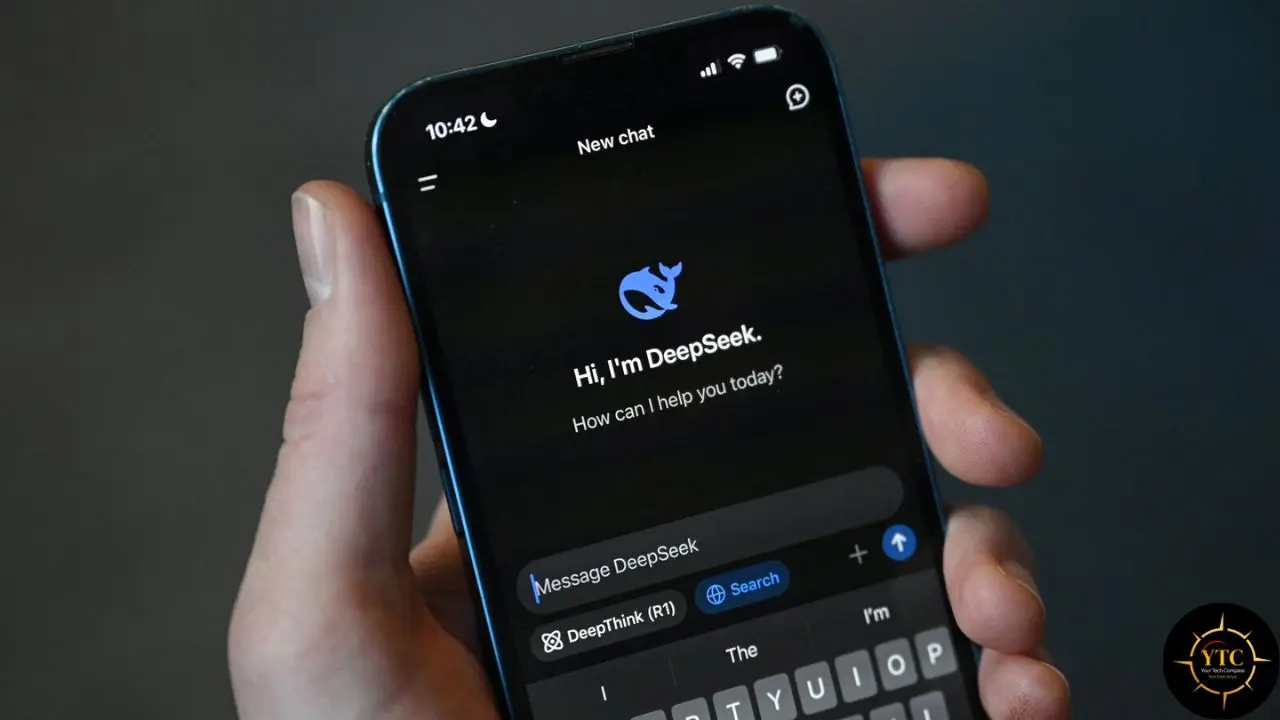
DeepSeek V4 supports an explicit thinking mode, a deliberate chain-of-thought reasoning process that the model engages before producing its final answer, distinct from its faster non-thinking mode for simpler queries. This dual-mode design lets you trade off depth, speed and cost on a per-request basis, rather than being locked into a single reasoning behavior for every task.
Massive Context as Standard, Not Premium
Both V4-Pro and V4-Flash support a 1-million-token context window by default across all official DeepSeek services, not as a special tier you pay extra for. In practical terms, this means you can hand DeepSeek an entire codebase, a lengthy research document, or an extended conversation history in a single request without manually chunking it into smaller pieces or building a separate retrieval system to manage context limits.
Genuinely Disruptive Cost Efficiency
This is DeepSeek’s defining characteristic, and the current numbers are worth seeing directly. V4-Pro costs $0.435 per million input tokens and $0.87 per million output tokens at standard rates. On the other hand, V4-Flash costs $0.14 per million input and $0.28 per million output.
For comparison, Claude Opus 4.7 charges roughly $25 per million output tokens, and GPT-5.4 charges roughly $15 per million output tokens, meaning V4-Pro is approximately 28 times cheaper than Opus on an output cost basis, and V4-Flash is closer to 90 times cheaper. Additionally, DeepSeek’s prefix caching system serves repeated prompt content (system prompts, shared document context) at a fraction of standard input pricing, often around one-tenth the normal rate, which compounds the savings further for production workloads that reuse context across many calls.
Open Weights Under MIT License
Both V4-Pro and V4-Flash are released as open weights on Hugging Face under the MIT license, genuinely permissive, allowing free commercial use, modification, fine-tuning, and self-hosting with no royalty obligations. This means organizations with strict data sensitivity requirements can deploy V4 entirely on their own infrastructure, ensuring data never reaches DeepSeek’s servers at all, a meaningful option for exactly the kind of regulated or security-conscious use case where DeepSeek’s privacy scrutiny would otherwise be disqualifying.
Strong Agentic Coding Performance
DeepSeek has specifically positioned V4 around agentic coding: the ability to handle multi-step software engineering tasks autonomously, not just generate isolated code snippets. The SWE-bench Verified score of 80.6% for V4-Pro reflects genuine competence at real-world tasks: understanding an existing codebase, planning a multi-file change, implementing it, and verifying the result, a function that goes well beyond simple autocomplete.
What DeepSeek Is Used For
DeepSeek’s capabilities span the same broad categories you’d expect from any frontier-class model, with particular strength in a few specific areas.
- Natural language generation covers essays, reports, and long-form content creation, with DeepSeek’s large context window making it particularly capable at maintaining coherence across genuinely long documents rather than losing track of earlier context. If you’re looking to apply AI for social media content specifically, Social Media Post Generator tools show how AI is being embedded into everyday marketing workflows.”
- Coding assistance is arguably DeepSeek’s strongest current use case, given V4-Pro’s SWE-bench performance: code generation, debugging, explanation, and full agentic workflows, where the model handles multi-step engineering tasks and is compatible with the OpenAI and Anthropic APIs, making integration into existing developer tooling, including Claude Code, straightforward.
- Research and document analysis benefits directly from the 1-million-token context window, enabling summarization and structured insight extraction from very long documents or multiple combined sources in a single pass.
- Mathematical and logical problem-solving reflects DeepSeek’s training priorities, with the thinking mode specifically suited to multi-step deductive and quantitative reasoning tasks.
These use cases mirror what other leading models support, and our Perplexity AI guide covers a complementary tool that is particularly strong in citation-backed research, useful context if your workflow benefits from combining DeepSeek’s reasoning and cost efficiency with Perplexity’s live source verification.
For a practical overview of what to look for when choosing AI tools for business use, see this guide on MozPK.
DeepSeek vs Other AI Models
Feature / Capacity | DeepSeek V4 | Claude | Gemini | ChatGPT |
SWE-Bench Verified (Coding) | 80.6% (V4-Pro, highest open-weight) | Comparable, narrow margin | 80.6% (tied) | Strong |
Context Window | 1M tokens (default) | 1M tokens (standard pricing) | 1M tokens | 128K (standard) |
Output Cost (Per Mtok) | $0.87 (Pro) / $0.28 (Flash) | ~$25 (Opus 4.7) | ~$12 | ~$15 (GPT-5.4) |
Openness (Weights, License) | Fully open, MIT license | Closed | Closed | Closed |
Self-Hosting | ✅ Yes | ❌ No | ❌ No | ❌ No |
Privacy / Regulatory Scrutiny | Active, documented concerns | Stable | Stable | Stable |
Multimodal Support | Text/code primarily | Strong | Advanced (native) | Advanced |
DeepSeek’s open-weight philosophy and extreme cost efficiency set it apart structurally from every closed competitor in this table. No other frontier-class model gives you the option to self-host the actual weights at this level of capability.
Claude and Gemini, by contrast, generally lead on alignment, safety predictability, and enterprise-grade infrastructure guarantees, areas that matter enormously for regulated or safety-sensitive deployments. For deeper coverage of those specific strengths, our Claude AI and How Gemini AI Works guides provide full coverage of both models.
Pros and Cons of DeepSeek

The Pros
- Genuinely disruptive cost efficiency. V4-Pro’s output pricing undercuts Claude Opus 4.8 by roughly 28 times and GPT-5.5 by a similar margin, while remaining competitive on the hardest available coding benchmark. For high-volume production workloads, this isn’t a marginal saving; it’s a fundamentally different cost structure.
- Real open access. V4’s weights are available on Hugging Face under the MIT license, enabling self-hosting, fine-tuning, and complete data sovereignty for organizations that need it, a capability no closed-source frontier competitor offers at any price.
- 1-million-token context as a default, not a luxury. This eliminates the chunking and retrieval-system overhead that smaller-context models require for long-document and large-codebase work.
- Genuinely competitive frontier benchmarks. 80.6% on SWE-bench Verified is not a “good for an open model” caveat-laden achievement; it’s tied with Gemini 3.1 Pro and within striking distance of Claude Opus 4.6, among the best scores from any model regardless of openness.
The Cons
- Documented privacy and regulatory scrutiny. DeepSeek has faced data handling and privacy concerns serious enough that several governments have restricted or banned the app on official devices. This is a real, ongoing consideration, not a resolved historical footnote, and deserves direct attention before using DeepSeek’s hosted services for sensitive personal or business data.
- Hallucination risk is similar to that of any generative model. DeepSeek can produce plausible but incorrect information, and nothing about its architecture makes it immune to this universal LLM limitation. Verification against trusted sources remains essential regardless of which model you’re using.
- Reliability variability on free/hosted tiers. Users have reported availability issues during peak demand on DeepSeek’s free consumer-facing services, a common growing-pain pattern for rapidly scaling AI products that’s worth factoring into any business-critical dependency.
- Migration churn from the rapid model consolidation. The retirement of R1, V3, and V3.2 into V4 within roughly a year reflects a genuinely fast-moving product cadence; anyone building on DeepSeek’s API should expect continued, relatively rapid model transitions.
Who Should Use DeepSeek
DeepSeek is a strong fit for developers and engineering teams running high-volume coding or agentic workflows where V4’s SWE-bench performance, combined with its dramatic cost advantage, changes the underlying economics of the product. It’s equally well-suited to researchers and technically inclined users who want self-hostable, open-weight access to frontier-class reasoning without committing to a single closed vendor’s infrastructure and pricing.
In addition, cost-sensitive startups and small businesses building AI-powered products on tight margins will find that V4-Flash’s pricing, in particular, changes what’s financially viable to build at all. Students and educators benefit from accessible, capable AI tooling without premium subscription costs standing between them and serious use.
That said, every user in these categories should weigh DeepSeek’s documented privacy and data-handling concerns directly against their specific use case. Self-hosting the open weights resolves most of that concern entirely, while using DeepSeek’s hosted consumer or API services does not.
Who Should Consider Alternatives

DeepSeek is a poor fit for organizations with strict enterprise security and data residency requirements, where DeepSeek’s hosted infrastructure doesn’t yet offer the regional data residency guarantees and compliance documentation that Anthropic or Google’s enterprise tiers provide. Self-hosting V4’s open weights is the workaround, but it requires real infrastructure investment that most organizations haven’t budgeted for.
It’s also not the right choice for safety-sensitive applications demanding the most predictable, rigorously tested alignment and content filtering, where Claude’s documented approach to safety-first design, covered in our Claude AI guide, is the more conservative and currently better-evidenced choice. Finally, anyone with zero tolerance for service availability gaps should be cautious about relying on DeepSeek’s free hosted tiers for anything business-critical, given the documented variability in reliability during peak-demand periods.
FAQs
Is DeepSeek better than ChatGPT? It depends entirely on your priorities. DeepSeek V4-Pro is genuinely competitive with or ahead of GPT-5.5 on coding benchmarks like SWE-bench Verified, while costing roughly 28 to 34 times less per output token, and it offers open weights you can self-host, none of which ChatGPT provides. ChatGPT leads on ecosystem maturity, broader plugin support, and a longer track record of enterprise-grade reliability and support infrastructure. For cost-sensitive, coding-heavy, or self-hosting use cases, DeepSeek has a genuinely strong case. For broad consumer use with maximum ecosystem polish, ChatGPT remains the more mature choice.
What happened to DeepSeek R1 and V3? Both have been fully retired and consolidated into DeepSeek V4, which was released on April 24, 2026. The legacy API model names deepseek-chat and deepseek-reasoner currently route to V4-Flash for compatibility, but they are scheduled for complete shutdown on July 24, 2026, after which any API call using those names will simply return an error with no fallback. Anyone still building on older model names should migrate directly to deepseek-v4-pro or deepseek-v4-flash. It’s a one-line configuration change with no other infrastructure modifications required.
Is DeepSeek free to use? DeepSeek’s consumer chatbot at chat.deepseek.com is free to use with rate limits. For developers, the API is usage-based: V4-Flash costs $0.14 per million input tokens and $0.28 per million output tokens, while V4-Pro costs $0.435 per million input tokens and $0.87 per million output tokens, both of which are dramatically cheaper than comparable closed-source competitors. Additionally, because V4’s weights are released under the MIT license, you can download and self-host the model entirely for free, aside from your own infrastructure costs, with no API fees at all.
Can DeepSeek effectively generate and debug code? Yes, and this is currently one of DeepSeek’s strongest demonstrated capabilities. V4-Pro scores 80.6% on SWE-bench Verified (the highest score among any open-weight model and competitive with the best closed-source frontier models), reflecting genuine ability to handle real-world, multi-step software engineering tasks, not just generate isolated code snippets. V4-Flash, the faster and cheaper variant, still scores a strong 79% on the same benchmark and 91.6% on LiveCodeBench.
Is it safe to use DeepSeek for sensitive business or personal data? This requires genuine caution and a direct answer rather than a vague one. DeepSeek’s hosted consumer and API services have faced documented privacy and data-handling scrutiny serious enough that several governments have restricted the app on official devices. This is an active, ongoing concern, not a resolved historical issue. If data sensitivity is a genuine requirement, self-hosting DeepSeek V4’s open weights under the MIT license on your own infrastructure eliminates this concern entirely, since your data never reaches DeepSeek’s servers. Using DeepSeek’s hosted services for highly sensitive data without a self-hosted setup carries real risk that you should weigh carefully against your specific compliance requirements.
How does DeepSeek’s pricing compare to Claude and GPT? The gap is substantial and genuinely changes the economics of the product for high-volume use. DeepSeek V4-Pro’s output pricing of $0.87 per million tokens is roughly 28 times cheaper than Claude Opus 4.8’s $25 and roughly 34 times cheaper than GPT-5.5’s $30, while remaining competitive on the hardest available coding benchmarks. V4-Flash widens that gap even further for workloads where Pro-level capability isn’t strictly necessary, at $0.28 per million output tokens.
Conclusion
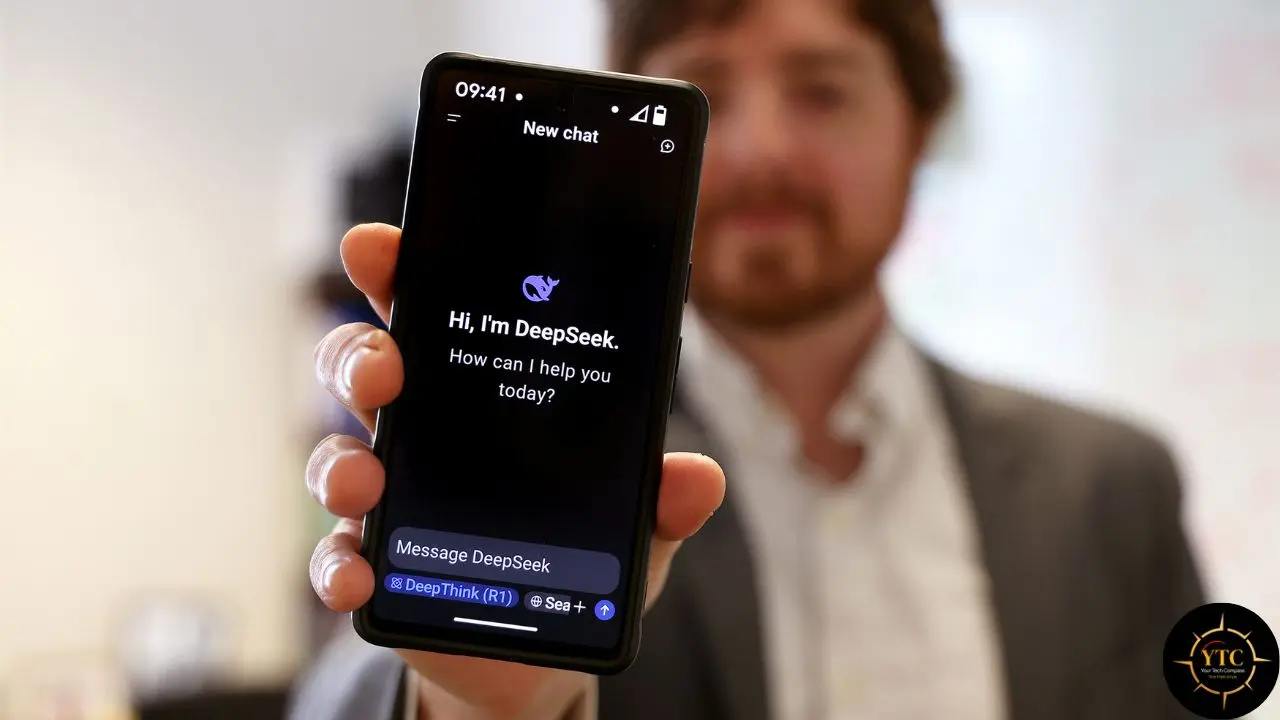
DeepSeek remains one of the clearest demonstrations of how quickly the assumptions underlying the AI industry can shift. What started in January 2025 as a market shock, a relatively unknown lab proving that frontier-level capability didn’t require frontier-level training budgets, has matured into DeepSeek V4, a genuinely competitive, openly licensed model family that scores within fractions of a percentage point of the best closed-source coding models while costing dramatically less to run and remaining fully self-hostable for anyone with sufficient infrastructure. That combination (frontier benchmark performance, a 1-million-token context window as standard, and pricing that undercuts the closed-source competition by an order of magnitude) is not a minor footnote in the AI landscape. It’s a genuine structural challenge to the idea that only massive, closed ecosystems can deliver top-tier AI.
None of that should obscure the real tradeoffs, though. The privacy and data-handling scrutiny DeepSeek has faced is documented and ongoing, not resolved, and deserves direct, case-by-case consideration rather than dismissal in either direction. DeepSeek is not a universal replacement for ChatGPT, Claude, or Gemini; each of those tools brings genuine strengths in ecosystem maturity, enterprise infrastructure, and safety-first design that DeepSeek doesn’t yet fully match. But for developers, researchers, and cost-conscious teams building serious coding or reasoning workloads, DeepSeek V4 has earned a legitimate place in the conversation about which frontier model actually fits your specific needs, and for self-hosted, data-sovereign deployments in particular, it may currently be the strongest option available at any price.
The AI model landscape keeps moving fast, and knowing which tool genuinely fits your specific task, not just which one has the loudest headlines, is exactly what this site is built to help with. Visit YourTechCompass.com for more honest, detailed AI tool guides and comparisons.