Choosing the best Google Fi plan requires careful research, given the variety of options and different usage scenarios. In what follows, this article explains every relevant aspect of Google Fi mobile service in detail, from what it is and how it works to how individual plans compare, including international benefits, cost structures, and real-world usage examples. The goal is to help you decide which Google Fi plan offers the most value for your money based on your specific needs and usage patterns.
I’ve drawn on authoritative sources, plan specifications, and comparative data to ensure this is both comprehensive and accurate, and I will refer back to specific use cases as we go. I’ve lived with multiple carriers and have tested similar plans firsthand. In this guide, you’ll find detailed comparisons, expert insights, and a clear recommendation at the end. I’m confident this will be your most useful resource on the topic by the time you finish reading.
What Is Google Fi and How It Works
Google Fi is a mobile virtual network operator (MVNO) service operated by Google that uses existing cellular networks to provide voice, text, and data service for phones and other mobile devices. Rather than building and maintaining its own radio towers like traditional carriers, Google Fi leverages partnerships with major network operators, including T-Mobile’s extensive 5G and LTE footprint, to deliver coverage across the United States and beyond.
Unlike many carriers whose plans are designed around bundling features, Google Fi emphasizes flexibility and transparency. For instance, its Flexible plan charges a base monthly fee plus a per-gigabyte rate based on actual data usage, which can be valuable for light or unpredictable users. Moreover, many plans include seamless roaming in over 200 countries without per-day travel fees, making Google Fi distinctive for frequent travelers.
In addition to phone service, Google’s mobile ecosystem supports productivity and cloud tools, and if you’re building a comprehensive digital workflow, you’ll want to explore guides such as “Google Drive Explained” and “Google Keep Explained.” These tools complement your mobile plan and help you organize your digital life more effectively. Likewise, understanding “How Gemini AI Works” can help you streamline tasks and boost productivity on devices connected to Google Fi.
Best Google Fi Plans at a Glance
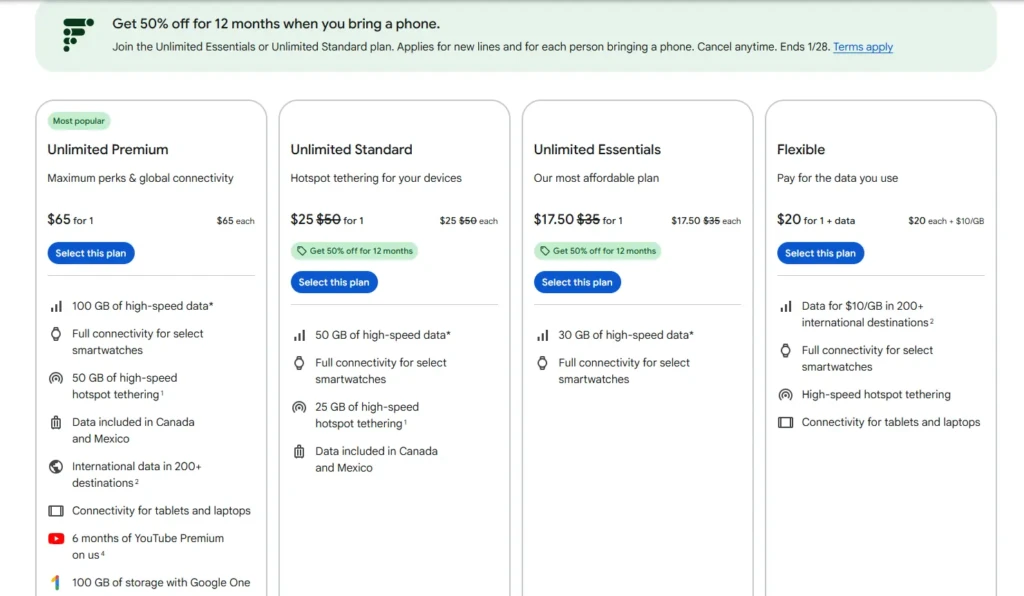
Below is a comparison table of key Google Fi plans to help you quickly grasp the differences in price, data allowances, and additional features. All prices and details are drawn from official plan data and reputable plan summaries.
Plan Name | Monthly Cost (1 Line) | Data Allowance | Mobile Hotspot | International Data | Best For |
Flexible | $20 base + $10/GB | Pay per use | Yes | In many destinations | Light usage |
Unlimited Essentials | ~$35 | 30 GB high-speed | Limited/none | Basic | Budget users |
Unlimited Standard | ~$50 | 50 GB high-speed | 25 GB | Yes | Most users |
Unlimited Premium | ~$65 | 100 GB high-speed | 50 GB | Yes, global | Heavy data/travel |
Note: After high-speed caps are reached, speeds are reduced, but data remains usable at slower rates. The table omits taxes and fees; carriers typically add these at checkout.
1. Unlimited Premium: Best Google Fi Plan Overall
For most people, the Unlimited Premium plan is the best Google Fi option. It includes up to 100 GB of high-speed data per line, 50 GB of dedicated high-speed hotspot data, and broad coverage both domestically and internationally, covering over 200 countries without costly travel day passes.
Additionally, Unlimited Premium often includes perks such as cloud storage credits and media subscriptions, which can add value beyond raw data. Compared to other carriers’ premium offerings, Google Fi’s combination of international data, high-speed hotspot allowance, and predictable pricing structure makes this plan the most versatile for average to heavy users.
Pros:
- Large high-speed data bucket
- International data included
- Significant hotspot allocation
Cons:
- Higher monthly cost than budget options
- Reduced speeds after high-speed caps
Ideal For: Typical smartphone users who want a balance of high-speed data, international use, and added perks.
2. Unlimited Standard: Best Google Fi Plan for Unlimited Data

For users who want an unlimited data experience without the premium price tag, Unlimited Standard delivers strong performance with 50 GB of high-speed data and generous hotspot allowances. Coverage includes both domestic and travel use.
This plan is competitive with mid-tier plans from other carriers, especially when you consider that many traditional carrier plans charge more for cross-border roaming or similar data allowances.
Pros:
- Solid data ceiling
- Good hotspot data allowance
- More affordable than Premium
Cons:
- Not ideal for very heavy streamers
Ideal For: Users who want unlimited data but don’t need the highest tier.
3. Flexible: Best Google Fi Plan for Light Users
The Flexible plan allows you to pay only for what you use: a base fee plus a per-gigabyte rate. That means you can save significantly if you consistently use less data than with flat-rate unlimited plans.
The built-in Bill Protection feature often caps your charges once a usage threshold is reached, preventing runaway bills.
Pros:
- Great for occasional users
- Transparent billing
- Hotspot included at the data rate
Cons:
- Can become expensive for higher usage
- Less predictable bill
Ideal For: Individuals with low monthly data needs or irregular usage patterns.
Best Google Fi Plan for Families
Family pricing with Google Fi becomes compelling when multiple lines are pooled. While major carriers might offer discounts for large groups, Google Fi’s structure ensures that each additional line adds value without complicated add-on fees, and hotspot data and international benefits apply across lines.
For families, Unlimited Standard or Premium plans typically provide the best mix of data, shared value, and device support. Hotspot data helps when tablets or laptops need connectivity on the go.
Best Google Fi Plan for International Travel
Google Fi is notable for international data support built into several plans, particularly Unlimited Premium. Unlike most carriers, which charge daily roaming fees, Google Fi lets you roam in many countries at no extra charge. This makes it one of the best carriers for frequent flyers or digital nomads.
When combined with tools such as Google Drive for cloud storage and Google Keep for note-taking, you can maintain productivity abroad without juggling multiple local SIMs or roaming passes.
Google Fi vs Traditional Carriers
Compared to traditional carriers like Verizon, AT&T, or T-Mobile, Google Fi often delivers cost-effective pricing, especially for multi-line users and international travelers. Some carriers may offer lower promotional prices, but they often offset savings with travel fees or reduced roaming inclusions.
Google Fi’s reliance on the networks of major operators usually means comparable domestic performance at simpler pricing. However, during peak congestion, some users report slight deprioritization compared to the carrier’s direct customers.
Is Google Fi Worth It?
Determining value depends on your usage profile:
- Frequent Travelers: Excellent choice due to built-in international data.
- Light Users: The Flexible plan can save money.
- Families: Multi-line pricing and features are competitive.
- Heavy Data Users: Premium tiers offer substantial data and hotspot benefits.
Across user types, Google Fi stands out for its clarity of pricing, expandable coverage, and ease of switching between plans.
How to Choose the Best Google Fi Plan for Your Needs
Follow these steps:
- Estimate your typical monthly data use: Choose Flexible if low, unlimited if high.
- Consider travel requirements: Frequent flyers should lean toward Standard or Premium.
- Account for hotspot needs: Plans differ significantly in the amount of allocated hotspot data.
- Compare total monthly spend: Including taxes and fees.
Final Verdict: The Best Google Fi Option Right Now
Across multiple usage profiles, Unlimited Premium emerges as the best Google Fi plan overall due to its combination of robust data allowances, hotspot access, and international coverage. For budget-minded users, the Standard or Flexible plans remain compelling alternatives.
Overall, Google Fi is a viable choice for users who want transparent pricing, solid international roaming, and the flexibility to switch plans without penalties. I am confident that after reading this, you’ll have the clarity needed to make an informed choice that aligns with how you use your device and your budget.
FAQs: Navigating Google Fi
Coverage is generally strong across the U.S. through partner networks, though some rural areas may perform better on native carrier plans.
Yes, especially with plans that include international data.
Google Fi does not impose long-term contracts or early termination fees for service.
Yes, you can bring your existing personal number. The process is remarkably straightforward: simply indicate during sign-up that you want to transfer your number. Most transfers are completed in under 15 minutes, though it is a pragmatic rule of thumb to keep your old service active until the transfer is fully confirmed.
If you are on the Unlimited Premium or Flexible plans, your data travels with you to over 200 destinations at no extra cost. On the Flexible plan, you simply pay the same $10 per GB rate you do at home. However, if you are on the Unlimited Essentials plan, international data is not included, making it a better fit for those who primarily stay within the US, Canada, and Mexico.
While the plans are “unlimited,” Google Fi uses a fair usage policy to ensure network stability. For example, on the Unlimited Premium plan, your data remains at top-priority speeds for the first 100 GB. After that, speeds are reduced to 256 kbps. This is a pragmatic way to manage network traffic while still providing a centerpiece of connectivity for the vast majority of users.
Yes, Google Fi is a great addition for your other devices. You can add data-only SIMs for tablets at no extra monthly cost; you only pay for the data they use (or it comes out of your unlimited bucket). Most modern smartwatches, like the Pixel Watch and Samsung Galaxy Watch, also support standalone connectivity.