Chat GPT 4 is one of the most widely discussed AI language models, largely because it represents a meaningful step forward in how machines process and generate human-like text. Compared to earlier versions, it demonstrates stronger reasoning, improved context handling, and better performance across complex language tasks. As a result, it has found its way into workflows spanning business, education, software development, and content creation, raising both expectations and questions about what it can realistically do.
This article breaks down what ChatGPT -4 is, how it works, where it performs well, and where its limitations become apparent. Rather than focusing on hype or surface-level descriptions, the goal is to explain its capabilities in practical terms and clarify how it fits alongside other AI tools currently in use. By the end, readers should have a grounded understanding of when ChatGPT -4 is genuinely useful and when human judgment still matters most, and I’ll draw on real-world use cases and comparisons to make that distinction clear.
What Is ChatGPT -4?
At its core, ChatGPT 4 refers to a specific generation of OpenAI’s generative pre-trained transformer language model. It is an evolution of earlier GPT models, designed to better understand and generate human-like text. Unlike prior versions that focused purely on text generation, this iteration was trained on a broad dataset and optimized to handle more complex language tasks and multi-step reasoning.
GPT-4 can interpret nuanced prompts, maintain longer context, and produce responses that appear more fluent and coherent than those of its predecessors. These improvements have made it a “go-to” AI tool for a range of applications, from drafting content to assisting with technical tasks.
How Chat GPT 4 Works
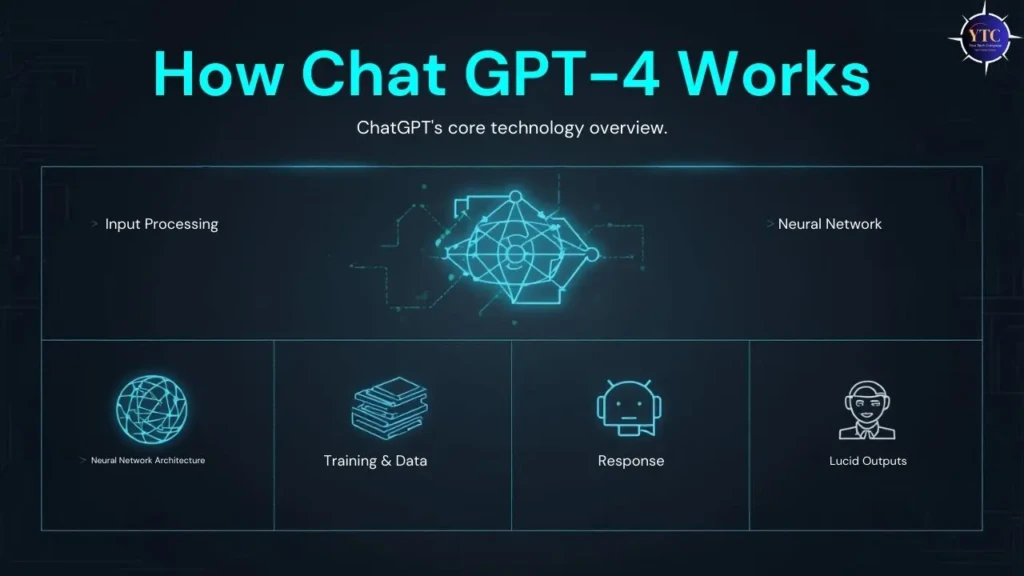
ChatGPT-4 is built on a transformer architecture that predicts likely word sequences based on patterns learned during training. The model was trained on massive datasets using techniques like reinforcement learning with human feedback (RLHF) to improve alignment with user intent. When given a prompt, the system generates a response by identifying and selecting the most probable continuation of that input, taking context and learned relationships into account.
Because it doesn’t “search” the web in real time (unless specifically enabled with browsing tools), its output reflects patterns present in its training data rather than direct retrieval of up-to-the-minute information. This approach enables quick, context-specific responses but also introduces limitations, such as outdated knowledge or inaccuracies when addressing recent events.
Key Features of Chat GPT 4
While earlier versions of Chat GPT were already capable, GPT-4 introduced or improved several capabilities:
- Improved Contextual Understanding and Reasoning: GPT-4 handles longer, more complex queries than earlier models, enabling more coherent multi-turn conversations.
- Multilingual Proficiency: It supports multiple languages, making it useful for global user bases and cross-language tasks.
- Enhanced Text Generation: Responses are more fluent, contextually aligned, and nuanced.
- More Flexible Task Performance: GPT-4 performs well across a wider range of domains, from creative writing to coding help, compared with basic models.
Together, these features make GPT-4 a more holistic tool for complex language tasks.
Chat GPT 4 vs Earlier and Related Models
While GPT-4 is a significant advancement over GPT-3.5 in terms of reasoning and context handling, later derivatives such as GPT-4o extend its capabilities further with support for multimodal inputs (e.g., text and images) and improved efficiency. Even so, the core GPT-4 model remains in use in certain enterprise and API contexts due to its established performance and reliability.
This incremental evolution underscores the importance of understanding which version best fits your needs rather than assuming “latest = best” in all scenarios.
What Chat GPT 4 Is Good At
Chat GPT 4’s strengths tend to surface in environments where complex language understanding and generation are necessary:
- Content Drafting and Editing: Generates structured text that often requires minimal revision.
- Coding Assistance: Provides explanations, examples, and debugging help in many programming languages.
- Summarization and Explanation: Condenses long texts into clear summaries.
- Language Translation and Multilingual Output: Supports communication across languages with reasonable fluency.
These capabilities make GPT-4 valuable in both individual productivity workflows and team environments where content quality and clarity matter.
Limitations of Chat GPT 4

Despite its strengths, GPT-4 has several limitations that influence how and where it can be used effectively:
- Not Real-time Aware: It does not inherently access live data or current events unless integrated with external tools.
- Potential for Hallucinations: It may produce factually incorrect or nonsensical responses when overreaching its training data.
- Bias Replication: Patterns learned from training data can reflect human biases.
- Limited Memory for Context: Even in longer conversations, the model can still struggle to retain earlier context accurately across many turns.
These limitations highlight the need for human oversight and fact-checking, especially in professional or sensitive environments.
Chat GPT 4 for Work and Business Use
In business contexts, GPT-4 can serve as an assistant that helps draft emails, generate reports, summarize data, and assist with routine communications. When combined with enterprise workflows, it can streamline documentation and support ideation. However, relying entirely on GPT-4 for critical decisions without human verification is inadvisable, given its limitations. This aligns with broader best practices for AI augmentation rather than replacement.
Chat GPT 4 for Students and Learning
For students, GPT-4 can clarify concepts, offer explanations, and support language learning or writing. It is a powerful tool when used to augment study and research. However, relying on it to replace independent learning or bypass necessary problem-solving can reduce long-term educational value.
Common Misconceptions About Chat GPT 4
Several misconceptions persist about GPT-4:
- “It always gives correct answers.” In reality, the model estimates probability and can be wrong.
- “It understands like a human.” It models language patterns, not cognition.
- “It replaces human expertise.” It augments, but does not replace, professional judgment.
Understanding these nuances helps set practical expectations for use.
Conclusion
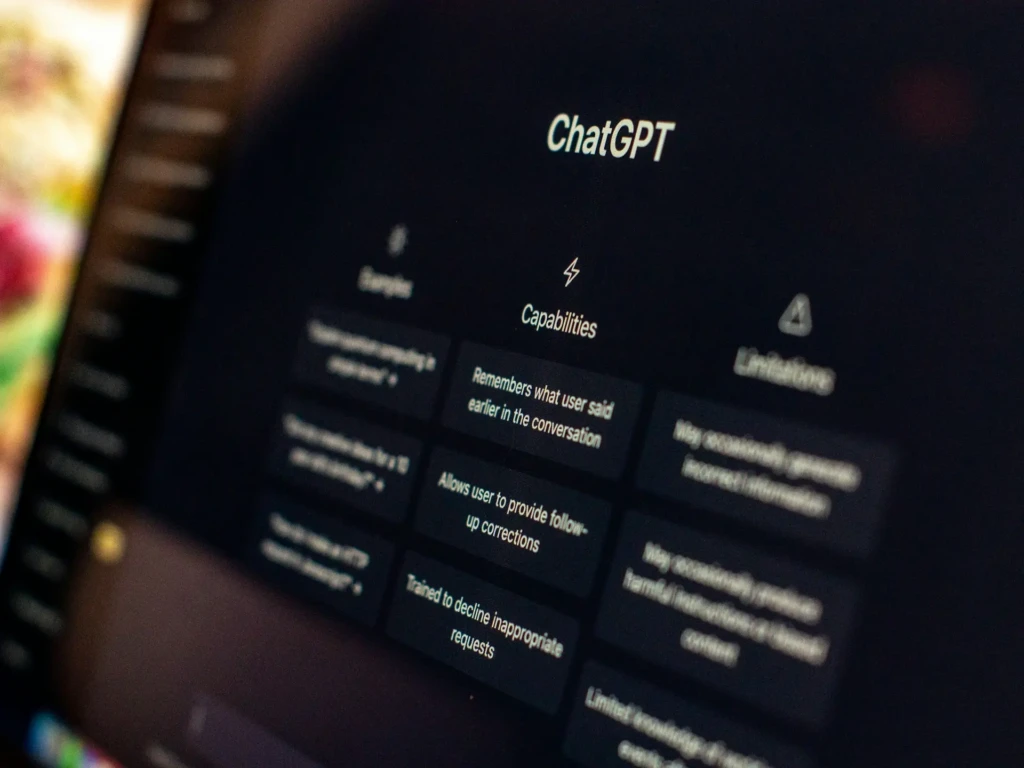
Chat GPT 4 is best understood as a capable language model that excels at structured text generation, reasoning support, and productivity assistance, rather than a replacement for human expertise. When used with clear prompts and realistic expectations, it can meaningfully support tasks such as writing, research summarization, coding assistance, and learning. However, its limitations, particularly around real-time accuracy, context boundaries, and occasional hallucinations, make it important to evaluate outputs critically and verify information when precision matters.
At the same time, ChatGPT -4 does not exist in isolation within the AI ecosystem. Tools like DeepSeek offer different strengths when compared directly, as explored in this DeepSeek vs ChatGPT comparison, while developer-focused solutions such as GitHub Copilot serve more specialized roles in programming workflows, as explained in this GitHub Copilot guide. For users who prioritize cited answers and search-style responses, alternatives like Perplexity AI may also be a better fit in certain scenarios. Looking at these tools side by side has reinforced my view that the real value comes from choosing the right AI for the right task, rather than expecting a single model to do everything well.
FAQs About Chat GPT 4
No. Access to GPT-4 generally requires a subscription tier, with model access limited under free plans.
Accuracy varies by task; for structured prompts and well-defined contexts, output tends to be reliable, but hallucinations are still possible.
Not inherently; web browsing must be explicitly enabled or integrated.