The Upside app is a free cashback rewards app that puts real money back in your pocket every time you buy gas, groceries, or eat at a participating restaurant, and the keyword there is real. No points, no credits, no confusing reward systems that take you three clicks to figure out what they’re actually worth. Just actual cash you can transfer straight to your bank account, PayPal, or redeem it as a gift card at major retailers. Upside partners with over 100,000 gas stations, grocery stores, and restaurants across the US, and frequent users earn an average of $270 to $290 per year simply by claiming offers on purchases they were already making.
That said, the most important thing to understand before you download is that Upside’s value varies significantly depending on where you live and how consistently you use it. In major metro areas with dense networks of participating merchants, you can claim offers multiple times a week without changing your routine. In rural areas, the map might show only a handful of participating locations within a reasonable driving distance. This review tells you exactly how the app works, what the savings look like in practice, how it compares to competitors like GasBuddy, Ibotta, and Fetch, and whether it deserves a permanent spot on your phone.
A note before we begin: every YTC score is earned, never negotiated. If you want to understand exactly how we evaluate apps & tools and how we handle affiliate relationships, our Review Methodology lays it all out.
What Is the Upside App?
Upside was founded in 2016 by Alex Kinnier in Washington, DC, originally under the name GetUpside, and later rebranded as Upside as the platform expanded beyond gas to include groceries and restaurants. The business model is cleverly straightforward: Upside partners with merchants who want to attract new customers and increase transaction frequency.
Those merchants pay Upside a fee for delivering customers, and Upside shares a portion of that fee back with you as cashback. Consequently, the money you receive isn’t coming from an unexplained discount; it’s a slice of the marketing budget the merchant would have spent on acquiring customers through other channels anyway.
Upside is available on iOS and Android and accessible via a web browser, though the mobile app provides the best experience for claiming offers on the go. It’s a US-only product; there’s currently no international version.
Participating gas brands include Shell, BP, Exxon, Mobil, Chevron, Marathon, Sunoco, Speedway, Valero, and 7-Eleven, among others. Restaurant partners include Applebee’s, Taco Bell, KFC, Wendy’s, Burger King, Domino’s, Papa John’s, Arby’s, and Popeyes. Additionally, grocery partners vary by region and continue to expand regional chains. Currently, regional chains have stronger representation than national ones.
How Does the Upside App Work?
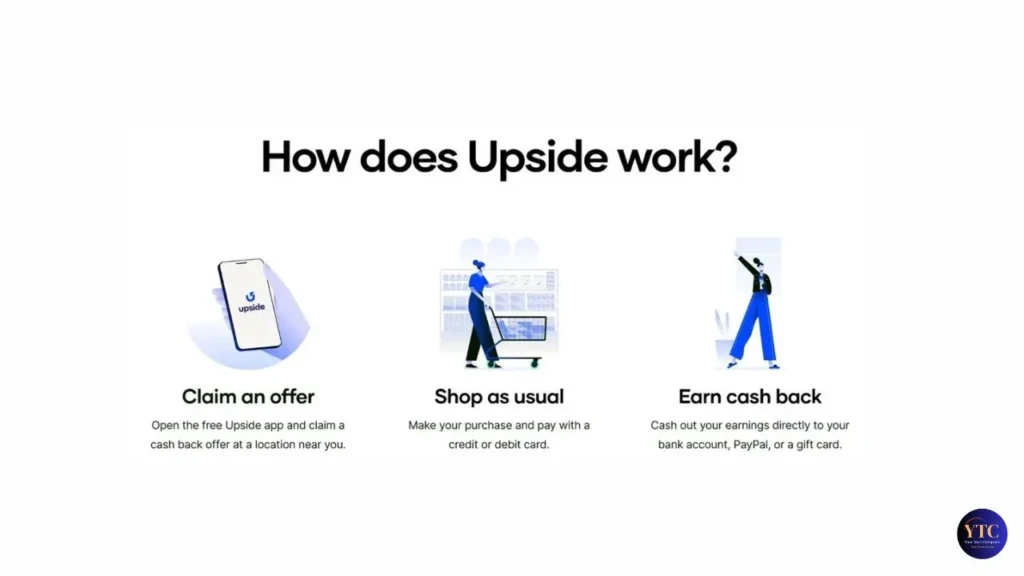
The process is simple, but one step is non-negotiable: you must claim the offer before you make the purchase. This is the single most common reason users miss out on cashback: they forget to open the app first. Here’s exactly how it works, step by step:
- Download the app for free on iOS or Android and create your account.
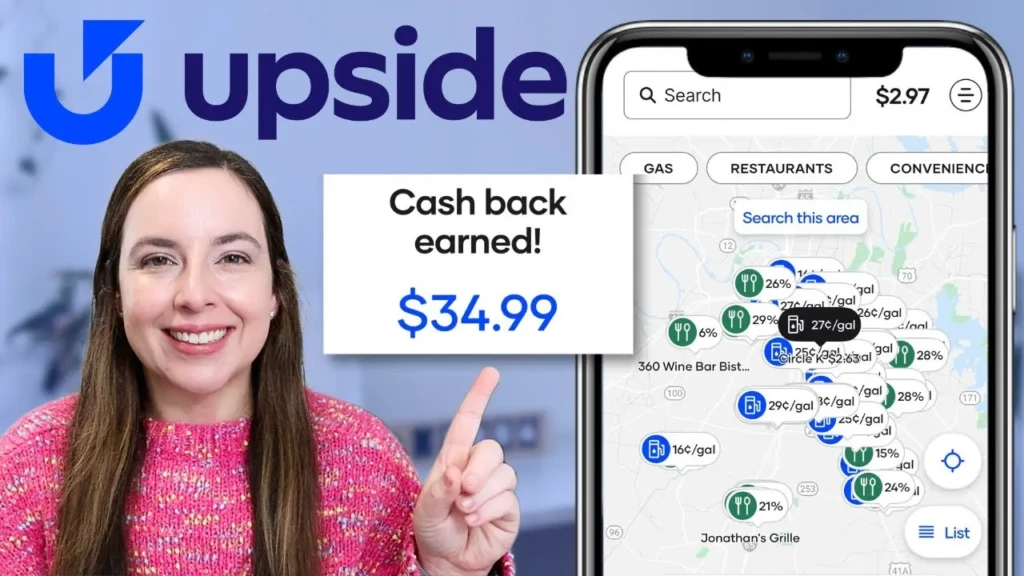
- Open the app and browse nearby offers displayed on an interactive map. You’ll see participating locations with their cashback rates shown directly on the map.
- Claim the offer by tapping it before you arrive or before you pay to lock in your cashback rate.
- Make your purchase with any credit or debit card (Apple Pay, Google Pay, Samsung Pay, and other digital wallets are also accepted at most locations).
- Verify the purchase; for gas, link your card for automatic verification; for groceries and restaurants, upload a photo of your receipt within the app.
- Cashback is credited to your Upside account within 48 hours.
- Cash out to PayPal, bank account via ACH transfer, or as a gift card whenever you’re ready.
One practical note worth flagging: if you earn less than $15 and choose to cash out to a bank or PayPal, Upside charges a $1 fee. Gift card redemptions have no minimum fee. Beyond that, your cashback balance never expires, so there’s no urgency to cash out if you’d rather let it accumulate.
How Much Can You Actually Save?
Here’s the honest breakdown of what Upside delivers in practice (not the best-case scenario from the marketing copy, but the realistic range backed by real user data).
Gas
Gas is where most users start, and where the app delivers the most consistent value for the largest number of people. Cashback typically ranges from 2 to 25 cents per gallon, with most real-world transactions averaging 10 to 15 cents per gallon.
The Ways to Wealth tracked their personal earnings from December 2025 through January 2026 and reported gas cashback averaging 13 to 14 cents per gallon across Shell and BP transactions, which aligns with what most regular users report. A driver who fills up 50 gallons per month at an average price of 12 cents per gallon saves approximately $72 per year on gas alone, without changing any purchase decisions.
Restaurants
Restaurants deliver the highest cashback percentages on the list, typically 8% to 45% back at participating locations. National chains like Applebee’s and Arby’s regularly appear at 8% to 15%, while promotional offers at smaller chains can push higher. Additionally, restaurants are the most reliably dense category in urban areas; you’ll almost always find participating options nearby if you’re in a city.
Groceries
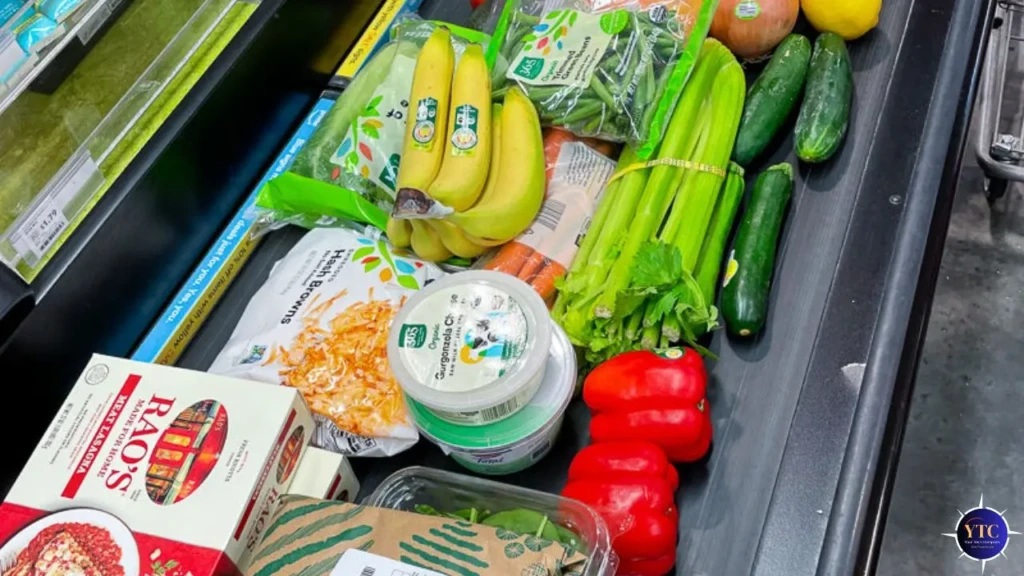
Groceries vary the most by region. Where participating stores are present, particularly regional chains like The Fresh Market, Giant Eagle, and Price Chopper, cashback ranges from 3% to 30%, with 10%+ achievable at some locations. The same Ways to Wealth user discussed above earned $12.14 on a single trip to Fresh Market at 21% cashback, which is meaningful savings for a single grocery run. However, the honest caveat is that major national chains (Kroger, Walmart, Target) are not broadly represented as of early 2026, which limits grocery value for users who primarily shop at those stores.
The Stacking Strategy
The stacking strategy is where Upside’s value compounds significantly. You can use Upside simultaneously with a cashback credit card and Ibotta (for product-level grocery rebates) on the same transaction (three layers of cashback on one purchase for about 30 seconds of extra effort). This stacking approach is why the most consistent Upside users report average annual earnings well above $270.
Upside App Key Features
Map-Based Offer Discovery
When you open Upside, you see a map of your area with participating locations marked and their cashback rates displayed directly on the map. You can compare multiple gas stations side by side, not just by price, but by how much you get back, which lets you make genuinely informed decisions about where to stop. This map interface is intuitive enough that even first-time users can navigate it confidently in their first session.
Card Linking
For gas purchases specifically, you can link a credit or debit card to your Upside account for automatic transaction verification. That means you claim the offer in the app, pump your gas, pay with your linked card, and the cashback processes without you needing to upload anything.
Card information is encrypted by Stripe, the same payment infrastructure used by millions of businesses worldwide. Consequently, card linking is the single biggest quality-of-life improvement you can make to your Upside workflow if you frequently fill up.
Receipt Upload
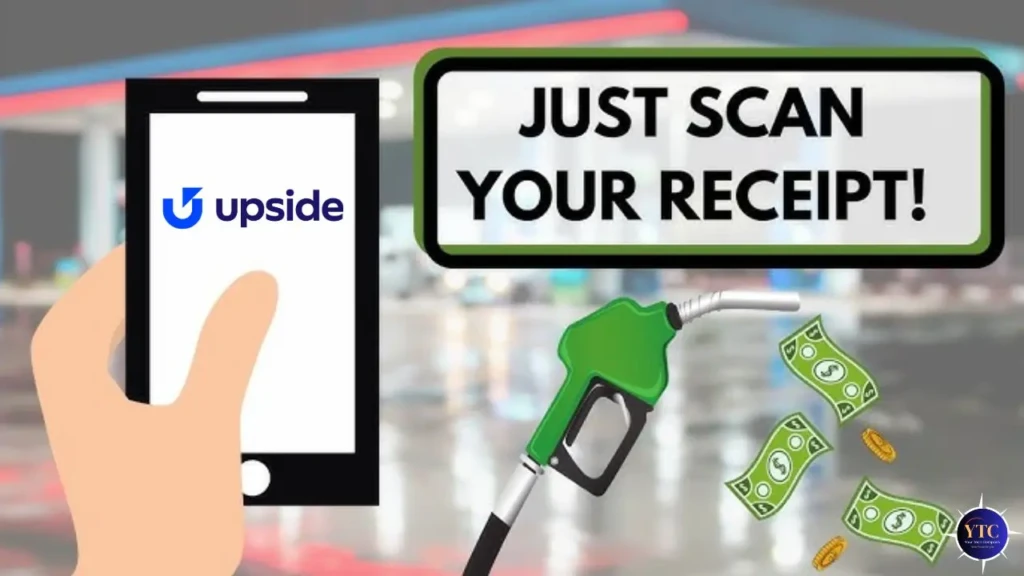
For grocery and restaurant purchases, you upload a photo of your receipt through the app after completing the transaction. The receipt must be clear and complete and submitted within the app’s time window (typically 7 days).
Blurry or incomplete photos are the most common cause of rejected claims. Therefore, take the photo in good lighting and make sure the store name, date, and total are visible.
Referral Program
Upside’s referral program is one of its most compelling long-term features. When you refer a new user who signs up and makes their first gas purchase of $10 or more, you both receive a bonus.
Beyond the first-time bonus, you earn a per-gallon bonus every time your referral buys gas for life, and you also earn on their referrals’ purchases. For active users who refer multiple friends, the compounding referral income can meaningfully exceed the standard cashback earnings over time.
Cash Out Options
You can cash out to PayPal or a bank account via ACH transfer, or as gift cards at major retailers, including Amazon and Walmart. PayPal and ACH transfers typically arrive within 2 business days of initiation. Additionally, gift card redemptions are processed faster (often within minutes) and have no minimum threshold, making them the most frictionless option for smaller balances.
Upside vs Competitors
Feature | Upside | GasBuddy | Ibotta | Fetch Rewards | Rakuten |
Cash Type | Real cash | Gas savings only | Real cash | Points → gift cards only | Real cash |
Gas Cashback | ✅ Up to 25¢/gal | ✅ Instant pump savings | ❌ No | ⚠️ Receipt scan (points) | ❌ No |
Grocery Cashback | ✅ 3%–30% (store-level) | ❌ No | ✅ Product-level offers | ✅ Any receipt (points) | ❌ No |
Restaurant Cashback | ✅ 8%–45% | ❌ No | ⚠️ Limited | ⚠️ Limited | ✅ Select chains |
Online Shopping | ❌ No | ❌ No | ✅ Yes | ✅ Yes | ✅ Primary focus |
Payout Method | Bank / PayPal / Gift card | Gas card only | Bank / PayPal / Gift card | Gift cards only | Check / PayPal |
Referral Program | ✅ Lifetime per gallon | ❌ No | ✅ One-time bonus | ✅ Points bonus | ✅ One-time bonus |
US Only? | ✅ US only | ❌ US + Canada | ✅ US only | ✅ US only | ❌ Multiple countries |
Free to Use | ✅ Yes | ✅ Yes | ✅ Yes | ✅ Yes | ✅ Yes |
Upside vs GasBuddy
GasBuddy shows real-time, crowd-sourced gas prices for free, and the price-finding utility is genuinely useful and doesn’t require any purchase. GasBuddy Pay delivers instant pump savings linked to a checking account, and it works at 95% of US gas stations (significantly broader coverage than Upside).
However, GasBuddy’s rewards are gas-station-only and redeemable only through their gas card; no PayPal, no bank transfer, no grocery or restaurant coverage. Upside wins on cashback flexibility and breadth of merchant categories. Crucially, you can use both simultaneously, claim an Upside offer, and use GasBuddy’s price information to pick the cheapest participating station in your area.
Upside vs Ibotta
Ibotta delivers product-level cashback on specific grocery items. You activate offers for a particular pasta brand or yogurt before you shop, then submit your receipt.
Upside gives you a percentage back on your entire grocery transaction at participating stores, with no item-level requirements. They’re complementary, not competing; stack both on the same grocery trip for maximum savings at stores where both are active.
Upside vs Fetch Rewards
Fetch is a points-based app; you scan any grocery, restaurant, or gas receipt to earn points redeemable only for gift cards. There’s no direct bank transfer option and no real cash payout.
Fetch has a broader acceptance of receipts than Upside (nearly any receipt earns something), but Upside pays in cash rather than points that must be converted. If real cash matters to you (and it should), Upside is the stronger choice in its specific categories.
For more tools that help you manage money transfers and payment apps alongside cashback, our Cash App guide and our Zelle app review cover two of the most widely used payment platforms you can use to receive your Upside cashback payouts.
Is the Upside App Legit and Safe?
Yes. Upside is a legitimate company. It’s backed by major venture capital investors, has reached a $1.5 billion valuation, has paid out over $1.5 billion in cashback to users, and maintains a B rating with the Better Business Bureau. It is not a scam, a survey trap, or a points-to-nowhere program. The cashback is real money deposited into a real account.
On the data privacy question, be honest with yourself about the trade-off you’re making. Upside collects your location data, purchase history, and transaction information, which allows it to know when to credit your cashback and to prove to merchants that you visited their location.
Card information is encrypted using Stripe, the same infrastructure securing millions of legitimate transactions daily. However, the privacy trade-off is the same as any cashback or loyalty program: you share behavioral data in exchange for financial rewards. If you’re comfortable with a grocery store loyalty card, you’ll be comfortable with Upside.
The most common legitimate complaints in user reviews include missing cashback on transactions (usually due to forgetting to claim the offer before purchase), slow customer support responses, and rejected receipts for image quality issues. None of these are scam indicators; they’re standard friction points in any rewards app workflow, and all three are largely avoidable through habit and attention.
Limitations and Honest Drawbacks
Geographic Density Is the Biggest Variable
In dense urban areas, such as New York, Los Angeles, Chicago, and Atlanta, participating merchants are plentiful, and the app delivers consistent value. In rural and suburban areas, you may open the map and find only one or two participating locations within a 10-mile radius, which significantly limits how often you can earn. Before committing to the app, open it and check the map for your actual area first.
Claiming Before Purchase Is Mandatory and Easy to Forget
This is the most common reason users report disappointment with Upside: they made the purchase, remembered Upside afterward, and missed out on the cashback. The solution is a specific habit: treat opening Upside the same way you treat checking Google Maps before driving somewhere. Make it the first tap before you start the car.
Cashback Rates Fluctuate Without Notice
The same gas station that offered 18 cents per gallon on Tuesday might show 7 cents on Thursday. Upside adjusts offers dynamically based on merchant demand, time of day, and competitive factors, so you can’t plan your savings with precision in advance. Additionally, the grocery category remains underdeveloped in many regions, with major national chains largely absent from the partner network as of early 2026.
Who Is the Upside App Best For?
Daily Commuters
Daily commuters get the most consistent value from Upside with the least effort. If you fill up your tank every week at a participating station, the cashback accumulates automatically as a side effect of your existing routine, no behavioral change required.
Families With Large Grocery Budgets
Families with large grocery budgets benefit significantly when grocery stores participating in the program are in their area. A 10% cashback offer on a $200 weekly grocery run is $20 back ($1,040 per year), which is meaningful money. Additionally, stacking Upside with Ibotta and a cashback credit card on the same grocery trip yields the highest per-trip return among available strategies without changing what you buy.
Budget-Conscious Users Who Want Real Cash
Budget-conscious users who want real cash will appreciate that Upside pays directly to PayPal or a bank account, not in points, credits, or complex redemption systems. Therefore, if you’ve been frustrated by reward apps that make you jump through hoops to access money that barely feels real, Upside’s direct payout model is a genuinely refreshing contrast.
For more money apps worth knowing about, our Apps and Tools section covers practical apps and tools for everyday use.
Who Should Skip It?
Users in rural areas with few participating merchants nearby, anyone who finds the pre-claiming step too disruptive to their workflow, and users outside the US, where the app is not available.
FAQs
Yes, completely free to download and use. There are no subscription fees or membership costs. The only fee is a $1 withdrawal charge if you cash out less than $15 to a bank or PayPal. Gift card redemptions have no minimum fee.
Yes. Card data is encrypted by Stripe, one of the most widely trusted payment security platforms. Card linking is optional; you can also upload receipts manually without linking any card.
Gas cashback typically processes within a few hours. Grocery and restaurant cashback (via receipt upload) typically takes 24 to 48 hours to process. After you initiate a cashback withdrawal, bank ACH transfers arrive within 2 business days; PayPal transfers are typically faster; gift cards are often processed within minutes.
Yes. Upside works with credit cards, debit cards, Apple Pay, Google Pay, Samsung Pay, and most other digital payment methods at participating locations. Using a cashback credit card in addition to an Upside offer is the recommended stacking approach for maximum savings.
No. Upside only works at participating partner stations. However, with partnerships covering major brands such as Shell, BP, Exxon, Mobil, Chevron, Marathon, Valero, and others, there’s a reasonable chance that at least one participating station is near you in most US markets. Check the app map for your specific area before counting on it.
Conclusion
Upside is exactly what it claims to be: a free, legitimate cashback app that puts real money back in your pocket on purchases you were already going to make. For daily commuters, frequent drivers, and families with consistent grocery budgets in areas with good merchant coverage, the app delivers genuine, tangible savings that compound meaningfully over the course of a full year. Frequent users, averaging $270 to $290 annually, aren’t outliers; they’re people who formed one simple habit: claiming the offer before purchase. The referral program adds another revenue stream for anyone willing to share the app with a few friends.
The honest ceiling is equally worth naming. Upside won’t transform your finances, and it won’t work at all if you’re in an area with sparse merchant coverage or if you consistently forget to claim offers before making a purchase. It functions best as one tool in a broader savings stack: Upside for the transaction-level cashback, Ibotta for product-level grocery rebates, and a cashback credit card for the third layer on top. Use it that way, and you’ll consistently earn more on the same purchases you were making anyway, without changing a single buying decision.
At YourTechCompass, every guide is written to give you accurate, practical information; no sponsored fluff, no vague advice. Explore more and find the answers you’re actually looking for.