Language-learning apps have reshaped how adults and beginners alike learn a new language. When it comes to the long-standing debate between Duolingo vs Babbel, the core question for many learners is straightforward: should you choose a gamified, free platform with broad accessibility or a structured, subscription-based system focused on deeper instruction? Both apps have strong followings, but their methodologies, pricing, and learning outcomes differ in important ways, and those differences matter depending on your goals and learning style.
In this detailed comparison, I break down the key features of these two popular platforms to help you make an informed choice that suits your needs and schedule. By the end of this article, you will understand the strengths and weaknesses of Duolingo and Babbel across key dimensions, including lesson structure, pricing, skill focus, and real-world effectiveness.
Duolingo vs Babbel: Quick Comparison Overview
To start, here’s a quick snapshot of how Duolingo and Babbel differ in philosophy and execution, two factors that often determine which app aligns best with your learning goals.
Feature | Duolingo | Babbel |
Learning Approach | Gamified, playful drills | Structured, course-like lessons |
Best For | Casual or beginner learners | Learners seeking guided progression |
Grammar Instruction | Implicit, limited | Explicit, robust |
Speaking & Listening Practice | Basic speech recognition included | Practical conversation and listening focus |
Languages Offered | Very broad list of languages | Limited language selection |
Pricing | Free with a premium subscription option | Subscription required (no freemium tier) |
Lesson Customization | Lower | Higher |
Above all else, the Duolingo vs Babbel comparison boils down to the depth of instruction versus accessibility, two different but valuable approaches depending on the use case.
What Is Duolingo?
Duolingo is a freemium language learning platform that has become one of the most downloaded educational apps worldwide. Operating on a model that blends free access with optional subscription upgrades, Duolingo uses gamification to motivate users to practice daily. Learners earn points (XP), maintain streaks, and unlock achievements as they progress through bite-sized lessons designed to build vocabulary and basic sentence structures.
One of Duolingo’s defining characteristics is its highly engaging interface. Rather than traditional grammar explanations, Duolingo places learners in context and encourages grammar acquisition implicitly through repeated exposure to patterns and sentence-level exercises. While some studies show that Duolingo can effectively improve reading and listening proficiency (comparable to semesters of university study), its implicit grammar teaching method may not suit every learner.
What Is Babbel?
In contrast, Babbel is a subscription-based language learning platform built around structured lessons and clear explanations of grammar and everyday conversation. Rather than relying on gamified repetition, Babbel emphasizes pedagogically sound progression through curated courses created by language professionals. Lessons are typically short but focused, providing explicit grammar rules, vocabulary in real-world context, and practical conversation exercises.
Babbel’s design philosophy revolves around helping learners understand why a language works the way it does. This structured approach is often more effective for learners who are serious about making measurable progress rather than those seeking casual practice. While Babbel supports fewer languages compared with Duolingo, its lessons are consistently deeper and richer in content.
Learning Experience: Gamification vs Structured Courses
The most noticeable difference between Duolingo and Babbel is the learning experience itself. Duolingo leans heavily into gamification, points, streaks, and levels, which keep users coming back day after day, helping build consistent habits.
This approach is enjoyable for many beginners and constructive if motivation is your main barrier to sticking with language practice. However, research suggests that overuse of gamification may distract learners from deeper engagement with linguistic structure.
By contrast, Babbel’s structured courses resemble classroom learning more than games. Lessons build logically from fundamental topics to more advanced structures, and explicit grammar notes make it easier to understand not just what to say, but why, a valuable distinction for learners aiming for fluency. For this reason, Babbel often feels more serious and less “playful” than Duolingo, but it also equips learners with tools for practical communication.
Language Coverage and Course Depth
When comparing Duolingo vs Babbel in terms of language selection, Duolingo wins on sheer breadth. Duolingo offers dozens of languages, ranging from popular ones like Spanish and French to niche or constructed languages, making it accessible if you want to explore several languages without financial commitment. Babbel, by contrast, offers a more limited set of languages with deeper, professionally developed content for each.
If your priority is dipping into multiple languages or sampling different language families, Duolingo’s extensive catalog may appeal more. Conversely, if you want to focus on mastering one language with structured progression and content depth, Babbel’s offerings tend to align more closely with that objective.
Speaking, Listening, and Grammar Training
Both platforms incorporate speaking and listening practice, but in fundamentally different ways. Duolingo uses speech recognition exercises that provide basic feedback on pronunciation but don’t simulate real conversation. This is useful for initial exposure, yet it often falls short of fostering conversational fluency.
Babbel’s lessons, on the other hand, integrate listening comprehension with dialogues that mirror real life and guided speaking exercises. Moreover, Babbel delivers explicit grammar explanations embedded within lessons, a key advantage for learners who want to understand language rules rather than infer them through repetition.
Pricing and Subscription Value
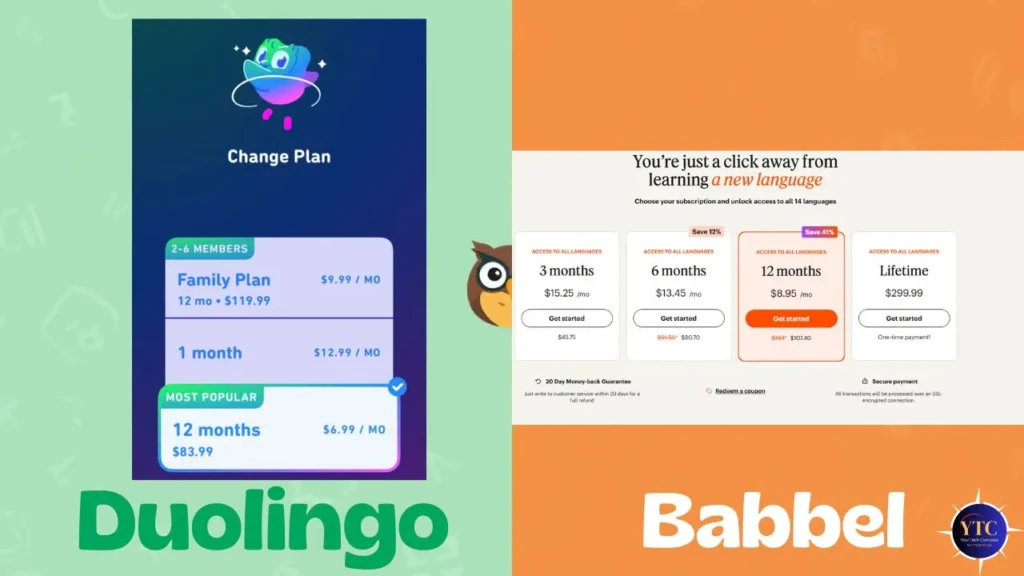
One of the most tangible differences in the Duolingo vs Babbel debate is pricing.
- Duolingo: Free tier with ads and limitations; optional premium removes ads and adds features.
- Babbel: Subscription-only model with tiered plans, no freemium option.
Duolingo’s free model dramatically lowers the barrier to entry, which makes it ideal for casual learners or those trying language learning for the first time. Babbel’s subscription cost reflects its structured content and pedagogical design, but it also means learners must commit financially before fully accessing the platform’s advantages.
Ease of Use and Platform Availability
Both Duolingo and Babbel are available on mobile and desktop, allowing learners to practice wherever they are. Duolingo’s interface emphasizes simplicity and engagement, making it easy for beginners to jump right in.
Babbel’s interface is similarly intuitive, though its structured nature might feel more like a traditional learning environment than a game. Both platforms offer offline access with paid plans, which adds convenience for studying on the go.
Who It’s Best For
Choose Duolingo if:
- You want a free or low-cost way to start learning
- You’re motivated by gamified rewards and daily streaks
- You plan to explore multiple languages casually
Choose Babbel if:
- You want structured lessons with explicit grammar explanations
- You’re focused on practical language use and conversation
- You are willing to pay for guided progression
Duolingo vs Babbel for Different Use Cases
- Absolute Beginners: Duolingo’s playful format offers a gentle, engaging introduction.
- Travelers: Babbel emphasizes useful phrases and real-world dialogues.
- Students and Professionals: Babbel’s structure aids measurable skill acquisition.
- Long-term Fluency Seekers: Babbel’s depth supports sustained growth.
For supplementary insights on building habits and structuring productivity in other domains, see how apps such as Google Keep can help you organize study routines in our Google Keep Explained guide. Also, broaden your comparative analysis skills by reviewing unrelated app comparisons, such as Mint vs Rocket Money, to see how pricing and user experience influence choice.
Final Verdict: Duolingo vs Babbel
In the Duolingo vs Babbel showdown, there is no absolute winner; each platform excels in its own arena. Duolingo’s freemium, gamified model makes language learning accessible, fun, and habit-forming, especially for beginners and casual learners. Babbel’s structured courses and explicit instruction, on the other hand, better support learners focused on serious progression and real-world communication.
Ultimately, the best choice depends on your goals: if consistency and low cost matter most, Duolingo delivers strong value. If depth, structure, and conversational readiness are your priorities, Babbel is more likely to justify its subscription cost. I encourage you to evaluate your learning style and objectives against the strengths outlined here when selecting the platform that will keep you progressing day after day.
FAQs
Duolingo’s gamified approach makes it easier to start without pressure, but Babbel’s structured lessons may promote better early retention.
Duolingo can significantly boost reading and listening skills, but achieving conversational fluency typically requires additional practice outside the app.
If your goal is structured learning and practical communication skills, many users find Babbel’s subscription worthwhile.
Babbel’s guided dialogues and speaking drills generally offer more practical speaking practice than Duolingo’s basic speech recognition.
At Your Tech Compass, we publish detailed tech guides, reviews, and comparisons to help users choose the right devices and tools.