Generative AI is one of those terms that seems to appear everywhere, from productivity apps and search engines to art tools and customer support systems. Yet despite how common the phrase has become, many people are still unclear about what generative AI actually is and why it matters. At a glance, it sounds complex or overly technical, but the core idea is surprisingly straightforward once it’s broken down properly.
In this article, I’ll explain what generative AI is in plain language, how it works behind the scenes, and how it’s already being used in tools you may interact with daily. I’ll also walk through its benefits, limitations, and risks so you can understand both the opportunity and the responsibility that comes with it. My goal here is clarity, not hype, so by the end, you’ll know exactly where generative AI fits into the broader tech landscape and how to approach it realistically.
What Does “Generative AI” Actually Mean?
Before diving deeper, it helps to start with the term itself.
Generative AI refers to artificial intelligence systems that can create new content rather than analyze or classify existing data. That content can take many forms, including text, images, audio, video, or even computer code.
In contrast to older AI systems that followed fixed rules or answered within narrow boundaries, generative AI produces original outputs based on patterns it has learned. This is why it can write essays, generate artwork, summarize research, or simulate conversations in a way that feels natural and human-like.
What Is Generative AI? (Plain-Language Definition)
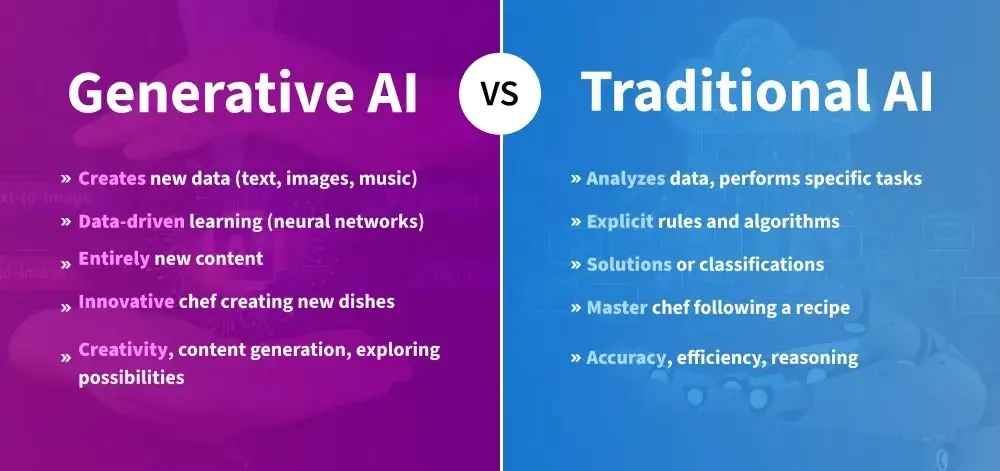
Put simply, generative AI is a type of AI that learns from massive amounts of data and then uses that learning to generate new material that resembles what humans create.
The word generative is key here. Instead of just recognizing patterns, such as identifying faces in photos or flagging spam emails, generative AI predicts what comes next. For example, when generating text, it predicts the next most likely word based on context. When generating images, it predicts how pixels should be arranged to match a prompt.
Because of this, generative AI systems are flexible, creative, and adaptable across many tasks.
How Generative AI Works
Although the math and engineering behind generative AI are complex, the high-level process can be understood in a few logical steps.
First, the AI is trained on enormous datasets. These datasets may include books, articles, images, audio clips, code repositories, or other publicly available information. During training, the model learns patterns, how language flows, how images are structured, and how sounds behave.
Next, the model uses probability to predict outputs. When you give a prompt, the AI does not “look up” an answer. Instead, it calculates the most likely response based on patterns it has learned.
Finally, the output is refined through feedback and tuning. This is how responses become more coherent, helpful, and context-aware over time.
This same foundational approach is used across many tools, whether you’re looking at creative platforms like Character AI or research-focused systems such as Perplexity AI.
Common Examples of Generative AI
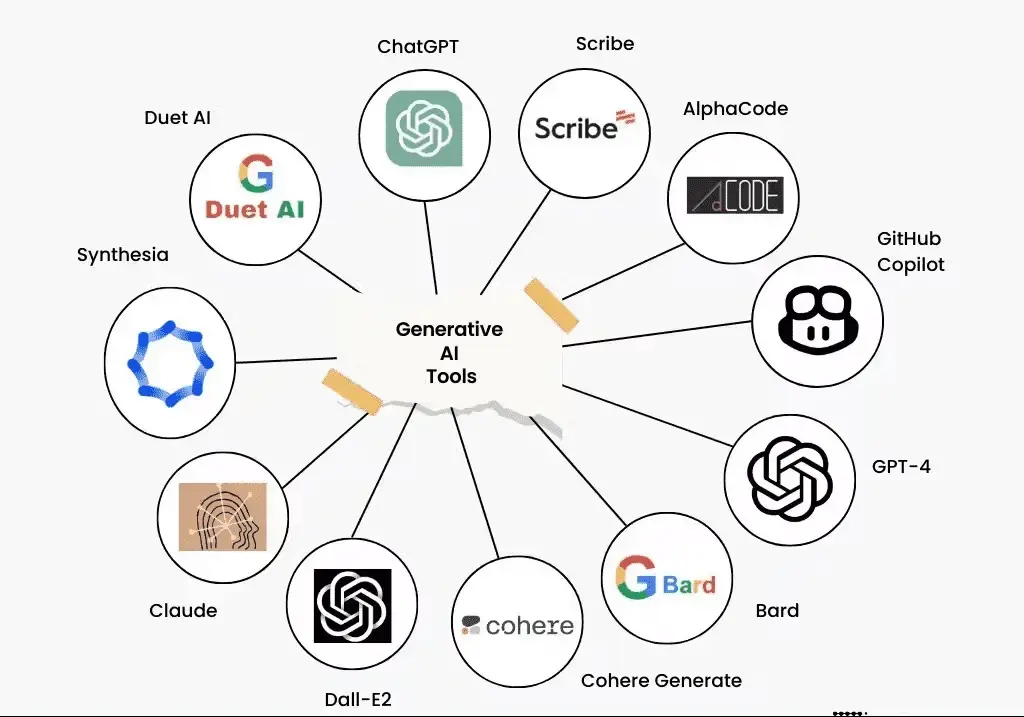
Generative AI shows up in many forms, often without users realizing it.
Text-Based Generative AI
Text generation is one of the most familiar applications. These tools can:
- Write articles, emails, and summaries
- Answer questions conversationally
- Generate or explain code
For example, the tools reviewed in this Blackbox AI review focus heavily on code generation and technical assistance, using generative AI to speed up development.
Image and Art Generation
Generative AI is also widely used to create images, illustrations, and designs. Based on a text prompt, these systems generate visuals that match the specified style, mood, or composition.
This has transformed creative workflows, making visual experimentation faster and more accessible.
Audio and Video Generation
In addition, generative AI can synthesize voices, create music, and even generate video content. Voice assistants, narration tools, and AI-powered customer support voices often rely on these models.
Platforms like Poly AI apply generative AI specifically to conversational voice systems for businesses, showing how the same core technology can be adapted for very different use cases.
Generative AI vs Traditional AI
To better understand generative AI, it helps to compare it with traditional AI approaches.
Feature | Traditional AI | Generative AI |
Primary Function | Analyze or classify | Create new content |
Output Type | Fixed or rule-based | Flexible and creative |
Adaptability | Limited | Highly adaptable |
Human-Like Interaction | Minimal | Strong |
Traditional AI is excellent for tasks such as fraud detection, recommendations, and image recognition. Generative AI, on the other hand, excels at producing new material that feels original and contextual.
How Generative AI Is Used in Everyday Life
Generative AI is already embedded in many everyday tools.
In search and research, it helps summarize information and explain complex topics quickly. When it comes to productivity apps, they assist with drafting documents, brainstorming ideas, and organizing notes. In education, it supports learning through explanations, examples, and practice prompts.
Even customer support systems increasingly rely on generative AI to provide conversational responses rather than rigid scripts, improving user experience while reducing response times.
Benefits of Generative AI
One of the biggest advantages of generative AI is efficiency. Tasks that once took hours, such as writing drafts, researching topics, or generating design concepts, can now be completed in minutes.
In addition, generative AI lowers the barriers to creativity and technical work. People without coding or design backgrounds can still produce useful outputs with the right prompts.
Finally, generative AI supports ideation. It’s particularly strong as a thinking partner, helping users explore options, refine ideas, or approach problems from new angles.
Limitations and Risks of Generative AI
Despite its strengths, generative AI is not without flaws.
One major limitation is hallucination, where the AI produces information that sounds confident but is incorrect. This is especially important in factual or sensitive contexts.
Bias is another concern. Because generative AI learns from existing data, it can reflect biases present in that data. Additionally, copyright and ethical questions arise when AI-generated content resembles existing work too closely.
For these reasons, generative AI should be treated as a tool, not an authority.
Is Generative AI Safe to Use?

Generative AI can be safe when used responsibly. That means avoiding sharing sensitive personal information, verifying important outputs, and understanding the limits of the tool you’re using.
Human judgment is still essential. AI can assist, but it should not replace critical thinking, especially in areas like health, law, or finance.
Who Generative AI Is Best For
Generative AI is especially useful for:
- Students and learners seeking explanations
- Writers, marketers, and creators
- Developers and technical professionals
- Businesses seeking to improve productivity and support
When used thoughtfully, it enhances human capability rather than replacing it.
Who Should Be Cautious Using Generative AI
Caution is advised for:
- Legal, medical, or financial decision-making
- Situations requiring guaranteed accuracy
- Users who may over-rely on AI without verification
In these cases, generative AI should be a secondary aid, not the primary source.
Final Thoughts: Why Generative AI Matters
Generative AI represents a major shift in how we interact with technology. Instead of static tools that wait for instructions, we now have systems that collaborate, suggest, and create alongside us. That shift brings incredible potential, but also responsibility.
When used with the right expectations, generative AI can save time, spark creativity, and make complex tasks more approachable. When misunderstood or overtrusted, it can mislead or create dependency. I see generative AI not as a replacement for human thinking, but as an amplifier, one that works best when guided carefully and used intentionally.
FAQs About Generative AI
No. ChatGPT is one example of a generative AI tool, but generative AI encompasses a broader category of systems that create text, images, audio, and other content.
No. Generative AI can assist and automate tasks, but it lacks judgment, accountability, and proper understanding.
Not always. Some tools use live data, while others rely on training data and do not browse the web in real time.
Many tools offer free versions, but advanced features or higher usage limits often require paid plans.
At Your Tech Compass, we publish practical guides and honest tech reviews to help users make smarter decisions.