Artificial intelligence has become one of the most transformative technologies of this decade, with generative AI assistants powering everything from coding workflows to creative content and research. Two of the most discussed contenders in this space are DeepSeek and ChatGPT. DeepSeek has gained rapid attention for its open-source accessibility and reasoning capabilities, while ChatGPT, developed by OpenAI, is widely regarded as a polished, general-purpose AI assistant with extensive ecosystem support. As both tools evolve, comparing their strengths, limitations, and ideal use cases is essential for anyone choosing the right AI tool for their needs. In this article, we break down DeepSeek vs ChatGPT across key dimensions so you can understand where each excels and where each might fall short.
While DeepSeek has emerged as a rising alternative that emphasizes cost efficiency and open access, ChatGPT’s broad feature set and ecosystem integrations have made it a default choice for many users. As we explore technical performance, ease of use, privacy, and real-world task outcomes, you’ll see that the debate isn’t about which is universally better but which is better for your specific application. By the end of this comparison, you’ll have a clearer picture of when DeepSeek or ChatGPT makes the most sense for creative work, coding tasks, research assistance, or enterprise deployment.
What Is DeepSeek?

DeepSeek is an open-source artificial intelligence model developed by a Chinese company that has rapidly captured attention as a cost-effective alternative to established AI systems. Its models, including DeepSeek-V3 and DeepSeek-R1, are designed with a Mixture-of-Experts (MoE) architecture that activates only parts of the model for specific tasks, making it computationally efficient and cheaper to run than traditional dense transformer models. DeepSeek’s openness and architecture enable users to deploy and customize the model directly, providing flexibility for developers and researchers. Additionally, several adaptations of DeepSeek focus specifically on structured reasoning, mathematics, and coding.
However, despite its rapid adoption and free access, DeepSeek has faced regulatory scrutiny in some regions due to data privacy and security concerns, and questions remain about how its framework handles sensitive queries and content moderation.
What Is ChatGPT?

ChatGPT is OpenAI’s flagship generative AI model, designed as a versatile, general-purpose assistant that can handle conversation, research, creative writing, coding, and more. Unlike DeepSeek, ChatGPT uses a dense transformer architecture, where all model parameters participate in generating responses, which contributes to its general linguistic fluency and contextual adaptability. ChatGPT also offers extensive ecosystem support through plugins, memory, multimodal input (text and images), and robust mobile and web applications, making it broadly accessible for both casual and professional use.
ChatGPT’s development emphasizes safety, contextual understanding, and ease of use, from simple conversational tasks to complex business automation and integration workflows.
DeepSeek vs ChatGPT: Core Differences
When comparing DeepSeek vs ChatGPT, it helps to look at their foundational philosophies:
- Architecture: DeepSeek uses a MoE approach for computational efficiency, whereas ChatGPT employs a dense model that processes all parameters for richer contextual understanding.
- Access & Cost: DeepSeek is generally free and open source, enabling local deployment and customization. ChatGPT follows a freemium subscription model with advanced tiers and ecosystem features.
- Use Cases: DeepSeek often excels at structured tasks such as logical reasoning and technical problem-solving, while ChatGPT shines at creative writing, dialogue, broad general knowledge, and integrated tool use.
Feature-by-Feature Comparison
Here’s how DeepSeek and ChatGPT compare across major capabilities:
Feature | DeepSeek | ChatGPT | Notes |
Architecture | MoE with selective activation | Dense transformer | Efficient vs rich context |
Open-Source | Yes | No (proprietary) | DeepSeek allows local hosting |
Coding & Logic | Strong | Strong | DeepSeek is often faster for math/code logic, and ChatGPT is more polished for general coding support in multiple frameworks |
Creative Writing | Good but structured | Excellent, conversational | ChatGPT excels in natural dialogue |
Multimodal Support | Limited | Advanced (Text + images + plugins) | DeepSeek primarily text |
Cost | Free/low API cost | Freemium + paid tiers | DeepSeek is cheaper for high volume |
Privacy & Regulations | Scrutiny in some regions | Stronger compliance | ChatGPT has robust safety controls, but DeepSeek faces geo restrictions |
Ease of Use | Technical focus | Very user-friendly | ChatGPT is easier for non-technical users |
Ecosystem & Integrations | Smaller | Extensive | ChatGPT integrates with plugins and third-party tools |
Privacy, Data, and Trust Considerations

Privacy and compliance are critical when choosing between DeepSeek and ChatGPT. DeepSeek’s servers and data storage practices have drawn regulatory scrutiny in several countries, leading to bans or restrictions in certain government systems due to concerns about data access and security.
In contrast, ChatGPT’s privacy and compliance frameworks are well established across Western markets, with clear documentation on data handling, enterprise controls, and compliance certifications that support sensitive workflows. This distinction can be decisive for business usage and privacy-sensitive tasks.
Performance in Real-World Scenarios
When put to the test in real tasks, DeepSeek and ChatGPT reveal practical differences:
- Technical Queries: DeepSeek’s reasoning and structure can make it faster and better for logic and mathematics.
- Creative Tasks: ChatGPT typically produces more natural, engaging narratives and handles nuanced prompts more effectively.
- Coding Tasks: Both models are capable, but ChatGPT’s broader framework support and community integration give it an edge for professional developers, while DeepSeek’s step-by-step logic is attractive for analytical debugging.
- Multilingual Support: ChatGPT supports a wider array of languages with smooth conversational ability, whereas DeepSeek’s strength in certain non-Latin scripts is notable but narrower.
Who Each One Is Best For
Best for DeepSeek:
- Developers and researchers who value open-source access and cost efficiency
- Technical problem solving with structured reasoning
- Users who want to run models locally or embed AI in custom systems
Best for ChatGPT:
- Creatives and writers seeking natural language quality
- General users and professionals who value multimodal features and ease of use
- Enterprises needing robust privacy, compliance, and integration support
Limitations and Weaknesses of Each
DeepSeek Weaknesses:
- Limited multimodal and UI integrations compared with mature ecosystems
- Regulatory and privacy concerns in several regions
- Potential gaps in creative language fluency
ChatGPT Weaknesses:
- Paid tiers required for full feature access
- Higher cost per API usage and enterprise scaling
- Less customizable than open-source systems
How They Compare to Other AI Tools
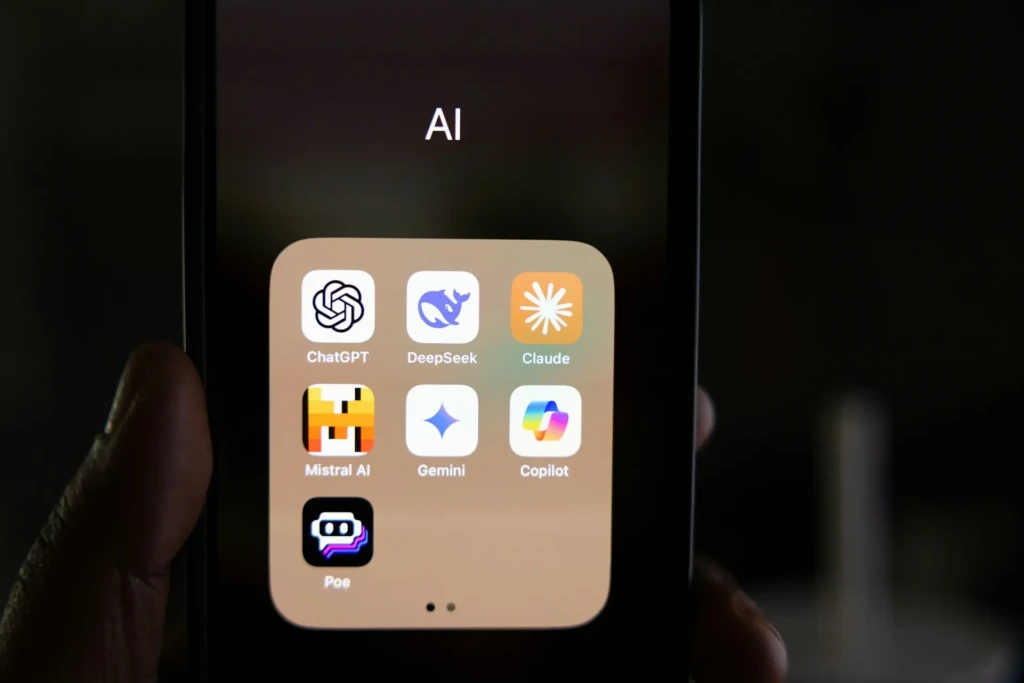
When expanded to broader AI ecosystems, tools like Claude AI emphasize safety and alignment, while Perplexity AI focuses on research citations and context sourcing, and Gemini AI brings advanced multimodal and conversational extensions. DeepSeek and ChatGPT each fit differently within this landscape; for work emphasizing factual retrieval, Perplexity AI may be preferred, while for structure and alignment, Claude AI might suit enterprise workflows. For deeper details on these alternatives, see our analyses of Claude AI Explained, Perplexity AI, and How Gemini AI Works.
Conclusion
Choosing between DeepSeek and ChatGPT isn’t simply about which AI is “better” overall; it’s about which tool aligns with your specific priorities, such as cost, accessibility, reasoning depth, privacy, and ecosystem integration. DeepSeek’s open-source approach and efficient architecture make it very attractive for developers and technical use cases, especially where cost and customization matter most. Conversely, ChatGPT’s polished conversational abilities, rich multimodal support, and enterprise-grade features make it harder to beat for general users, creative tasks, and regulated environments.
Ultimately, both models represent significant advancements in the AI landscape, and one may complement the other rather than replace it outright. I encourage you to consider your most frequent tasks and constraints when choosing an AI assistant that helps you work smarter and more efficiently.
FAQs
It depends on your use case: DeepSeek tends to be cost-effective and efficient for structured tasks, while ChatGPT excels in natural conversation and integrated features.
Yes. DeepSeek excels at code generation and logic tasks, with efficient reasoning.
Yes. ChatGPT supports images and other input types alongside text.
ChatGPT’s established compliance and privacy frameworks make it better suited to regulated environments.
At Your Tech Compass, we publish detailed tech guides, reviews, and comparisons to help users choose the right devices and tools.