

Picture the last week of a ninety-day AI pilot. The demo impressed everyone, the internal champion is still excited, and then someone in finance asks which budget the renewal comes out of. Nobody in the room has an answer, and the project quietly joins a pile that keeps growing: Gartner expects over 40% of agentic AI projects to be canceled by the end of 2027, and MIT’s Project NANDA found that 95% of the organizations in its research saw no measurable P&L return from generative AI.
Buyers have not stopped spending, though. Most AI pitches promise to transform a whole workflow, but most buyers fund something smaller: a fix tied to a budget line they already own. Founders who sell into that line, and prove it with a paid pilot against an agreed baseline, are the ones getting past the pilot stage. This article walks through the evidence from Gartner, MIT, Bain, PitchBook, and Black Duck, three budget lines where narrow AI products already get paid for, a three-gate test to run before you scale, and the limits of the whole argument.
Disclosure: I run Korim, a market research company that tracks funding, procurement, and regulation signals. This article cites one Korim research brief as vendor research, alongside independent sources. I have no commercial relationship with any other company named here.
Quick Verdict
- Best For: Founders selling narrow AI products that solve a measurable problem tied to an existing budget line, such as post-acquisition integration, M&A diligence, or repeatable portfolio workflows.
- Skip It If: You are pitching a broad transformation platform without a named budget owner, a baseline metric, and proof that the same product works for a second customer.
- Bottom Line: The winning AI pitch is not “transform the business”; it is “move a number your buyer already reports upward,” validated through a paid pilot on real systems.
The Pilot Graveyard Is Real, But Demand Is Not the Problem
Enterprise AI has a conversion problem, not a demand problem. In June 2025, Gartner predicted that over 40% of agentic AI projects will be canceled by the end of 2027, citing escalating costs, unclear business value, and inadequate risk controls. A month later, MIT’s Project NANDA reported that 95% of the organizations in its research saw no measurable P&L return from generative AI, despite an estimated $30–40 billion of enterprise spending.
Read quickly, those numbers say buyers are losing faith. Read closely, they say something more useful for founders. Buyers are still spending; they are walking away from projects that cannot show what changed.
Gartner’s own advice in the same release was to pursue agentic AI only where it delivers clear value or ROI. MIT’s data pointed the same way: tools bought from specialized vendors or built with partners succeeded about 67% of the time, at least double the rate of internal builds.
So the buyers getting results are not avoiding AI. They are buying narrower things from people who do one job well.
Over the past year, I have tracked funding rounds, procurement signals, and regulatory deadlines across B2B software. The pattern I keep seeing: the AI products that get paid for are narrow fixes attached to a budget line the buyer already owns. The ones that stall are broad workflow platforms asking for new money.
Why Narrow Fixes Get Funded

Why does a smaller pitch beat a bigger one? Because a broad platform asks a buyer to find new, discretionary money. Someone has to write a business case for a category that does not yet exist in their budget, then defend it against every other priority.
That is a slow, political sale, and it dies the moment a pilot cannot point to a number.
A narrow fix asks for something easier: a share of already allocated money. Think of the integration plan after an acquisition, the diligence line on a deal, the compliance program with a fixed deadline, or the cost-out target the CFO has already promised. Each has an owner, a figure, and a date.
If your product moves that figure, you are not creating a budget. You are competing for one that exists.
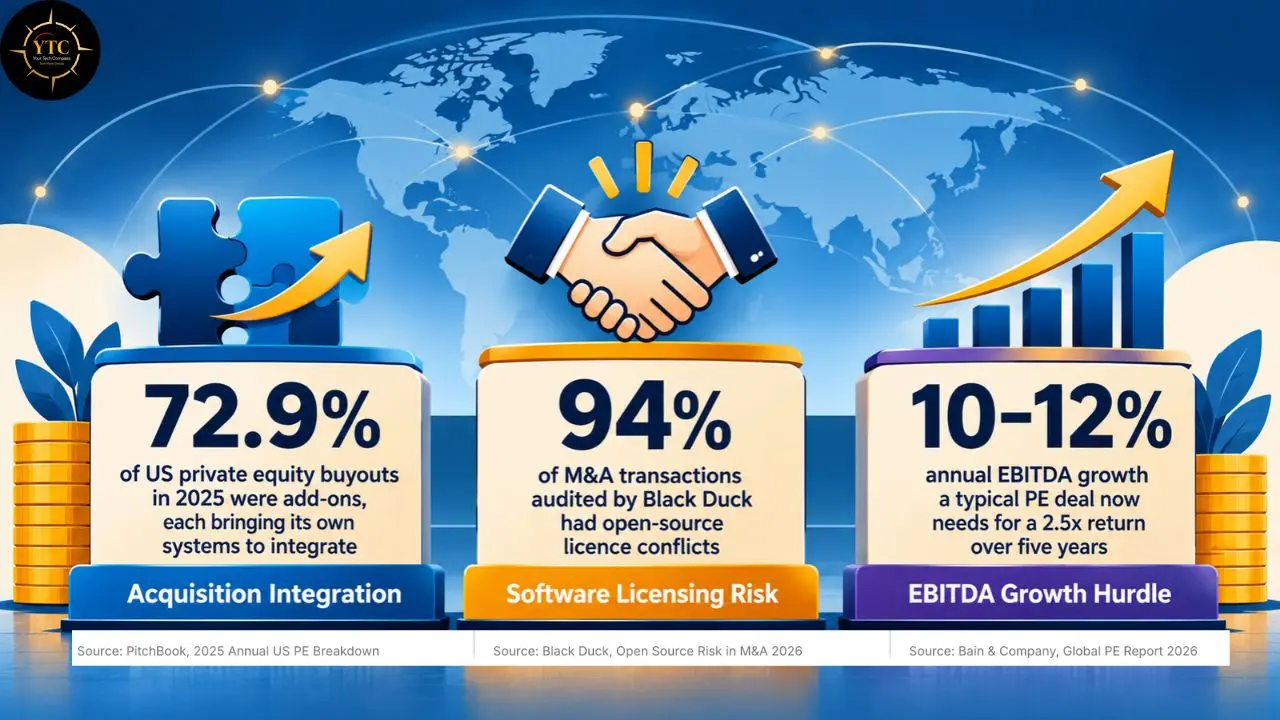
Timing matters because the people holding those budgets are under pressure to show results. Take private equity, where the math has changed. Bain’s 2026 Global Private Equity Report found that a typical deal now needs around 10%–12% average annual EBITDA growth to deliver the benchmark 2.5x return over five years, a shift Bain summarizes as “12 is the new 5.”
Operating partners chasing that number are unlikely to want a transformation program. In my view, they want one workflow that works, which they can roll out across the portfolio again and again.
The same logic holds outside private equity. A finance team with a software cost-out target, or a legal team facing an audit, does not need persuading that the problem matters. It needs proof that your product solves its version of the problem.
The contrast is easier to see side by side.
How the Pitches Differ
This table summarizes the argument above; it is not measured data.
Dimension | Broad Platform Pitch | Narrow Fix |
|---|---|---|
Funding | New, discretionary budget | An existing, allocated line |
Approvals | Several stakeholders defending a new category | The budget owner already accountable for the number |
Success Measure | A debate about “transformation” | One or two numbers already reported upward |
Failure Mode | The pilot ends without a number | Scope creep past the budget line |
Expansion | Starts broad, often stalls | Wedge first, then adjacent lines |
Three Places the Budget Already Lives
To test the idea, my team at Korim ranked ten B2B software opportunities in a research brief, Narrow Software, Real Budgets. We scored each on the strength of its evidence, how clearly a budget holder feels the cost of the problem, and how quickly a narrow first product could earn revenue. This is vendor research, and the method is set out in the methodology note below.
The three strongest openings followed the same pattern, and independent data backs each one. The figure below shows them side by side before we take them in turn.
Integration Debt After Acquisitions
Add-ons made up 72.9% of US private equity buyouts by deal count in 2025, according to PitchBook. Many add-ons bring separate systems, supplier records, and inventory data. Integration work often has a budget, an owner, and a deadline, and it recurs as platforms continue making add-ons.
The opportunity is not a replacement ERP. It is a connector layer that gives shared supplier records and consolidated stock visibility across the systems a group already runs. In practice, that means selling into the integration plan rather than asking anyone to rip out what works.
Hidden Risk in Diligence
Black Duck’s 2026 review of codebases audited for M&A found open-source license conflicts in 94% of transactions. Diligence already has a budget line and a deadline. A tool that records where code components came from, flags conflicts, and produces a report a human can sign off on fits into that line.
A caution on the source: Black Duck sells audit services, and the figure comes from its own audits, so it describes its sample rather than every deal. Even so, the direction is hard to ignore. A product here does not need to become a code-security platform to get paid.
Repeatable Workflows for PE Portfolios
Bain’s “12 is the new 5” target gives operating partners a growth number they are already accountable for. By my read, most portfolio automation is still bespoke, so each project starts from scratch.
The fundable product is one reusable workflow, such as getting ERP data into a warehouse, with connectors, approval controls, and a results dashboard measured against a baseline. Sold once, it can be deployed again across the portfolio.
What these three share is not the technology. Each one plugs into money that someone is already accountable for spending well.
The Test: A Paid Pilot Against an Agreed Baseline
If narrow fixes get funded, how do you know whether yours is one? I use a simple three-gate test. Pass all three before you scale.
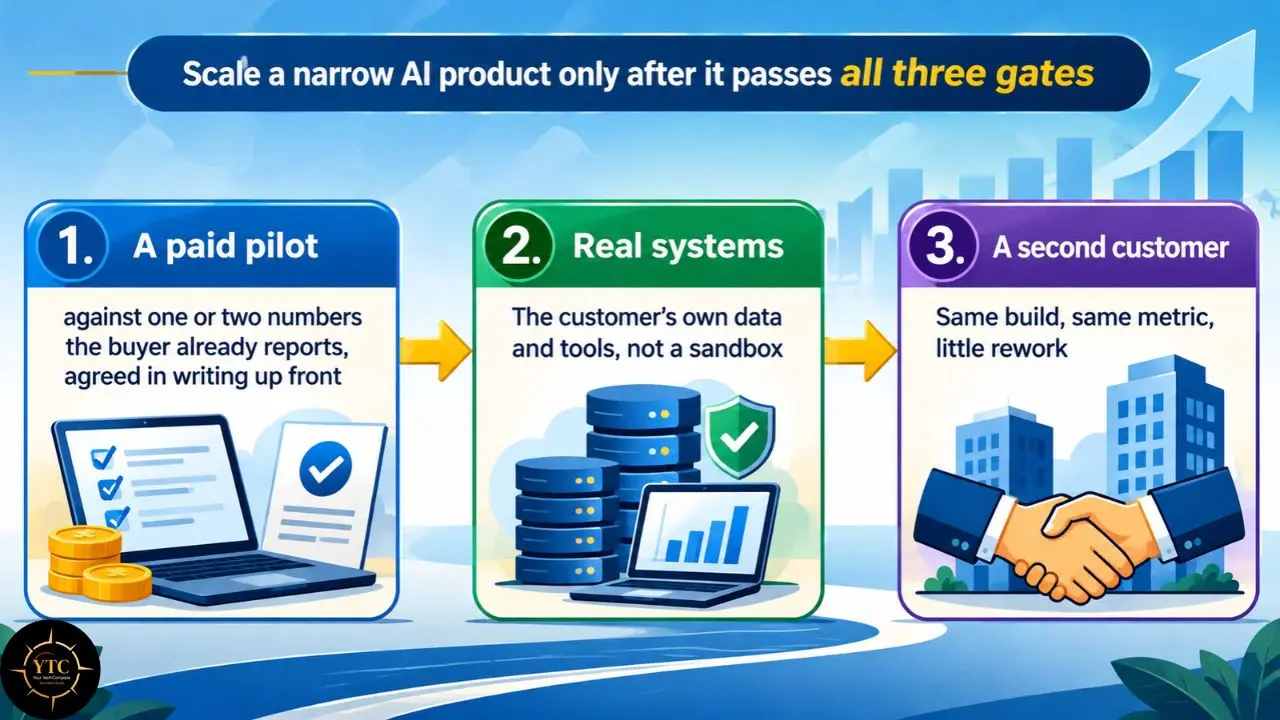
Gate 1: A Paid Pilot Against an Agreed Baseline
Even a small fee matters. A buyer who pays has found the money somewhere, which tells you which budget line you belong to.
Then agree, in writing and before you start, on one or two numbers the budget holder already reports upward, such as “days to close the books” or “hours to answer a diligence query.” Record today’s value and the target. Agreeing the yardstick before the work starts is the same principle behind how YTC scores tools, and we publish ours on our review methodology page.
Skip this step, and the pilot ends in a debate about whether it worked. Debates are where projects get canceled.
Gate 2: It Runs on the Customer’s Real Systems
Run it on the customer’s real systems, not a sandbox or sample data. Real systems are where the integration cost, the messy data, and the security questions show up. If those sink the pilot, better to know now.
Gate 3: The Same Build Works for a Second Customer
One success can be a bespoke project in disguise. A second customer on the same product, with the same metric and little rework, is the first sign of a business.
How the Gates Change the Sales Conversation
Together, the first two gates address the cancellation risks Gartner names before the pilot begins. The fee and the scope fix the cost, and the baseline defines the value. Running on real systems forces the question of controls, because a buyer who lets you into their ERP will ask exactly what the tool may touch.
The gates also change what you say in the room. Instead of demoing features, ask the buyer three questions:
- Which number do you report on?
- What is it today?
- What would it need to be for this to be worth renewing?
If they cannot answer, you have found a problem without a budget. It is better to learn that in week one than in month nine.
What This Does Not Mean
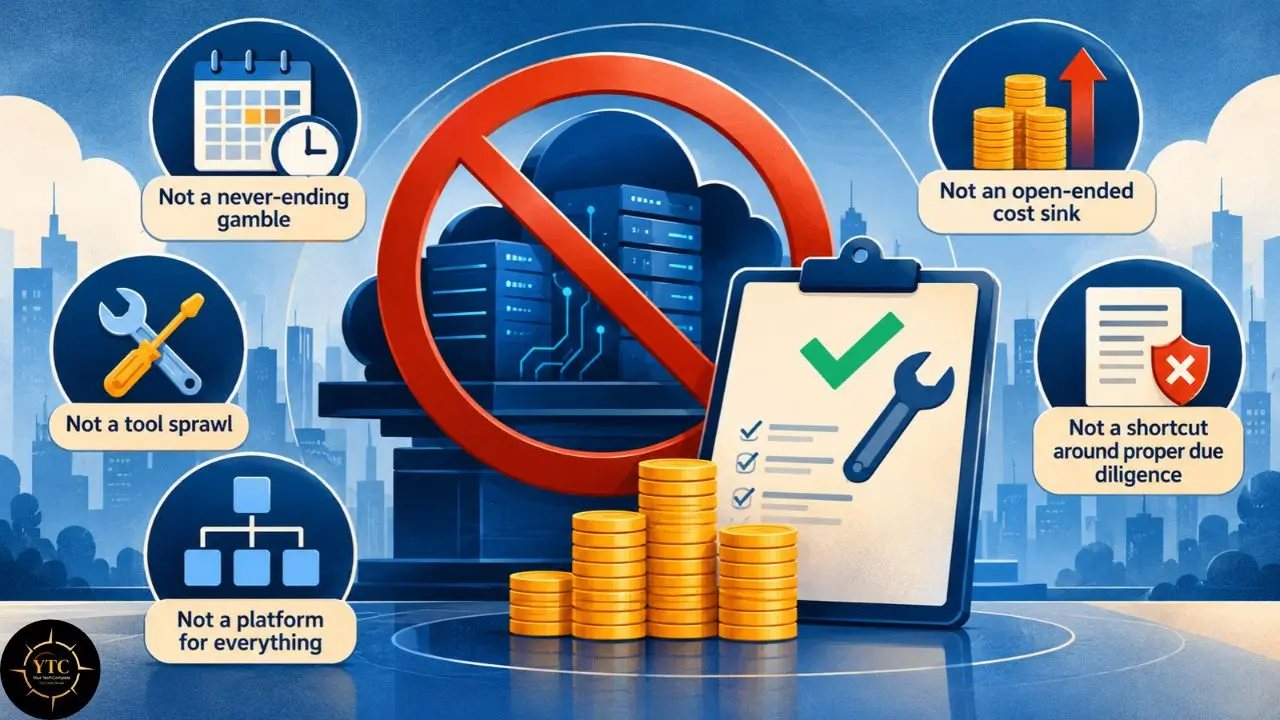
Narrow is not the same as easy, so the limits deserve a plain look.
- Narrow does not mean small forever. The aim is a wedge, not a ceiling. Once a product owns one budget line and passes the second-customer gate, it earns the right to expand into the next one.
- Some narrow problems are services in disguise. Our research found opportunities with real, measurable costs that still need heavy operational support, such as hospital discharge coordination, where delays are expensive, but the work is human and local. A founder who treats that as a software sale will find the margins look like a consultancy’s.
- Crowded categories need a sharper wedge. Where well-funded tools already exist, as in SaaS spend management, “narrow” has to mean an outcome the incumbents do not deliver. Zylo’s 2026 SaaS Management Index, itself vendor research, found the average organization uses only 54% of its provisioned SaaS licenses, but plenty of tools already detect that waste, so the wedge is spend that actually gets canceled at renewal.
- Platforms will absorb some features. In areas such as agent monitoring, large vendors are likely to bundle basic controls into their own products, so readers comparing standalone AI tools should check what the big platforms already include. The narrow play there is depth in one type of workflow and its audit needs, not a thin layer the platform can copy.
- Gartner does not say “think small.” The same release argues that, in many cases, rethinking workflows with agentic AI from the ground up is the ideal path. A narrow first product can still sit on a broad foundation, so treat narrow as a go-to-market strategy rather than a rule about architecture.
- The evidence leans American. The add-on and diligence data describe US private equity and a vendor’s audit sample, so founders in Nairobi, Lagos, or Johannesburg should treat them as a pattern to test, not a forecast for their own markets. The test itself, a named budget line with an owner, a number and a date, travels well.
The headline numbers deserve care too. MIT’s 95% figure describes P&L impact within its own sample of 300-plus public initiatives, 52 interviews and 153 survey responses, not every AI project everywhere. Gartner’s 40% is a forecast, not a count.
Both point the same way, but neither is a law of nature. The same goes for my own pattern: Korim’s brief notes that none of its opportunities yet amounts to proof of signed customer demand.
What This Means for Builders and Investors in Africa
Editor’s Note: This section extends the author’s argument to African markets. It is YTC’s own analysis, not part of Michael Boham’s research.
Boham’s data comes from US private equity and global audits, so it does not map one-to-one onto the markets we cover in our African tech reporting. The test does travel. A founder in Nairobi, Lagos or Johannesburg can ask the same three questions: which budget line, which number, which second customer.
Regulatory obligations are one place to look first. Kenya’s Data Protection Act, Nigeria’s Data Protection Act and South Africa’s POPIA each come with a regulator, and with compliance work somebody already owns. In our view, a narrow AI product that shortens that work against an agreed baseline is a more credible pitch than a platform asking for new money, though each country has its own buyers and each deserves its own test.
Methodology Note: The Korim Brief (Vendor Research)
Narrow Software, Real Budgets (Q4 2026 edition) was produced by Korim, which the author owns. It ranks ten B2B software opportunities drawn from the Korim Signal Index, which aggregates market data and compares sector demand against disclosed funding. Each opportunity is backed by up to five types of evidence:
- Index opportunities
- Index metrics
- Practitioner network signals (stated expectations, not commitments)
- Korim’s own hypotheses (not independent corroboration)
- Disclosed funding in adjacent categories (evidence of competition, not demand)
Analysts scored each opportunity on strength of evidence, budget-holder clarity, and speed to revenue. Those scores are judgment, not measured market sizes. Public sources were accessed in October 2026.
The sample was 6,600+ market signals, and 260+ scored emerging opportunities, collected from 300K+ evidence links between the market signals and opportunities. The brief notes that none of its opportunities yet amount to proof of signed customer demand, and Korim did not measure cancellation expectations. The cancellation figure in this article is Gartner’s forecast.
Calibrating Your Tech Compass to the Budget Line

The AI cycle will keep producing bigger promises, and buyers will keep doing what buyers do: spending against the numbers they are already judged on. For founders, that suggests a different starting point. Before you design the product, find the budget line. Name its owner, the number they report, and what that number is today. Then build the smallest thing that moves it, and charge for the pilot that proves it did. The platform can come later. The customers who fund it will be the ones whose number you moved first.
If you build, write the baseline into the pilot agreement before the first line of code ships, and treat a second customer on the same build as your real milestone. If you invest, ask founders for the budget line, the baseline, and the second customer before you ask for the deck; in our view, a paid second customer is stronger evidence than a logo. And if you shape policy, borrow the discipline for public-sector pilots: publish the baseline and the target before the pilot starts, and pay for the work so the result means something.
Before your next pitch, check your bearings: more grounded reads on AI, SaaS and African tech wait at YourTechCompass.com.
About the Author: Michael Boham is the founder of Korim, a market research company that tracks funding, procurement, and regulation signals to show where demand for new software is forming. His background spans data, technology, and consulting, and he specialises in strategic workforce analysis and transformation projects for large organisations.