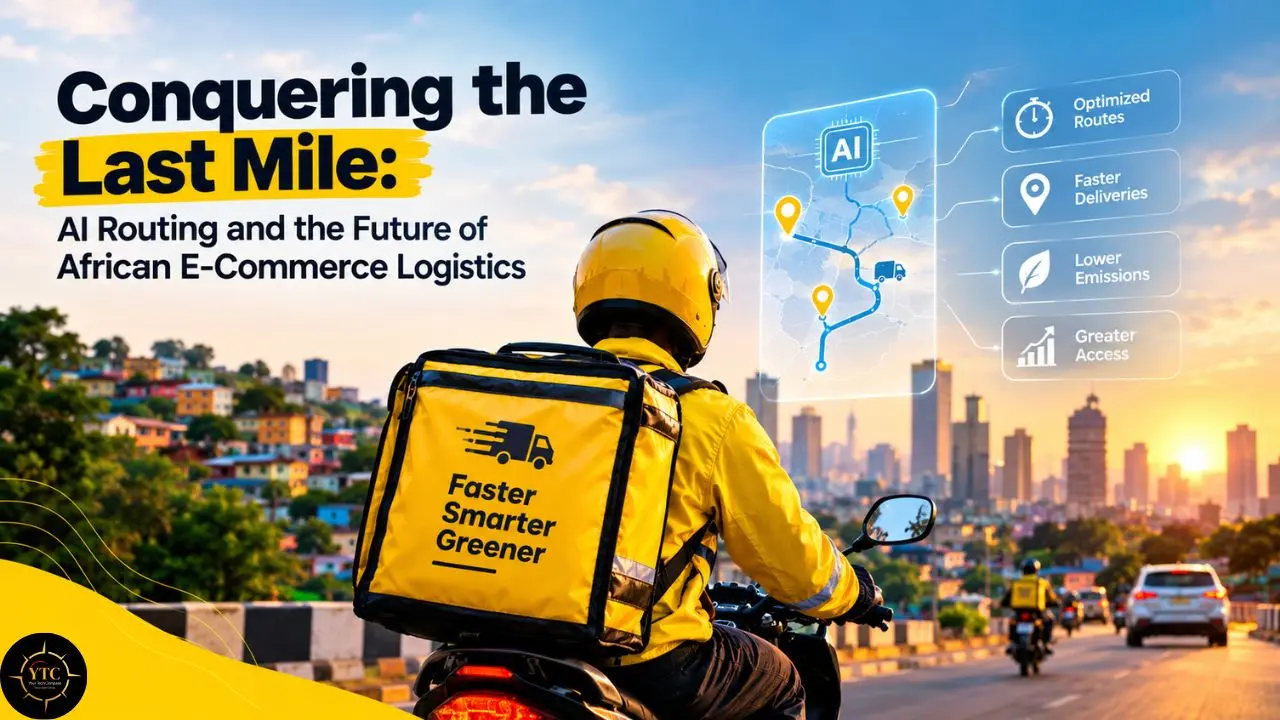
Picture a delivery rider in Lagos at 4:30 PM on a Friday. He has seventeen packages in his box, a phone with 23% battery, and a destination that Google Maps identifies only as “near the blue gate opposite the church.” The street has no name. The house has no number. And the traffic between him and that blue gate is currently a parking lot stretching from Yaba to Oshodi. This is not an edge case in African e-commerce. This is the default operating environment.
The explosion of digital marketplaces across the continent has created a brutal paradox. Consumer demand for online shopping has never been higher, yet the physical infrastructure to fulfill those orders remains fragmented, informal, and frequently unpredictable. We have examined how artificial intelligence is reshaping sectors from healthcare to agriculture across the continent. Logistics, however, presents a uniquely African challenge because the problem is not merely about optimization; it is about navigation in environments where the foundational data that Western algorithms take for granted (standardized addresses, named streets, reliable geocoding) simply does not exist. The question is no longer whether AI can improve delivery times. It is whether AI can build a navigable map where none exists.
The African Last-Mile Problem Is Unlike Anywhere Else
Addresses That Don’t Exist on Maps
Most African cities were not designed with formal street addressing in mind. In Lagos, Nairobi, Accra, and Kinshasa, entire neighborhoods function on landmark-based navigation. A customer enters “close to the Total petrol station, third compound on the left” as their delivery instruction. Standard GPS systems treat these as incomplete data points. For logistics operators, they are the raw material of daily operations.
The cost of this ambiguity is staggering. Every failed delivery attempt burns fuel, wastes driver hours, and erodes customer trust. In markets where cash-on-delivery still dominates (often 70% or more of transactions in countries like Morocco and Algeria), a missed delivery frequently means a lost sale or, at best, a costly reattempt that doubles trip and handling expenses. Most logistics operators eventually discover that the biggest bottleneck is not the vehicle capacity or warehouse space; it’s the simple act of finding the door.
Machine learning systems are addressing this by treating successful deliveries as training data. When a rider completes a drop at “the blue gate opposite the church,” the system logs the precise GPS coordinates, the time of day, the vehicle type, and the customer’s verification pattern. Over hundreds of deliveries, these points form a de facto addressing layer. Companies building proprietary geospatial databases for African conditions (including logistics platforms and specialized location-intelligence startups) are generating maps from actual delivery behavior rather than from satellite imagery alone, producing layers that are often more accurate for African streets than any generic commercial mapping product.
Traffic Chaos and Infrastructure Volatility
African urban traffic operates on rhythms that defy prediction. Lagos gridlock follows patterns influenced by everything from rainfall to political rallies. Nairobi’s matatu dynamics create micro-congestion zones that shift hourly. In Johannesburg, load-shedding knocks out traffic signals without warning, turning organized intersections into negotiation zones.
Seasonal flooding presents another variable entirely. During Lagos’s rainy season, entire sections of Lekki and Victoria Island become temporarily impassable. Dar es Salaam’s coastal roads regularly disappear under water. A route that was optimal in January may be suicidal in April. Static routing plans, calculated at 6 AM, are often obsolete by noon.
The economic stakes are enormous. Global last‑mile delivery markets are projected to expand from roughly $184–203 billion in 2024/25 to well over $277 billion by 2030 and $300–390 billion by 2034, with Africa’s share growing rapidly from a much smaller base. South Africa alone generated about $2.3 billion in last‑mile revenue in 2025. Yet much of this value leaks away through inefficiency. Without dynamic routing, fleets burn fuel in traffic, miss delivery windows, and accumulate wear on vehicles that spend more time idling than moving.
The E-Commerce Volume Surge
The pressure on logistics networks is intensifying. Jumia, the continent’s largest e‑commerce platform, has reported double‑digit millions in quarterly fulfillment expenses as volumes rise; in Q1 2026, fulfillment expenses were $12.2 million. In May 2025, the company launched Jumia Delivery in Nigeria, opening its logistics infrastructure to third‑party sellers beyond its own marketplace. The service, already piloted in Côte d’Ivoire, is slated for expansion to Kenya, Ghana, and Senegal.
Meanwhile, DHL Group committed more than €300 million to Sub-Saharan Africa in October 2025, explicitly targeting e-commerce, perishables, and life sciences logistics. The investment includes AI-enabled route optimization and digital customs tools. Sub-Saharan Africa led all global regions in trade growth during the first half of 2025, recording a 10% year-on-year increase in trade value. The cargo is flowing. The question is whether the routing intelligence can keep pace.
How AI Routing Actually Works in African Conditions
Beyond GPS: Multi-Layer Data Fusion
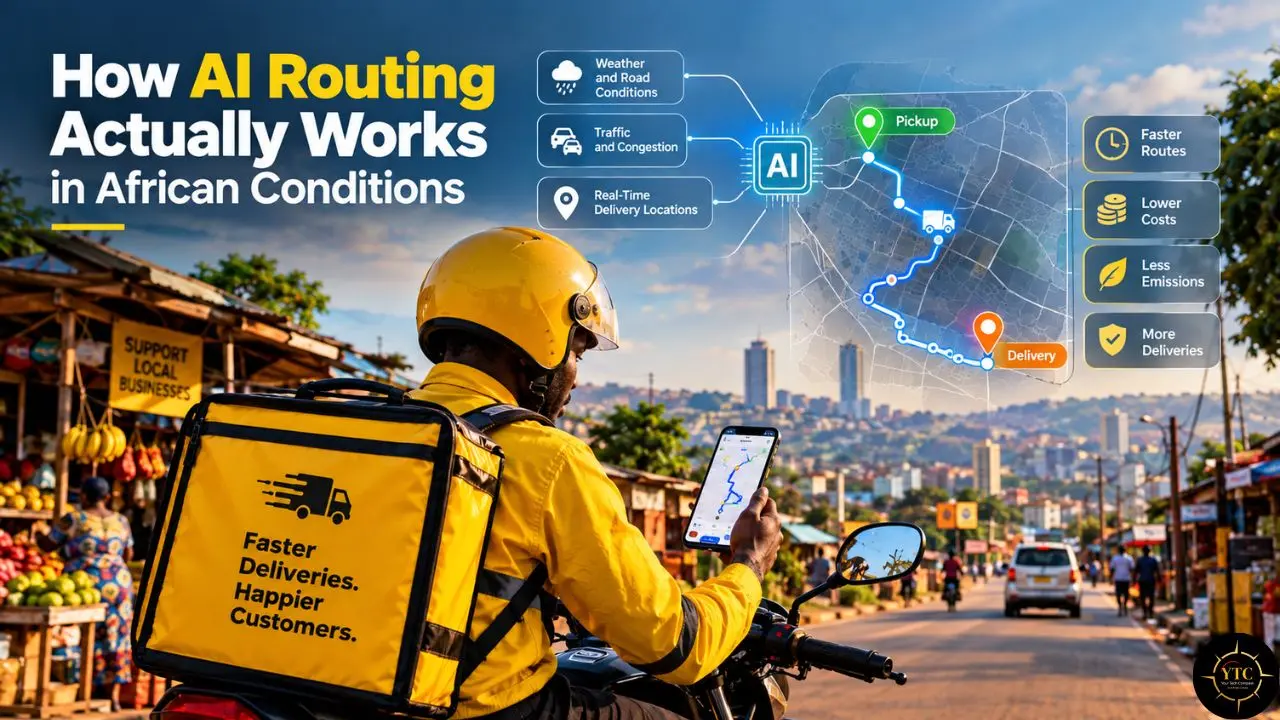
Conventional route-optimization models perform best where map coverage, addressing, and traffic data are reliable. In many African e-commerce markets, however, incomplete addressing, uneven road infrastructure and fragmented delivery networks make those inputs less dependable, increasing the need for operational data collected by the delivery business itself. Instead of relying on a single data source, the most effective systems fuse multiple layers into a single operational picture.
GPS logs provide the foundation. While fleets capture camera data, annotated video provides evidence of road hazards and changing conditions. Customer delivery history supplies behavioral patterns. And local dispatcher knowledge, often captured through calls, messages, and informal instructions, can be structured to support routing workflows, although public evidence of production NLP deployments remains limited.
The DataLens case study illustrates this fusion in practice. A Southern African cross-border trucking fleet reportedly achieved a 25% reduction in delivery delays by training models on 25,000+ annotated GPS logs, dashcam videos and shipment documents. The system supplemented operational GPS and video data with geospatial analysis to support dynamic rerouting rather than relying solely on existing map data. However, please note that because this is a vendor-reported case study, the figures are a case-study outcome rather than independently validated evidence.
The bigger advantage is that this knowledge can compound, but only under the right conditions. Every completed delivery can make the next one more efficient when its outcomes, travel times, and exceptions are consistently captured, quality-controlled, and used to retrain or recalibrate models. That improvement is conditional on high-quality data, ongoing model monitoring and human operational oversight.
Dynamic Re-Routing in Real Time
Traditional static route planning assumes relatively stable conditions and often calculates a day’s routes in advance. In many African e-commerce markets, however, that assumption is frequently violated by weather, infrastructure, and operational shocks. Heavy rains can quickly render unpaved roads unusable; in Nigeria alone, flood damage in Lagos is estimated at almost $4 billion annually, underscoring how weather can disrupt urban mobility. Political events, road closures, and sudden staffing changes can similarly upend planned routes.
Dynamic AI routing aims to treat these disruptions as inputs rather than exceptions. When operators use telematics and routing software, systems can continuously recalculate routes based on real-time traffic data, weather information, and fleet status. If a vehicle breaks down, a sufficiently advanced system can reassign its packages to nearby riders and resequence routes to contain delays, though this capability depends on the operator’s technology stack, data quality and connectivity.
For many teams, this capability helps separate more professional operations from less formal ones. A well-equipped Lagos courier running a fleet of motorbikes could, in principle, absorb a mid-day disruption without missing evening delivery windows if it has real-time visibility and flexible capacity. The payoff is not just faster delivery. In African e-commerce, where addressing gaps and manual coordination already make delivery slow and costly, predictable delivery is often more valuable than speed alone.
Learning Delivery Behavior
Here is where things get interesting. The most advanced routing engines do not just optimize roads; they also optimize around customer-related constraints.
Machine learning models can analyze historical delivery data to identify patterns that human dispatchers might miss. For example, a model might learn that a customer in Lekki (Nigeria) rarely answers before 10 AM, a shop in Eastleigh (Nairobi, Kenya) prefers afternoon drops because it is closed in the mornings, and a recipient in Kumasi (Ghana) consistently needs extra time for cash payment and package inspection. Where operators have sufficient digital delivery histories, such behavioral signals can be used to sequence routes more intelligently, although many teams in Africa still rely heavily on dispatcher judgment and informal notes.
This matters more than it first appears. In practice, a route that looks suboptimal on a map (zigzagging across a neighborhood instead of following a logical perimeter) may actually be faster because it aligns with customer availability and service-time patterns. Most founders eventually discover that delivery efficiency is not purely a geometry problem; it is a behavioral problem. Given how much last-mile performance in African e-commerce depends on addressing gaps, manual coordination, and customer availability, behavioral data could become a key differentiator for logistics AI in the region.
The Players Building Africa’s AI Logistics Stack
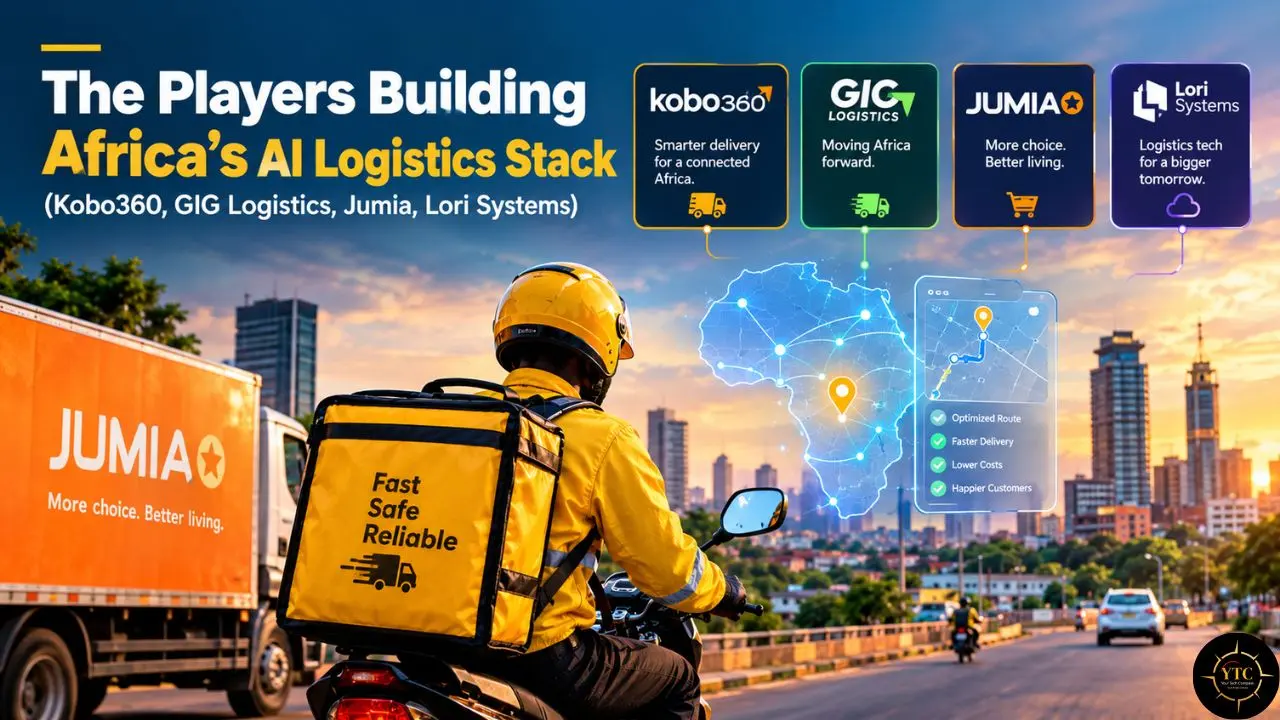
The competitive landscape for AI-driven logistics in Africa is not dominated by global giants. It is being built by operators who understand that the continent’s logistics problem requires African solutions. Each major player has taken a different approach to the same fundamental challenge.
Kobo360 and the Nigerian Trucking Revolution
Kobo360 operates like an Uber for trucks, but the comparison undersells its sophistication. The platform connects truck owners with cargo demand across West Africa, using data-driven optimization to improve fleet utilization and reduce empty miles. Its real innovation lies in backhaul optimization. Empty return trips are the silent killer of trucking economics. By matching loads to cut deadhead kilometers, Kobo360 reduces the percentage of miles driven without revenue, with industry analyses estimating that digital freight platforms can reduce empty backhauls, a key factor in making African logistics among the world’s most expensive.
In Nigeria specifically, the platform addresses challenges that many Western routing tools do not face. Port congestion at Apapa and Tin Can Island creates multi-day delays. Multiple security checkpoints along interstate routes add unpredictable time costs. Fuel price volatility changes the economics of every trip on a weekly basis. The extent to which these factors are explicitly modeled in pricing and routing algorithms is not fully documented, but they clearly shape operational decisions on the ground.
I believe their asset-light model is the right approach for Nigerian trucking, but the working-capital strain of paying drivers upfront while awaiting payments from shippers remains a structural vulnerability that technology alone cannot solve. Reports indicate that Kobo360 typically paid drivers around 50% upfront at pickup and the balance on delivery, while waiting 30–90 days for settlement from manufacturers and distributors, creating significant liquidity demands that contributed to financial stress and investor exit. In response, the company integrated embedded finance (prepayments, faster settlements and fuel credit) to stabilize cash flow in an asset-light, data-driven network.
GIG Logistics and the Payments-Integrated Logistics Stack
GIG Logistics has built its competitive edge on infrastructure depth and tightly integrated payments rather than pure platform network effects. The company operates a large domestic delivery network with extensive physical presence and tracking-enabled operations, using digital tools to coordinate pickups, deliveries and customer communication across Nigeria.
Their GIGGo technology layer integrates e-commerce APIs, payment-on-delivery infrastructure and wallet systems into a unified logistics stack. The GIGGo app supports API-enabled deliveries for SMEs and e-commerce merchants, real-time shipment tracking, an in-app wallet (funded via Paystack, Sterling, or Korapay), and pay-on-delivery (cash on delivery) for e-commerce-class merchants.
For small teams selling on Instagram or WhatsApp in Lagos, this integration matters more than theoretical routing efficiency. GIG’s strength is that they were built to meet Nigerian reliability standards from day one. They understand that a delivery promise means nothing if the payment collection fails or the customer cannot track their package. In our African fintech coverage, we have examined how payment infrastructure shapes every digital transaction on the continent. GIG Logistics embodies this intersection of logistics and financial technology fused into a single operational pipeline.
Jumia’s Logistics Pivot
Jumia is undergoing a transformation that few observers fully appreciate. The company is effectively becoming a logistics provider that also operates a marketplace. With Jumia Delivery now open to third-party merchants in Nigeria and Côte d’Ivoire, the platform is monetizing its delivery infrastructure independently of its e-commerce sales.
The numbers reveal why this pivot is necessary. Fulfillment expenses of $9.4 million in Q1 2025 consumed a disproportionate share of operational resources. By opening the network to external sellers, including informal social-media merchants, Jumia aims to increase package density per trip and amortize fixed costs across a larger volume base. The company already operates 494 pickup stations across Nigeria and has demonstrated strong penetration beyond major cities, with 58% of Q1 2025 orders originating from rural and upcountry regions.
This is one of Jumia’s biggest strengths. While many competitors emphasize urban density, Jumia has built a network that extends into upcountry regions often underserved by formal logistics providers. The trade-off is complexity. Deliveries outside major urban centers are typically less profitable per unit, but they build the operational data foundation that can make the entire network smarter over time.
Lori Systems and the Long-Haul Intelligence Layer
Lori Systems operates at a different scale. Coordinating 20,000+ trucks across 12 African countries, the platform has facilitated the movement of over $10 billion worth of cargo. Its platform focuses on full-truckload optimization and cross-border coordination, using data and analytics (including AI-driven route planning) to address customs delays, permit variations, currency fluctuations, and road conditions.
The platform’s route planning reduces empty return trips by matching cargo owners with vetted trucks and providing real-time tracking. For enterprise shippers moving goods from Nairobi to Kampala or Lagos to Accra, this predictability is worth more than marginal cost savings. It transforms trucking from a negotiation into a service.
There is a catch, though. Lori raised $2 million in a 2024 bridge round (reported in 2025) at a valuation far below its previous $120 million peak. The company, like rivals Kobo360 and Sendy, has struggled with working-capital constraints. Its model of paying transporters upfront while receiving delayed payments from enterprise customers created a financing gap that technology could not bridge. Lori is now partnering with banks like Ecobank for invoice financing, effectively outsourcing the working-capital burden while focusing on its core tech stack, with banks charging interest rates of 8%–24% per year on such facilities.
In my view, Lori’s challenge is not technological. Its routing algorithms work. Its matching engine works. The question is whether asset-light logistics platforms can survive African payment cycles without becoming banks themselves.
What AI Routing Changes for Customers and Businesses
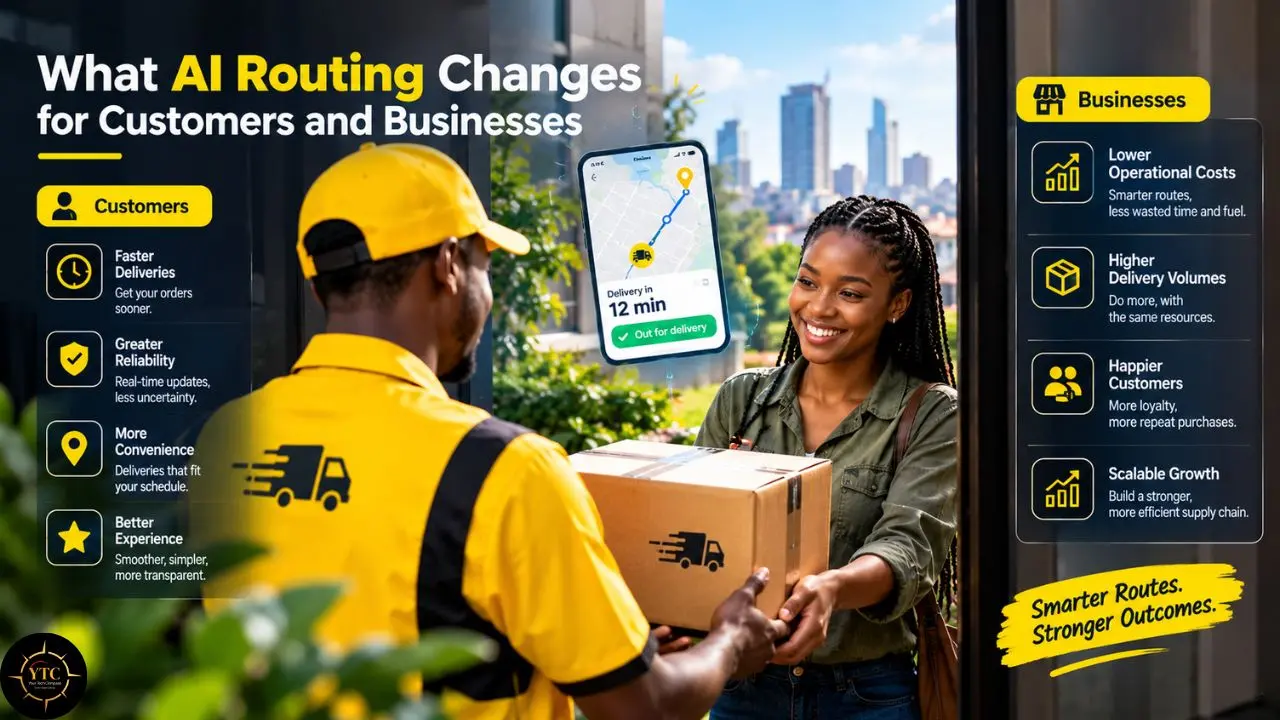
ETA Predictions That Customers Can Trust
The shift from “your package will arrive today” to “your package will arrive between 2:30 and 3:00 PM” represents more than a convenience upgrade. In African e‑commerce, where cash‑on‑delivery still dominates and customers often rearrange their schedules to receive packages, precise ETAs reduce friction across the entire transaction.
When a customer knows exactly when to expect a delivery, failed attempts drop dramatically. Customer service call volumes fall. And perhaps most importantly, trust accumulates. For digital commerce to grow beyond urban early adopters, reliability matters more than speed. A delivery that arrives predictably at 3 PM builds more loyalty than a delivery that might arrive at 11 AM or 6 PM.
Fleet Utilization and Cost Control
Fuel represents roughly 25–40% of total fleet operating costs in most logistics operations. AI route optimization consistently delivers fuel savings in the 10–20% range, with McKinsey citing around 15% reductions from AI‑driven logistics optimization and HERE Technologies reporting up to 20% lower fleet management and fuel costs.
For a Lagos logistics operator running twenty motorbikes, a 10% fuel saving is often the difference between profit and loss. But the savings extend beyond fuel. Optimized routes reduce vehicle wear, lower maintenance frequency, and improve driver retention by eliminating the most frustrating parts of the job: endless circling, backtracking, and arguing with customers about addresses.
Smart AI load and route optimization together can reduce total fuel burn by a few more percentage points in high‑density delivery zones like Ikeja or Yaba (Nigeria), where better vehicle utilization means fewer trips and more packages per run.
The Data Flywheel Effect
Every delivery generates data that improves the next delivery. This flywheel effect is particularly powerful in African logistics because the baseline data quality is so low. When a rider successfully delivers to “the blue gate opposite the church,” the system captures coordinates, timing, and verification patterns. Over months, these points form a navigable layer that did not exist before.
Looking beyond that, the compounding advantage favors scale. Larger networks train better models. Jumia’s rural and upcountry orders now represent the majority of volume in key markets (around 60% in Kenya and Nigeria), giving it delivery data from regions that many competitors have not deeply served. Cross‑border digital freight platforms accumulate corridor‑level intelligence (border wait times, document exceptions, route risks) that improves planning over time. The result is winner‑take‑most dynamics in specific corridors and marketplaces: operators with the most data build the most accurate models, attracting more volume, which generates more data.
The Hard Problems AI Hasn’t Solved Yet
The Addressing Infrastructure Gap
AI can optimize routes to approximate coordinates. It cannot create formal national addressing systems. Nigeria has moved from pilot initiatives to an imminent nationwide rollout: the Federal Government has ratified a framework for a National Digital Alphanumeric Postcode System, with the first phase scheduled for October 2026. Kenya is advancing a unified framework through the National Addressing Bill, 2025, now under parliamentary stakeholder review. Even so, the majority of African urban and rural areas remain unmapped in any standardized sense, and logistics operators still rely on landmark‑based navigation and operator workflows to resolve ambiguity.
Until governments fix addressing, logistics AI is solving a symptom rather than the disease. The most sophisticated routing model still struggles when a customer provides no useful location data whatsoever. In our AI policy coverage of Africa, we have argued that infrastructure policy must keep pace with technological innovation. Logistics is perhaps the clearest example of this gap.
Connectivity and Device Limitations
The most elegant routing model means nothing if the driver cannot load it on a 2G connection in Kano (Nigeria). Many African delivery drivers operate on basic smartphones with intermittent data coverage. Real‑time dynamic rerouting requires continuous connectivity that simply does not exist across large swathes of the continent. Operator playbooks therefore emphasize offline‑tolerant apps, zone specialization, and pre‑loaded routes.
There’s another aspect worth considering: the user interface. A routing app designed in San Francisco assumes a level of digital literacy and screen size that may not match the reality of a motorbike driver in Accra navigating through afternoon traffic. The algorithm is only as good as its last‑mile interface.
Regulatory Fragmentation Across Borders
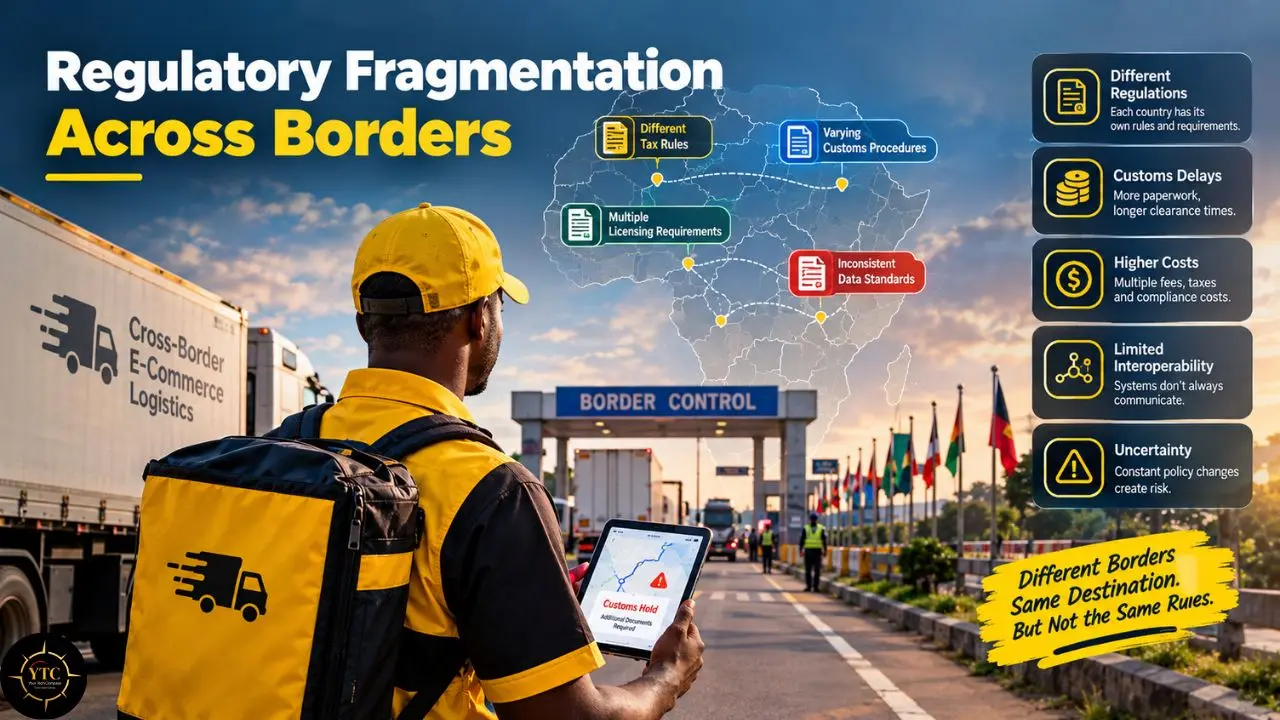
Cross‑border AI routing hits walls that no algorithm can climb. Customs procedures vary by country. Vehicle permit requirements change without notice. Data sovereignty regulations in several African nations restrict where sensitive or government data can be stored and processed and impose transfer approvals that complicate the use of centralized platforms.
For Lori Systems, coordinating trucks across 12 countries means navigating twelve regulatory environments. An AI model trained on Lagos traffic patterns may underperform in Kampala or Dar es Salaam because the underlying rules of the road (both formal and informal) differ fundamentally. Operators address this with corridor‑specific models, local rule layers, and zone specialization, but the friction remains one of the biggest challenges for pan‑African networks.
Profitability vs. Growth Tension
The technology works. The business models are still being stress‑tested. Lori’s steep valuation reset in 2024–2025 (from prior highs near $120m to a materially lower bridge), Kobo360’s working‑capital constraints, and Sendy’s well‑documented struggles all point to the same reality: optimizing routes is easier than optimizing balance sheets.
By comparison, global logistics giants can cross‑subsidize multi‑year African build‑outs with profits from mature markets, a luxury local startups do not have. They must achieve route efficiency and financial sustainability simultaneously, which explains why so many are pivoting toward B2B enterprise contracts with faster payment terms rather than consumer e‑commerce deliveries with longer cash conversion cycles.
FAQs
African last-mile delivery operates without the foundational infrastructure that Western logistics assumes it has. Formal street addresses are rare in many neighborhoods. Traffic patterns are volatile and influenced by factors like flooding, utility outages (including load‑shedding in some Southern African markets), and informal roadblocks. The vehicle mix is different too; motorbikes often outperform vans in dense urban areas. Our artificial intelligence Africa guide provides broader context on how these infrastructure gaps shape technology adoption across sectors.
AI systems build proprietary geospatial databases from successful delivery history. Each completed drop logs precise GPS coordinates, landmark descriptions, and customer verification patterns. Over time, these data points create a navigable layer that is more accurate for local conditions than commercial maps. Operators such as last‑mile and freight platforms have effectively built their own addressing layers through machine learning.
Industry benchmarks suggest fuel savings of 10–25%, with most fleets achieving a 15–20% reduction through optimized sequencing and traffic avoidance. In high‑density zones, load optimization can add a few more percentage points of fuel burn reduction. Beyond fuel, businesses see reduced vehicle wear, lower maintenance costs, and fewer failed delivery attempts. For context on how AI drives efficiency in other sectors, see our coverage of how AI is revolutionizing agriculture in Africa.
The primary constraints are infrastructure gaps, connectivity limitations, and regulatory fragmentation. AI cannot create formal addresses where governments have not built them. Many drivers lack reliable data connections for real-time routing. Cross-border operations face customs, permit, and data sovereignty hurdles that vary by country. Additionally, as we explored in our South Africa AI skills paradox analysis, talent shortages affect how quickly these systems can be built and maintained locally.
Finding True North in African Logistics
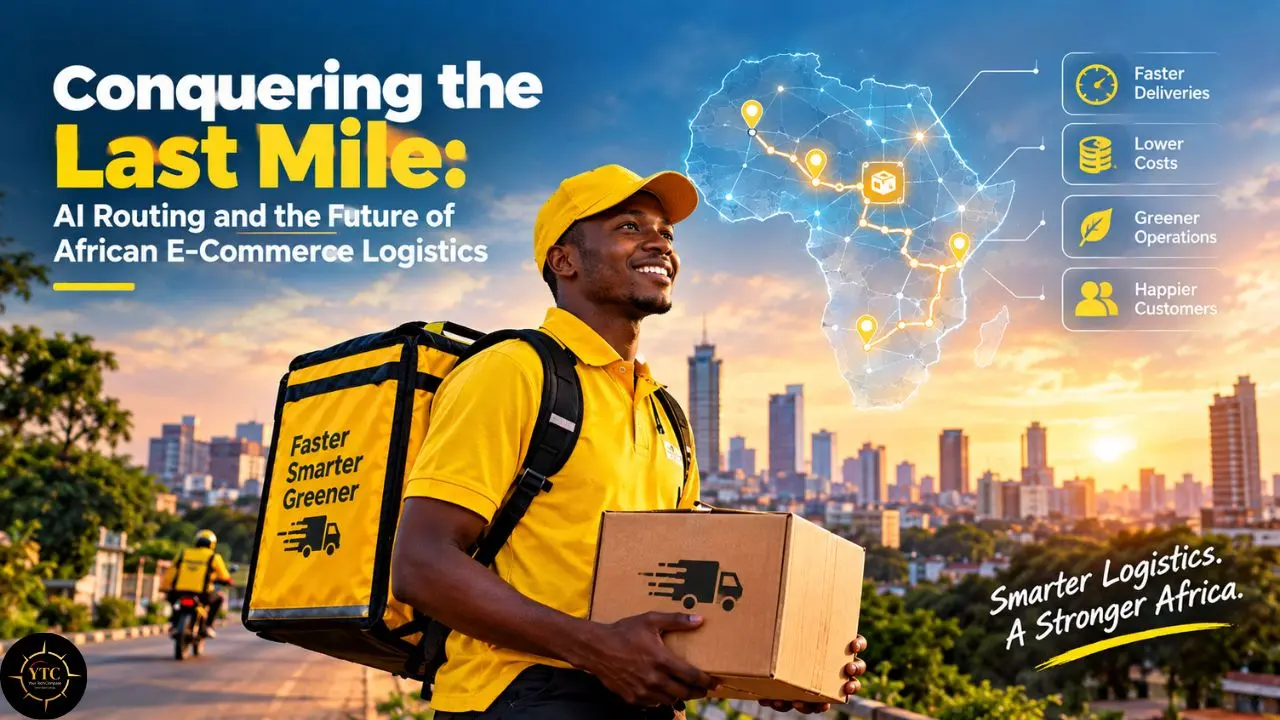
AI routing is transforming African logistics from an art of guesswork into a science of prediction, but this transformation remains incomplete. The technology exists. The pilots are working. The market opportunity is massive: global AI-in-logistics forecasts run into the hundreds of billions by 2034, with Africa among the fastest-growing regions. Yet the real constraint is not algorithmic sophistication. It is physical infrastructure, regulatory harmonization, and the working capital required to scale asset-light models across a continent where payment cycles still move slower than delivery trucks.
For founders, the lesson is execution over pitch decks. The winners in this space will be operators who treat AI as a complement to local knowledge, not a replacement for it. For e-commerce merchants, the message is even simpler: your delivery experience is now your brand experience. In markets where trust is scarce and alternatives are plentiful, the platform that delivers reliably at 2:47 PM will win against the platform that promises 11 AM and arrives at dusk. The infrastructure may be digital, but the impact is viscerally physical.
For policymakers and investors watching this space, the imperative is clear. Africa does not need another logistics startup with a slick app. It needs foundational investments to address cross-border harmonization and the financing structures that help operators bridge the gap between paying drivers and getting paid by customers. The technology is ready. The question is whether the ecosystem around it can keep pace.
Let Your Tech Compass be the navigator you trust as Africa’s digital highways take shape. Find your bearing at YourTechCompass.com.