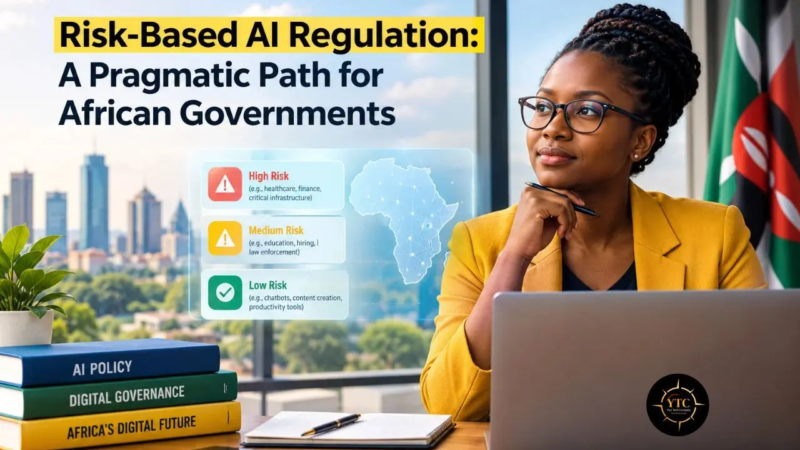

Africa is simultaneously the continent with the most to gain from AI and the one least represented in the global conversations that shape its governance. That gap matters more than most people appreciate. When the rules governing how AI systems are built, deployed, and held accountable are written without African input, they reflect priorities and values that may not align with Africa’s contexts, populations, or development needs. The stakes are real: AI could add $1.5 trillion to Africa’s GDP by 2030, but poorly designed or absent policies could mean those benefits flow primarily to foreign technology companies, while the risks fall disproportionately on African populations who had no say in the design of the systems that affect them.
The good news is that the conversation has genuinely started. In July 2024, the African Union endorsed its Continental AI Strategy, a landmark document adopted by 55 member states that provides the first continent-wide framework for AI governance. By the end of 2025, 16 of 54 African countries had adopted national AI strategies or policy frameworks. Kenya launched its National AI Strategy 2025–2030 in early 2025. Nigeria tabled an Artificial Intelligence Control and Regulation Bill. Egypt published its second edition of the National AI Strategy. The decisions being made right now (on data governance, ethical AI frameworks, and regulatory models) will shape Africa’s relationship with this technology for a generation. This article is your guide to understanding what’s happening, what’s working, what’s failing, and what the opportunity actually looks like if Africa gets this right.
The State of AI Policy in Africa: Where Things Stand in 2026
Let me be direct with you about the current picture: Africa is not a regulatory blank slate, but it also lacks a coherent, enforced AI governance framework. What exists is a patchwork: 54 countries at very different stages of policy development, moving at different speeds, with different priorities, and with vastly different levels of institutional capacity to implement their policies.
The headline number is meaningful but needs context. By the end of 2025, 16 out of 54 African countries had adopted national AI strategies or policy frameworks, signaling early but growing interest in formalizing AI governance.
That means 38 African countries, most of the continent by population and geography, still have no formal AI policy of any kind. Furthermore, having a strategy document is not the same as having a functioning regulatory framework. Several of the 16 countries with strategies are working from documents that predate the current generation of AI capabilities.
The countries actively moving the needle include Mauritius, Egypt, and Senegal, which released national AI strategies relatively early. Rwanda, which has a full national AI policy and has positioned itself as Africa’s regulatory innovation lab. Kenya, which launched its AI Strategy 2025–2030 in January 2025, focuses on ethical, inclusive, and innovation-driven AI adoption. Nigeria, where the NDPC’s September 2025 General Application and Implementation Directive created an enforcement framework specifically covering high-risk AI activities. South Africa, where POPIA (Protection of Personal Information Act) and the Presidential Commission on the 4th Industrial Revolution form the most developed data privacy and AI governance foundation on the continent.
No African country has yet surpassed a 20% AI adoption rate, according to the Microsoft AI Diffusion Report 2025. That low baseline is simultaneously a challenge and an opportunity; the frameworks being built now have the chance to be proactive rather than reactive, designed to shape AI adoption rather than catch up to it.
The African Union Continental AI Strategy: What It Actually Says

The most significant single document in African AI governance is the Continental AI Strategy, endorsed by the AU Executive Council during its 45th Ordinary Session in Accra, Ghana, on July 18–19, 2024. I want to walk you through what it actually says, not just that it exists, because the substance matters for understanding where continental governance is heading.
The strategy identifies five key focus areas: leveraging AI benefits for socio-economic development and cultural renaissance; mitigating AI-related risks to protect African peoples, societies, and environments; building capacity in infrastructure, datasets, computing, skills, education, research, and innovation; reinforcing regional and international cooperation and partnerships; and stimulating public and private investment in AI at national and regional levels.
Importantly, the strategy doesn’t just list priorities; it grounds them in specifically African values. The strategy establishes fifteen ethical principles rooted in human rights and the traditional values of Ubuntu, African values embodying solidarity and responsibility, emphasizing individuals’ interconnectedness with their communities. This is the most substantive acknowledgment in any major AI policy document that AI governance frameworks must reflect the cultural and philosophical contexts of the populations they serve.
During implementation, the process is set to unfold in two phases: Phase 1 (2025–2026) focuses on establishing governance structures, developing national AI strategies, and mobilizing resources, including strategic documents, forums and workshops, and AI advisory boards and centers of excellence. Phase 2, starting in 2028, focuses on executing core projects and actions, informed by a 2027 review.
The honest gap assessment, however, is important. There are no comprehensive, binding laws or regulations specifically governing AI across the entire African Union.
The Continental AI Strategy is a framework, not a regulation. Member state adoption is voluntary. Enforcement at the continental level is not possible. Analysis of 18-month implementation data from July 2024 to October 2025 reveals a stark geographic concentration, with 83% of funding concentrated in four countries; minimal private-sector mobilization relative to the continent’s $500 billion in needs; and governance structures that remain nascent.
Consequently, the honest framing of the AU strategy is this: it is the most important AI policy document Africa has produced, and it sets a direction and framework that are genuinely Africa-centric and ethically grounded. But the gap between a well-written strategy document and an operational, enforceable regulatory framework is vast, and closing it is the defining challenge of Phase 1.
Country-by-Country: Africa’s Regulatory Diversity in Practice
The national-level picture is where AI policy in Africa is actually implemented. Here’s an honest assessment of the markets that matter most for understanding where continental governance is heading.
Egypt 🇪🇬
Egypt’s National AI Strategy, now in its second edition covering 2025–2030, is the most developed AI policy framework in North Africa and one of the most structured on the continent. Egypt created the National Council for Artificial Intelligence to coordinate AI policies and introduce AI regulatory regimes.
The strategy focuses on healthcare, agriculture, smart cities, and international partnerships. Egypt’s approach includes a requirement that AI systems in public services meet ethical benchmarks and the development of a framework to monitor AI use in sectors such as transportation. Furthermore, Egypt’s breach notification requirement, which mandates reporting within 72 hours of a data incident, is among the strictest in Africa.
Honest Limitation: The pace of strategy implementation has been slower than initially anticipated, and the gap between published frameworks and operational enforcement remains significant.
Rwanda 🇷🇼

Rwanda is the continent’s most compelling case study in AI governance by design. It has positioned itself as an AI hub through its National AI Policy, focusing on capacity building and enhancing public service delivery, with a National AI Ethics Committee overseeing high-risk applications and a set of public consultation mechanisms for AI policy development.
The fintech regulatory sandbox model, which has produced globally recognized results and attracted fintech headquarters to Kigali, is being applied directly to AI governance: controlled testing, supervised deployment, and learning before legislation. Kenya’s High Court’s decision to halt Worldcoin’s biometric data collection, ruling that mass iris scan collection violated constitutional rights without a proper Data Protection Impact Assessment, demonstrates the kind of evidence-based judicial enforcement that Rwanda’s model is designed to encourage.
Honest Limitation: Rwanda’s small market size limits the scale of private-sector investment its governance framework can attract, despite its regulatory sophistication.
South Africa 🇿🇦
South Africa has the most developed private sector AI ecosystem on the continent and the most comprehensive data protection legislation. POPIA, the Protection of Personal Information Act, is modeled on the GDPR and is the strongest data privacy law in Africa, with enforcement overseen by the Information Regulator.
The Presidential Commission on the 4th Industrial Revolution produced substantive recommendations, but implementation across government departments has been fragmented. Additionally, the National Health Insurance Bill‘s implications for health AI regulation create both an opportunity and a governance challenge; the largest public health procurement opportunity in African history will require specific AI governance frameworks that don’t yet exist in finalized form.
Honest Limitation: Policy fragmentation across government departments means South Africa’s governance environment is less coherent than its individual frameworks suggest.
Kenya 🇰🇪
Kenya’s AI governance story in 2026 is characterized by momentum alongside gaps. Kenya launched its Draft National AI Strategy 2025–2030 in January 2025, through the Ministry of Information, Communications and the Digital Economy, aiming to position Kenya as a regional AI hub, with public consultations ongoing through 2025.
The Digital Health Act 2023, Africa’s first formal digital health regulatory framework with specific AI implications, provides a template for sector-specific AI governance that other African countries are watching closely. Kenya’s Data Protection Act (2019) and the Office of the Data Protection Commissioner provide an operational enforcement framework, with fines for unlawful data retention and unauthorized processing already being issued.
Honest Limitation: Kenya’s governance remains sector-specific rather than AI-specific. The frameworks are strong in fintech and health, but lack a unified AI governance law.
Nigeria 🇳🇬

Nigeria’s AI governance story in 2026 is characterized by legislative ambition that has yet to translate into implementation. Nigeria’s Artificial Intelligence Control and Regulation Bill seeks to balance innovation with public protection and, if passed, would make Nigeria one of the first African countries to embed AI regulation in law rather than in policy.
In September 2025, Nigeria’s Data Protection Commission introduced the General Application and Implementation Directive, which requires Data Protection Impact Assessments and the certification of Data Protection Officers for high-risk activities such as biometric data collection and automated decision-making.
Honest Limitation: The pace of regulatory development in Nigeria is significantly behind the growth of its startup ecosystem. The country with the most AI startups on the continent has, until recently, had the least AI-specific regulation.
The Rest of the Continent
The honest picture for most African countries is this: they have no formal AI policy at all. Francophone West Africa is the most underserved region in terms of AI governance, partly due to language barriers in international policy participation and partly due to limited institutional capacity.
East Africa benefits from the EAC digital economy framework as a coordination mechanism. Southern Africa has South Africa’s governance sophistication as a regional reference point. But for the average African country in 2026, AI governance means applying existing data protection law (if one exists) to AI use cases it wasn’t specifically designed for.
Country Policy Comparison at a Glance
Country | AI Policy Status | Data Protection Law | Key Strength | Key Gap |
Egypt | National AI Strategy (2nd edition, 2025–2030) | Yes (72-hr breach notification) | Institutional coordination | Implementation pace |
Rwanda | Full National AI Policy + Ethics Committee | Yes | Sandbox model; governance innovation | Market scale |
South Africa | Presidential 4IR Commission; POPIA | Yes (strongest in Africa) | Private sector ecosystem; POPIA enforcement | Departmental fragmentation |
Kenya | AI Strategy 2025–2030 (in consultation) | Yes (2019 DPA) | Digital Health Act template; DPC enforcement | No unified AI law |
Nigeria | AI Regulation Bill (pending); NDPC directive | Yes (2023 DPA + Sept 2025 directive) | Legislative ambition; startup density | Implementation gap |
Mauritius | One of Africa’s earliest AI strategies | Yes | Early mover; coordination capacity | Limited market influence |
The majority of Africa | No formal AI policy | Partial or absent | — | Institutional capacity |
Data Governance: Africa’s Most Critical AI Policy Challenge

I want to be direct with you about something that doesn’t get enough attention in the AI policy conversation: data governance is not a supporting issue in African AI policy. It is the foundational issue. Everything else depends on getting this right.
AI systems are only as good as their training data. And the vast majority of AI systems deployed across Africa are trained on data that doesn’t include African populations, languages, health patterns, or economic behaviors.
The consequences are documented and specific: facial recognition systems trained on predominantly non-African data perform measurably worse for African faces. Credit scoring models trained on non-African financial data exclude populations whose economic behavior differs from that of their training sets. Healthcare diagnostic AI fails for African disease presentations because it was trained on Western patient records.
By the end of 2025, 45 African countries had enacted data protection laws, and 39 countries had established fully operational regulatory authorities. That’s genuine progress, more than most people realize.
But regulatory maturity and enforcement capacity remain uneven, reflecting disparities in institutional resources and digital readiness. Having a data protection law on the books is not the same as having the staff, the technical capacity, and the will to investigate a global technology company’s data practices.
The cross-border data flow challenge is particularly acute. African mobile money transactions, health records, agricultural sensor data, and behavioral data from social media are flowing to foreign servers, where they are processed under the privacy frameworks of companies headquartered in the US, Europe, and China.
African regulators have limited ability to audit, penalize, or require data localization from companies whose primary regulatory relationship is with foreign authorities. Consequently, even the strongest national data protection laws face a structural limitation: the data is already elsewhere.
A notable example occurred in Kenya, where the High Court halted Worldcoin’s operations, a global biometric identity platform, ruling that its mass collection of iris scans violated constitutional rights due to the absence of a proper Data Protection Impact Assessment. This case is significant because it demonstrates that African courts, when equipped with the right legal framework and evidence, can hold global technology companies accountable for failing to comply with adequate data governance. It’s the kind of enforcement action that builds regulatory credibility, and it was made possible by Kenya’s Data Protection Act.
The data sovereignty question (who owns, controls, and benefits from data generated by African populations) sits at the intersection of AI policy, trade policy, and development strategy. Several African countries are developing data localization requirements that mandate that certain categories of data be stored and processed on infrastructure within their national borders.
The Honest Trade-Off
Localization increases privacy protection and data sovereignty but raises infrastructure costs. Most African countries don’t currently have the data center capacity to make localization practical without significant investment. This is why the AU Continental AI Strategy’s infrastructure pillar is not separate from its data governance pillar; they are the same problem.
Ethical AI in Africa: The Challenges That Global Frameworks Miss

Here’s what I think is the most underappreciated dimension of AI policy in Africa: global AI ethics frameworks, even the well-intentioned ones, were mostly designed by people who don’t experience the specific AI risks that African populations face. And that matters, because the risks are genuinely different.
Most AI ethics principles were developed in Western institutional contexts, reflecting Western legal traditions, Western concepts of individual rights, and Western assumptions about the infrastructure and governance capacity required to implement them. The Ubuntu philosophy, which the AU Continental AI Strategy explicitly incorporates, frames ethical obligations in communal rather than individual terms. Fairness isn’t just about what happens to an individual; it’s about what happens to the community. Accountability isn’t just to a regulator; it’s to future generations.
Against that philosophical backdrop, here are the five most critical ethical AI challenges in the African context, challenges that global frameworks address only partially, if at all.
1. Algorithmic Bias and the African Data Gap
I mentioned this in the data governance section, but it deserves a dedicated treatment here. The problem of algorithmic bias in Africa is structural, not incidental.
When Masakhane‘s researchers tested major language models in isiZulu, they found responses described as “mixed and hilarious”: culturally wrong, grammatically broken, or nonsensical. When Lelapa AI benchmarked ChatGPT in African languages, the results clearly demonstrated that models trained predominantly on English-language Western internet data systematically underperform for African users.
This is not a minor UX inconvenience; in healthcare, credit, and law enforcement contexts, it has direct consequences for people’s lives. Ethical AI in Africa requires African-built training data for African use cases. That’s what Masakhane and Lelapa AI are doing, and it’s what AI policy frameworks need to incentivize and fund.
2. AI in Law Enforcement and Surveillance
Several African governments have deployed Chinese-supplied surveillance infrastructure, including AI-enabled facial recognition systems in public spaces, without the public accountability frameworks required for responsible deployment. The combination of AI-enabled surveillance capabilities, limited judicial oversight of government data practices, and politically fragile contexts creates a specific risk: AI becoming a tool for authoritarian governance rather than for public safety.
Ethical AI governance frameworks for Africa need explicit provisions for AI in law enforcement, mandatory impact assessments, public accountability requirements, and judicial oversight mechanisms. Currently, these provisions are largely absent from national AI strategies, most of which focus on economic opportunity rather than governance of state power.
3. AI in Elections and Political Manipulation

The 2024–2025 African election cycle coincided with the rapid proliferation of AI-generated political content, deepfakes, and microtargeting capabilities. Several African elections took place in environments where AI-generated misinformation was documented yet poorly addressed by regulatory frameworks, most of which were not designed to address AI-specific election interference.
African regulators lack both the technical capacity to identify AI-generated content at scale and the legal frameworks to act on it. This is the governance gap that poses the most immediate democratic risk.
4. Labor Displacement
Africa has the world’s youngest population and a workforce that is predominantly in the informal sector. AI-driven automation poses a specific displacement risk to the very economic sectors that provide livelihoods for the majority of African workers: customer service, transport, agricultural processing, and financial services.
Most African AI strategies celebrate AI’s job-creation potential without adequately addressing the risk of displacement. The honest, ethical question that few national strategies confront directly is: what happens to the 60% of the African workforce employed in the informal sector when AI automates the tasks they currently perform?
5. AI for Development vs AI Extraction
This is the ethical dimension I find most under-discussed in mainstream AI policy conversations. “AI for good” programs funded by international development organizations frequently extract African health, agricultural, and behavioral data to train models that are then owned by foreign institutions, while providing limited local AI capacity in return. Genuine AI for development builds local capability: trains local data scientists, creates locally owned datasets, and develops locally governed AI infrastructure.
Extractive AI for development benefits the funder more than the recipient. African AI ethics frameworks need to distinguish between these two models and create policy mechanisms that incentivize the former.
The AI ethics work being done by Masakhane, whose community annotation model and open-source NLP research have become a global reference point, and by African AI researchers at institutions such as Carnegie Mellon Africa and the African Institute for Mathematical Sciences, provides the intellectual foundation for African-specific AI ethics. The policy challenge is translating that intellectual foundation into operational governance frameworks.
Regulatory Models: What Could Actually Work for Africa
You’ve seen the landscape and the challenges. Now let me walk you through the three distinct regulatory models that African policymakers are drawing on, and give you an honest assessment of which approach fits Africa’s current stage of development.
Model 1: The EU AI Act Approach: Risk-Based Regulation
The EU AI Act, which entered into force in August 2024, represents the world’s most comprehensive AI regulatory framework. It classifies AI systems by risk level: unacceptable risk (banned), high risk (strict requirements), limited risk (transparency obligations), and minimal risk (no specific regulation), and mandates conformity assessments, technical documentation, and human oversight for high-risk applications.
The intellectual framework is the most rigorous available. For Africa’s highest-stakes AI applications (healthcare diagnostics, credit scoring, law enforcement, election systems), something resembling a risk-based approach is clearly appropriate. Rwanda and South Africa are the two African countries with regulatory infrastructure closest to implementing a risk-based framework.
The Honest Challenge
Most African regulatory bodies lack the technical staff to evaluate AI systems within a risk-based framework. The EU AI Act requires regulators to audit training data, assess model behavior, and evaluate documentation, capacities that require AI expertise that most African regulators are still building.
Model 2: The Regulatory Sandbox Approach

The sandbox model, which allows controlled testing of AI tools under regulatory supervision before full deployment, is the approach most naturally suited to Africa’s current stage of development. Rwanda and Kenya pioneered this fintech model and have achieved internationally recognized results.
The Kenyan fintech regulatory sandbox is explicitly cited in our mobile money Africa guide as a global model for progressive regulatory design. The sandbox approach lets regulators learn about technology alongside deployers, building regulatory capacity alongside deployment experience.
The Honest Limitation
Sandbox results need to translate into actual legislation, and that translation is where most African sandboxes stall. A successful fintech pilot doesn’t automatically produce a fintech law. The same challenge will apply to AI sandboxes unless they’re explicitly designed to produce codified regulatory frameworks.
Model 3: Sector-Specific Regulation
Rather than a comprehensive AI law, several African countries are regulating AI through sector-specific frameworks: health AI by health ministries, fintech AI by central banks, and election AI by electoral commissions. Nigeria’s FCCPC digital lending guidelines, covered in our African fintech category, represent this approach applied to credit AI. Kenya’s Digital Health Act applies to health AI.
The Honest Limitation
Sector-specific regulation creates fragmented governance. AI risks that span sectors, such as an AI system used for both credit scoring and health diagnosis, fall into regulatory gaps. And no sector-specific framework addresses the fundamental questions of AI rights, accountability, and liability that only a comprehensive AI law can settle.
The Emerging African Consensus
Most African policy discussions in 2025–2026 are converging on a pragmatic hybrid: implement sector-specific regulation now, using existing regulatory agencies with existing mandates, while working toward harmonized continental frameworks over the next five years. This approach acknowledges that building regulatory capacity takes time and that waiting for a perfect framework before regulating anything means leaving populations exposed to AI harms during the most critical deployment period.
More advanced digital economies, including Nigeria, Kenya, South Africa, Ghana, and Rwanda, now prioritize stricter enforcement, cybersecurity resilience, and accountability in high-risk data processing. The convergence of these leading markets around similar enforcement priorities suggests a de facto regional standard is emerging, even without a formal harmonized framework.
The Opportunity: What Good AI Policy Actually Unlocks

I want to be direct about this: AI policy in Africa is not fundamentally a defensive exercise. Done well, it’s an economic development strategy. The regulatory decisions being made now determine whether Africa captures the GDP opportunity AI represents, or whether that opportunity flows primarily to the foreign companies deploying AI at scale across the continent.
The sector-level opportunity breakdown is specific and verifiable, and it connects directly to the work documented in AI in Africa coverage and the AI healthtech startups profiled on YourTechCompass.
Agriculture
The agricultural sector employs over 60% of Africa’s workforce and contributes approximately 23% of the continent’s GDP. AI-enabled precision farming, crop disease detection, and climate adaptation tools and platforms, such as Apollo Agriculture, Aerobotics, and the IGAD climate intelligence system, are already deployed and producing documented outcomes.
What enables their scale is data-sharing frameworks that allow agricultural agencies and AI developers to access quality data. A policy that builds this framework accelerates the agricultural AI opportunity. A policy that restricts data flows without alternatives constrains it.
Healthcare
This is where the life-or-death dimension of AI policy is most visible. The platforms profiled in our AI healthtech startups article (Ubenwa’s newborn diagnostics, Jacaranda Health’s maternal SMS guidance, and Vula Mobile’s specialist referral system) are all operating at the intersection of AI capabilities and the policy environment.
Kenya’s Digital Health Act provides the clearest template on the continent for how health AI regulation should work: establishing data governance, protecting patient rights, and creating a pathway for the evaluation and approval of AI medical tools. What good health AI policy unlocks is scale: a tool validated under a clear framework can be deployed nationally, not just piloted in one county.
Financial Services
This is the sector where African AI policy is most developed and most consequential. Nigeria’s FCCPC digital lending guidelines, which mandate Data Protection Impact Assessments for AI-driven credit scoring, represent exactly the kind of responsible AI lending standard that protects consumers without blocking innovation. The intersection of African fintech innovation and AI policy is where Africa’s regulatory capacity is growing fastest, because the financial regulators (CBN, CBK, SARB) have more technical staff and more enforcement experience than any other regulatory body on the continent.
Education
Education is the opportunity that receives the least policy attention relative to its potential. AI-personalized learning tools, local-language educational content, and teacher support systems could transform learning outcomes across the continent, but only if EdTech data privacy standards protect student data, AI curriculum standards ensure quality, and accessibility requirements prevent the amplification of the digital divide.
Government Services
This is where the economic and social returns are largest, and the governance stakes are highest. AI for tax collection, social transfer targeting, and identity verification can dramatically improve government efficiency and reach, but algorithmic accountability, bias auditing, and public sector AI procurement standards are the difference between AI that serves citizens and AI that surveils them.
The talent dimension of this opportunity is worth naming explicitly. As our Africa vs India AI adoption analysis documents, Africa’s demographic advantage (the world’s youngest population) becomes an AI advantage if AI education investment is made now.
The data scientists, AI engineers, and AI policy professionals trained today are the people who will build, deploy, and govern the AI systems of 2030. A policy that invests in that talent pipeline is the highest-return AI policy investment available.
Civil Society, Academia, and the Private Sector: The Policy Actors Most Guides Ignore

Government policy doesn’t happen in a vacuum. The quality of AI governance in Africa depends significantly on whether civil society organizations, academic institutions, and the private sector are at the table, and whether they’re there in a genuine capacity rather than a consultative formality.
Masakhane is the most globally recognized example of civil society driving AI policy through research. Its community-driven, open-source NLP model, which builds African-language AI datasets through community annotation rather than centralized data collection, has become a reference point not just for language AI but also for what community-centered AI development looks like as a governance model. When I review the AU Continental AI Strategy’s language around “people-centered, Africa-owned” AI development, I can trace a direct intellectual lineage to the work Masakhane has been doing since 2019.
Research ICT Africa provides the policy analysis infrastructure that African governments largely lack in-house: empirical research on digital access, AI impacts, and regulatory effectiveness across African markets. Carnegie Mellon Africa in Kigali trains the AI engineers who will eventually staff both tech companies and regulatory agencies. The African Institute for Mathematical Sciences produces AI researchers whose work on African-language models, health AI, and climate prediction is directly relevant to policy.
The private sector’s policy responsibility is real, yet it has underperformed. Africa’s leading fintech companies, such as Flutterwave, Moniepoint, and others covered in our African fintech startups to watch piece, have practical experience with AI-driven financial systems that regulators need to make good policy. Their participation in policy consultation processes needs to be substantive, not just presentational.
Big tech’s engagement (Google’s $37 million African AI investment, Microsoft’s cloud expansion, Meta’s language model work) brings capital and tools but should be evaluated honestly: these investments serve commercial interests alongside public ones, and African policy frameworks should be designed to align those interests with African development priorities, not assume they’re already aligned.
The diaspora connection is underutilized. African AI researchers at Google, Meta, OpenAI, and DeepMind bring both technical expertise and accountability to their home countries, making them powerful participants in national AI policy processes. The Deep Learning Indaba (the continent’s premier AI research conference) is already building the network that enables this engagement. Policy processes that explicitly create pathways for diaspora researchers to contribute to the development of national AI strategies would significantly improve the quality of those strategies.
What Africa Needs From the Global AI Governance Conversation
The global AI governance conversation is happening at the UN AI Safety Summit, in the G20 AI Principles process, in the OECD AI Policy Observatory, and in bilateral AI agreements between major powers. Africa’s representation in these conversations is insufficient relative to both its population and the degree to which global AI governance decisions affect African populations.
Our AI Unboxed coverage on YourTechCompass documents the frontier AI models (Gemini 3.1 Pro, GPT-5.x, Claude Opus 4.7, Grok 4, DeepSeek V4) that are increasingly deployed across African markets through APIs and consumer products. The training data, safety standards, and governance frameworks behind these models were designed in the US, Europe, and China, without specific accountability to African regulatory authorities or African user populations. That’s a governance gap that global frameworks need to address explicitly.
What meaningful African participation in global AI governance requires is specific. First, technical representation in standard-setting bodies: AI standards being developed at ISO, IEEE, and the ITU need African technical experts in the drafting process, not just at the consultation stage. Second, data sovereignty provisions in international trade agreements: AFCFTA’s digital trade provisions need explicit AI data governance clauses that protect African countries’ ability to require appropriate data handling standards. Third, development finance for AI regulatory capacity building: the development banks and bilateral donors funding African digital development need to include AI regulatory capacity as a fundable investment, not an afterthought.
The compute sovereignty issue is a structural constraint that no amount of governance writing can address on its own. The continent can be described as a “digital desert,” lacking the necessary infrastructure despite possessing rare minerals and vast resources, and despite investment initiatives launched by regional powers seeking to expand their influence.
Until Africa has its own data center infrastructure at a meaningful scale and the reliable electricity to power it, its AI sovereignty is structurally limited. Governance frameworks that require data localization without the infrastructure to support it create compliance costs without protection benefits. The infrastructure and governance investments need to proceed together.
FAQs

Africa has a patchwork of AI-related regulations rather than comprehensive AI laws. By the end of 2025, 16 of 54 African countries had adopted national AI strategies, 45 had data protection laws, and 39 had operational data protection authorities. The African Union’s Continental AI Strategy, adopted in July 2024, provides a continent-wide framework but is non-binding and lacks an enforcement mechanism. Nigeria tabled an AI Control and Regulation Bill in 2025, making it one of the first African countries to embed AI regulation in law. The most operationally significant AI-adjacent regulations are country-level data protection laws and sector-specific frameworks in fintech and health.
Each leading country excels in a different dimension. Rwanda leads in regulatory innovation and sandbox governance. Egypt leads on institutional coordination and sector-specific AI ethics requirements. South Africa leads in data protection enforcement and in the depth of the private-sector AI ecosystem. Kenya leads in sector-specific frameworks, particularly the Digital Health Act, which serves as a template for health AI governance. Nigeria leads in legislative ambition and in the scale of its startup ecosystem. No single country leads on all dimensions simultaneously; the continental picture is a mosaic of different governance strengths.
The AU Continental AI Strategy is a non-binding framework endorsed by all 55 AU member states in July 2024. It organizes continental AI governance around five pillars: leveraging AI’s socio-economic benefits, mitigating AI risks, building AI capacity and infrastructure, fostering regional and international cooperation, and stimulating investment. It establishes fifteen ethical principles grounded in Ubuntu values. Its implementation runs in two phases: Phase 1 (2025–2026) builds governance structures; Phase 2 (from 2028) implements core projects. It is a framework document, not a regulatory law; member states must translate it into national policy.
Five challenges are most specific to the African context: algorithmic bias from AI trained on non-African data underperforming for African users; AI in government surveillance deployed without accountability frameworks; AI-generated election misinformation with limited regulatory response capacity; labor displacement risk for Africa’s large informal workforce; and extractive “AI for development” programs that export African data and knowledge without building local AI capacity. The Ubuntu-based ethical framework in the AU strategy, which emphasizes communal well-being over individual benefit, offers a distinctive African approach to AI ethics that global frameworks are beginning to reference.
The EU AI Act is a binding, comprehensive, risk-based AI regulatory framework with enforcement mechanisms and significant penalties for non-compliance. African AI policy, by contrast, is predominantly aspirational at the continental level and sector-specific at the national level. The regulatory capacity required to implement a risk-based framework like the EU AI Act (including technically trained staff, auditing infrastructure, and coordination across agencies) doesn’t yet exist in most African countries. The emerging African consensus is a hybrid approach: sector-specific regulation now, with a view to harmonized continental frameworks over five years, using the EU AI Act as an intellectual reference but not a direct template.
African governments play three distinct roles in AI development: as regulators (setting the rules), as deployers (using AI in government services), and as investors (funding AI infrastructure, research, and education). The most impactful near-term role is to create the conditions for private-sector AI deployment: data governance frameworks that enable safe data sharing, regulatory sandboxes that enable supervised innovation, and AI talent development pipelines through universities and technical training programs. The most consequential longer-term role is infrastructure investment in data centers, reliable electricity, and high-speed connectivity, without which both AI development and AI governance are structurally constrained.
Conclusion

The window for Africa to shape its own AI future, rather than simply receive AI designed elsewhere and governed by others, is open right now, and it won’t stay open indefinitely. The AU Strategy’s success hinges not on regulatory sophistication but on resolving the fundamental development-governance paradox: ambitious continental frameworks coexist with severe implementation constraints stemming from infrastructure deficits, capacity gaps, and resource scarcity. That paradox is real, and it’s the central challenge of Phase 1 of the AU strategy. The countries and institutions that close it (that move from aspirational policy documents to enforced regulatory frameworks with technical capacity behind them) will shape both their own economic futures and the global conversation about what AI governance looks like for the majority of the world’s population.
What I find most compelling about Africa’s AI policy moment is that the continent has the opportunity to do something rare: design governance frameworks before mass deployment rather than after harm has occurred. Most global AI regulatory frameworks are reactive; they were written after problems became visible. Africa’s policies, if well-designed and adequately resourced, can be proactive, embedding Ubuntu-grounded ethics, data sovereignty protections, and algorithmic accountability into the rules before AI systems reach the scale at which their governance failures become catastrophic. That opportunity is what makes this moment consequential, not just for Africa but for the global understanding of what responsible AI governance can look like when it’s designed for everyone, not just for the populations already well served by the systems that design them.
Africa’s AI story is being written in policy rooms in Kigali, Lagos, Cairo, Nairobi, and Accra, alongside the innovation stories covered here every week. Visit YourTechCompass.com for ongoing coverage of African tech, AI governance, and the platforms shaping the continent’s digital future.