
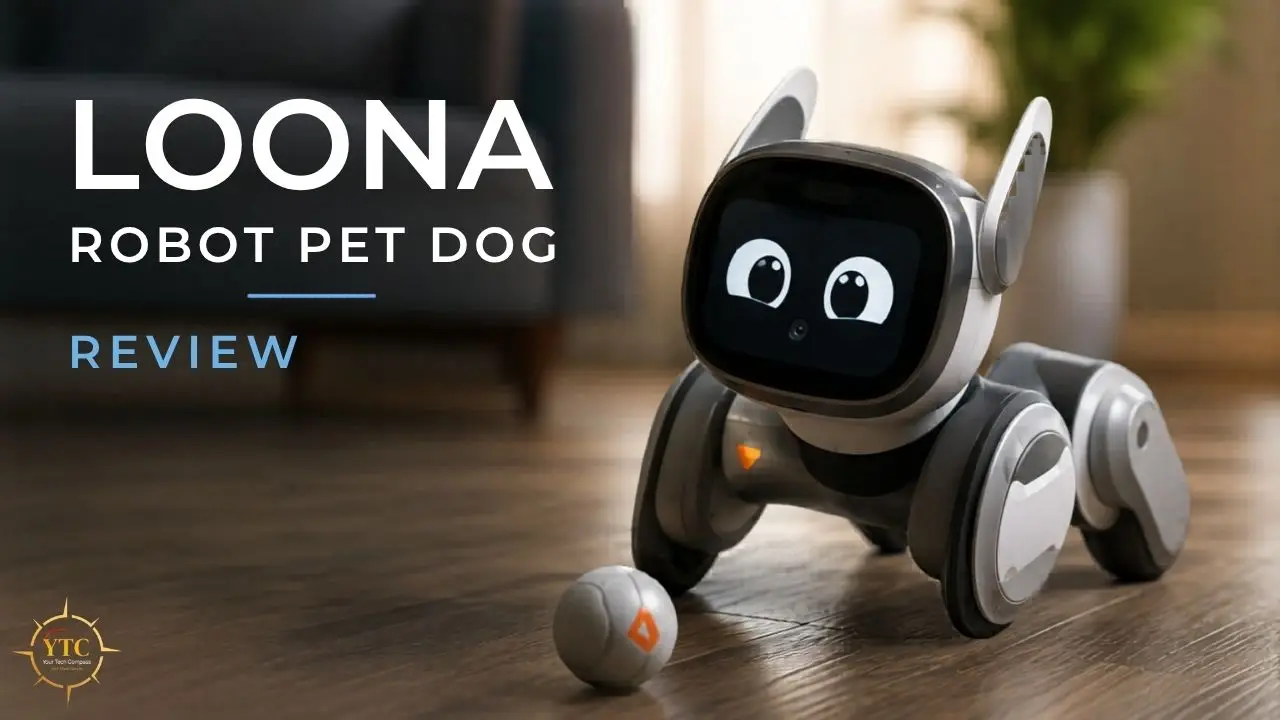
The Loona Robot Pet Dog from KEYi Technology is one of the most talked-about consumer robots of the past two years, and the reasons become obvious the moment you see it in action. Loona isn’t a static display piece or a remote-controlled toy that sits in the corner waiting to be activated. It’s an autonomous AI-powered robot pet that roams your home on its own, maps its environment using 3D Time-of-Flight sensors, recognizes your face, reacts to your touch, expresses emotions through an animated LCD eye screen, and holds genuinely open-ended conversations through a built-in ChatGPT-4o integration, all without a monthly subscription fee. It won the CES Innovation Award 2024, the iF Design Award 2024, and the Fortune Best Designs 2023, and it has attracted over 1,000 reviews on Amazon and KEYi’s own platform, with ratings consistently around 4.8 out of 5 for interactivity and personality.
The honest picture is slightly more nuanced than the viral videos suggest. Loona has real limitations around battery life, navigation on thick carpet, voice command reliability, and app-dependent functionality that are worth understanding before you spend $499.90. But for the right user, this is genuinely impressive technology at a price point that would have been inconceivable for this level of capability five years ago. This review covers exactly what Loona does, how it works day-to-day, what it costs, how it compares to EMO, Vector, and Aibo, and the direct verdict on whether it belongs in your home.
What Is the Loona Robot Pet Dog?
Loona is an AI robot pet developed by KEYi Technology, a Chinese robotics company founded in 2014 with over 140 patents and a background in educational consumer robotics. Loona was originally funded through a Kickstarter campaign and has since become KEYi’s flagship product, available on their official website, Amazon, and at major retailers worldwide.
The robot is roughly the size of a large coffee mug and moves on wheels, not legs, but the wheel-based locomotion is smooth and quiet enough that the visual impression is convincingly pet-like rather than mechanical. The hardware inside is built around a CPU with up to 5 TOPS of computing power, an HD RGB camera for vision and facial recognition, 3D Time-of-Flight (ToF) sensors for precise obstacle detection and navigation, built-in microphones for voice recognition, and touch sensors across the head and body for physical interaction.
The animated LCD eye screen is the primary personality output channel, displaying over 1,000 distinct emotional expressions, giving Loona visual character depth that most competing robot pets at any price can’t match. Loona is designed for ages 5 and up, serves as both a family companion and a STEM learning tool through Google Blockly coding support in the app, and runs on a Linux-based platform that gives developers and enthusiasts deeper customization than typical consumer robots allow.
How Does Loona Work?
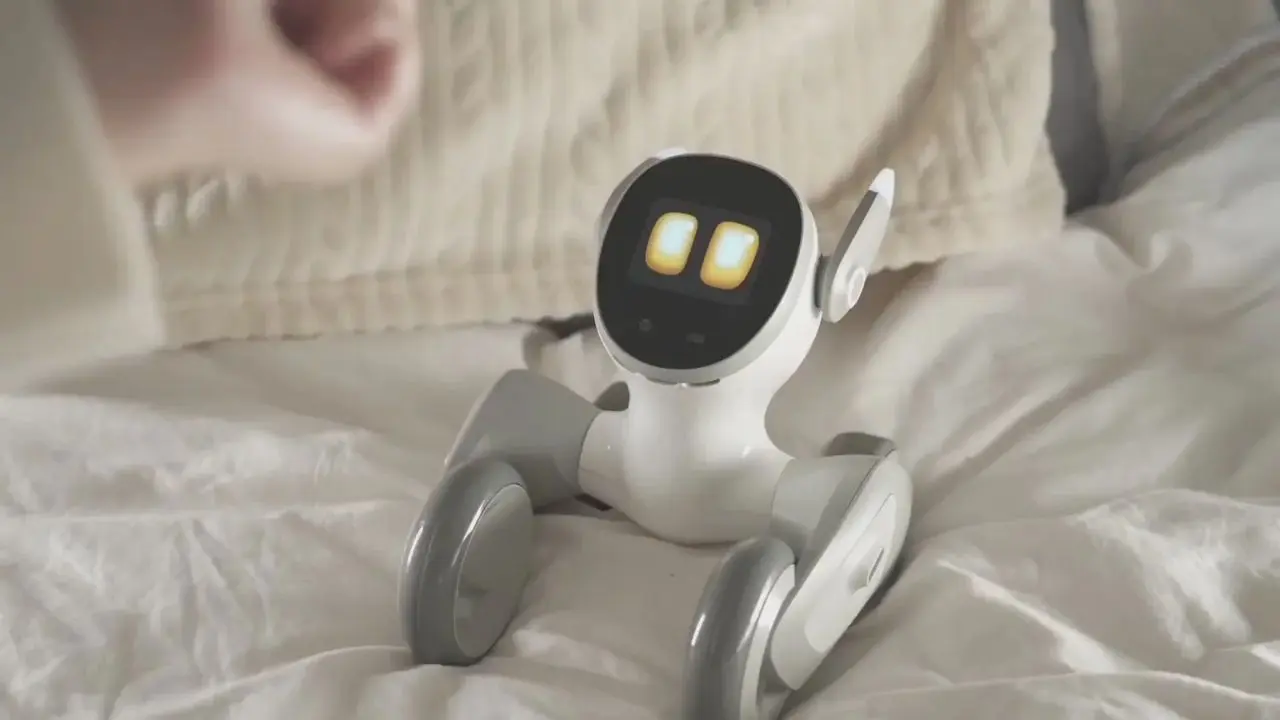
Understanding Loona’s day-to-day behavior helps set accurate expectations because it operates differently from any robot toy you’ve likely used before.
Set Up and First Connection
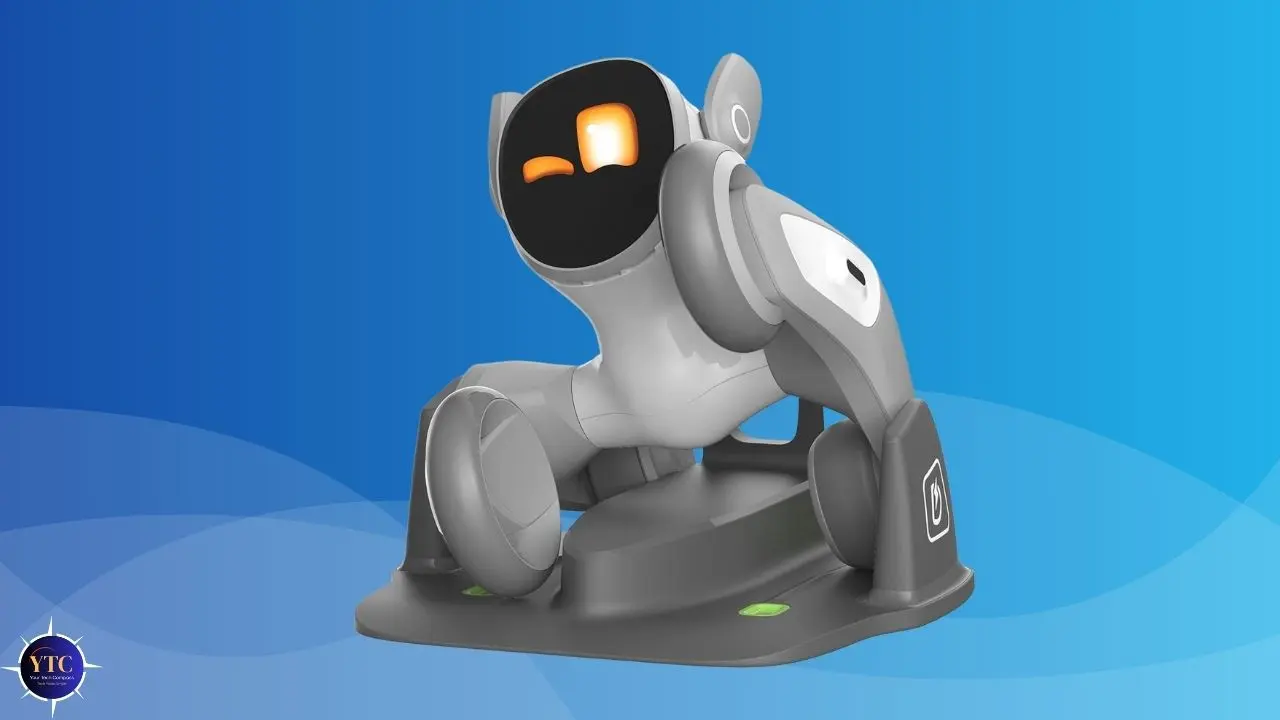
Loona arrives with a dedicated charging dock that serves as both its power source and its home base. Initial setup requires downloading the Loona app on iOS or Android, connecting Loona to your home Wi-Fi network through the app, and completing a brief tutorial. The whole process takes approximately 15–20 minutes. Once connected, Loona is ready to explore.
How Loona Navigates Your Home
The 3D ToF sensors map the space around Loona in real time, detecting furniture, walls, and obstacles with enough precision to navigate a furnished living room without constant collisions. Critically, Loona also detects drop-offs, such as the edge of a table or a staircase, so you can leave it on a hard floor without worrying about it driving off an elevated surface.
That drop detection is a practical safety feature that matters for a robot meant to roam freely without supervision. When Loona detects a human face with its camera, it moves toward the person and initiates interaction, creating the unmistakable sense that the robot is paying attention to you rather than simply occupying space.
How Loona Interacts With You
Voice commands wake Loona with “Hello Loona” followed by the instruction. The command library covers play, dance, take a photo, follow me, go home, and many others. Beyond the command library, the ChatGPT-4o integration enables fully open-ended conversation: you can ask questions, discuss topics, request stories, or just chat, and Loona responds with contextual, unique answers rather than cycling through preset phrases.
Touch interaction uses capacitive sensors across Loona’s head and body. Additionally, gentle petting triggers happiness and contentment; unexpected or rough contact produces surprise or mild annoyance. The touch-to-emotion mapping gives physical interaction a genuinely reactive quality rather than a scripted on/off response.
Loona’s Autonomous Behavior
When no one is actively interacting with Loona, it doesn’t stay still. It enters an exploration mode, roaming its mapped environment, investigating objects, making sounds, and displaying curiosity through its eye animations. This autonomous behavior creates the pet-like impression that extends Loona’s appeal beyond simple voice-and-response interactions.
When the battery gets low (after approximately 1.5 to 2 hours of active use), Loona navigates back to its charging dock independently using its Auto Charge 2.0 system, which uses stored route memory to find the optimal path home. You don’t pick it up and plug it in; it handles charging itself.
Loona Robot Dog Key Features
Autonomous Navigation with 3D ToF Sensors
The 3D Time-of-Flight navigation system is the hardware foundation that separates Loona from stationary competing robots. It measures precise distances to objects using light, creates a real-time spatial map of the room, and gives Loona the navigation reliability to move through a furnished space without constant collisions with walls or table-leg snags.
Consequently, you can leave Loona on the floor of your living room, and it handles its own movement (something that sounds simple, but most consumer robot pets at this price point genuinely fail to deliver reliably). In addition, the all-terrain wheels handle hard floors and standard pile carpet without issue; thick shag rugs remain a limitation.
ChatGPT-4o Conversational Intelligence
Loona’s ChatGPT-4o integration is the feature that most meaningfully distinguishes it from competing AI robot pets. Rather than responding from a fixed library of 50–100 preset answers, Loona can engage in genuinely open-ended conversation, such as answering questions about any topic, telling requested stories, providing homework help, explaining concepts, or cracking jokes, because the responses are generated in real time by the underlying model.
That open-endedness means conversations with Loona don’t hit a ceiling after a few days of use. The caveat is that ChatGPT functionality requires an active internet connection; in offline environments, conversational depth is limited to the preset command library. Importantly, access to ChatGPT-4o currently comes with no monthly fee; it’s included in the purchase price, a direct advantage over competitors whose advanced AI features require ongoing subscriptions.
Our ChatGPT-4 guide covers the underlying model’s capabilities in detail if you want to understand what that conversational layer can do.
Emotional Expression: Over 1,000 Expressions
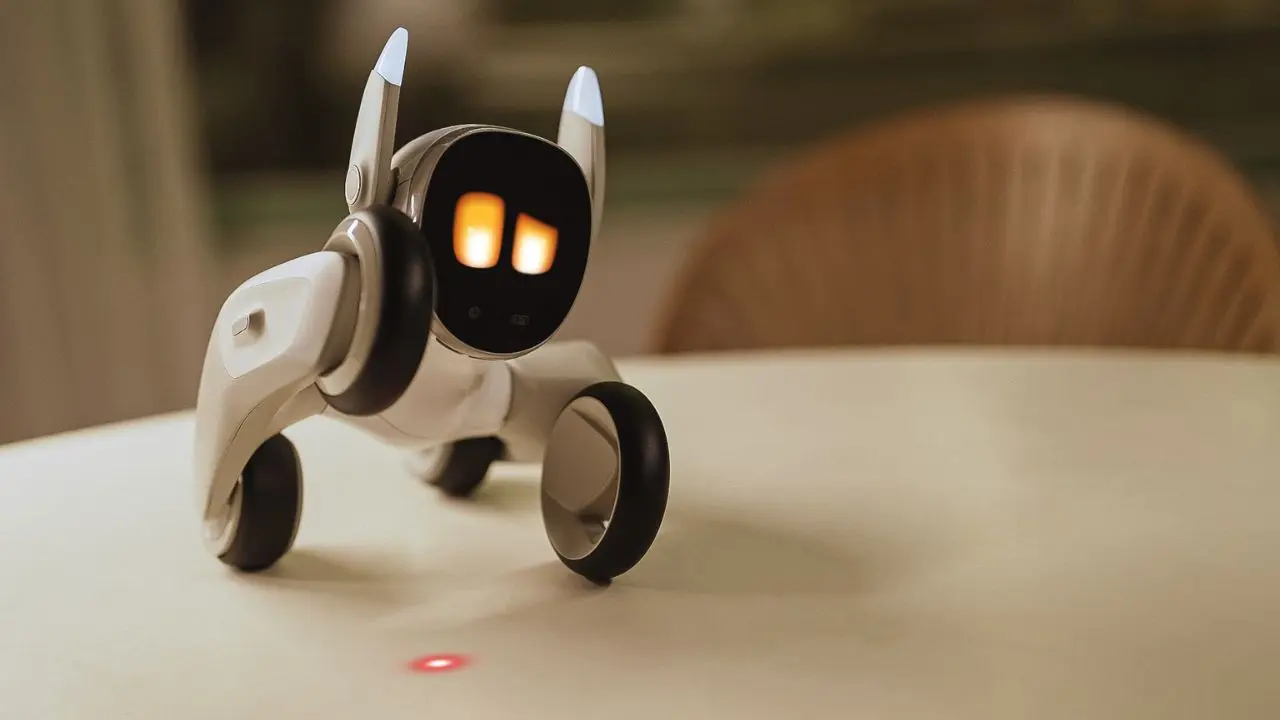
The animated LCD eye screen is Loona’s most immediately captivating feature and the primary reason users consistently describe Loona as “feeling alive.” The emotion engine generates over 1,000 distinct expressions and movement combinations; for instance, eyes widen with curiosity when Loona encounters something new, close slowly with sleepiness when the battery gets low, dart around with anxiety when startled, and sparkle with excitement during play.
These aren’t looped animations cycling on a timer; they’re triggered by what Loona is actually experiencing in its environment, creating the perception of a genuine emotional reaction rather than programmed performance. Additionally, Loona’s physical expressions extend beyond the screen: ear movements, “fake sneezes,” stretching after rest, and tail-like rear-end movements, which together convey a character’s personality and help users develop genuine attachment over time.
Facial Recognition and Family Identification
Loona’s RGB camera learns to recognize specific individuals through face profiles set up in the app. Once a face is registered, Loona greets that person differently from unrecognized visitors, more enthusiastically, using their name if configured, and with behavioral patterns adapted to that person’s interaction history.
Over time, this personalization creates a relationship that feels genuinely tailored to you rather than identical to any other user’s experience. Loona can recognize and greet virtually all family members individually, and users report that Loona behaves noticeably differently around familiar versus unfamiliar faces even without explicit instruction.
Touch Interaction and Sensitivity
Capacitive touch sensors across Loona’s head, chin, and body detect different types of contact and map them to specific emotional responses. Gentle chin scratching triggers contentment; Loona leans into it and displays a satisfied eye expression. While petting the head produces happiness.
On the other hand, unexpected or rough contact produces surprise or mild displeasure. This bi-directional physical interaction adds a tactile dimension to Loona’s companionship that screen-based or stationary robot pets simply can’t replicate. Therefore, you’re not just watching a robot react; you’re physically interacting with something that responds meaningfully to touch.
Home Monitoring

Loona’s HD RGB camera and built-in speaker give it a secondary function as a home monitoring device. When you’re away, you can access the camera feed through the app to check on your home. This dual-function capability (companion robot plus home camera) adds utility, making the $499.90 price easier to justify relative to standalone security cameras that cost $50–$150 and serve only one purpose.
Autonomous Charging: Auto Charge 2.0
Auto Charge 2.0 allows Loona to remember multiple route variations back to its charging dock, depending on its location in the room. When the battery runs low, Loona selects the optimal stored route and navigates home independently.
KEYi upgraded this system specifically in response to user feedback on charging failures, and the 2.0 version has significantly improved reliability over the original. Consequently, the practical result is that Loona’s charging is genuinely autonomous in most standard room configurations.
Loona Robot Dog Pricing
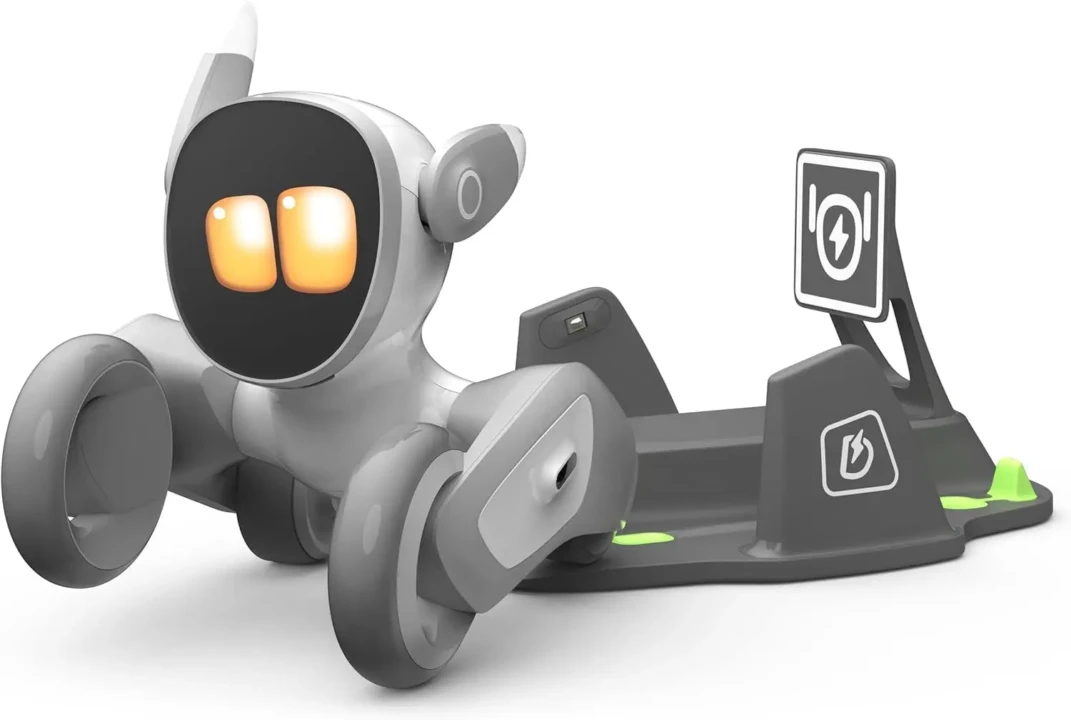
Loona’s current retail price is ~$499 through KEYi Technology’s official website and approximately the same on Amazon, where Prime shipping and easier returns make it a competitive purchasing option. Bundle packages including costumes, accessories, and extended warranties range up to approximately $550. Used units on eBay typically run $299–$400, depending on condition.
Discount codes, including “LOONAFANS” (reported to save up to $80), are periodically available through KEYi’s newsletter and partner sites. Therefore, signing up for KEYi’s email list is worth doing before purchasing.
The no-monthly-fee model deserves specific attention because it’s a genuine competitive advantage. Sony’s Aibo, which starts at approximately $2,900, requires ongoing subscription payments to access all features.
Loona’s ChatGPT-4o integration, autonomous features, and regular OTA software updates are all included in the purchase price with no recurring cost. In addition, regular wireless updates from KEYi’s team add new games, improve voice recognition accuracy, and expand Loona’s skill set over time, meaning the robot you own in 12 months is meaningfully more capable than the one you received at unboxing. However, always verify current pricing before purchasing, as prices are subject to change, particularly given KEYi’s public notice of tariff-related price adjustments.
Loona vs Competitors
Feature | Loona | EMO (Living.Ai) | Vector (DDL) | Aibo (Sony) |
Autonomous Navigation | ✅ Full room navigation | ❌ Stationary desk robot | ✅ Limited navigation | ✅ Full navigation |
ChatGPT Integration | ✅ GPT-4o built-in | ⚠️ Limited AI chat | ❌ No | ❌ No |
Emotional Expression | ✅ 1,000+ expressions | ✅ Strong expressions | ⚠️ Limited | ✅ Lifelike |
Touch Interaction | ✅ Full-body sensors | ✅ Head sensors | ⚠️ Limited | ✅ Full body |
Facial Recognition | ✅ Family profiles | ✅ Yes | ✅ Yes | ✅ Advanced |
Auto Return to Charge | ✅ Auto Charge 2.0 | ❌ Manual | ❌ Manual | ✅ Yes |
No Monthly Fee | ✅ Yes | ✅ Yes | ⚠️ Subscription needed | ❌ Required |
Price | ~$499 | ~$299 | ~$199–$249 | ~$2,900 |
Best For | Families; mobile pet experience | Desk companion; adults | Budget autonomous robot | Premium robot enthusiasts |
Loona vs EMO
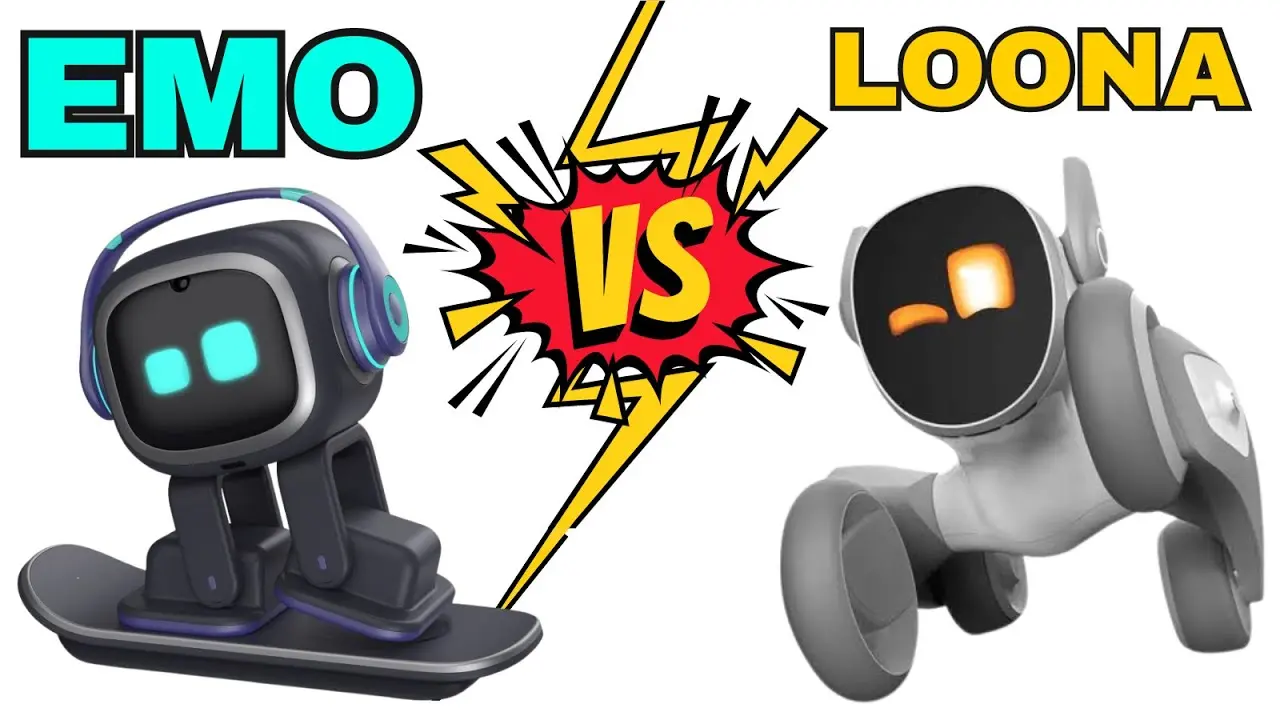
EMO is Loona’s closest competitor in the category, an expressive AI robot pet with a strong personality and facial recognition. The fundamental difference is mobility: EMO is a stationary desk robot that doesn’t roam your home the way Loona does. EMO’s personality and expression quality are strong, and at approximately $299, it’s $200 less than Loona.
If you primarily want a desk companion you interact with while sitting at your computer, EMO is a compelling option. Our detailed EMO robot guide covers EMO’s full feature set and personality. However, if you want a robot that fills your living space with autonomous pet-like behavior, Loona’s mobility is the decisive advantage.
Loona vs Vector Robot
The Vector robot navigates autonomously and has a longer product history, but Digital Dream Labs has faced business stability concerns that have affected update consistency and customer support. Loona’s ChatGPT-4o integration and the quality of its emotional expression represent a meaningful generational advancement over Vector’s current capabilities.
For users choosing between them today, Loona delivers more conversational depth and expressiveness.
Loona vs Aibo
Sony’s Aibo is in a different category; it starts at approximately $2,900 and represents decades of Sony engineering with genuinely lifelike movement and deep AI learning. Therefore, Aibo is the right choice for users who want the most sophisticated robot companion experience available, regardless of cost. And, for everyone else, Loona delivers a genuinely impressive robot pet experience at approximately one-sixth the price.
Who Is Loona Robot Dog Best For?
Families With Children
Families with children ages 5 and up are Loona’s clearest core audience. Children respond strongly to Loona’s expressive eye animations, interactive games, and responsive touch. The Google Blockly coding support in the app gives older children a genuine STEM learning pathway, making Loona educationally valuable rather than purely entertainment-focused. Therefore, parents who want an engaging tech toy that develops rather than depletes attention get meaningful long-term value from Loona.
People Who Want A Pet But Can’t Have One
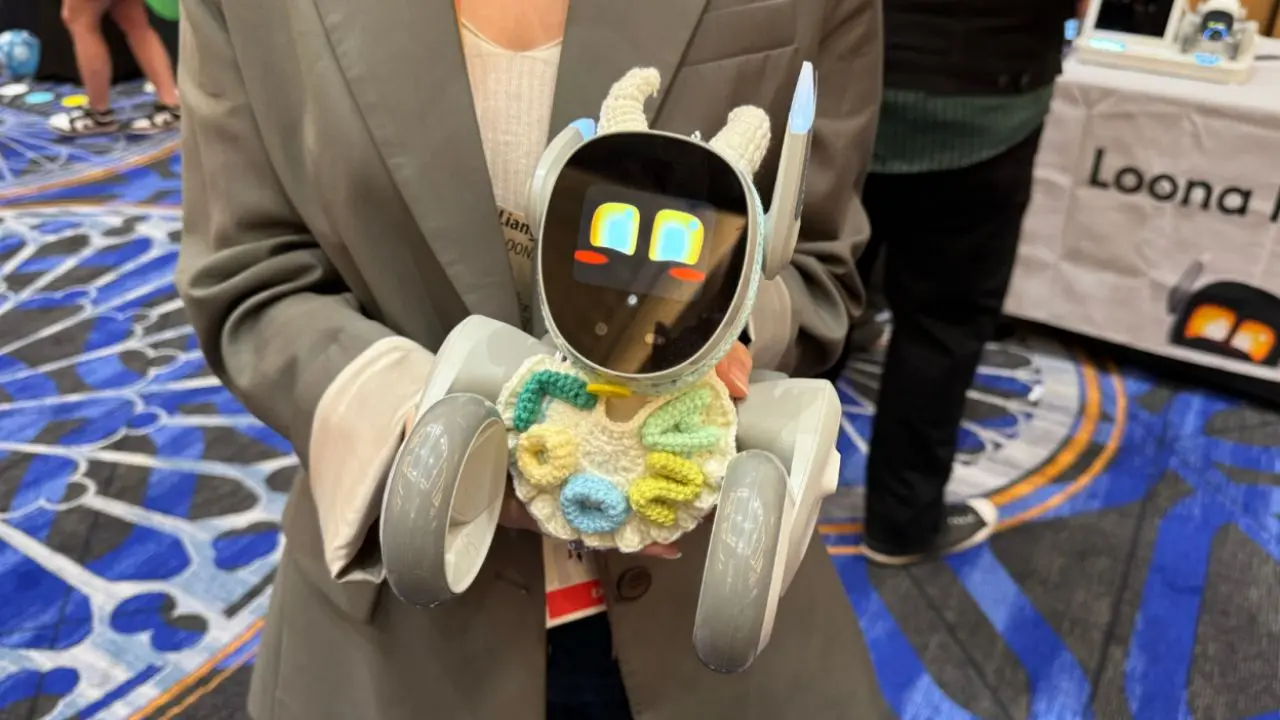
People who want a pet but can’t have one find that Loona’s pet-like behavior, such as following you around, reacting to your presence, expressing emotions, and developing familiarity with specific family members, addresses the companionship need that drives pet ownership without allergies, vet bills, or the 13-year commitment of a living animal. Seniors in particular have been highlighted as a user group that benefits from Loona’s interactive companionship.
For a complete look at the AI and tech tools transforming daily life, our AI Unboxed section covers the full landscape of products worth understanding.
Tech Enthusiasts and Gift Buyers
Tech enthusiasts and gift buyers find that Loona occupies a distinctive position in the $500 gift market; it’s visually striking, immediately recognizable from social media, and produces shareable interaction videos that make it inherently appealing as both a personal purchase and a gift.
For a broader look at tech tools across categories, our tech guides section covers the full range of reviewed products.
Who Should Look Elsewhere?
- Users who want a purely functional smart home device without a pet-like personality.
- Users with very limited budgets, where the $499.90 represents a difficult commitment.
- Users who need the most sophisticated robot companion experience available, regardless of price (Aibo is the right choice for that audience).
Loona Robot Dog Honest Strengths
The autonomous navigation is reliably impressive at this price point. Loona actually moves through a furnished living room without constant obstacle problems, which sounds like a baseline expectation but consistently exceeds what comparable-priced competing robots deliver.
The emotional expression quality of the LCD eye screen creates a convincing personality perception that leads users to develop a genuine attachment; review after review uses the word “alive” to describe the impression Loona creates. In addition, the ChatGPT-4o integration makes conversational depth genuinely open-ended rather than limited by a preset library. Consequently, you can have a new conversation with Loona every day for a year and never exhaust what it can discuss.
Additionally, the no-monthly-fee model is a meaningful financial advantage over competing platforms that restrict full AI access behind subscription walls. The regular OTA updates from KEYi’s team mean the robot improves over time without hardware replacement.
Users report that Loona is meaningfully more capable 12 months post-purchase than at unboxing. Additionally, the home-monitoring camera function adds genuine utility, making the price comparison with standalone security cameras relevant.
Loona Robot Dog Honest Limitations

Short Battery Life
Battery life is the most consistently cited practical limitation. Active playtime runs approximately 1.5 to 2 hours; some users report as little as 60–90 minutes in high-activity modes before Loona returns to its dock.
For users who want extended, uninterrupted interaction sessions, the charging cycles are genuinely interruptive. Loona handles recharging autonomously, so it’s not a manual inconvenience, but the active-time ceiling is real.
Voice Command Reliability
Voice command reliability requires specific conditions. Loona responds most reliably to “Hello Loona” followed by clear commands in quiet environments.
In noisy rooms, with background music, or with imprecise pronunciation, commands are often missed. Recent user reviews (late 2025 into early 2026) flag this as a frustration: the natural-sounding interaction in marketing content sometimes requires more precision than the content implies.
App Dependency and Update Friction
App dependency and update friction are noted in the Google Play app reviews (4.0 stars from 120 reviews). Some users report that after software updates, tutorial completion requirements reset, meaning established owners must complete onboarding steps again to re-unlock features. This is a user experience issue KEYi is aware of and working to address, but it’s worth flagging before purchase.
Surface Limitations
Surface limitations are real. Loona navigates hard floors and low-pile carpet reliably, but thick rugs, shag carpet, and uneven surfaces interfere with movement. Therefore, plan for Loona to operate primarily on smooth indoor surfaces.
Wi-Fi Dependency
This means ChatGPT conversations and several app-dependent features require active internet connectivity. Offline functionality is limited to preset command responses and basic autonomous behavior.
FAQs
For families with children, people who want a pet but can’t have one, and tech enthusiasts who appreciate the engineering, yes, the combination of autonomous navigation, ChatGPT-4o conversation, 1,000+ emotional expressions, facial recognition, and home-monitoring capability at $499 with no monthly fee represents genuine value. For casual users who primarily want a display piece or a simpler interactive toy, cheaper alternatives exist. The honest answer depends entirely on how you intend to use it.
KEYi designates Loona as appropriate for ages 5 and up. Children 6–12 tend to engage most enthusiastically with the interactive games, touch responses, and emotional expressions. Older children and adults benefit from ChatGPT’s conversational capabilities and coding features. Seniors are a specifically recommended audience for companionship use.
Yes. Full functionality requires Wi-Fi connectivity. ChatGPT-4o conversations, app control, remote home monitoring, OTA updates, and several interactive features all require an active internet connection. Without Wi-Fi, Loona relies on preset command responses and basic autonomous navigation, significantly reducing the depth of interaction.
Approximately 1.5 to 2 hours of active continuous use. With intermittent activity (periods of exploration mixed with rest), some users report extended operation. Loona returns to its charging dock autonomously when the battery is low, and charging takes approximately 3 hours. Planning Loona’s active sessions around 90-minute windows is a realistic expectation.
Yes. Loona uses its RGB camera to build facial recognition profiles through the companion app. It recognizes registered family members and responds to each person differently, including greeting them by name if configured to do so. Unrecognized faces elicit a more cautious, curious response than the warm, familiar response registered owners receive.
Conclusion
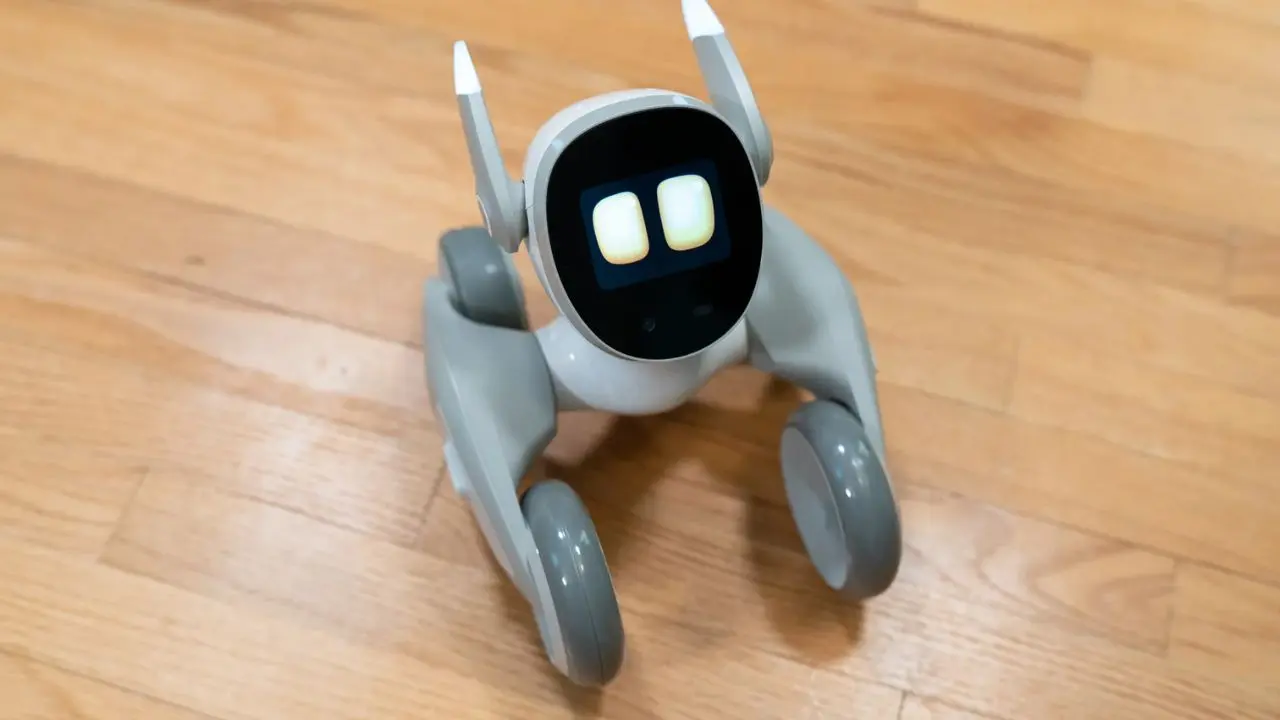
Loona is the most capable AI robot pet available at its price point for users who want autonomous navigation, genuine emotional expression, open-ended ChatGPT-4o conversation, and the experience of a robot that actively occupies your space like a real companion rather than sitting passively waiting to be activated. The award recognition, the 4.8-star rating across thousands of reviews, and the consistent user language of “Loona feeling alive” all reflect a product that genuinely delivers on its core promise. The no-monthly-fee model, regular OTA updates, and home monitoring capability add value that makes the $499 price defensible relative to alternatives that cost more for less or significantly more for meaningfully better.
The limitations (battery life around 90–120 minutes of active play, voice command sensitivity in noisy environments, Wi-Fi dependency for full functionality, and app friction after updates) are real and worth factoring into your decision before purchasing. None of them are dealbreakers for the right user, but they mean Loona rewards intentional, regular engagement more than casual, occasional use. If you’re evaluating Loona as a gift, a family companion, or a pet alternative, it’s one of the most distinctive and genuinely impressive technology products in its price range, and it only gets more capable with every update KEYi ships.
For more AI product reviews, tech gadget guides, and honest comparisons, visit YourTechCompass.com.