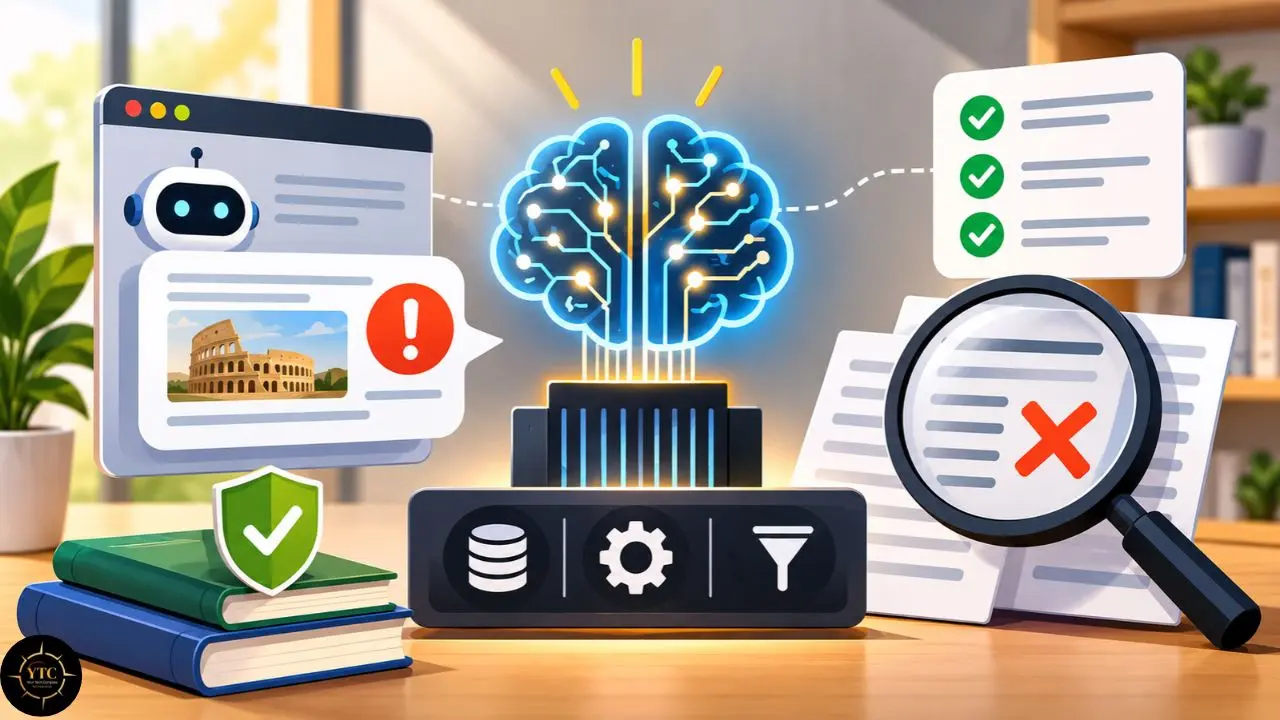
You paste an AI-written summary into a client report, and it reads beautifully. Two days later, the client asks where one of the statistics came from, and you realize you can’t find the source because it doesn’t exist. That sinking feeling is the everyday face of an AI hallucination: a fluent, confident answer that presents inaccurate, unsupported, or fabricated information as fact.
Here’s the honest promise of this guide. I can’t show you a setting that switches hallucinations off, because the research says none exists, but I can show you how to reduce them and catch what slips through. We’ll cover why AI makes things up, what the numbers say, ten fixes ranked by evidence, and a workflow you can copy. I’ll also explain why people working in African languages face extra risk. Everything below comes from published research, official documentation, and reporting rather than my own testing, so treat my recommendations as informed judgment, not lab results.
Quick Verdict
- Best For: Anyone using AI for facts, research, code, customer replies, or advice.
- Skip It If: You want a setting that switches hallucinations off. None exists.
- Bottom Line: You can’t stop hallucinations entirely, but grounding answers in reliable sources, permission to say “I don’t know,” and verification sized to the risk cut them sharply and catch much of the rest.
What Are AI Hallucinations?
An AI hallucination is output that sounds confident and fluent but is false or unsupported. The model might invent a statistic, cite a study that doesn’t exist, misrepresent a document you gave it, or present a wrong conclusion as fact. It might also agree with a false claim you slipped into your question, a habit researchers call sycophancy.
Some researchers dislike the word, arguing that it anthropomorphizes a statistical error and makes it sound like a mind playing tricks. I’d say the label has stuck because it captures the experience: the answer looks right, and that’s the problem. Whatever you call it, the practical question is the same: how do you stop trusting a sentence just because it sounds convincing?
Why AI Hallucinates
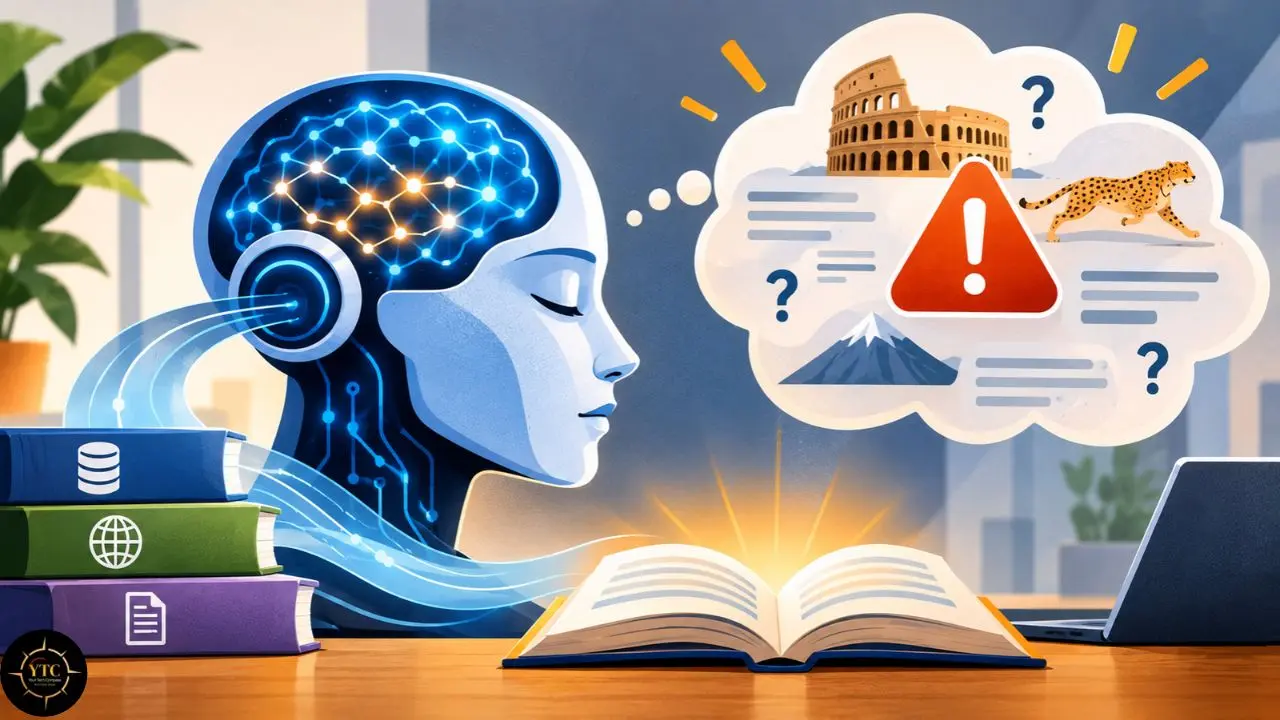
Language models learn by predicting the next word from huge amounts of text, and that text isn’t labeled as true or false. The model sees plenty of fluent sentences and has to guess the pattern underneath. For one-off facts, like a person’s birthday or a dissertation title, there’s no reliable pattern to learn, so it produces something plausible instead.
OpenAI’s September 2025 paper on why language models hallucinate adds a second cause that surprised me. Most benchmarks reward guessing because a wrong answer can still earn credit, while “I don’t know” guarantees zero. Think of a multiple-choice test with no penalty for wrong answers: the student who always guesses beats the student who leaves blanks.
OpenAI’s own SimpleQA example makes the point vividly. Its gpt-5-thinking-mini model abstained on 52% of questions and answered wrongly on 26%, while the older o4-mini abstained on 1% and answered wrongly on 75%. The older model scored slightly higher on raw accuracy, 24% to 22%, even though it was wrong far more often.
So what? A model that guesses can look better on a scoreboard while being less trustworthy in your hands. Stale knowledge, vague prompts, and thin training data in some languages make things worse, and our AI Unboxed category explains more of how these systems work under the hood.
How Often Does It Happen? The Numbers
Hallucination rates depend heavily on the task, so no single percentage describes a model. Here is a snapshot of published figures, each measuring something different.
Task | What was measured | Rate | Source |
|---|---|---|---|
Document summaries | Unsupported content in summaries of supplied documents, across models listed on the leaderboard | 1.8%–24.2% | Vectara Hallucination Leaderboard, October 2026 snapshot |
Legal research using retrieval | Incorrect or unsupported answers to challenging legal queries | 17%–33% | Stanford, Hallucination-Free?, 2024–2025 |
General-purpose LLMs on federal-case questions | Hallucinated answers to specific, verifiable questions | 69% for ChatGPT 3.5; 88% for Llama 2 | |
Questions about people (PersonQA) | Hallucination rate without browsing: o3, o1, and o4-mini | 33%, 16%, and 48% |
Read the table carefully, because it hides traps. Vectara’s leaderboard tests whether a model’s summary is consistent with a document the user supplies; it does not test whether a model accurately recalls facts without a source. A low Vectara score therefore does not establish that a model is safe for open-ended research.
It also matters how often a model declines to answer. A model that refuses more questions can appear safer on a hallucination-rate metric while providing less usable information.
The courtroom record shows what is at stake. Damien Charlotin’s AI Hallucination Cases Database listed 2,313 legal decisions involving alleged or established AI hallucinations as of November 20, 2026. That is a cumulative count of identified cases, not a rate of hallucination across all AI-assisted legal work.
Compared with vendor claims, the evidence is sobering. Some legal-research vendors promoted retrieval as eliminating hallucinations, but Stanford’s preregistered study found that its leading tools still produced incorrect or unsupported information on roughly one in six to one in three challenging queries. In my view, “hallucination-free” is a marketing phrase, not a measurement.
The Fixes, Ranked by Evidence
I’ve ordered these from strongest evidence to weakest. Treat every example prompt as a starting point, and test it on your own tasks, because I haven’t tested these on yours.
Fix 1: Ground the Model in Your Own Sources
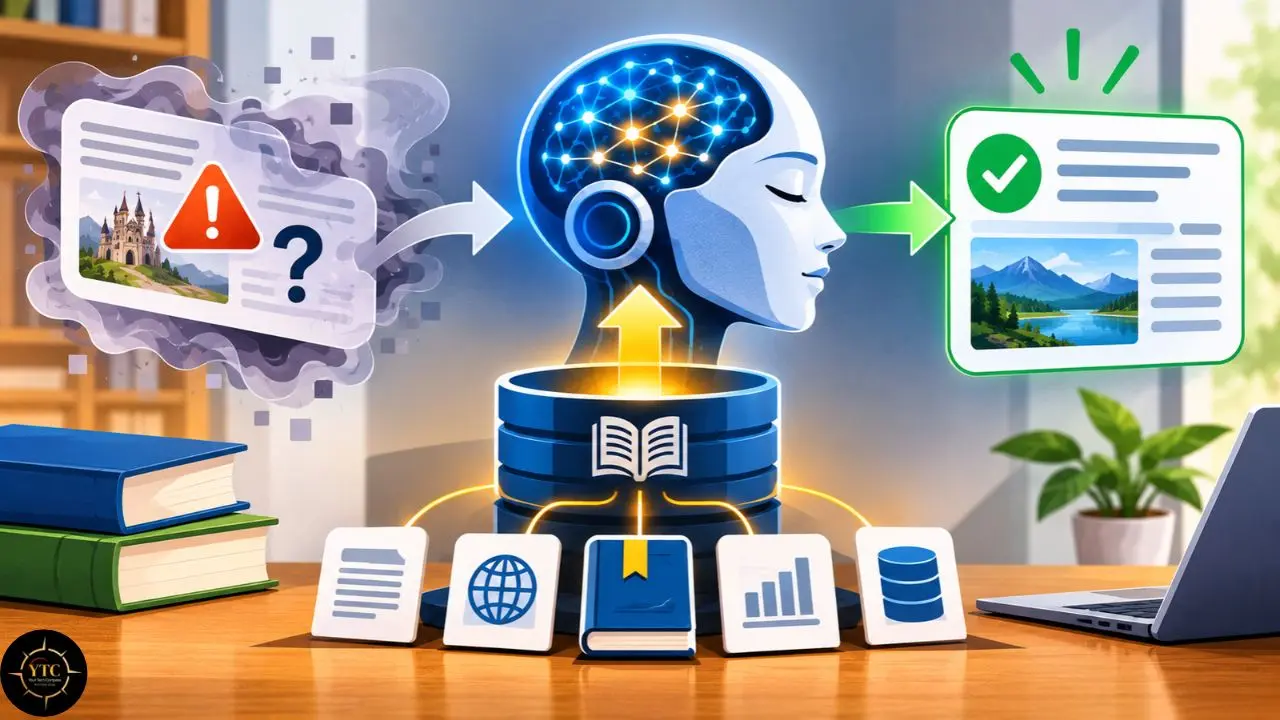
Paste in the documents you want it to use, or use a tool that retrieves them, and tell the model to rely only on that material. This is the technique usually called retrieval-augmented generation, or RAG. A sample instruction: “Answer using only the three documents below, and say so if they don’t contain the answer.”
The evidence is encouraging but mixed. In a randomized controlled trial, law students using Clio’s retrieval-based Vincent tool improved productivity and work quality without increasing hallucinations relative to students working without AI. That is encouraging, but it concerns one legal product and one study population, not RAG in general. Clio’s summary explains the study.
Yet Stanford found retrieval-based legal products still hallucinated roughly 17% to 33% of the time, partly because retrieval can pull the wrong document. Grounded doesn’t mean safe.
Fix 2: Give Explicit Permission to Say “I Don’t Know”
Tell the model it’s fine to admit it lacks the information. This works with the incentive problem above: you’re replacing a scoreboard that rewards guessing with an instruction that rewards honesty. Anthropic’s guidance on reducing hallucinations lists this first and says it can drastically reduce false information, though that’s the vendor’s own claim.
The trade-off is over-refusal. If the model starts saying “I don’t know” to everything, check how often it answers at all, and loosen the instruction.
Fix 3: Make It Quote First, Then Answer
For long documents, ask the model to extract word-for-word quotes before it does anything else. Then have it base its answer only on those quotes. Anthropic’s docs also suggest having the model find a supporting quote for each claim afterward and retract any claim it can’t support.
Why does that help? Quotes anchor the answer to text you can check, so a reader can trace each claim back. The cost is longer outputs and a bit more setup.
Fix 4: Ask for Sources, Then Check Them Yourself
A source list from an AI is a lead, not proof. Open each link, confirm the paper or case exists, and read the line it supposedly supports. A citation can be real and still not say what the model claims.
Our guide on fact-checking AI responses walks through a fast routine. Court sanctions for fake citations show the cost of skipping it, which I’ll quantify shortly.
Fix 5: Run It Twice and Compare
Ask the same question more than once, or ask a second model. Anthropic’s docs describe this as best-of-N verification: inconsistencies between runs can flag hallucinations. Our multi-model AI guide explains how to compare assistants, and our GPT-5.5 vs. Claude Opus 4.8 comparison shows how top models differ.
There’s a catch, though. Different models can share the same blind spots, so agreement isn’t proof. I’d treat disagreement as a red flag and agreement as merely encouraging.
Fix 6: Break the Task Into Steps and Check the Reasoning
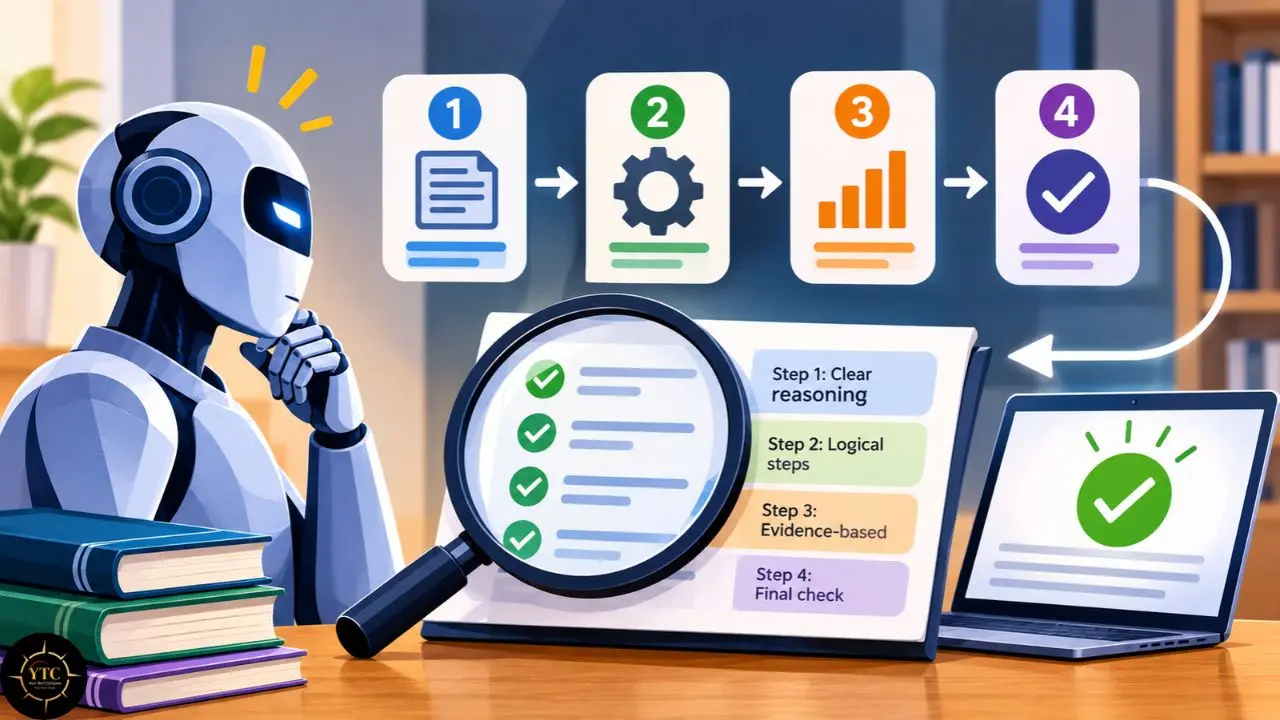
Ask the model to explain its reasoning step by step before it gives a final answer. Faulty logic is often easier to spot in the steps than in the conclusion. Reviewing that reasoning is a useful second pair of eyes.
Don’t assume “thinking” models are immune, though. OpenAI’s o3 hallucinated on 33% of PersonQA questions without browsing, versus 16% for o1. On Vectara’s summarization test, DeepSeek R1 scored 11.3% against 6.1% for its V3 base model. These are model-to-model comparisons, not proof that reasoning itself causes hallucinations, but they are a useful warning against treating a reasoning label as a safety guarantee.
Fix 7: Use Tools for Facts and Math
Don’t make the model remember what a tool can look up. Search, calculators, code execution, and database queries beat memory for numbers, dates, and current events. Our Model Context Protocol explainer covers how assistants connect to tools, and our LangChain explainer shows how builders chain retrieval and tools together.
Fix 8: Constrain the Output
Give the model a template, a list of allowed values, or an explicit “not found” option. A constrained answer leaves less room to improvise. A form that says “Fee: [amount from document, or NOT STATED]” is harder to hallucinate into than an open paragraph.
My opinion: lowering randomness settings may make answers more consistent, but a consistent wrong answer is still wrong. Treat that setting as a polish step, not a fix.
Fix 9: Avoid Leading Questions
Models tend to go along with what you imply. If you ask “Why is this policy illegal?” you’ve baked in a premise, and the model may build a convincing case for something false. Ask “Is this policy legal, and what evidence cuts against it?” instead.
Stanford HAI’s 2026 AI Index found that accuracy can collapse when a user presents a false claim as fact. In its benchmark, GPT-4o’s accuracy fell from 98.2% to 64.4%, and DeepSeek R1’s fell from over 90% to 14.4%. The habit costs you nothing.
Fix 10: Match Human Review to the Risk
No prompt replaces a person who knows the subject. The question is how much checking each task deserves.
Risk Level | Example | What to Do |
|---|---|---|
Low | Brainstorming names, rough outlines | Skim for obvious errors |
Medium | Internal reports, summaries, code for non-critical tools | Verify key facts, sources, and numbers |
High | Legal, medical, financial, published claims, customer commitments | Verify everything against primary sources, with a qualified reviewer |
The Ten Fixes at a Glance
Here’s how the ten fixes compare at a glance.
Fix | What It Prevents | Effort | Evidence Strength |
|---|---|---|---|
1. Ground in your sources | Invented facts | Medium | Moderate; task- and implementation-dependent |
2. Permission to say “I don’t know” | Confident guessing | Low | Vendor guidance; limited independent evidence |
3. Quote first | Drift from source text | Medium | Vendor guidance; strong mechanistic rationale |
4. Check every source | Fake citations | Medium | Strong for catching errors; not a generation fix |
5. Run twice and compare | One-off fabrications | Low | Heuristic; moderate at best |
6. Step-by-step reasoning | Faulty logic | Low | Mixed; useful for review, not a hallucination cure |
7. Use tools for facts | Memory errors | Medium | Strong in principle; depends on tool and data quality |
8. Constrain the output | Free-form invention | Low | Limited; reduces free-form invention |
9. Avoid leading questions | Sycophancy | Low | Moderate; supported by Stanford HAI benchmark |
10. Risk-based review | Costly mistakes | Varies | Strongest overall safeguard |
What Doesn’t Work
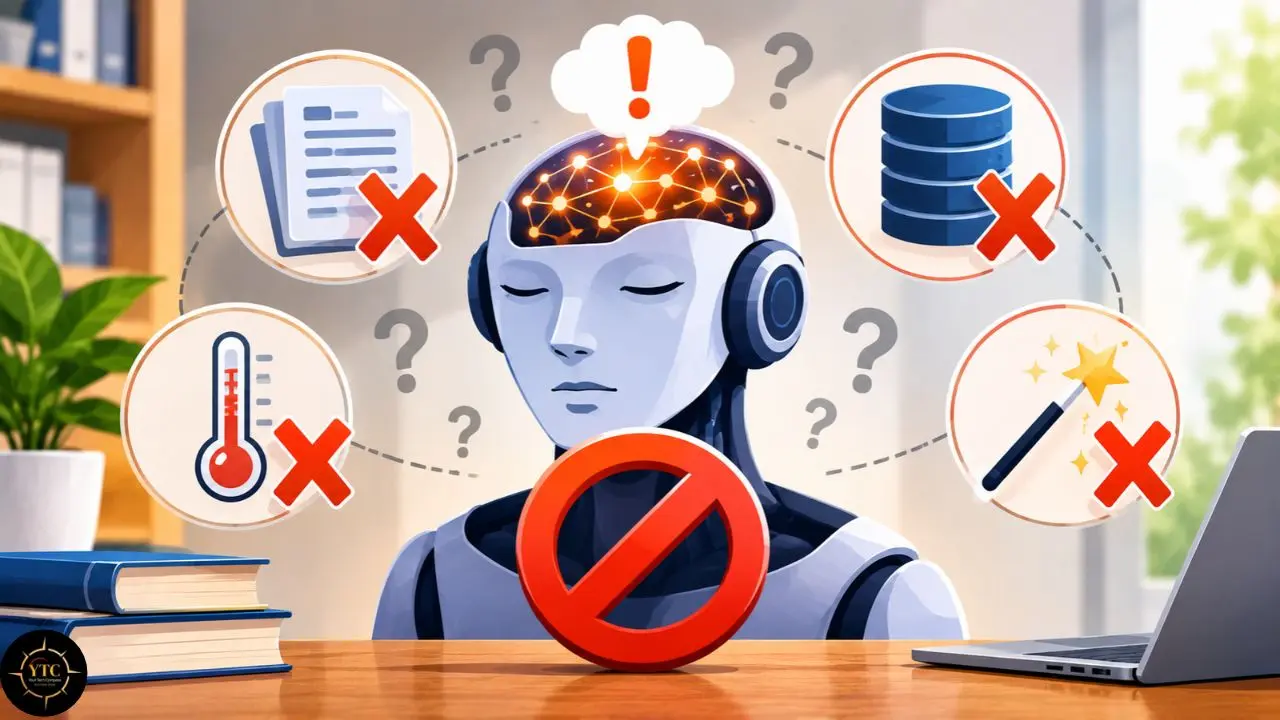
A few popular beliefs deserve skepticism. “A newer model means no more hallucinations” is the first: OpenAI says GPT-5 hallucinates significantly less than its predecessors, especially when reasoning, but says hallucinations still occur. Its system card reports a 26% lower hallucination rate for gpt-5-main than GPT-4o, and a 65% lower rate for gpt-5-thinking than o3. Whether you’re comparing Kimi K3, which independent testing found gave confident wrong answers on 51% of the knowledge questions it did not answer correctly, or any other new release, test it instead of assuming.
“Retrieval eliminates them” fails the Stanford test, and “a citation means it’s true” fails the moment you open the link. A confident tone proves nothing either, since the model sounds equally sure when it’s right and when it’s wrong. And in my opinion, simply typing “don’t hallucinate” is weak, because a vague command does not reliably give the model a way to recognize the limits of its knowledge. Permission to abstain does: it gives the model a legitimate way to say “I don’t know” rather than manufacture an answer.
A Workflow You Can Copy
For You as an Individual
Run through five steps whenever the answer matters. Ground the model in your sources, give it permission to say it doesn’t know, ask for quotes, verify the claims that carry your conclusion, especially numbers, names, dates, legal or medical assertions, and anything you plan to repeat publicly, and keep a note of what you checked. It takes a few minutes and saves you from the Tuesday-morning phone call.
Here’s a starter prompt, which you should adapt and test on your own tasks:
Use only the documents below. Do not use outside knowledge. If the documents do not contain the answer, write “Not in the sources.” Quote the exact sentence that supports each claim. If a quote supports only part of a claim, say which part it supports. List anything you’re unsure about at the end.
For Teams
Write down which tasks fall into which risk tier, name an owner for checking, and require a source for any number, legal claim, medical claim, financial claim, or customer commitment that leaves the building. Keep a saved set of ten to twenty real questions with known answers, and re-run it after every model update, and after meaningful changes to your prompts, retrieval sources, or tools.
Our piece on the model churn tax explains why updates can quietly change behavior.
For Builders
If you build products, measure retrieval quality and groundedness instead of trusting the demo. Set an abstention rule so the system declines or asks for a better source when retrieval does not surface sufficiently relevant, non-conflicting support for the request. Monitor real conversations for unsupported claims, not just benchmark scores. For more guides on building and checking AI tools, browse our Tech Guides.
The Cost Math: Verification vs. Mistakes
Verification isn’t free, so let’s price it. Checking 20 citations at about 2 minutes each takes 40 minutes, which is roughly $33 at $50 an hour. That’s an illustration, not a benchmark.
Now compare it with what skipped checks have cost others. NPR reported in April 2026 that an Oregon lawyer was ordered to pay $109,700 in sanctions and costs over AI-generated errors. Bloomberg Law reported that an Illinois law firm and one of its partners were ordered to pay a combined $59,500 to the opposing firm after fake citations were discovered in a filing.
The takeaway is not that you should check everything, since that’s impractical. It’s that you should spend your checking time where an error would be expensive.
Legal and Risk Considerations
Professionals carry duties that AI doesn’t remove. Courts have sanctioned lawyers who submitted unverified AI-generated citations, and ethics guidance treats AI output like work from a nonlawyer assistant: it must be checked before a professional relies on it. If you advise clients on law, health, or money, your name is on the answer.
There’s also a data side. When you paste a contract or a customer list into a chatbot, you’re deciding what information you’re sending to that provider. Read its data policy first, and check whether it retains, trains on, shares, or gives staff access to what you submit. For confidential material, use appropriate safeguards, and, where required, obtain consent.
It’s worth separating what works today from what’s settled: court rules and professional guidance on AI keep changing, so check the latest for your field and country.
Real-World Use Cases
- The Student or Researcher: You ask for background reading and get a tidy reference list. Open every link before you cite anything.
- The Lawyer or Compliance Officer: You use AI to draft, then verify every citation against an official source. The sanctions discussed above show why.
- The Customer-Support Bot: A bot that invents a refund policy or a transaction fee creates real liability. For fintech teams, our African FinTech coverage explores why exact fee, limit, and account information matters to customers.
- The Developer: AI-written code often runs and still misbehaves. In Stack Overflow’s 2025 Developer Survey, 46% of developers said they actively distrust the accuracy of AI tools, compared with 33% who trust them, and 66% named “almost right, but not quite” as their biggest frustration.
- The Health or Agriculture Adviser in Africa: A farmer asking about pest treatment, or a patient asking about a medicine, shouldn’t get a confident guess. Ground answers in official guidance and keep a qualified person in the loop.
Honest Limitations
- No Method Stops Everything: Even the best combination reduces hallucinations without eliminating them.
- Verification Takes Time: Checking sources costs minutes that deadlines don’t always allow.
- Grounded Tools Still Err: A model can misread, misapply, or selectively use the document you gave it.
- Benchmarks and Real Life Differ: A leaderboard score may not match your documents.
- Much Advice Is Vendor Guidance: Several techniques come from model makers, not independent testing, so measure them on your own work.
Who Needs Which Fix
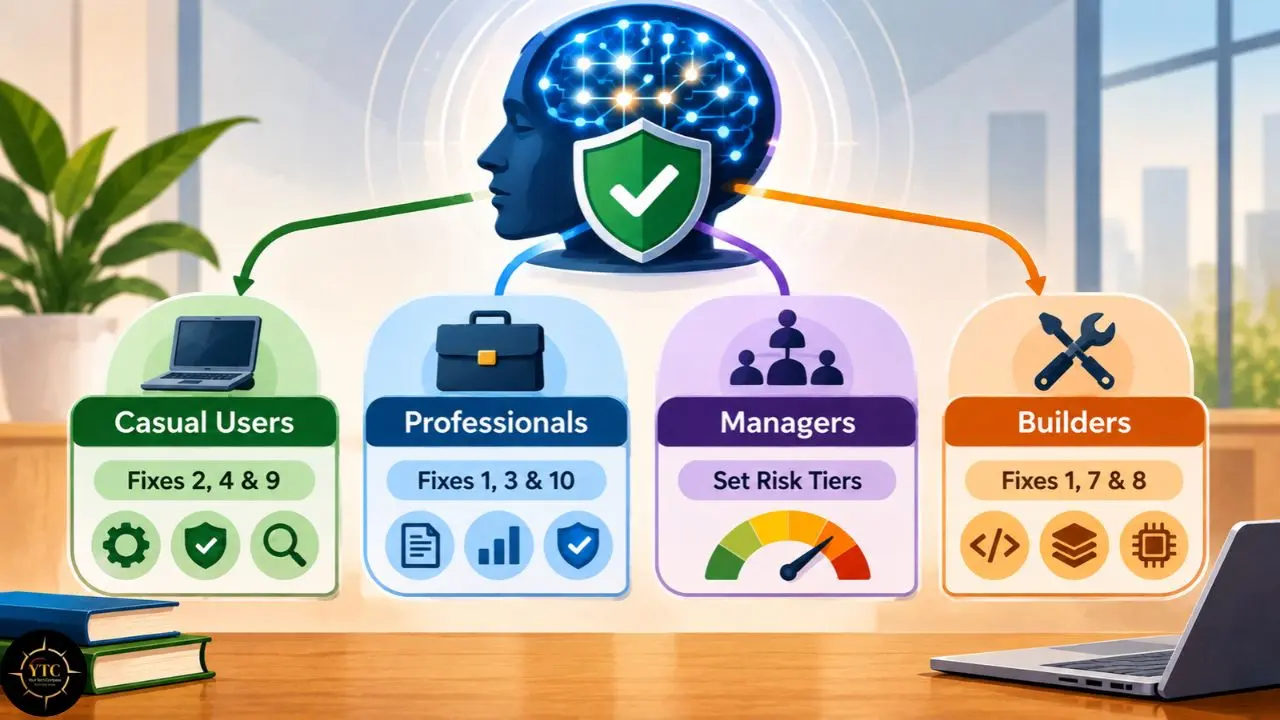
Casual users should start with Fixes 2, 4, and 9, which cost almost nothing. Professionals should add Fixes 1, 3, and 10, with a record of what they verified. Managers should set risk tiers and a review rule, and builders should add Fixes 1, 7, and 8 plus ongoing measurement.
Hallucinations in African Languages
If you work in Swahili, Yoruba, Hausa, Zulu, or Amharic, you face a harder version of this problem. AfroBench, accepted to ACL Findings 2025, tests language models on 64 African languages across 15 tasks and 22 datasets. It finds large performance gaps compared with English, and across 14 African languages, GPT-4o and Gemma 2 27B scored more than 25 and 40 points higher in English, respectively.
Another benchmark, IrokoBench, covering 17 African languages, found that machine-translating the test set into English before evaluation helped close the gap for some larger English-centric models, including Gemma 2 27B and Llama 3.1 70B. That can improve benchmark scores, but it does not make English-only routing a safe production strategy.
A pilot study listed for NeurIPS 2026, called AfriLCB, reported that models sometimes mixed languages and, in very low-resource languages such as Bum and Saar, produced confident but nonsensical answers. English instructions sometimes reduced that confusion, but sometimes increased language mixing or hallucination. The finding is preliminary, but it matches what the performance gap would lead you to expect.
So what should you do? Verify answers in both languages, have a native speaker review anything public for meaning, terminology, and cultural fit, and ground responses in local sources such as national laws, health ministry guidance, and agricultural bulletins. Be extra careful with advice on health, money, and legal rights. Our piece on African NLP and local LLMs covers the models being built to close this gap, and our coverage of AI policy in Africa tracks the rules taking shape.
FAQs
No. Recent research argues that hallucinations are inevitable under current next-token-prediction training and accuracy-only evaluation, because models can be rewarded for guessing rather than acknowledging uncertainty. The realistic goal is to reduce them and catch the rest. Match your checking effort to the risk.
Models can generate citations that follow the form of real ones without reliably checking whether the specific source exists or supports the claim. A fabricated citation can therefore look convincing, and you may discover the problem only when you try to open it.
It reduces them but doesn’t stop them. Stanford found that retrieval-based legal tools still hallucinated on 17% to 33% of challenging queries, partly because retrieval can fetch the wrong document or the model can misread the material it retrieves.
Often, yes, but not always, and not on every task. OpenAI says GPT-5 hallucinates significantly less, yet reasoning models have scored worse on some factual benchmarks, so test on your own work.
Verify the claims your conclusion depends on, especially numbers, names, dates, legal or medical claims, and anything you plan to publish. Open the underlying source, confirm it says what the AI claims, and ask a second model to challenge the answer as a triage step, not as proof. Our guide on fact-checking AI responses gives a step-by-step routine.
Often, yes, but it depends on the language, task, and model. Research finds that many models perform substantially worse in many African languages than in English, and low-resource languages can trigger language mixing or confident but nonsensical answers. Have a native speaker review important output and ground answers in local sources.
Keeping Your Compass True: Steering Past the Mirage of Confident Machines
Hallucinations aren’t a glitch waiting for a patch. They come from how models learn and how we score them, which is why guessing keeps winning and why verification has to become a habit instead of a setting. The good news is that the core habits are simple: permission to abstain, grounding, quotes, and a check sized to the stakes.
If you work in an African context, add one more habit: test in the language your users speak, and ground answers in authoritative local sources they can recognize and trust. If you lead a team or shape policy, notice who pays when an AI is confidently wrong, and write the review rule before the first costly mistake instead of after it. Whoever makes verification routine will get more of AI’s benefits with less of the embarrassment.
Keep your compass pointed at what’s true: more research-first guides to the tools shaping tech are waiting at YourTechCompass.com.