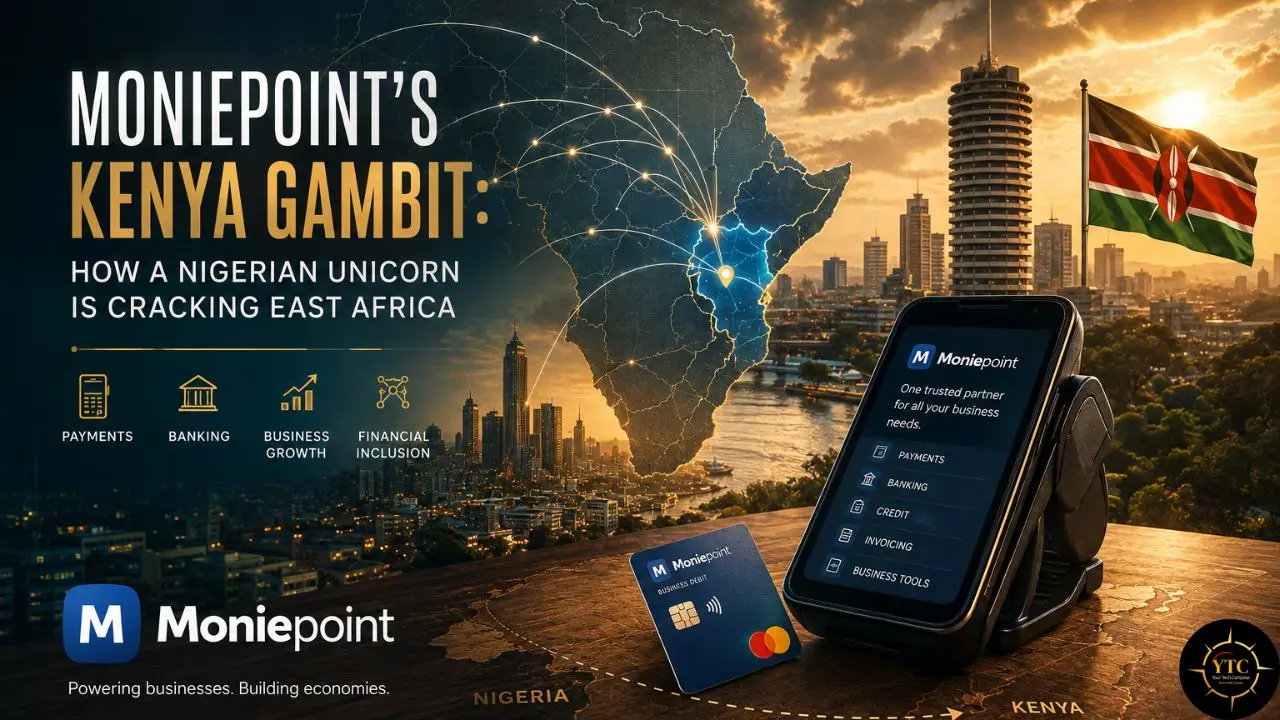
In February 2026, Moniepoint completed the acquisition of a 78% stake in Sumac Microfinance Bank, following approvals from the Competition Authority of Kenya and the Central Bank of Kenya; the deal was publicly announced at the end of March. The transaction gives the Nigerian fintech unicorn a controlling stake in a regulated, deposit-taking microfinance-bank platform (not a standalone banking license) and a locally embedded route into one of Africa’s most competitive financial markets. Moniepoint became a unicorn after its $110 million Series C in 2024 and subsequently raised an additional $90 million in a 2025 extension round. Founded in 2002, Sumac brings an established presence across Nairobi, Thika, Githunguri, and Nakuru. Moniepoint’s stated objective is to integrate digital infrastructure and expand the product offering, while existing Sumac accounts and services remain unchanged. This is Moniepoint’s first major acquisition on the African continent and its formal entry into East Africa, not a side experiment or soft launch, but an attempt to extend a major Nigerian merchant-payments and business-banking model into a new regulatory and competitive environment.
Kenya is not Nigeria. Safaricom held 89.1% of Kenya’s mobile-money subscriptions in the quarter ending March 2026, while M-Pesa processed KSh 41.68 trillion in gross transaction value in FY2026, roughly 2.4 times Kenya’s GDP. The Central Bank of Kenya had licensed 227 digital credit providers by April 2026, rising to 252 by July, although their scale and relevance to Moniepoint’s bank-led model vary widely. MSME finance remains a genuine opening: one 2025 business survey found that 23.4% of enterprises struggled to secure capital, while banking-sector research estimates that only 20–23% of MSMEs access bank finance and that many face collateral, cost, and documentation barriers. Moniepoint’s playbook (POS-led merchant acquisition, credit informed by transaction data, and an integrated business-banking platform) has already scaled in Nigeria, where the company says it processes more than one billion transactions monthly. Whether that model can work in Nairobi depends on its ability to adapt to a market where M-Pesa’s payment rail, established banks, digital lenders, merchant tools, and regulatory requirements create a fundamentally different battlefield. This article maps the acquisition, the market, and the leadership bet that will determine whether Moniepoint can build a differentiated merchant-banking franchise in East Africa or become another example of a Nigerian fintech underestimating Kenya’s competitive depth.
The Acquisition That Unlocked East Africa
Why Sumac, Why Now
Sumac Microfinance Bank traces its roots to a chama (savings group) formed in 2001, was officially registered in 2002, and has operated under a Central Bank of Kenya deposit‑taking license since 2012 (some sources cite 2014). For Moniepoint, the license is the asset. In a market where regulators have tightly controlled new banking authorizations, acquiring an existing tier‑three institution is the fastest, and in many cases, the only pathway to offering integrated banking, payments, and credit services under local supervision.
The financial terms were undisclosed, but the strategic logic is transparent. Sumac brings established customer relationships, a functioning branch network across Nairobi, Kiambu, and Nakuru, and deep local market knowledge. Moniepoint brings a high‑volume digital platform, a strengthened capital base, and engineering capacity built on processing hundreds of billions of dollars in annual transaction value. The combination is meant to accelerate lending capacity while digitizing operations. Sumac Chairman John Kibatha Njoroge framed the partnership as a blend of local market knowledge and customer trust with Moniepoint’s advanced technology, a sentiment echoed across deal coverage. That is the pitch. The execution will be harder.
This acquisition mirrors a broader pattern across the African fintech ecosystem: buying regulatory access rather than building it from scratch. For Moniepoint, Sumac is not an endpoint. It is a beachhead.
The KopoKopo Failure That Came First
Moniepoint’s ambitions in Kenya did not start with Sumac. An earlier attempt to acquire KopoKopo, a Kenyan payments and credit platform serving small businesses, stalled and ultimately fell through. That failure delayed entry by several months and forced a strategic pivot.
The lesson is sharp. In Kenya, regulatory patience and deal structure matter more than speed. The KopoKopo collapse taught Moniepoint that acquiring a licensed deposit-taking institution, even a small, tier-3 one, provides more durable regulatory cover than acquiring a fintech with payment partnerships but no banking license. The competitive landscape for African fintech startups is littered with companies that rushed into markets without understanding that regulatory infrastructure is the first battle, not the last.
What Moniepoint Actually Built in Nigeria
From Backend Provider to Nigeria’s Largest Merchant Acquirer
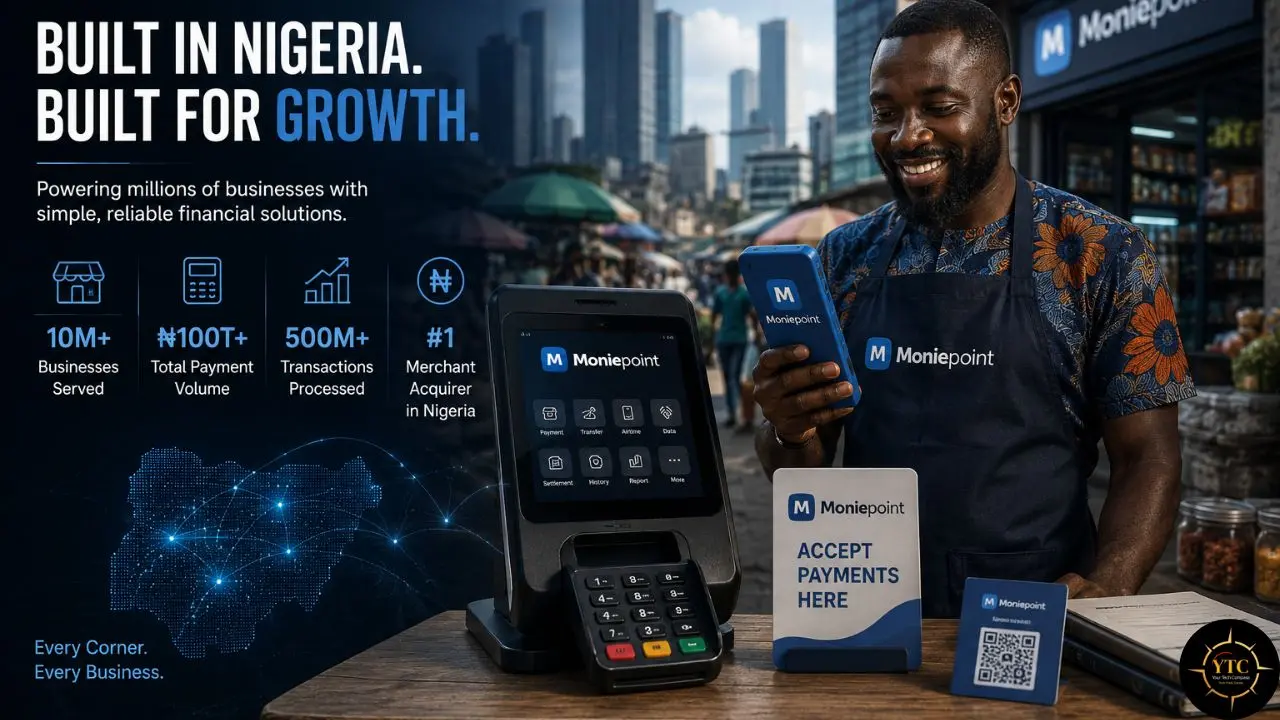
Moniepoint began in 2015 as TeamApt, a backend infrastructure provider for Nigerian banks. In 2019, it launched its POS terminal solution. By 2025, it had become Nigeria’s largest merchant acquirer, powering the majority of the country’s point-of-sale transactions.
The model is deceptively simple. Distribute POS terminals to small businesses (market vendors, tailors, roadside food sellers) and capture transaction data that feeds into credit underwriting. The terminal is not just a payment device. It is a data acquisition tool. Moniepoint’s digital lending operations in Nigeria grew precisely because those terminals provided real-time cash-flow visibility that traditional banks could not match.
The $600 Million Revenue Engine
Moniepoint’s 2025 revenue has been estimated at around $600 million by third-party SaaS-data provider Latka, up from the $264.51 million revenue figure Moniepoint cited for 2023 in its Financial Times growth-ranking announcement. Neither figure should be treated as audited public-company revenue: Moniepoint is private and does not publish full audited financial statements. The company says it serves more than 20 million businesses and individuals, while separately reporting more than six million active businesses. Its expansion has been financed by a roughly $200 million Series C: an initial $110 million round in October 2024 led by Development Partners International, followed by a $90 million extension in October 2025 backed by investors including LeapFrog Investments, Visa, Google’s Africa Investment Fund, the International Finance Corporation, Lightrock, Verod Capital, and DPI.
The product suite has expanded beyond payments to include personal banking, MonieWorld remittance services for the UK market, Moniebook business management software, and working capital loans. Moniepoint’s acquisition of Orda in March 2026 signals an ambition to deepen Moniebook’s role in merchant operations, particularly for restaurants and food-service businesses, through tools for ordering, inventory, supplier payments, and reporting. Moniepoint also completed the acquisition of Bancom Europe, an FCA-authorised UK e-money institution, in July 2025; the deal was announced publicly in October. Rather than creating a cross-border payments operation from scratch, Bancom strengthens Moniepoint’s UK and EEA regulatory footprint and supports its longer-term ability to issue sterling accounts and offer more direct UK-based financial and remittance services through MonieWorld.
The Kenyan Battlefield: What Moniepoint Is Walking Into
M-Pesa’s 99% Shadow
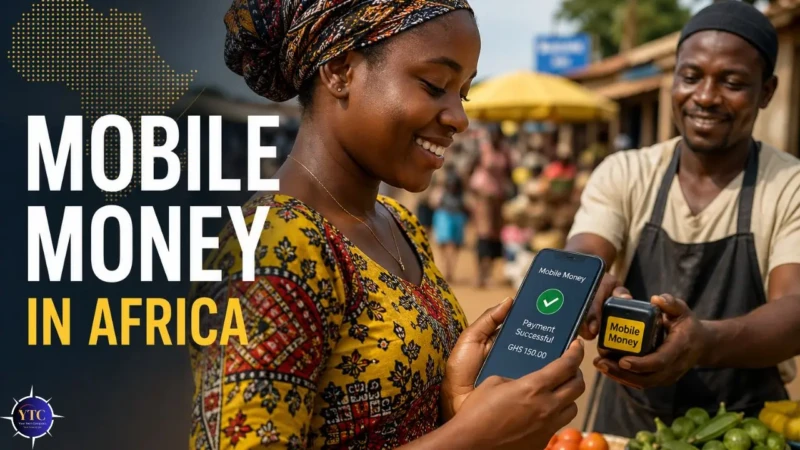
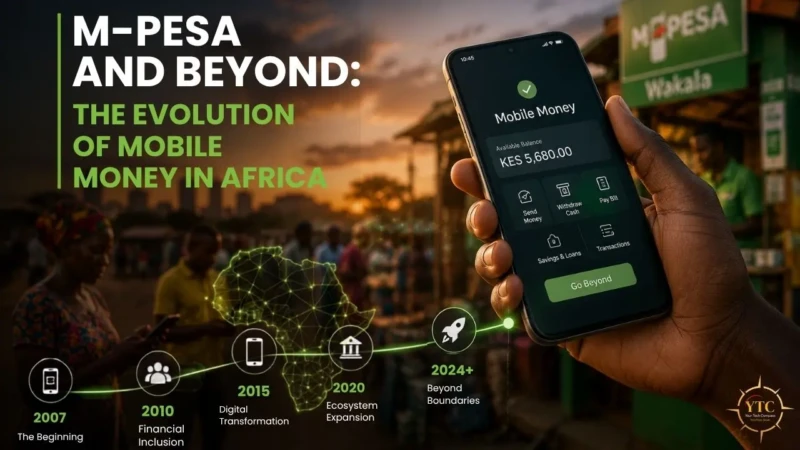
Kenya is one of Africa’s most mature mobile-money and digital-finance markets. M-Pesa, Safaricom’s mobile-money service launched in 2007, had 40.99 million active customers in Kenya by the end of FY2026; the wider M-Pesa footprint across multiple African markets is often described as serving 70+ million users. In the financial year ended 31 March 2026, M-Pesa processed 46.41 billion transactions worth KSh 41.68 trillion (about 127 million transactions a day on average). That gross transaction value was roughly 2.4 times Kenya’s GDP, illustrating how frequently money moves through the platform rather than its direct contribution to economic output. Safaricom held 89.1% of Kenya’s mobile-money subscription market in the quarter ending March 2026.
For Moniepoint, this is unlikely to be primarily a consumer play. Trying to displace M-Pesa as Kenya’s default rail for peer-to-peer transfers and everyday retail payments would mean confronting unmatched distribution, merchant acceptance, and consumer trust. Moniepoint’s more credible angle is business banking: helping Kenya’s more than 7.4 million MSMEs manage collections, supplier payments, reconciliation, working capital, expenses, and day-to-day operations. The sector is estimated to contribute roughly 33.8–40% of GDP, yet many businesses still face constraints in finance, technology adoption, and market access. The gap is not simply in sending money; it is in running a business.
The evolution of mobile money across Africa has created a paradox in Kenya: one of the most sophisticated mobile money infrastructures on the continent coexists with a fragmented business banking layer. MSMEs accept M‑Pesa, but they struggle to reconcile it with inventory, payroll, tax filing, and working capital. That is the opening Moniepoint is targeting.
The MSME Credit Gap Nobody Has Closed
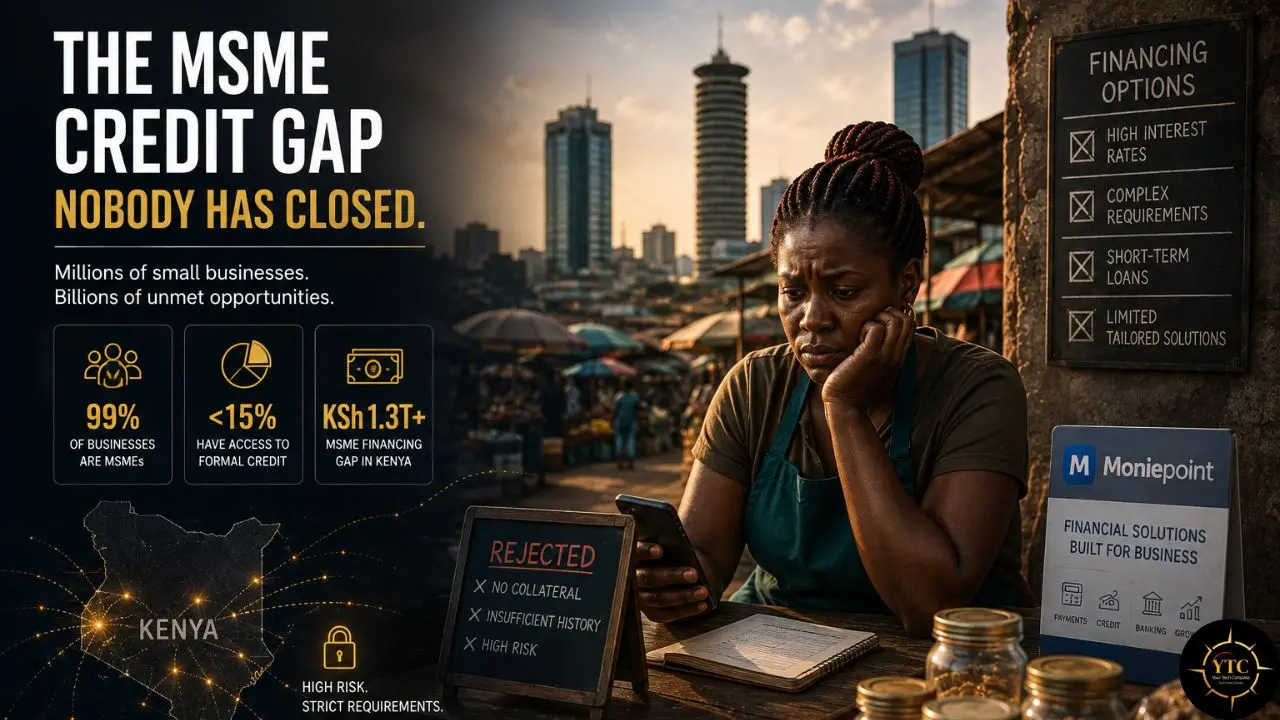
Despite M-Pesa’s ubiquity, Kenya’s MSME financing gap remains substantial. Kenya Bankers Association research estimates the gap at roughly KSh 2.49 trillion, while an earlier IFC assessment placed it at KSh 2.2 trillion and identified a persistent “missing middle” for businesses requiring between KSh 100,000 and KSh 1 million, too large for typical microfinance products but often too small, informal, or insufficiently documented for conventional bank lending. Research suggests that only 20–23% of MSMEs access bank finance, while many businesses cite collateral requirements, high borrowing costs, and documentation as barriers. The Hustler Fund and government credit-guarantee schemes have expanded access, but the missing middle between microfinance and traditional banking remains vast.
Moniepoint’s Nigerian playbook (using merchant payment behavior and POS transaction data to underwrite working-capital loans) aligns closely with this gap, but it will not transfer automatically. Kenya has deep digital payment adoption, yet relevant business data is fragmented across M-Pesa, cash, bank accounts, suppliers, invoices, and merchant systems; M-Pesa transaction data is not automatically available to a new entrant. The question is whether Moniepoint can acquire enough merchants, generate or integrate consented transaction data, and convince businesses to borrow from a newly Moniepoint-owned microfinance bank rather than from banks, SACCOs, mobile-credit products, and digital lenders. Because Sumac is a licensed deposit-taking microfinance bank, its lending operation is not directly governed by Kenya’s Digital Credit Provider Regulations; the larger challenge is whether Moniepoint can deploy credit quickly while meeting the prudential, consumer-protection, and data-governance obligations that apply to a regulated MFB.
A Regulator That Learns Fast
The Central Bank of Kenya had licensed 227 digital credit providers by April 2026, up from none before the DCP regulatory regime began in 2022. CBK received more than 800 license applications and applies fit-and-proper assessments to significant shareholders, directors, CEOs, and senior officers. By February 2026, licensed DCPs had issued approximately 7.5 million loans totaling KSh 133.5 billion; the number of licensed providers rose to 252 in July 2026.
CBK’s 2025 draft regulations for non-deposit-taking credit providers proposed capital thresholds, governance and risk-management requirements, consumer-protection rules, and market-conduct standards for a wider class of lenders. The rules should still be described as proposed rather than enacted, pending their final legal status. For Moniepoint, operating through Sumac’s deposit-taking microfinance-bank license places it outside the standalone DCP framework, but it does not provide regulatory shelter. Instead, it brings Moniepoint under a more demanding prudential regime, including requirements for liquidity, capital, governance, reporting, and CBK supervision. Sumac must maintain liquid assets worth at least 20% of its deposits and short-term liabilities.
Kenyan regulators have shown they can quickly expand oversight when digital-credit risks become material. Parliament gave CBK authority over digital lenders in late 2021, and CBK issued operational DCP regulations in March 2022, after which it processed more than 800 applications and licensed hundreds of providers. DTB’s wearable-payment product is a commercial bank offering rather than evidence of a special CBK regulatory pilot, but it illustrates the ongoing product innovation within Kenya’s regulated banking sector. Moniepoint will face routine but consequential scrutiny as the controlling shareholder of a deposit-taking microfinance bank, particularly as it introduces new lending, merchant, and digital-finance products.
Moniepoint’s Kenya Playbook and Where It Might Break
The Business Banking Angle

Moniepoint appears less interested in replicating M-Pesa’s consumer mobile-money model than in positioning itself as a business-services platform for Kenyan MSMEs. Its intended proposition combines payments, banking, credit, and business-management tools on a single platform, although the extent to which these services are already integrated and available in Kenya remains to be demonstrated.
Moniebook supports that strategy by combining point-of-sale functionality with sales tracking, inventory management, and financial administration tools. Moniepoint’s acquisition of Orda Africa adds restaurant-specific capabilities, including order and inventory management, with Orda’s technology intended to become part of Moniebook for Restaurants. However, because the acquisition initially focused on Orda’s Nigerian operations, it would be premature to describe the Kenyan integration as complete.
The risk is real. Kenyan MSMEs already rely heavily on M-Pesa for customer collections, supplier payments, and business expenses, while many also maintain relationships with established commercial banks such as KCB and Equity. At the same time, accounting and inventory processes remain manual or only lightly digitized across much of the sector. World Bank research found that only 5% of firms intensively use specialized software for functions such as turnover and inventory management, while most establishments rely on handwritten records or manually updated databases.
Winning these businesses will require more than another payment or banking app: Moniepoint must show that its integrated platform can save time, improve record-keeping, make cash flow more visible, and strengthen access to working capital. “Slightly better” may not overcome the cost of changing providers, training employees, migrating records, and trusting a relatively new entrant with core business operations. In a market where M-Pesa is deeply embedded in daily commerce, product quality must be matched by pricing, reliability, local distribution, and sustained customer support.
The Credit-Led Growth Model
In Nigeria, Moniepoint’s credit business was supported by transaction and cash flow data generated by its POS terminals and business accounts. That data helped the company assess informal merchants that might lack conventional financial statements by revealing revenue patterns, business cycles, transaction volumes, and repayment capacity.
Kenyan merchants also generate valuable transaction data through M-Pesa, Lipa na M-Pesa, and other payment channels. But that data is not automatically available to Moniepoint; access will depend on commercial arrangements, interoperability, data protection requirements, and customer consent. The larger question is whether underwriting models developed in Nigeria can be validated and recalibrated for Kenyan economic conditions and merchant behavior.
The CBK’s tighter oversight of digital lending also means Moniepoint cannot assume that the same credit-expansion playbook will transfer unchanged to Kenya. Kenyan rules require licensed digital credit providers to disclose charges, interest, total credit costs, repayment dates, and complaint procedures, while limiting the customer information lenders may collect to what is reasonably required for credit assessment and loan servicing. The rules also prohibit threats, contact shaming, and other improper collection practices. However, Kenya does not currently impose a general statutory interest-rate cap on digital lenders; the main constraints are transparency, data governance, consumer protection, and fair-recovery requirements.
The Integration Bet: Orda and Moniebook
The Orda acquisition is about more than restaurants. It gives Moniepoint a way to embed itself in the operational layer of a business, not just the financial layer. A restaurant owner who uses Moniebook for inventory and order management, Moniepoint for payments, and the wider platform for working-capital finance could be harder to displace than a merchant who uses Moniepoint only for payment acceptance.
But vertical software integration is expensive to localize. Nigerian restaurant workflows differ from Kenyan ones, as do supplier networks, payment practices, tax requirements, and reporting standards. The acquisition reportedly covers Orda’s Nigerian operations, so Moniepoint may need to localize and integrate the product for Kenya rather than simply rebrand it. Its software and data infrastructure will need to accommodate Kenyan data formats, KRA’s eTIMS requirements, local regulatory reporting, and merchant behavior. The opportunity is real, but the integration will only create a defensible advantage if the product works reliably within Kenyan businesses’ existing workflows.
The Leadership Bet: Rose Muturi and Local Credibility

In July 2026, Moniepoint appointed Rose Muturi as chief executive officer for its Kenya business. The hire is strategically significant. Muturi previously served as CEO of Branch Kenya, where she helped lead the fintech’s transition from digital lending into broader regulated banking services following Branch’s acquisition of an 84.89% stake in Century Microfinance Bank. That playbook is similar to Moniepoint’s acquisition of a 78% stake in Sumac Microfinance Bank, although the transactions and ownership structures are not identical.
Her career spans Standard Chartered, Chase Bank, TransUnion, Tala, HF Group, and Branch. She also founded the Digital Lenders Association of Kenya and serves on the board of the Association of Microfinance Institutions Kenya. Her experience gives her relevant exposure to Kenyan credit information, digital lending regulation, borrower behavior, and financial services operations.
For Moniepoint, Muturi brings local regulatory and market experience that can complement the company’s Nigerian leadership. She adds familiarity with Kenya’s banking and credit ecosystem, as well as female representation to the company’s senior leadership. Her appointment suggests that Moniepoint’s Kenya strategy is moving beyond securing a regulated foothold. The company will need leadership that can help it navigate the CBK, compete with established institutions such as Equity and KCB, and earn the trust of Kenyan merchants who have seen foreign fintechs enter and retreat. Available reporting indicates that Muturi will lead Moniepoint’s broader strategy in Kenya, while Sumac will continue under its own management.
What Success or Failure Looks Like in 2027
The Bull Case
By late 2027, Moniepoint could become one of Kenya’s leading digitally focused MSME banking platforms, not by displacing M-Pesa, but by serving the merchants and small businesses that already use mobile-money payments and need working capital, savings, inventory management and business analytics. Through its 78% stake in Sumac Microfinance Bank, Moniepoint has access to a CBK-licensed, deposit-taking platform, providing a potential foundation for savings products and other services that could build greater customer loyalty than lending alone. The Orda acquisition could add vertical depth across restaurants and other food-service businesses, while Rose Muturi’s local fintech and regulatory experience could help Moniepoint navigate Kenya’s competitive and regulatory environment as it scales.
The global fintech landscape is increasingly competitive, but cross-border African fintechs may have an advantage in attracting capital and talent if they can demonstrate strong unit economics, regulatory discipline and repeatable operating models. Moniepoint’s Nigeria–Kenya expansion could become a template for regional growth, although that outcome will depend on customer adoption, credit performance, product execution and the company’s ability to navigate Kenya’s established banking and mobile-money ecosystem.
The Bear Case
Moniepoint discovers that Kenyan MSMEs are well served by digital payments and short-term credit, but that the deeper financing gap is not simply a technology problem. The cost of credit remains high because of borrower risk, funding costs, collections, compliance, and uneven business records, while Moniepoint’s data advantage may not translate into consistently better underwriting. The Nigerian playbook fails because Kenya’s mature mobile-money ecosystem, established credit-reference infrastructure and dense regulatory environment reduce the advantage of speed and aggressive lending. Success would require local pricing, distribution, risk models, and customer relationships, not just the transfer of a Nigerian operating model.
Carbon, another Nigerian fintech, entered Kenya in 2019 with ambitions to build a pan-African digital bank. The company later acknowledged that COVID-19 disrupted its Kenyan rollout, but available sources do not conclusively establish that Carbon withdrew from the market. Carbon co-founder Ngozi Dozie later recalled that a competitor had warned him against expanding into Kenya, which illustrates the market’s perceived difficulty but does not, by itself, explain Carbon’s outcome.
Moniepoint could follow a similar trajectory if it treats Kenya as a straightforward extension of Nigeria rather than as a distinct market with established incumbents, sophisticated mobile-money behavior and demanding regulatory requirements. The mobile money landscape in Africa has exposed the limits of scale and funding for companies that fail to adapt their products, pricing, and compliance models to local conditions. Kenya may reward disciplined execution, but it is unlikely to reward an imported playbook on its own.
Conclusion
Moniepoint’s entry into Kenya is one of the most significant cross-border fintech expansions by a Nigerian company in recent years, although it is too early to call it the most consequential in Africa. It is also a high-risk move. The company has substantial capital, a broad payments and business-finance platform, and experienced local leadership, but those advantages do not guarantee success. Kenya has challenged foreign fintechs before, and M-Pesa remains the defining force in mobile money, accounting for roughly 89–90% of mobile money subscriptions in recent reporting periods. The Sumac acquisition gave Moniepoint a 78% stake in a regulated deposit-taking microfinance bank and access to local banking infrastructure. It did not automatically give Moniepoint customer trust, regulatory goodwill, or a winning business model.
By 2027, the question will not be whether Moniepoint entered Kenya. It will be whether the company adapts to Kenya. That will depend on its ability to build customer trust, price credit competitively, manage risk, retain merchants and operate effectively within the country’s distinct regulatory and mobile-money environment. The difference between Nigerian fintechs that scale across Africa and those that remain domestic champions is not ambition alone; it is the discipline to rebuild the operating playbook for each market’s infrastructure, regulation and competitive reality. Moniepoint has the resources to attempt that rebuilding. Whether it shows the patience and discipline to achieve product-market fit will determine the outcome.
If you’re tracking African fintech expansion, cross-border M&A, or the battle for MSME banking across the continent, bookmark YourTechCompass.com; we follow the deals, the regulation, and the founders actually building the next generation of African finance.