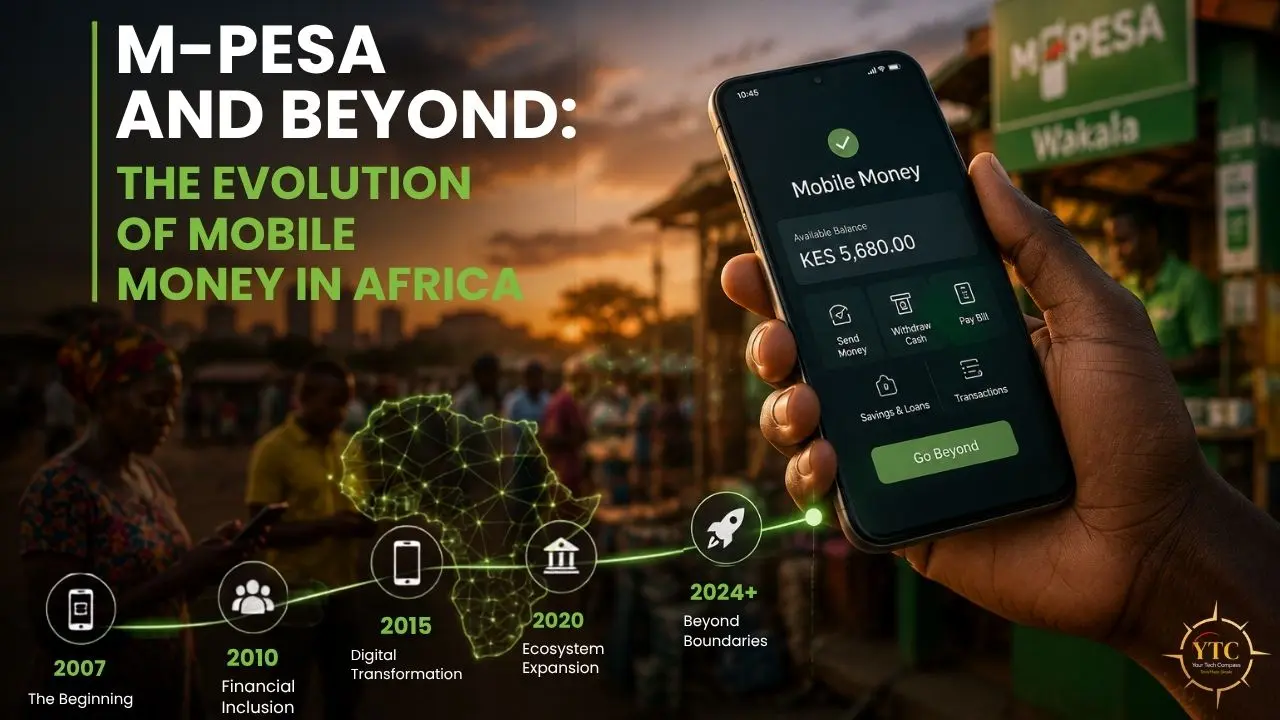
On March 6, 2007, Safaricom launched M-Pesa in Kenya with no precedent, no competitor to copy, and no certainty that a text-message-based money transfer service would be adopted by a population the formal banking system had spent decades failing to serve. The name was deliberate: “M” for mobile, “Pesa” the Swahili word for money. The product was disarmingly simple: send money to another person using a feature phone and a series of USSD text menus. No bank account required. No minimum balance. And no credit history. Just a SIM card, a PIN, and an agent who would convert cash to digital float or digital float back to cash. Within three years, M-Pesa had more active users than Kenya’s entire banking sector had accumulated across decades of operation. Within 3 years of launch, it had over a million users, and by 2010, more than 40% of Kenya’s adult population was using the service.
That trajectory deserves more than admiration. It deserves analysis because M-Pesa is not simply a product success story. It’s a proof of concept that permanently altered how the world thinks about financial infrastructure. It demonstrated that mobile connectivity could replace physical bank branches. It showed that social trust networks could substitute for formal credit histories. In addition, it proved that the populations labeled “unbankable” by legacy institutions were, in fact, an enormous, underserved market with real financial needs and a willingness to pay for services that genuinely met their needs. By 2025, M-Pesa’s transaction volume exceeded $450 billion annually. Digital services, strongly supported by mobile money, are projected to contribute $180 billion to Africa’s GDP by 2025. This article traces the complete arc: from the conceptual precursors and DFID seed funding, through M-Pesa’s origin and near-death regulatory moment, through the continental spread and fragmentation, to the API infrastructure era that defines African mobile money in 2026.
Before M-Pesa: The Preconditions That Made It Possible
The most important thing to understand about M-Pesa’s success is that it wasn’t inevitable, but it wasn’t accidental either. Three specific, converging conditions created the precise window for a mobile money service to achieve mass adoption in Kenya, specifically in 2007.
Condition 1: The Mobile Leapfrog
By the end of 2008, Kenya had approximately 11 million mobile subscribers, roughly 30% of the population, while formal bank account ownership sat below 20%. This inversion is the essential precondition.
Mobile phones had achieved broader penetration than the banking system because they required none of the banking system’s demands: no minimum balance, no credit history, no documentation package, no branch visit. A Nokia 1100, the dominant handset in Kenya in 2007, selling for under $30, was all you needed to be connected.
Safaricom held approximately 84% of Kenya’s mobile market by the end of March 2007. That extraordinary market concentration, the result of Safaricom’s aggressive agent and infrastructure build-out since its 2000 launch, gave it the network density that no mobile money service could succeed without. Consequently, when Safaricom launched M-Pesa, it wasn’t introducing a service to a market it was still building. It was layering a financial product onto a distribution network that already reached the majority of Kenyan mobile users.
Condition 2: The Informal Money Transfer Problem
Before M-Pesa, the dominant mechanism for sending money from Nairobi to rural Kenya was the bus network. Cash was sealed in envelopes, handed to bus conductors, transported to destination towns, and collected by recipients in an informal, unreliable system exposed to conductor fraud, bus robbery, and delivery delays measured in days to weeks. Western Union and Postapay existed but required in-person visits at both the sending and receiving ends and charged fees that consumed 10–20% of typical transfer amounts.
The remittance flow from urban workers to rural families was not a marginal financial behavior; it was a central mechanism of household economic survival for millions of Kenyan families. The problem wasn’t that people didn’t want to send money; it was that no accessible, reliable, and affordable mechanism existed for doing so.
M-Pesa didn’t create a new financial behavior. It replaced a painful, expensive, risky existing behavior with something safer, cheaper, and faster.
Condition 3: The CBK Regulatory Window
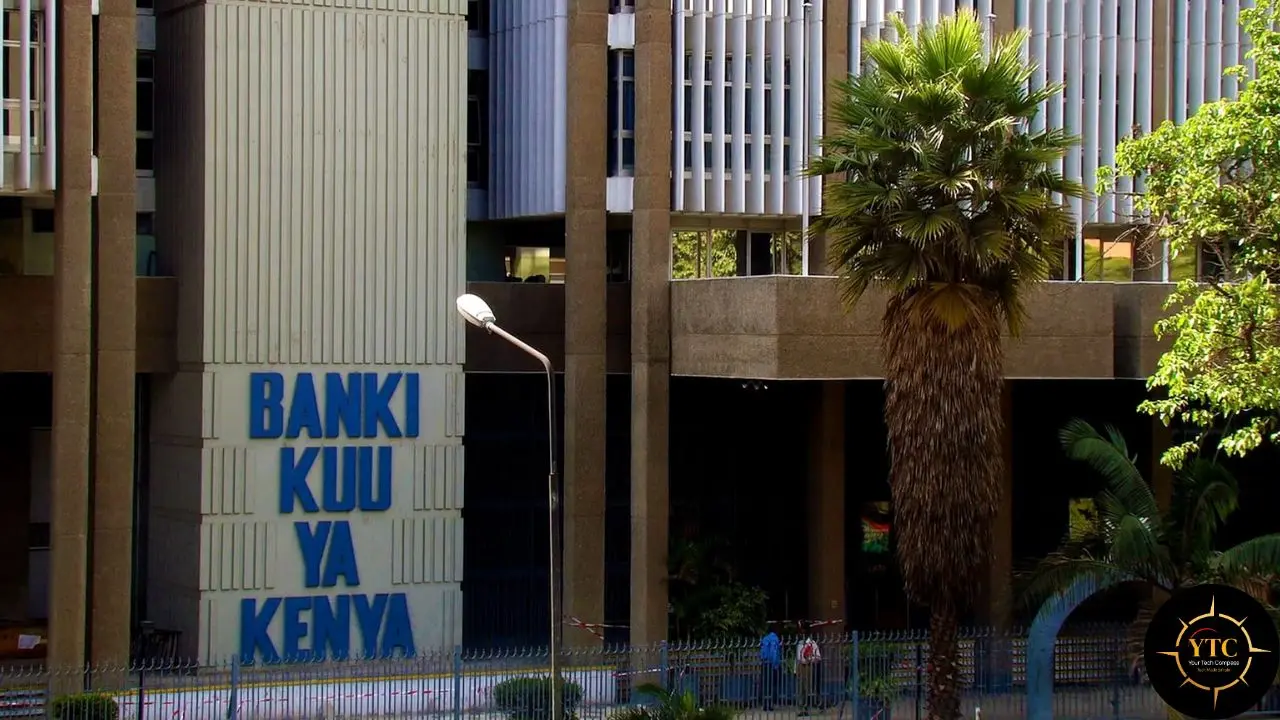
The Central Bank of Kenya’s decision to allow M-Pesa to operate under a specific waiver, rather than requiring Safaricom to apply for a full banking license, was the regulatory decision that made the launch possible. The trust account structure that emerged was elegant: M-Pesa customer float was held in commercial bank trust accounts rather than on Safaricom’s balance sheet. Customers were protected; Safaricom was not functioning as a deposit-taking bank; the regulatory risk was managed without the licensing process that would have delayed the launch by years.
This was unusual at the time. Most central banks globally would have blocked or indefinitely delayed a non-bank entity offering what was functionally a payment and transfer service. CBK’s pragmatic approach (allow innovation to demonstrate value under controlled conditions, then regulate comprehensively) became the template for progressive African financial regulation. It’s the model Kenya applied to digital lending, open banking, and subsequent financial innovation over the decade that followed.
The DFID Seed: The Overlooked Origin
The origin story most people know starts with Safaricom. The full origin story starts with the UK’s Department for International Development (DFID), which provided seed funding for M-Pesa‘s pilot development. DFID’s original intent was a microfinance loan repayment tool, enabling borrowers at microfinance institutions to repay loans via mobile without visiting a branch.
The pivot that produced the product we know came from user behavior during the pilot: people were using the loan disbursement and repayment mechanism to send money to each other. In addition, the peer-to-peer transfer use case emerged not from product design but from observing how users actually used the tool.
M-Pesa: The Origin Story in Detail
Most summaries of M-Pesa undersell the specific design decisions that made it work. Understanding those decisions explains not just why M-Pesa succeeded, but why so many attempted copies in other markets initially struggled to replicate it.
The Product Architecture
The choice of USSD over SMS as the protocol backbone was the single most consequential technical decision in M-Pesa’s design. USSD (Unstructured Supplementary Service Data) is a protocol that works on any mobile phone, requires no data connection, costs fractions of a cent per interaction, and operates in real time with a session-based architecture rather than the asynchronous delays of SMS. Furthermore, USSD requires no app installation; you access it through a menu triggered by a short code (the iconic *334# that Kenyans know without thinking).
The agent network model was the physical infrastructure that made USSD payments meaningful. An M-Pesa agent handles two functions: cash-in (accepting physical cash from customers and crediting the equivalent M-Pesa float to their wallet) and cash-out (accepting M-Pesa float from customers and dispensing the equivalent physical cash).
At launch, around 450 M-Pesa agents operated across Kenya. By 2010, 18,900. By 2016, Kenya alone had more than 100,000 M-Pesa agents, and globally, there were more than 280,000 agents. Consequently, M-Pesa built a distributed cash infrastructure (effectively a network of micro-ATMs) denser than Kenya’s entire bank branch and ATM network combined, in a fraction of the time and at a fraction of the capital cost.
The Launch and Early Adoption Curve
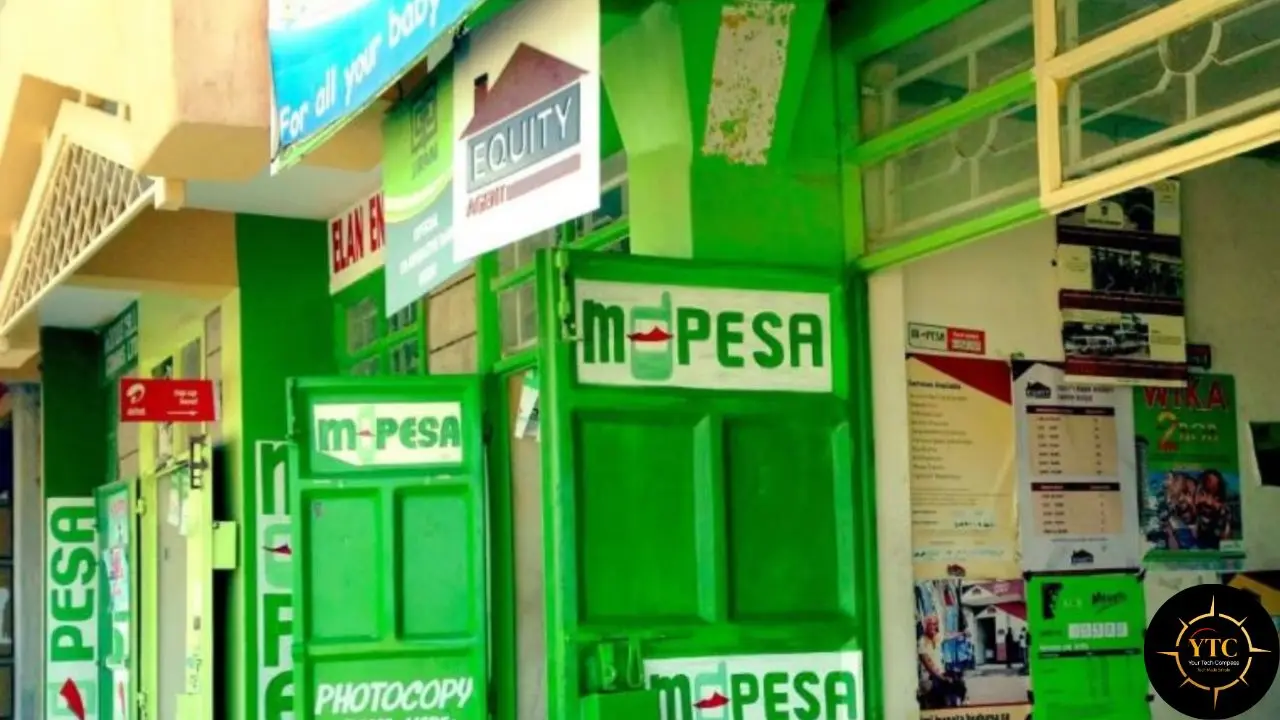
Within the first year, M-Pesa had over 1 million users, growing to over 6 million by the end of 2008. By August 2009, about 38% of Kenya’s adult population (7.7 million) was using M-Pesa, and by January 2010, over 9 million users had registered. The network effect mechanism was self-reinforcing: M-Pesa’s value as a P2P transfer tool is directly proportional to the number of people in your social network who also have it. As adoption approached critical mass in specific communities and social networks, the pressure on non-users to join became social rather than purely economic; you were missing out on money people were trying to send you.
The Safaricom brand did work that a startup brand couldn’t have replicated in any comparable timeframe. Trust was built quickly due to the platform’s reliability and Safaricom’s existing reputation.
M-Pesa inherited Safaricom’s existing trust relationship with 75% of Kenyan mobile users rather than having to construct consumer trust from scratch. That inherited trust compressed the adoption curve in ways that purely trust-building investments cannot replicate.
Nick Hughes and Susie Lonie: The Human Architects
Nick Hughes, Vodafone’s Head of International Mobile Payments, and Susie Lonie, M-Pesa’s project manager at Vodafone, were the two individuals most directly responsible for M-Pesa’s design and launch. Lonie’s field observation during the pilot produced one of the most important user research findings in African fintech history: women were using the service specifically because it allowed them to receive money from husbands in cities without the husbands knowing when they withdrew the cash.
The service created financial privacy within households in ways the product design hadn’t anticipated. That discovery shaped how M-Pesa was subsequently marketed to women and designed as a tool for household financial management, not just a payment mechanism.
The 2008 Attempted Regulation: The Moment M-Pesa Almost Died
In 2008, competing Kenyan banks petitioned the Finance Ministry to investigate M-Pesa, arguing it was operating as an unlicensed bank. The Central Bank of Kenya commissioned an independent audit. The audit found that M-Pesa was consumer-safe, did not threaten financial stability, and served populations that the banking sector wasn’t serving. And the Finance Ministry cleared M-Pesa to continue operations.
You should sit with what that moment represents. Had the 2008 audit gone the other way (had the Finance Ministry sided with the banking lobby and shut down or heavily restricted M-Pesa), the entire global mobile money movement that followed would have been set back by years. The 196,000 Kenyan households that research later documented as having been lifted out of poverty through M-Pesa access would have remained below the poverty line.
The Lesson: Transformative financial innovation almost always faces powerful incumbent resistance, and the 2008 regulatory decision was as consequential as the 2007 product launch.
What M-Pesa Did to Kenya: The Documented Impact
M-Pesa’s impact on Kenya is among the most rigorously studied fintech interventions in development economics. Unlike most claims about technology development, M-Pesa’s effects have been measured, published, and peer-reviewed by multiple independent research groups.
The Poverty Reduction Evidence
The landmark study by Tavneet Suri (MIT Sloan) and William Jack (Georgetown), published in Science in 2016, documented that M-Pesa access lifted approximately 194,000 Kenyan households out of poverty, roughly 2% of the population, by boosting per capita consumption levels. The mechanism was consumption smoothing: households with M-Pesa access could survive income shocks (illness, drought, job loss) by receiving emergency transfers from distant relatives, rather than being forced to liquidate assets or take on debt. The poverty-reduction effect was concentrated among female-headed households, reflecting the domestic financial privacy function that Lonie had observed during the pilot.
Mobile money adoption has been linked to a 2.6% reduction in poverty levels. Additionally, in 2014, M-Pesa transactions accounted for nearly half of Kenya’s GDP, a figure that reflects not just M-Pesa’s scale but the degree to which it had displaced cash as the medium of economic exchange in Kenya’s urban economy.
Financial Inclusion at Scale
Before M-Pesa, Kenya’s access to formal financial services was roughly 27% in 2006, and by 2021 it had risen to about 84%. That trajectory, from below 30% to above 80% in 15 years, is one of the fastest financial inclusion rates in the world, driven primarily by M-Pesa adoption rather than by bank account opening.
By 2025, over 60 million active users across Africa were using M-Pesa, representing a significant portion of the population. This platform has enabled millions of people who previously lacked access to banking to participate in daily financial transactions. Today, even farmers and informal workers living in remote rural areas can receive payments for their goods or services directly on their phones, eliminating the need for cash and reducing the risk of theft.
The Ecosystem Effect: M-Pesa as a Platform
The most important long-term product story in African fintech is M-Pesa’s evolution from a P2P money transfer service into a full-stack financial services platform. Once the payment rail existed, financial products layered on top of it with remarkable speed:
- M-Shwari (2012): Savings and micro-credit embedded in M-Pesa; Kenya’s first mobile banking product.
- M-Akiba (2017): Government bond investment via M-Pesa; retail investors could buy Kenyan Treasury bonds with a minimum of KES 3,000.
- Fuliza (2019): M-Pesa overdraft; if a payment fails due to insufficient balance, Fuliza covers it automatically for a small fee.
- M-Pesa Super App (2021): Full financial super-app integrating savings, insurance, credit, e-commerce, and government services.
- Mini Apps (2022–present): Third-party developers build applications within M-Pesa’s Super App ecosystem.
M-Pesa Africa has grown into a full-service financial provider. The ‘Super App,’ launched in 2021, is already being used by more than 9 million customers to access a broader range of services, including savings, insurance, and credit. M-Pesa is now working with software developers to create ‘mini apps’ that enable businesses to build their own platforms within the M-Pesa Super App.
The GDP Infrastructure Effect
M-Pesa reduced transaction costs across the entire Kenyan economy. Paying school fees, purchasing agricultural inputs, paying workers, and settling business invoices all shifted from cash logistics to instantaneous mobile transfers.
Agricultural supply chains transformed: input suppliers could extend credit to farmers, secured by mobile payment commitments; buyers could pay at the point of collection rather than requiring farmers to travel with cash. Research has estimated that M-Pesa’s transaction-cost reductions contributed roughly 0.45–0.5 percentage points annually to Kenyan growth-related measures, with additional gains coming through trade credit and productivity channels.
The Spread: How Mobile Money Moved Across Africa
M-Pesa’s success created a template, but Africa’s mobile money landscape didn’t develop as a simple copy-paste of the Kenyan model. Different regulatory environments, different operator market structures, and different population characteristics produced significant variation in how mobile money evolved across the continent.
The West Africa Story: MTN MoMo and Orange Money
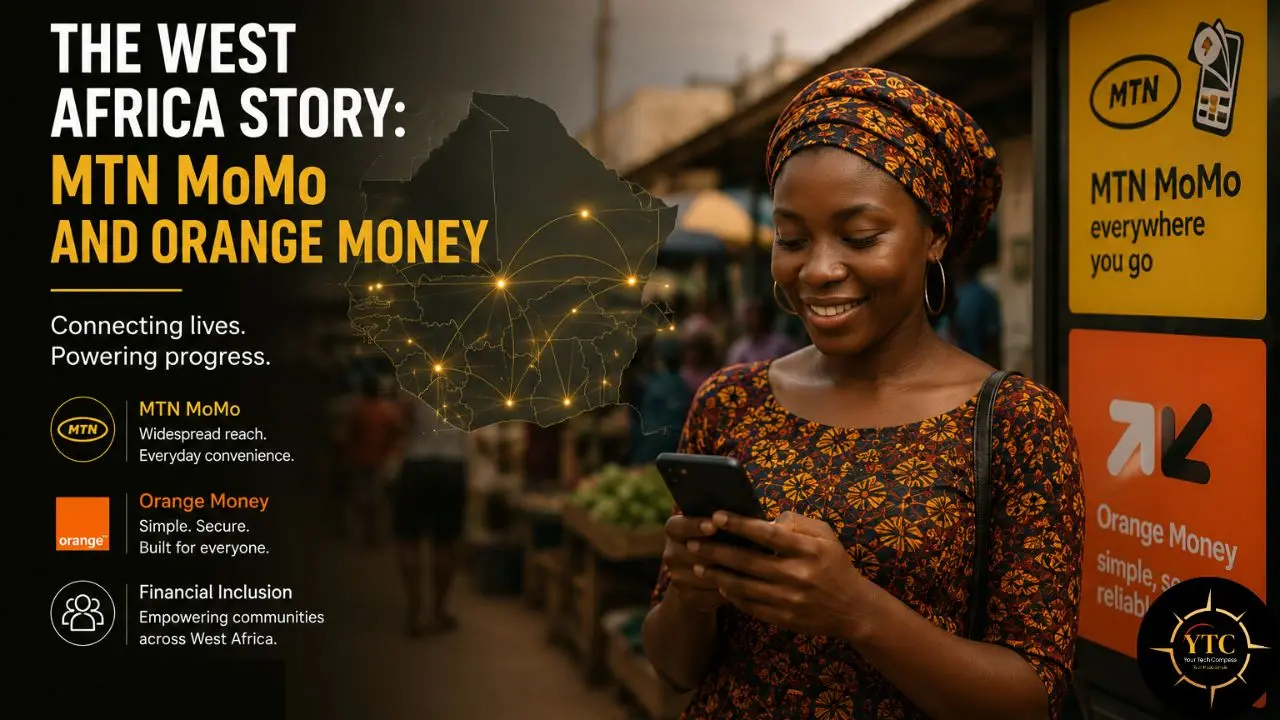
MTN Mobile Money (MoMo) launched in 2009 and, by 2026, operates in 16+ African countries with 50+ million active users, making it the largest mobile money network by geographic footprint on the continent. MTN MoMo’s design differs from M-Pesa in one fundamental way: it was multi-country from inception, rather than single-market followed by expansion. This required building multiple operator partnerships and regulatory relationships simultaneously, which produced a network that comprehensively covers West and Central Africa but exhibits greater heterogeneity in product quality across markets than M-Pesa’s more tightly controlled East Africa footprint.
Orange Money dominates in Francophone West Africa (Côte d’Ivoire, Senegal, Mali, Burkina Faso), serving populations for whom French regulatory frameworks and French-language USSD menus require specifically localized product design. The Francophone coverage fills the geographic gap that M-Pesa and MTN MoMo don’t cover to the same depth.
Wave, launched in Senegal in 2018 with a VC-funded zero-fee model, demonstrated something the incumbent operators hadn’t: in a sufficiently price-sensitive market, free beats established with fees. Wave’s radical simplicity (simpler UX, lower smartphone hardware requirement, zero transaction fees) captured significant market share from Orange Money and Free Money in Senegal within three years of launch. The Wave case is the clearest evidence that African mobile money markets are not locked in; they can be disrupted by a sufficiently differentiated value proposition, even against entrenched operators.
The Tanzania and Uganda Variations
Tanzania achieved early multi-operator interoperability between Vodacom M-Pesa, Tigo Pesa, and Airtel Money, creating a more competitive and consumer-friendly environment than markets where operators maintained closed systems. Uganda became one of Sub-Saharan Africa’s markets with the highest mobile money penetration outside Kenya, driven by MTN Mobile Money’s agent network density and the specific remittance dynamics of Uganda’s migrant worker population.
In Ghana, the mobile money sector saw transaction values soar to GH¢1.912 trillion in 2023, a 78.7% increase from the previous year, thanks to a network of 228,000 agents who brought financial services to remote areas. Ghana’s progress through GhIPSS (Ghana Interbank Payment and Settlement Systems) interoperability represents the most advanced mobile money interoperability architecture in West Africa; the infrastructure underpinning Ghana’s ability to meet EU Deforestation Regulation traceability requirements and to build the kind of formal financial records that our African fintech ecosystem guide identifies as foundational to the next phase of African fintech development.
The South African Exception
South Africa is the continental outlier, and studying why M-Pesa failed there is as instructive as studying why it succeeded in Kenya. Vodacom launched M-Pesa in South Africa in 2010. It was withdrawn in 2016 after failing to achieve meaningful adoption. The reasons are precisely the inverse of Kenya’s preconditions: South Africa had a sophisticated formal banking infrastructure, high levels of formal bank account ownership among the urban population, an established point-of-sale payment infrastructure, and less pronounced rural remittance demand.
South Africa’s financial inclusion path ran through digital banking rather than mobile money: Capitec, GoTyme Bank (profitable by December 2023), Bank Zero, and Discovery Bank built digital-first bank accounts rather than USSD-based mobile wallets. The lesson South Africa teaches is that mobile money is not universally the right solution; it’s the right solution when formal banking infrastructure is absent and mobile connectivity exists. Where both exist, market dynamics differ.
The Nigerian Complexity
Nigeria’s mobile money story is the most complex and, until recently, the most delayed on the continent. Before 2021, CBN’s policy required that mobile money products be bank-led; only banks could offer mobile money services. That policy led to low adoption because banks lacked the distribution density or consumer trust for informal transfer use cases that mobile operators had built in Kenya and West Africa.
The 2021 CBN policy reversal, allowing mobile network operators to lead mobile money products, opened the door. The ecosystem that subsequently emerged was different from those in East or West Africa: OPay, Palmpay, and the broader Nigerian fintech ecosystem were built on smartphone apps rather than USSD, reflecting Nigeria’s higher smartphone penetration relative to earlier-adopting markets. Moniepoint’s SME banking model, Kuda’s digital bank account, and Carbon’s digital lending evolution, all covered in the digital lending Nigeria analysis, represent a distinctively Nigerian path to financial inclusion that runs through digital banking apps rather than the operator-led USSD model.
The Interoperability Problem: Africa’s Most Expensive Unresolved Mobile Money Challenge
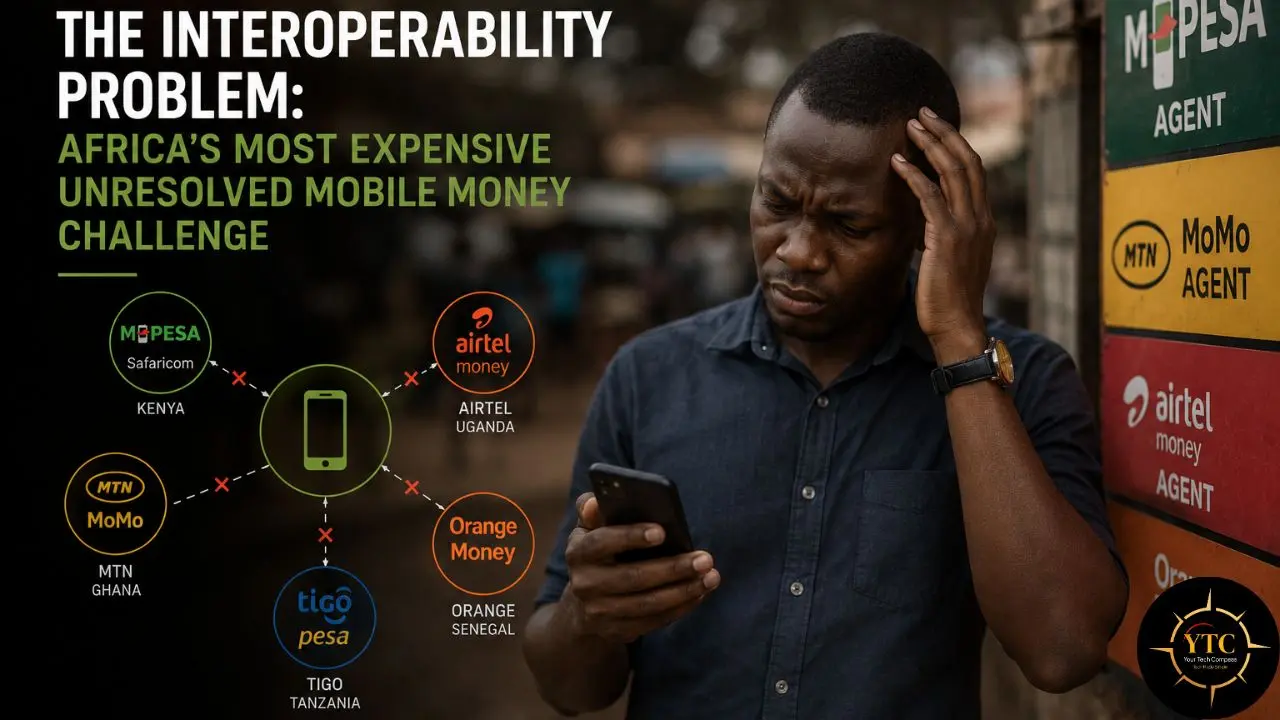
Mobile money’s biggest structural limitation is fragmentation. Africa has dozens of mobile money platforms operating on separate rails. Sending money from an M-Pesa wallet to an MTN MoMo wallet typically requires a bank account as an intermediary or a third-party service, adding friction, delays, and costs to what should be an instant transfer.
AfricaNenda documents that intra-African cross-border payment costs average 7.9%, more than double the UN SDG target of 3%. This is not just an inconvenience figure. It represents billions of dollars annually extracted from the incomes of diaspora workers and the families who receive their remittances. For context: the over $100 billion in annual diaspora remittances to Africa loses approximately 8.5% to transfer fees and exchange-rate margins before reaching African households.
Why Operators Resist Full Interoperability
The competitive dynamics of interoperability resistance are straightforward: a closed mobile money system creates a network effect moat. If all your contacts are on M-Pesa, you have an incentive to stay on M-Pesa, and Safaricom has an incentive to keep its system closed to preserve that advantage.
Float income (the interest earned on the aggregate customer balance across all wallets) is concentrated in closed systems rather than distributed across an interoperable network. Agent network investments are diluted by interoperability: an M-Pesa-exclusive agent provides differentiated value in a closed system but less differentiation in an interoperable one.
PAPSS: The Continental Infrastructure Response
The Pan-African Payment and Settlement System, launched in 2022, operates across 19 countries and 150+ banks as of 2026. PAPSSCARD, launched in June 2025, represents Africa’s first continental card scheme, enabling debit card transactions across member countries without currency conversion through dollar correspondent banking. As part of our mobile money Africa guide, PAPSS is enabling Ghanaian businesses to pay Nigerian suppliers directly in local currencies, a transaction that previously required routing through New York or London correspondent banking infrastructure.
The Honest Gap
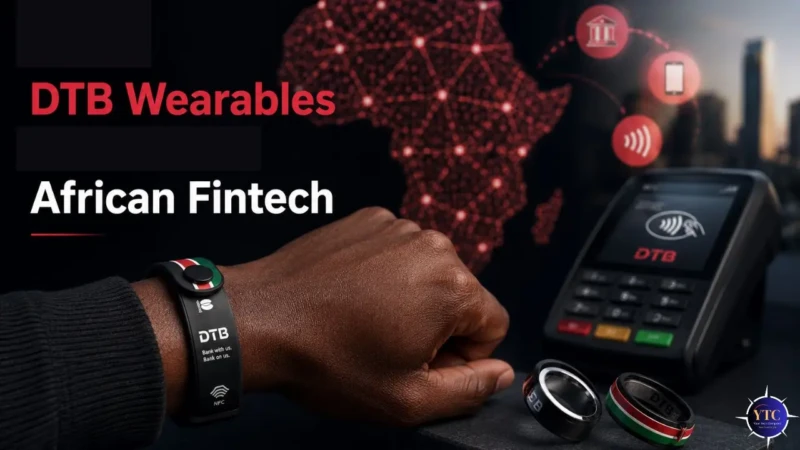
PAPSS operates at the bank-to-bank level. The connection between bank-level interoperability and individual mobile wallet interoperability (what the average person who sends money cross-border actually needs) is the next engineering and regulatory challenge. DTB Wearables, as covered in our DTB Wearables Kenya review, represents one piece of the evolving contactless payment infrastructure layer that sits above the mobile money rail and below the bank card network, where the interoperability challenge is most practically felt.
The Mobile Money vs. Traditional Banking Interoperability Comparison
Feature | Mobile Money (M-Pesa/MTN MoMo) | Traditional Banking | Digital Banking (TymeBank/Kuda) | Payment Gateways (Flutterwave) |
Account Requirement | None (SIM only) | Full bank account | Smartphone + ID | Depends on the method |
Transaction Speed | Real-time | Hours to 3 days | Real-time | Real-time |
Minimum Balance | KES 0 | Often KES 1,000+ (Depending on the account type) | KES 0 | N/A |
Cross-Border Capability | Limited (improving) | Via SWIFT (expensive) | Limited | ✅ 34+ African countries |
Agent/Cash-Out Network | ✅ Extremely dense | ✅ Branch + ATM | Limited | ❌ Digital only |
API Developer Access | ✅ (Daraja, MoMo API) | Limited | Growing | ✅ Primary capability |
Monthly Active Users | 400M+ (Sub-Saharan) | Lower (unbanked excluded) | Growing rapidly | Developer-facing |
Interoperability | Improving; still fragmented | Swift network | Growing | Aggregates multiple rails |
The API Era: How Mobile Money Became Infrastructure
One of the most important developments in African mobile money since M-Pesa’s 2007 launch is the opening of payment rails to third-party developers via APIs. This shift converted mobile money from a consumer product into infrastructure, the foundational layer on which a generation of African fintech companies has been built.
M-Pesa Daraja API: The Developer Ecosystem
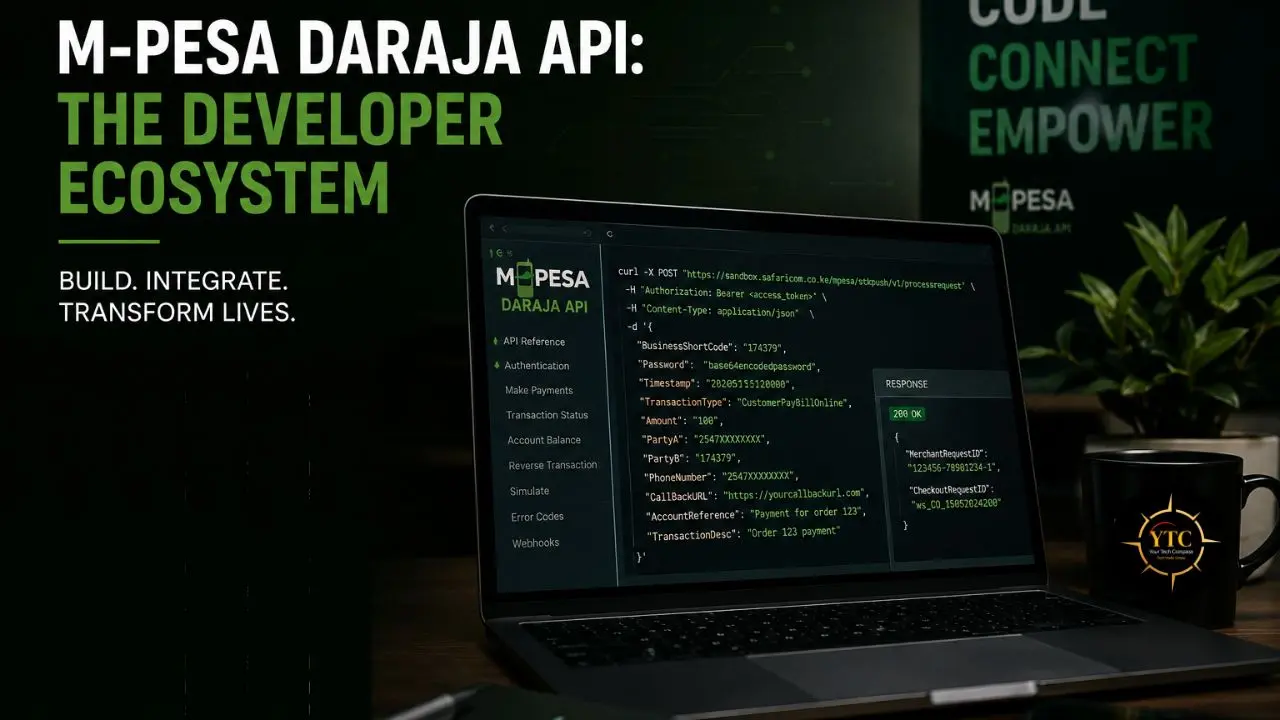
Safaricom’s Daraja API, “daraja,” is Swahili for “bridge,” launched in 2016 and has been expanded continuously through 2025. Daraja enables Lipa na M-Pesa (merchant payment API), C2B (customer-to-business), B2C (business-to-customer), B2B (business-to-business), account balance queries, and transaction status checks. Registered developers on the Daraja platform exceed 105,000 as of 2025, the largest developer community built on a single African financial service.
What Daraja unlocked is Kenya’s full e-commerce and digital payments ecosystem. Every app that accepts M-Pesa payments (e-commerce, utility payments, subscription services, government fee collection, school fee payments) runs through Daraja.
Before Daraja, M-Pesa was a consumer product. After Daraja, it became an infrastructure layer on which the entire Kenyan digital economy was built. Furthermore, MTN’s MoMo API has followed the same trajectory, enabling pan-West and Central African payment collection through a single API integration, reducing the friction of multi-country expansion that previously forced African startups to build country-by-country payment integrations.
The Payment Gateway Layer: Aggregating the Rails
Flutterwave, founded in 2016, is the company that most completely represents the payment gateway era. It raised $250 million in Series D funding in February 2022 and offers developer payment APIs that support cards, bank transfers, M-Pesa, and multiple mobile money rails across Africa.
Recent reporting also says the company has surpassed $40 billion in lifetime payment volume, though the exact country count and full rail list should be verified against current company documentation before publication. The gateway layer solved a specific problem: the heterogeneity of African payment rails was a barrier to pan-African product expansion. Flutterwave’s single integration removed that barrier.
Flutterwave’s January 2026 acquisition of Mono, Nigeria’s open banking API often described as “Plaid for Africa,” represents the consolidation of payments and financial data infrastructure on a single platform. The implications for the African fintech startups-to-watch landscape are significant: a Flutterwave + Mono combined platform can not only process payments but also read bank account data with user consent, enabling AI-powered credit scoring, financial management apps, and personalized financial products at scale.
Paystack, acquired by Stripe in 2020, brought credibility in global payment infrastructure to African markets through its developer-first gateway covering Nigeria, Ghana, South Africa, and Kenya. Paystack’s April 2026 acquisition of a microfinance bank in Nigeria, marking its transition from a payment gateway to a deposit-taking institution, reflects the same trajectory Flutterwave is following: payment gateway companies are becoming banks.
Open Banking: The Data Layer
Open banking APIs (connecting financial institutions to third-party developers with user consent) are the data infrastructure layer that sits atop payment rails. Mono in Nigeria, Stitch in South Africa ($55M Series B), and Okra provide the connectivity that enables a fintech app to read a user’s bank transaction history, verify account ownership, or initiate payments directly from a bank account.
This layer is what makes AI-powered financial products possible in African markets. Without reliable access to transaction data, credit scoring relies on proxies for mobile money behavior. With open banking data, credit models can assess the full financial picture. Our AI in Africa coverage tracks how this infrastructure is enabling the next generation of AI-native financial services, positioning African fintech at the frontier of global financial innovation rather than merely as a development-focused catch-up story.
Embedded Finance: Products Inside the Payment Flow
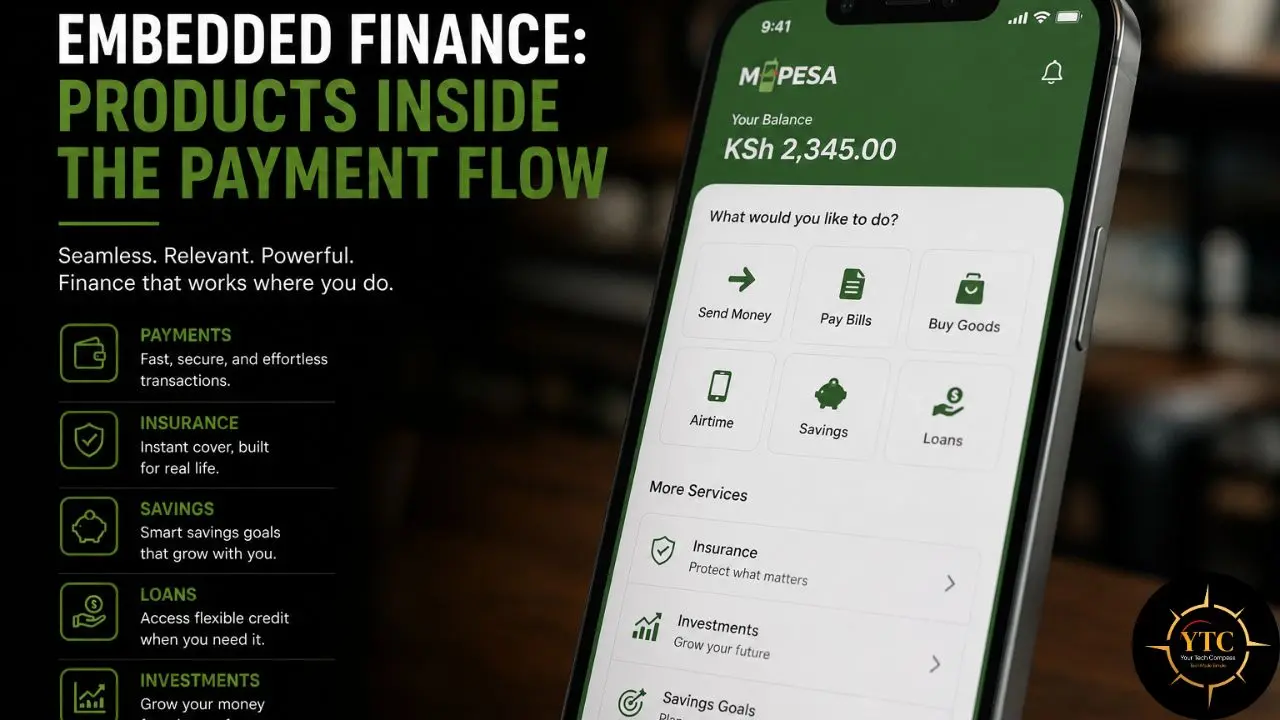
The embedded finance model (financial products appearing at the moment of transaction rather than requiring a separate visit to a financial service) was pioneered in African mobile money, and M-Pesa became a key platform for embedded finance in Kenya. M-Shwari (2012) embedded savings and credit inside M-Pesa’s payment flow. Fuliza (2019) embedded overdraft so seamlessly that users often don’t perceive it as a separate financial product. On the other hand, Apollo Agriculture embedded input credit at the point of purchase, allowing farmers to buy seeds and fertilizer on credit.
For global comparison context: what Western fintech markets are now calling “embedded finance” and treating as a 2020s innovation was, in 2012, the M-Pesa model. As tools like Zelle and Venmo for Business bring embedded payment experiences to US users, they’re following a design philosophy pioneered by African mobile money a decade earlier. The convergence of payment rails and financial product distribution is not a new idea in African fintech; it’s how the ecosystem was built from the beginning.
Stablecoins and Blockchain: The Emerging Layer
Flutterwave’s October 2025 Polygon blockchain integration represents the newest rail emerging beneath traditional mobile money and bank transfer infrastructure. Stablecoin settlement enables cross-border B2B payments that bypass correspondent banking entirely: a Nigerian importer pays a Kenyan supplier via stablecoin; both parties interact only with local mobile money or bank accounts; the stablecoin conversion happens invisibly in the middle.
The Limitations
The limitations are real and honest to name. Regulatory uncertainty persists in most African markets. Customer-facing stablecoin adoption is still in the early stages.
Nigeria’s eNaira CBDC (2021), widely considered a failed launch due to low adoption and UX friction, serves as a cautionary example of the gap between payment infrastructure innovation and consumer adoption. Consequently, the stablecoin and blockchain layer should be understood as the experimental frontier rather than the current mainstream of African mobile money.
Mobile Money and Financial Inclusion: The Numbers That Matter
The GSMA Mobile Money Annual Report provides the authoritative annual scorecard on mobile money’s progress in financial inclusion. The 2025 figures are genuinely remarkable by any historical comparison.
Mobile money adoption has been linked to a 2.6% reduction in poverty levels. Additionally, digital services (strongly supported by mobile money) are projected to contribute $180 billion to Africa’s GDP by 2025.
The country-level inclusion trajectories tell the story more concretely:
Country | Financial Inclusion (Pre-Mobile Money) | Financial Inclusion (2024) | Mobile Money’s Role |
🇰🇪 Kenya | 84%+ (2023) | Primary driver (M-Pesa) | |
🇷🇼 Rwanda | 21% (2008) | 89% (2024) | Mobile money + public-private partnerships |
🇹🇿 Tanzania | ~20% (2009) | 72% (2023) | Mobile money dominant |
🇬🇭 Ghana | ~30% (2010) | 68% (2023) | GhIPSS + mobile money interoperability |
🇳🇬 Nigeria | ~30% (2010) | 64% (2023) | Digital banking + mobile money (post-2021) |
🇿🇦 South Africa | ~63% (2010) | 85% (2023) | Digital banking (not mobile money) |
The gender gap deserves specific attention. GSMA data show that women in Sub-Saharan Africa are 33% less likely than men to have a mobile money account, an improvement from 36% in 2017, but a persistent gap that structural barriers perpetuate. Phone ownership disparities, digital literacy gaps, and social norms around women’s financial autonomy all contribute. Programs explicitly targeting women (savings groups digitized on mobile money rails, women’s health insurance products, targeted agent recruitment of women agents) represent the highest-return investment in closing the remaining financial inclusion gap.
For individuals and families managing personal finances alongside the tools African mobile money enables, our YNAB vs. Monarch comparison on YourTechCompass covers the personal financial management tools that complement mobile money’s transactional infrastructure with budgeting and financial planning capabilities.
Where Mobile Money Is Heading: The 2026–2030 Horizon
I want to give you a framework for understanding where African mobile money is heading, not as a prediction but as a map of the forces currently shaping the ecosystem’s next phase.
- Phase 1 (2007–2015): The M-Pesa Era; proving the concept, building the agent network, achieving financial inclusion at scale in East Africa.
- Phase 2 (2015–2023): The Platform and Gateway Era; API opening, payment gateways aggregating rails, embedded finance layering onto payment infrastructure, continental spread via MTN MoMo and Orange Money.
- Phase 3 (2023–present): The AI and Infrastructure Convergence Era; what is now underway.
AI-Native Financial Services
Mobile money transaction data is one of the richest behavioral data assets available in African markets, and AI models trained on that data are delivering credit scoring, fraud detection, and customer service capabilities that would have required formal banking histories in earlier-generation credit models. Apollo Agriculture’s model (using satellite data plus mobile payment history to underwrite agricultural credit) is being extended to SME lending, personal credit, and insurance across markets where mobile money histories are long enough to build reliable models.
M-Pesa’s WhatsApp integration with AI-powered customer service already serves millions of monthly interactions in Kenya. This positions our AI Unboxed landscape of frontier AI models (the capabilities documented in tools like GLM-4.7, Qwen 3, and Gemini) as directly relevant to how the next generation of African financial services products will be built and delivered.
Super-App Convergence
M-Pesa is now working with software developers to create ‘mini apps’ that allow businesses to build their own platforms within the M-Pesa Super Apps. This mini-app strategy is the M-Pesa version of what WeChat built in China: a platform where third-party businesses operate inside the payment interface rather than building separate apps that require separate payment integration. The competitive question for the 2026–2030 period is whether Africa will produce three to five dominant financial super-apps (M-Pesa, MTN MoMo, OPay/Moniepoint in Nigeria) that consolidate the fragmented ecosystem, or whether fragmentation will persist alongside new platform entrants.
Satellite Connectivity: The Final Inclusion Frontier
SpaceX Starlink and competing LEO satellite networks are bringing connectivity to populations that have never had reliable mobile data. Combined with low-cost smartphone proliferation driven by models from Transsion (the Nairobi-headquartered device manufacturer that now sells more smartphones in Africa than Samsung), satellite connectivity potentially extends mobile money’s addressable market to the populations that remain excluded in 2026; largely rural, largely female, and largely in countries where mobile network infrastructure build-out is still incomplete.
Our African fintech category tracks all these developments in real time: funding rounds, regulatory changes, product launches, and market entries that shape how this ecosystem evolves quarter by quarter.
FAQs

M-Pesa is a mobile money transfer and financial services platform launched by Safaricom in Kenya on March 6, 2007. The name combines “M” for mobile and “Pesa,” the Swahili word for money. Originally developed with DfID seed funding as a microfinance loan repayment tool, it pivoted to P2P money transfer based on user behavior observed during the pilot phase. By 2025, M-Pesa had over 35 million active users in Kenya and operated across seven countries, with an annual transaction volume of over $450 billion. It has since evolved into a full financial super-app offering savings, credit, insurance, investment, and e-commerce services.
Three converging conditions made Kenya the right market at the right moment. First, Safaricom’s massive mobile market share provided the network density needed for P2P transfers to have immediate value; critical mass was achievable because the distribution infrastructure was already in place. Second, Kenya had a massive, painful, and unsolved informal money-transfer problem via the bus network; M-Pesa addressed real, daily, economically significant behavior. Third, the Central Bank of Kenya made a progressive regulatory decision to allow M-Pesa to operate under a waiver rather than requiring a full banking license, enabling the product to launch and prove its value before facing the compliance burden of a traditional financial institution.
Mobile money (M-Pesa, MTN MoMo) operates on USSD or basic mobile infrastructure, requires no bank account, works on feature phones, and uses a physical agent network for cash-in and cash-out. Digital banking (GoTyme Bank, Kuda, Moniepoint) operates on smartphone apps, requires digital identity verification, offers full banking features (interest-bearing savings, debit cards, credit), and typically does not use an agent cash-in/cash-out model. Mobile money succeeds in markets where formal banking is absent and mobile connectivity exists. Digital banking succeeds in markets with higher smartphone penetration and existing formal banking infrastructure. Increasingly, the two categories are converging: M-Pesa’s Super App has digital banking features, and digital banks like Moniepoint are building agent networks.
Kenya leads with 84%+ financial inclusion (primarily driven by mobile money) and 60+ million M-Pesa users. Rwanda is the fastest-growing inclusion success story: from 21% (2008) to over 95% (2024) through public-private investment in digital infrastructure. Tanzania has about 72% financial inclusion, with mobile money dominating over bank accounts. Ghana reached GH¢1.912 trillion in mobile money transaction value in 2023, a 78.7% annual increase, driven by GhIPSS interoperability and a density of 228,000 agents. Uganda has one of the highest mobile money penetration rates in Sub-Saharan Africa, outside Kenya. South Africa is the notable exception: high financial inclusion, but achieved through digital banking rather than mobile money.
The third phase is the convergence of AI and infrastructure. AI-powered credit scoring using mobile transaction histories is expanding access to formal credit for populations without traditional credit records. Super-app consolidation is the conversion of payment platforms into full financial operating systems. Open banking APIs (Mono, Stitch, Okra) are building the data layer that enables AI-native financial products. Stablecoin rails are emerging for cross-border B2B settlement, bypassing expensive correspondent banking. Satellite connectivity is extending mobile money infrastructure to populations that remain excluded. And CBDC experimentation (learning from Nigeria’s eNaira’s failed first attempt) is building toward central bank digital currencies that may coexist with, or partially substitute for, commercial mobile money platforms.
Conclusion
The M-Pesa history is, at its core, a story about what happens when you design for the people the existing system ignored. From a DFID-funded microfinance pilot in 2005, through a commercial launch in 2007 that nearly got shut down by a banking lobby-driven regulatory challenge in 2008, through the documented lifting of 194,000 Kenyan households out of poverty, through the spread of the model to 16+ African countries via MTN MoMo, through the API opening that converted payment rails into developer infrastructure, through the current AI and super-app convergence; African mobile money has compressed decades of financial infrastructure development into less than twenty years. In 2025, M-Pesa’s transaction volume exceeded $450 billion, marking a substantial impact on the economies of the countries where it operates. Mobile money adoption has been linked to a 2.6% reduction in poverty levels across the continent. The $180 billion GDP contribution projection for digital services is not a development aspiration; it’s an infrastructure dividend on decisions made in 2007.
The story is not complete, and it would be dishonest to present it as uniformly triumphant. The gender gap in mobile money access persists at around 26%. The cross-border payment cost of 7.9% is more than double the UN target. Interoperability fragmentation still taxes every cross-platform transaction in markets where multiple operators compete without interconnection. Nigeria’s eNaira is a documented cautionary lesson about the gap between launching a financial technology and achieving consumer adoption. And the populations who most need the next phase of inclusion (rural, low-literacy, without consistent connectivity) are exactly the populations for whom mobile money’s current form factor still presents barriers. The arc of African mobile money bends toward inclusion, but it doesn’t arrive automatically. It arrives through the work of regulators who create space for innovation, developers who build on APIs, agents who bring cash infrastructure to the last mile, and product teams who keep designing for the people the previous system ignored.
The African mobile money story is one of the most consequential financial infrastructure narratives of the 21st century, and it’s still being written. Visit YourTechCompass.com for ongoing coverage of African fintech, mobile payments, and the ecosystem innovations that continue to reshape how money moves across the continent.