An analysis of approximately 11,000 African data scientists associated with Zindi found that only 5% had access to the computational resources needed for research and innovation. Within that cohort, roughly 1% had on-premises GPUs, while another 4% could afford limited cloud access. The analysis estimated that a budget of about $1,000 per month would provide approximately two hours of daily access to an older NVIDIA A100. The remaining 95% generally relied on standard laptops, Google Colab, or other constrained resources. Meanwhile, a preliminary estimate by the Africa Green Compute Coalition found more than 7 million GPU hours of unmet demand for model training among selected researchers and early-stage innovators over the next three years, excluding inference and other workloads. Some high-end NVIDIA accelerators have been reported to cost between $45,000 and $60,000 before the additional expenses of servers, networking, cooling, power, and operations, a figure that can rival annual income in some African markets. The result is a continent rich in AI ambition but still constrained by limited access to the infrastructure required to turn that ambition into scalable innovation.
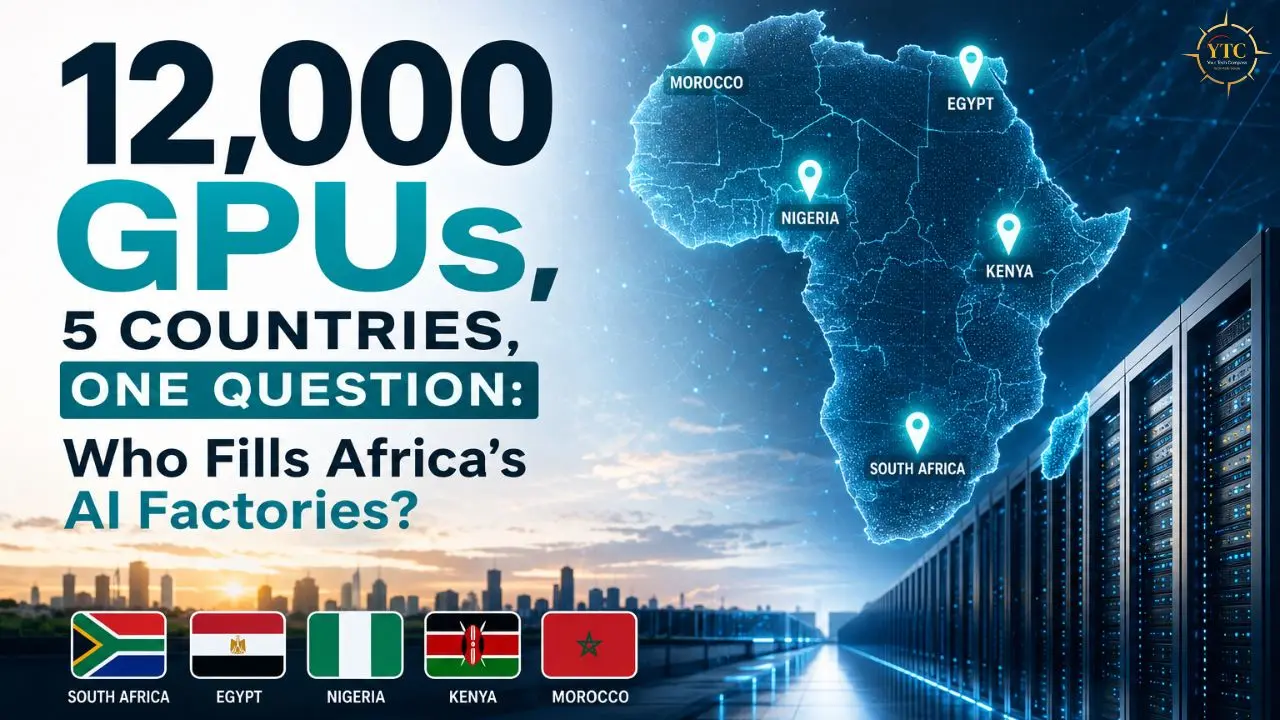
The response is beginning to take shape. On March 24, 2025, Cassava Technologies announced plans for an NVIDIA-powered AI Factory, initially targeting South Africa and later expanding to Egypt, Nigeria, Kenya and Morocco. In April, reports put the potential investment at up to $720 million and the planned deployment at 12,000 GPUs over three to four years. Roughly eight months later, on November 10, Atlancis Technologies announced the deployment of a GPU-powered AI infrastructure platform under its Servernah Cloud brand, developed with Everse Technology and hosted at iXAfrica Data Centers in Nairobi. Atlancis described the facility as East and Central Africa’s first GPU-powered AI infrastructure. These initiatives are part of an emerging effort to provide locally hosted cloud and GPU-as-a-Service capacity, improving data residency and access while reducing dependence on overseas infrastructure. This article examines what Cassava, Atlancis, and iXAfrica are actually building, where their models work, and where the gaps remain.
The Compute Crisis: Why Africa Cannot Train Models at Scale
The 5% Access Gap
The numbers from UNDP and the World Economic Forum are stark. An analysis of approximately 11,000 African data scientists associated with Zindi found that only 5% had access to the computational resources needed for research and innovation. Africa is home to more than 1.5 billion people but has less than 1% of global data-center capacity and an even smaller share of the GPU infrastructure used for AI. A startup or researcher in a G7 country may be able to iterate on an AI model every 30 minutes during training, while an African peer may wait up to six days for results from a single run. This comparison is illustrative rather than a continent-wide average, but the underlying disparity can stall promising research and product development.
The broader AI landscape across Africa is full of founders with viable ideas who struggle to execute them because suitable machines are expensive, oversubscribed, or located outside the continent. Some rely on overseas cloud regions such as Frankfurt, Mumbai, or Virginia, while others use local data centers, academic clusters, GPU marketplaces, or constrained services such as Google Colab. A researcher at a South African university may have access to national HPC and GPU resources, but capacity, queue times, and hardware availability can still differ substantially from those available to well-funded laboratories at institutions such as Stanford.
A startup in Lagos training a language model for Nigerian or other African languages may face a choice between expensive cloud compute, limited local capacity, and processing data through infrastructure outside the country. Overseas processing does not automatically violate data-protection rules, but it can introduce additional compliance, governance, latency, and cost concerns, particularly for sensitive datasets. The AI policy framework across Africa increasingly emphasizes data governance and, in some cases, localization; without adequate domestic compute, those requirements can be difficult to implement effectively.
The Cost Barrier and Global Supply Squeeze

NVIDIA dominates the market for AI accelerators, although its precise share varies by product category and year. Recent estimates have placed the company’s share at roughly 70–95% of the AI-accelerator market, while others put its share of data-center GPU revenue at around 80–90%. Some high-end NVIDIA accelerators have been reported to cost thousands of USD, before the additional costs of servers, networking, storage, power, cooling, and operations. In a market where major hyperscalers such as Amazon, Google, Microsoft and Meta have made multibillion-dollar forward commitments for leading-edge systems, smaller buyers, including African startups, are typically disadvantaged in both price and access.
The resulting cycle is difficult to break: limited local demand can discourage investment in regional compute capacity, while global supply constraints, financing costs, unreliable power and limited purchasing scale keep local access expensive. The problem is therefore not simply that Africa lacks GPUs; it lacks enough affordable, reliable and efficiently utilized compute infrastructure. Breaking that cycle will require coordinated investment by governments, development finance institutions, telecommunications companies, data center operators, and cloud providers, at a scale that most African startups cannot manage alone. A World Economic Forum–published analysis describes this as a system trapped in “low equilibrium” and calls for shared digital infrastructure, regional collaboration and coordinated investment.
Cassava’s NVIDIA Partnership: What $720 Million Actually Buys
The Deal Structure and Geographic Rollout
In March 2025, Cassava Technologies announced plans to establish what it described as Africa’s first AI Factory in partnership with NVIDIA. In April, reporting put the potential investment at up to $720 million. Cassava has described itself as Africa’s first NVIDIA Cloud Partner, using NVIDIA accelerated computing, AI software and Cloud Partner reference architectures. The first phase targeted the deployment of 3,000 GPUs in South Africa by June 2025, while the broader plan called for 12,000 GPUs across South Africa, Egypt, Nigeria, Kenya and Morocco over three to four years.
Hardy Pemhiwa summarized the strategy by saying, “The GPUs themselves are like laying fiber; the investment is really about building the whole AI ecosystem.” Strive Masiyiwa has similarly argued that building digital infrastructure for the AI economy is essential for Africa to fully benefit from the Fourth Industrial Revolution. The project is intended to build on Cassava’s existing pan-African fiber network and data-center capabilities. Cassava and its subsidiaries have established sustainability and energy-efficiency initiatives, although public sources have not yet quantified how much less electricity the AI Factory will use per compute workload than conventional facilities.
AI-as-a-Service and the Sovereignty Play
Cassava is not primarily asking customers to purchase GPUs; it is offering managed GPU-as-a-Service and AI-as-a-Service through its AI Factory model. Its on-demand GPU offering allows customers to pay for compute by the hour, converting much of the upfront capital cost into an operating expense, although reserved capacity and other service options may require longer commitments. A three-person team in Accra, for example, would not necessarily need to purchase a $60,000 chip; it could rent the compute capacity required to train or deploy its models, provided the pricing, availability, and other infrastructure costs fit its business model.
The sovereignty angle is explicit in Cassava’s stated strategy. The company says its regional AI infrastructure is designed to keep data within Africa and support local privacy, sovereignty and data-governance requirements, although in-region hosting is not an automatic guarantee of compliance with every country’s laws. Cassava launched its AI Multi-Model Exchange in November 2025 as a locally managed platform for accessing multiple AI models and services, while its broader AI offerings incorporate NVIDIA technologies such as NIM inference microservices.
Cassava’s Model-as-a-Service materials mention capabilities in languages including isiZulu and Swahili, but do not specify a rollout that begins with Swahili and later adds Zulu and Afrikaans. The African NLP and local LLM movement has been constrained in part by limited compute. Masakhane’s open African-language research and Lelapa AI’s Vulavula language API demonstrate what developers have already built under those constraints; Cassava’s infrastructure could help move some projects from research and pilot stages into production if compute is affordable, reliable and accessible.
IXAfrica and Atlancis: The Kenyan Counterweight
East Africa’s First GPU-Powered AI Factory
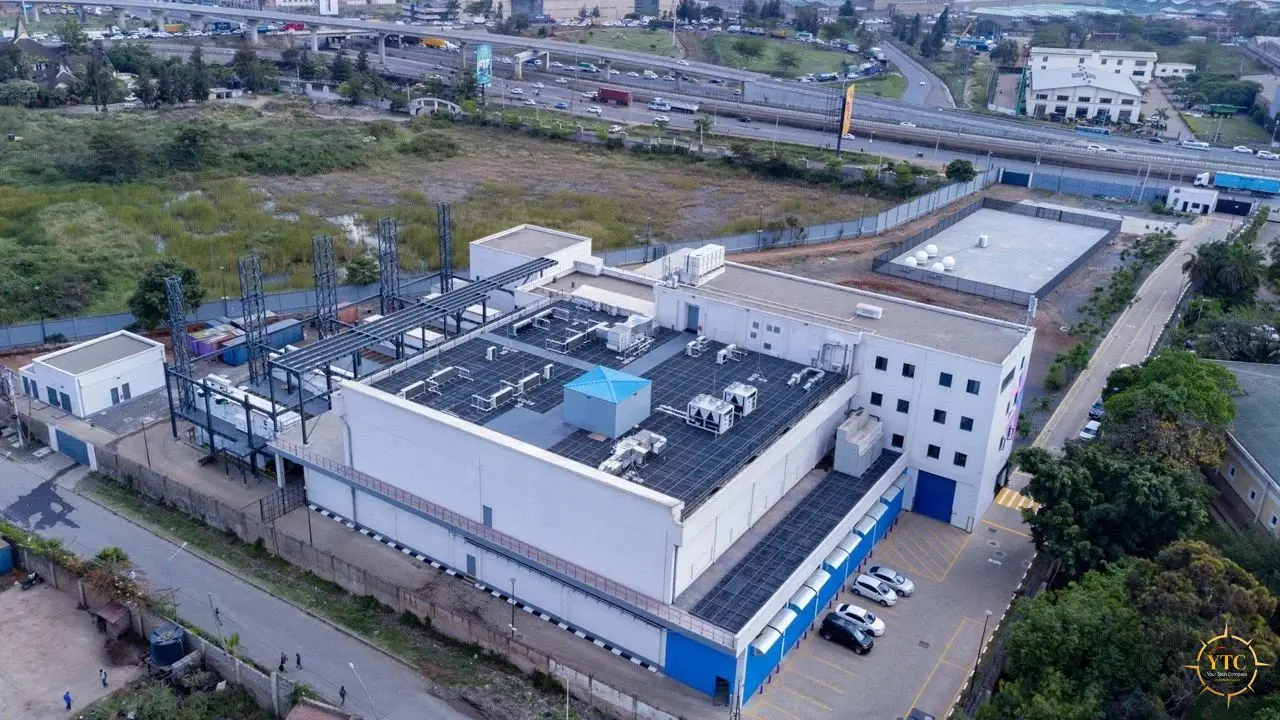
In November 2025, Atlancis Technologies, operating under its Servernah Cloud brand, announced what it described as East and Central Africa’s first GPU-powered AI infrastructure, hosted at iXAfrica Data Centers in Nairobi. The facility is built on Open Compute Project design principles and powered by NVIDIA GPUs. It is intended to support high-performance computing, machine learning, deep learning, and data-analytics workloads.
iXAfrica’s NBOX1 campus is marketed as East Africa’s first hyperscale, AI-ready data center, offering carrier-neutral interconnectivity, support for power densities up to 50 kilowatts per rack, and access to Kenya’s predominantly renewable, low-carbon electricity grid. iXAfrica describes the facility as Tier III-designed and cites a 99.999% uptime guarantee, although these claims should not be presented as independent Tier III certification without supporting documentation. Daniel Njuguna, Founder and CEO of Atlancis Technologies, called the deployment “the heart of Africa’s AI revolution.” Snehar Shah, CEO of iXAfrica Data Centers, described it as “a defining step in Africa’s AI infrastructure story.”
This is not Cassava’s network. It is a separate infrastructure layer that could complement (and potentially compete with) Cassava’s regional AI network by giving Kenyan and East African developers another route to locally hosted compute. A Safaricom–iXAfrica strategic partnership, announced in May 2025, could help aggregate enterprise demand by combining Safaricom’s customer relationships with iXAfrica’s data-center infrastructure, although the available evidence does not establish that Safaricom directly distributes Servernah’s GPU services. This kind of enterprise demand aggregation is consistent with the broader shared-infrastructure and coordinated-investment approach discussed in World Economic Forum–published analysis.
Why Kenya Needs Its Own Factory
Kenya’s tech ecosystem, from healthtech startups to agricultural AI innovators, faces the same limited access to affordable and reliable compute that constrains AI development across much of the continent. The Microsoft–G42 $1 billion geothermal-powered data-center project in Kenya, announced in 2024, has been delayed, and its future remains uncertain, although Kenyan officials say it has not been formally canceled.
By contrast, the Atlancis–EverseTech–iXAfrica platform was deployed in Nairobi in November 2025, and Servernah Cloud was launched as a live Kenyan service in March 2026. For Kenyan developers, the difference between infrastructure that is merely committed and infrastructure that is actually online can determine whether experimentation becomes a deployable product.
How Selected African Compute and Data-Centre Projects Compare
Project | Location | GPU Source | Status | Key Differentiator | Target Users |
Cassava AI Factory — Phase 1 | South Africa | NVIDIA | Initial deployment announced June 2025; current operational capacity should be separately verified | Cassava’s claimed first NVIDIA Cloud Partner status in Africa; reported potential investment of up to $720 million; access to Cassava’s wider fiber and data-center infrastructure | Startups, researchers, governments, and enterprises |
Cassava AI Factory — Planned Expansion | Egypt, Nigeria, Kenya, and Morocco | NVIDIA | Planned over approximately three to four years | Locally hosted and sovereignty-oriented AI infrastructure; potential support for regional and African-language workloads | Startups, researchers, governments, and enterprises in the target markets |
iXAfrica–Atlancis Servernah | Nairobi, Kenya | NVIDIA | GPU infrastructure announced as deployed in November 2025; Servernah Cloud launched as a live service in March 2026 | OCP-based design; high-density AI infrastructure; associated Safaricom–iXAfrica enterprise-infrastructure partnership | Kenyan and East African developers, enterprises, and public-sector customers |
Microsoft–G42 | Kenya | Not publicly specified | Delayed or stalled, with the project’s future uncertain | Reported $1 billion investment plan; proposed geothermal-powered data-center campus and Azure region | Cloud customers, enterprises, and public-sector users |
Diamniadio National Datacenter | Senegal | Not specified (not publicly established as a GPU facility) | State-run hosting and storage infrastructure focused on national data management and digital sovereignty | Government agencies, public bodies, and potentially SMEs and private-sector users |
What This Infrastructure Actually Enables
Training African Language Models Locally
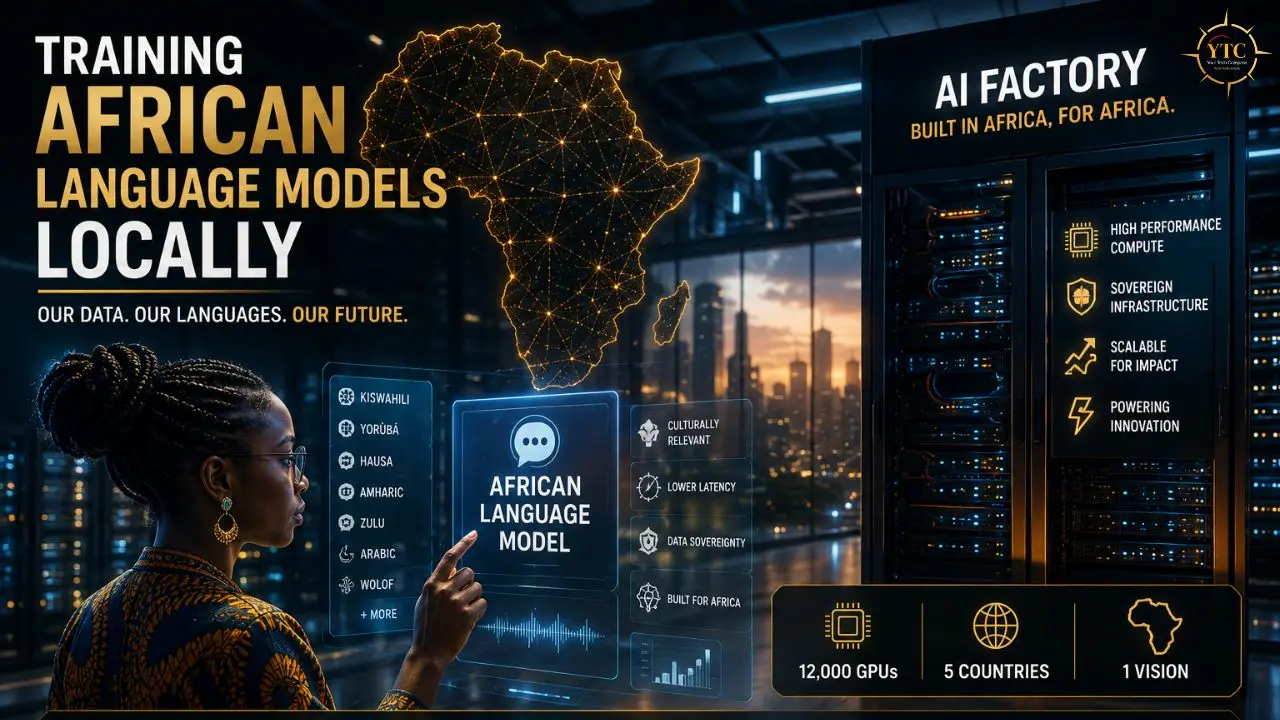
The difference between training a Swahili language model on Cassava’s South African cluster and renting GPUs through AWS is not necessarily whether the data remains in Africa, since AWS operates a Cape Town region. The more relevant differences may involve GPU availability, pricing, latency, data governance arrangements, technical support, and access to the specific hardware required for training.
Local infrastructure can also help researchers retain greater control over datasets subject to national storage requirements or cross-border transfer restrictions, although African data-localization rules vary by country and do not generally prohibit every international transfer. The African NLP and local LLM movement has demonstrated what is possible with limited resources. Cassava’s GPU-as-a-Service offering, combined with CAIMEx’s locally managed access to AI models and services, could help move projects from academic research and pilot stages toward commercial deployment, but only if the compute is affordable, reliable and supported by suitable data, skills, distribution and paying customers.
Accelerating Sector-Specific AI
Healthcare is already moving. Jacaranda Health, a Kenyan maternal-health NGO, was named an initial beneficiary of the Cassava–Rockefeller Foundation initiative, which is expected to provide access to advanced computing resources to develop culturally attuned, multilingual AI models for maternal care. Cynthia Kahumbura, Co-Executive Director, stated that the infrastructure would “accelerate our development of culturally attuned, multilingual AI models while slashing costs, enabling us to reach millions of women with critical health information in their native languages.” The healthtech startup ecosystem could benefit from locally hosted compute when handling sensitive patient data, although data residency and cross-border processing requirements vary by country and system configuration.
Agriculture follows the same logic. Digital Green, operating in Ethiopia and Kenya, uses AI to deliver localized, real-time agricultural advice to smallholder farmers. Rikin Gandhi, CEO, noted that access to GPUs on the continent could “unlock breakthroughs in speech-to-text, local language translation, image recognition, and retrieval-augmented generation.” The agricultural AI revolution depends in part on processing satellite imagery and climate data at scale, workloads that can become more economically viable when compute is local, affordable, and supported by reliable connectivity.
Education is the third pillar. According to the Rockefeller Foundation and Cassava Technologies, Rising Academies’ AI tools reached more than 13,000 students in Rwanda, reduced teacher grading time by 60%, and saw 85% of learners report that they enjoyed the AI tutor. Local GPU clusters could help make it more financially feasible to scale these tools beyond pilot programs, but national deployment would also require connectivity, devices, teacher training, safeguarding and evidence that the learning benefits persist at larger scale.
The Talent Development Loop
Cassava signed an MoU with the South African AI Association, under which more than 3,000 AI practitioners would receive access to Cassava’s data-center GPUs to develop and deploy local AI solutions. Zindi, which describes itself as Africa’s largest professional network for data scientists, also partnered with Cassava to explore GPU-as-a-Service access for solution development and connect its data-science community with Cassava’s AI infrastructure. This is the critical feedback loop that infrastructure alone cannot create. GPUs without skilled operators are expensive heaters. Skilled operators without GPUs are theoretical physicists. The intersection is where African AI capability can compound.
The talent shortage in South Africa shows why this loop matters urgently. African developers increasingly work for foreign companies, with one estimate finding that 38% work for at least one foreign firm, although this figure applies to developers broadly rather than specifically to the continent’s top AI specialists. Local computing could give African researchers and engineers better access to tools, projects, and career opportunities without requiring them to emigrate, but retention also depends on pay, research funding, mentorship, career progression, and reliable institutions. The role of women in African AI is particularly relevant here: retention strategies must be intersectional, and access to local compute should be paired with measures that address financing, training, workplace inclusion, and leadership opportunities.
The Hard Problems That Remain
Utilization and the Demand Question
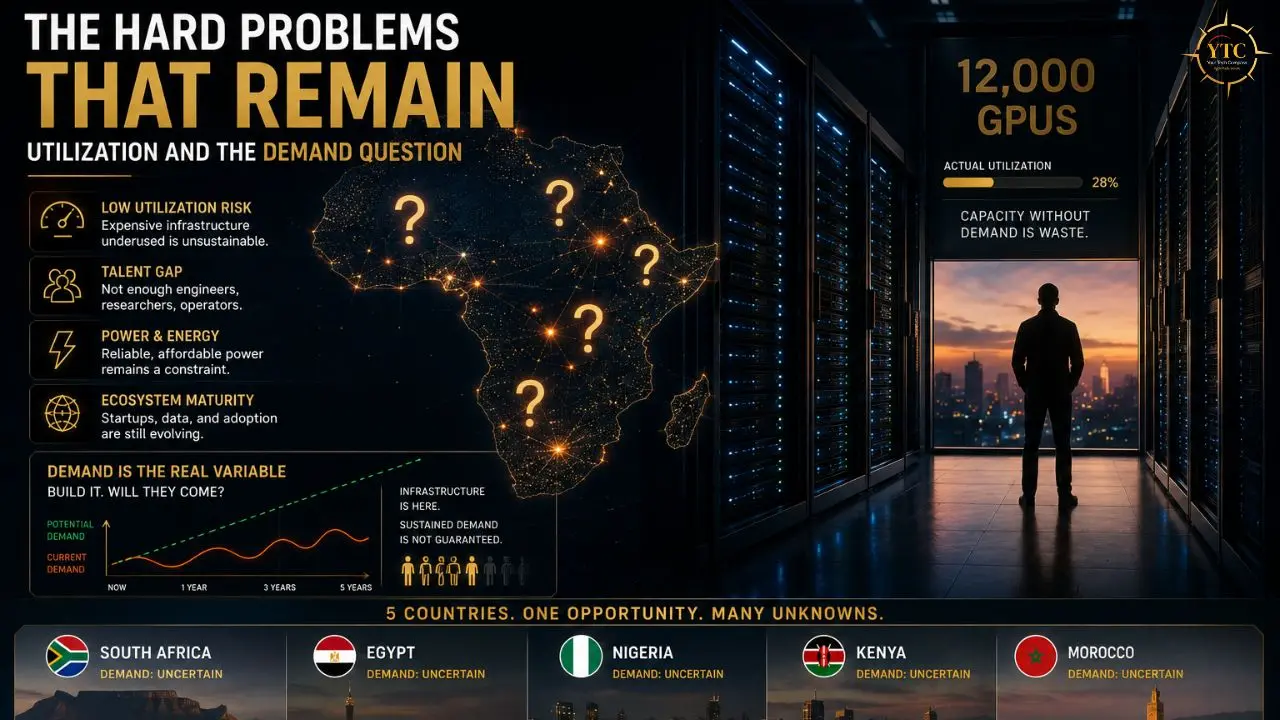
Even globally, AI-compute business models remain unsettled, and underutilization is a recognized industry risk. In Africa, the challenge is not yet shifting away from physical capacity; the continent still lacks sufficient affordable, reliable compute. As new facilities come online, however, uncertain workload demand, limited customer purchasing power, and the high cost of GPU access will become additional constraints. Industry research has found low GPU utilization in some enterprise environments, while estimates from African data centers suggest that facilities can take years to reach sustainable occupancy. Building AI factories is therefore only the first challenge; filling them with paying customers is harder.
GPU-as-a-Service pricing must be low enough for startups and researchers to afford, but high enough to cover the cost of accelerators, servers, networking, storage, electricity, cooling, staffing, financing, and maintenance. That model works best with sufficient utilization, anchor customers, and long-term contracts. If projected African demand does not materialize, these facilities could become stranded assets as expensive hardware remains underused or loses value when newer generations arrive. Reports have described Cassava’s potential strategy of serving global NVIDIA cloud customers alongside African users as a possible hedge, but this raises an important sovereignty question: if foreign customers become the factory’s primary users, how much capacity and commercial priority remain available to African innovators?
Power, Cooling, and the Green Compute Question
AI factories are power-hungry. Large GPU clusters can consume megawatts once the electricity needs of accelerators, servers, networking, and cooling are combined. South Africa’s grid has faced significant reliability and supply constraints; Kenya has a relatively high share of renewable generation, particularly geothermal, but its generation, transmission, and connection capacity remain finite. Cassava emphasizes sustainable and energy-efficient data-center design, while the proposed Microsoft–G42 Kenya facility was designed around geothermal power. Its progress has since stalled amid disputes over electricity capacity and project guarantees.
The broader question remains: can Africa’s power infrastructure support a continental AI-factory network without diverting electricity from homes, hospitals and manufacturing?
A World Economic Forum–published analysis estimates that coordinated investment in green computing could unlock approximately $1.5 trillion in economic value for Africa by 2030. This is an opportunity estimate rather than a guaranteed outcome, and achieving it would require renewable-energy integration, grid upgrades, transmission capacity, cooling infrastructure, and investment at a scale that most African grids have not yet reached. The AI conversations often focus on a model’s capabilities. It should focus just as heavily on the kilowatts required to train, host, and run it.
The Geopolitical Layer
The Cassava–NVIDIA partnership is not only commercial; it can also be read as strategic. Analysts have framed it as positioning American private-sector technology as a counterweight to China’s Belt and Road and Digital Silk Road investments, although neither Cassava nor NVIDIA has publicly described the deal in those terms. The comparison between Chinese and US firms is also more nuanced than a simple split: Chinese firms have developed competitive AI models and, within China, domestic chips such as Huawei’s Ascend have captured a substantial share of the local market as US export controls reduced NVIDIA’s position there.
For African governments, this creates leverage but also dependency. NVIDIA’s dominant position in the accelerator market (discussed in the Cost Barrier section above) creates additional exposure. US export controls already restrict the export of advanced AI chips and impose quotas and licensing requirements on shipments to many countries, so African AI factories could face supply-chain and cost risks. The exposure depends on licensing, quotas, ownership, and the location of advanced hardware deployment, rather than being an automatic outcome of any commercial relationship.
Who Pays, and Who Profits
The Business Model Uncertainty
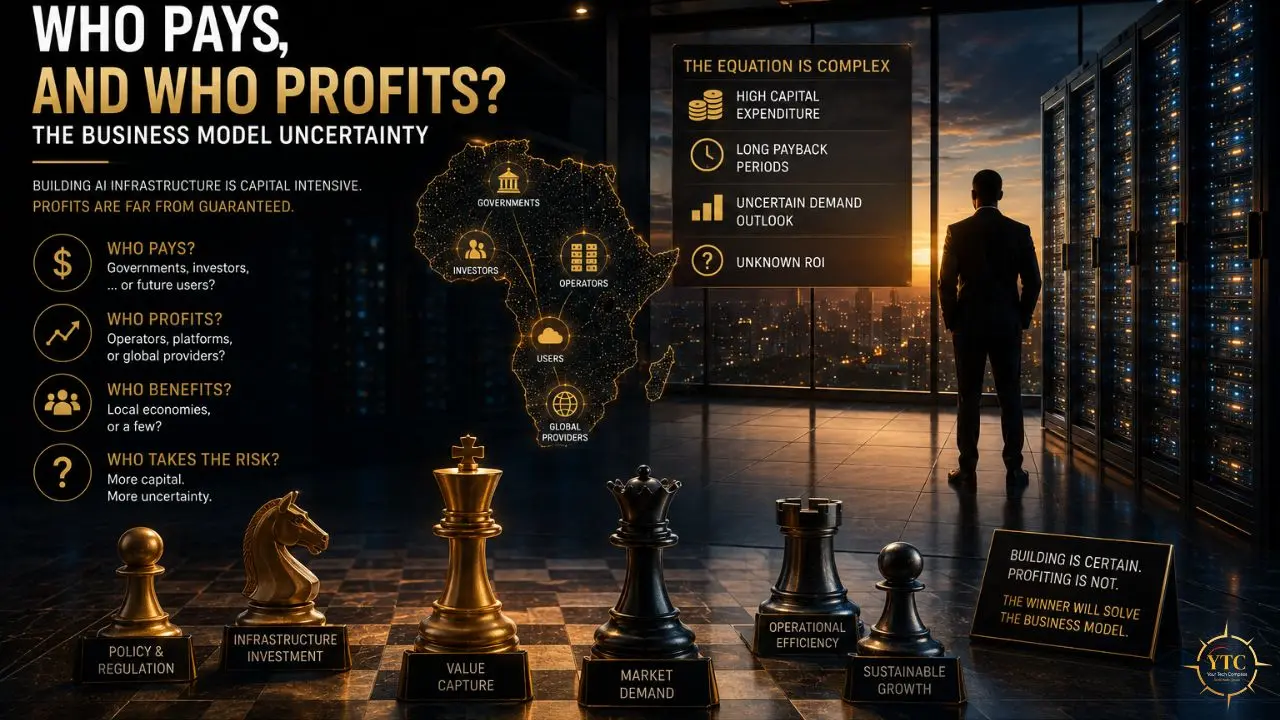
It remains unclear which workloads justify GPU costs, how GPU time should be priced, and who ultimately pays. African markets add another layer: government procurement cycles are slow, startup budgets are thin, and enterprise adoption of AI is still in its early stages. The African fintech sector may be among the first significant customers to use local compute for fraud detection, credit scoring, and algorithmic trading. But fintech alone cannot fill 12,000 GPUs.
The SME Access Gap
GPU-as-a-Service lowers the barrier, but it does not eliminate it. A startup in Kigali or Accra may still find per-hour GPU rental costs prohibitive for extended training runs. Subsidies, blended finance, and anchor-tenant government contracts are necessary to bridge the gap between infrastructure availability and actual affordability. The Rockefeller Foundation partnership is one model: providing access to GPUs for African NGOs and social enterprises. But philanthropy cannot scale to meet the demand for an estimated 7 million GPU hours.
A Realistic Assessment: What Changes by 2028
The Near-Term Wins
By 2028, South Africa and Kenya are expected to have operational NVIDIA-powered GPU clusters intended to support large language model training, large-scale satellite imagery processing, and enterprise AI workloads. Researchers at South African universities will depend less on overseas compute grants, given the expansion of national HPC and GPU resources and policy attention to university supercomputing, although they may still need overseas access for frontier-scale models or specialized capacity.
Kenyan healthtech startups will be able to train diagnostic models on local compute while still complying with data-protection, consent, and validation requirements. The artificial intelligence landscape across Africa will look materially different from the cloud-dependent ecosystem of 2024, though constraints around affordability, skills, power, and demand will not be fully resolved.
The Risks That Could Stall Progress
If utilization remains low, investor appetite for Phases 2 through 4 of Cassava’s rollout will cool. If power infrastructure cannot keep pace, factories will face downtime that undermines their reliability. If the global GPU shortage worsens (as projected through 2027), African orders may remain deprioritized in favor of hyperscaler demand.
The comparison with India’s AI adoption trajectory is instructive: India invested in compute infrastructure early, coupled it with massive talent programs, and created a self-reinforcing ecosystem. Africa’s infrastructure is arriving. The talent and demand aggregation must catch up.
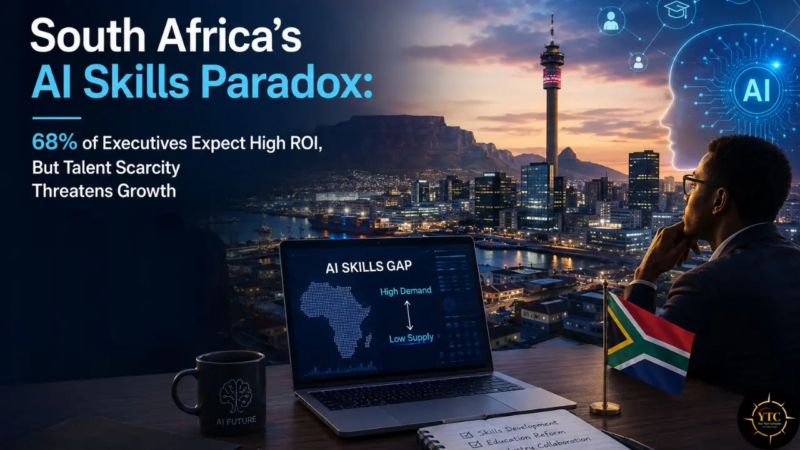
The difference between a continental AI infrastructure success and a cautionary tale will not be the hardware. It will be the ecosystem around it, talent pipelines, demand aggregation, government procurement, and pricing models, that makes access real rather than theoretical. The South African AI skills paradox illustrates that infrastructure without human capability is just expensive real estate.
Conclusion
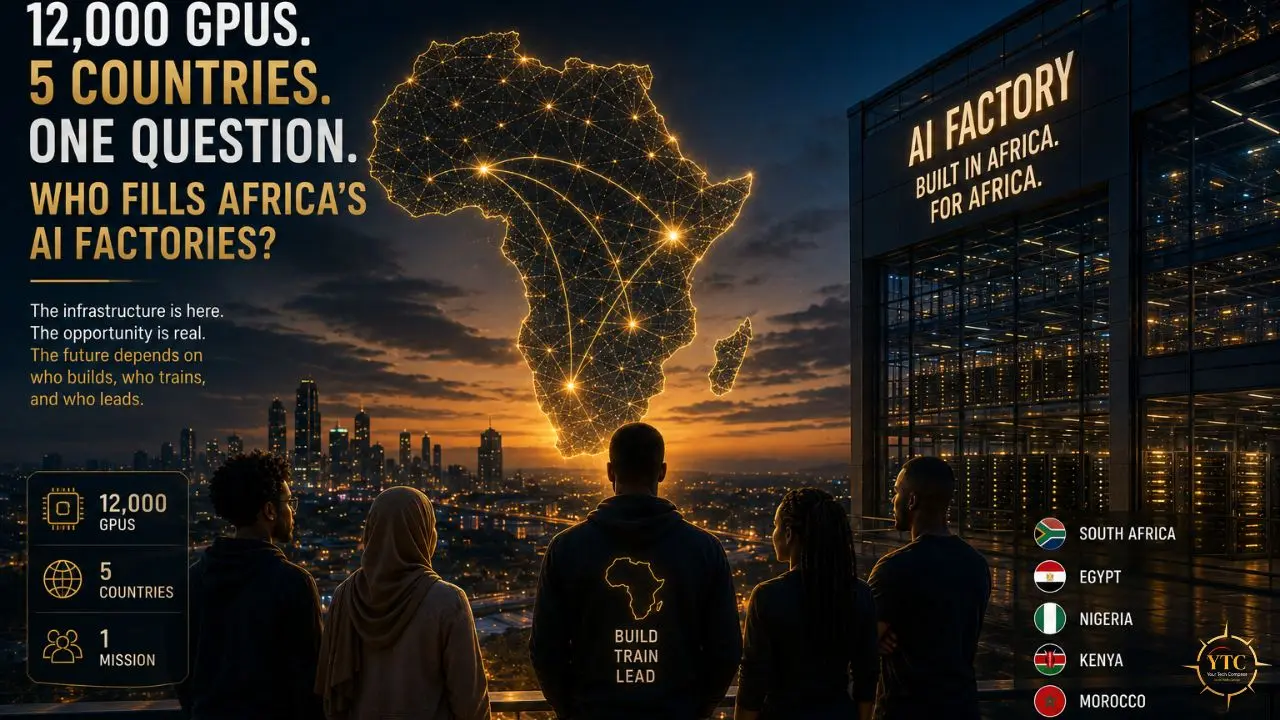
Africa’s GPU crisis is not a technology problem dressed in infrastructure clothing. It is a market failure (capital mispricing, coordination gaps, and demand fragmentation) that requires coordinated intervention to break. Cassava’s NVIDIA partnership and iXAfrica’s Kenyan deployment are among the most serious attempts yet to solve it through sovereign, private-sector-led infrastructure. They are necessary but not sufficient. The factories are being built. The question is who will fill them, who will pay for them, and whether the talent to operate them will stay on the continent.
By 2028, the question will not be whether Africa has GPU factories. It will be whether those factories are full, affordable, and accessible to the startups and researchers who need them most. Hardware is the beginning. Pricing, talent, power and demand aggregation will determine whether this infrastructure becomes the foundation of an African AI economy or a monument to ambition that outpaced execution. The AI policy conversation must now shift from data-localization mandates to the reality of compute localization. Without the machines, localization rules are difficult to implement effectively.
If you’re tracking Africa’s AI infrastructure, compute sovereignty, or the deals reshaping who controls the continent’s digital future, start at the homepage — YourTechCompass.com — where we map the factories, the fiber, and the founders building Africa’s AI stack from the ground up.