
You have probably stared at an empty notes app on a Sunday evening, cycling through the same five recipes in your head, only to end up ordering takeout by Wednesday. The intention was there: you wanted to eat better, spend less, and stop wasting the spinach that always wilts in the crisper drawer. But meal planning is a constraint problem, and your brain is already tired from the week. You may need to meet a calorie target, accommodate your partner’s dairy allergy, stay under budget, and still make meals appealing enough that you do not abandon the plan by Thursday.
This guide is not a collection of generic “healthy eating” tips. It presents a complete five-step workflow for using AI to create a weekly meal plan, from auditing your pantry to reviewing a consolidated grocery list. You will see selected free and paid tools available in 2026, evaluated by their features, pricing, practical usefulness, and limitations. You will also get prompt templates designed to produce more structured results, along with the checks you need to perform yourself. AI can help organize ideas and reduce decision fatigue, but it may still generate inaccurate nutrition estimates, incomplete grocery lists, unsuitable substitutions, or meals that do not work in your kitchen. The research reviewed here is current as of mid-2026 and includes recent studies examining the nutritional quality and accuracy of AI-generated diet plans. These studies suggest that AI can be useful for general planning but should not replace a dietitian, especially for children, pregnancy, eating-disorder recovery, diabetes, kidney disease, significant food allergies, or other medical conditions. By the end, you will have a clearer basis for choosing the AI approach that fits your kitchen, budget, dietary needs, and patience level.
Quick Verdict
- Best For: Busy professionals, parents, health-conscious eaters, and budget-minded shoppers who want to reduce decision fatigue, organize meals, and potentially cut food waste without hiring a nutritionist for routine planning.
- Skip It If: You prefer completely improvisational cooking, have complex medical dietary needs that require individualized guidance from a registered dietitian, or are unwilling to double-check AI-generated nutrition data, ingredients, and allergen risks. AI meal plans should not replace professional dietary advice for clinical or medically sensitive situations.
- Bottom Line: AI meal planning works best as a smart assistant, not an autopilot. Give it detailed inputs, such as your preferences, budget, pantry inventory, cooking time, equipment, and dietary restrictions, and it can make weekly planning faster and more organized. Give it vague prompts, however, and you may receive repetitive, impractical meals that bore you into ordering pizza. The amount of time saved will vary by person and tool, so treat claims of a fixed percentage, such as 70%, with caution.
What Is AI Meal Planning (and What It Is Not)
The Promise vs. The Reality
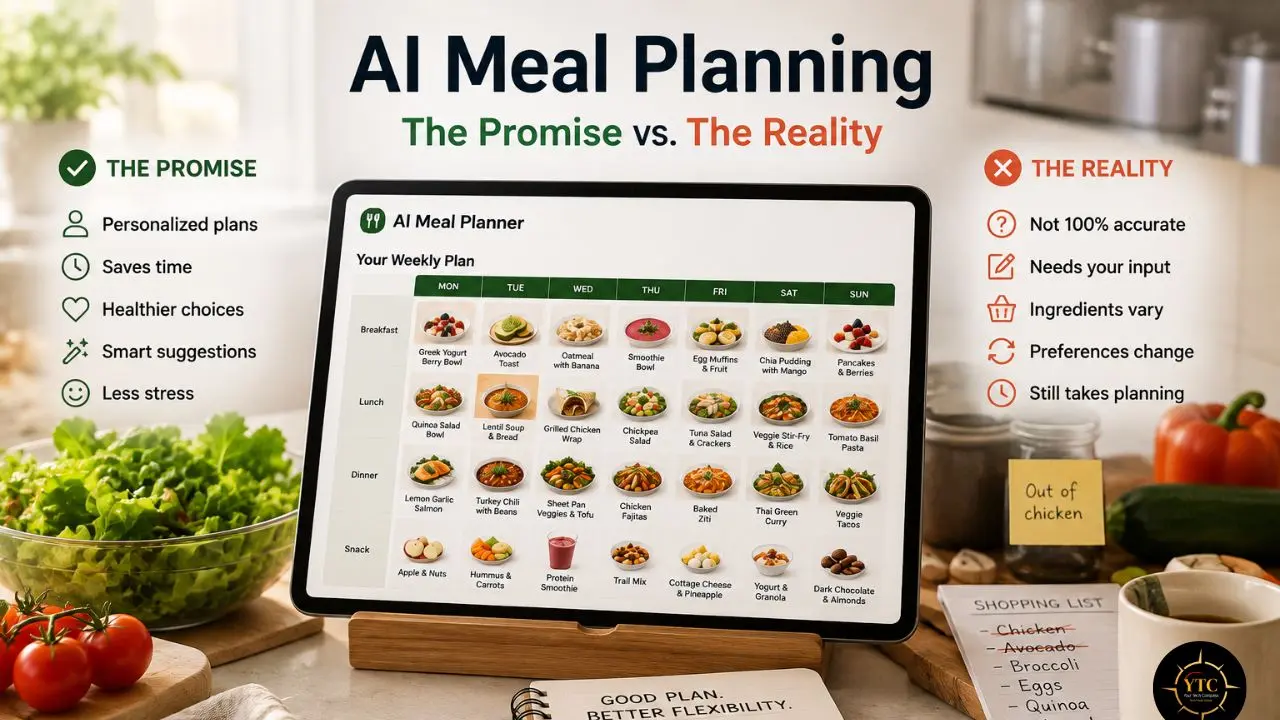
AI meal planning means using large language models such as ChatGPT-4o, Gemini 2.5 Pro, or Claude 3.5 Sonnet, or specialized services such as Eat This Much, to help generate weekly menus, shopping lists, and preparation schedules based on your constraints. These systems can organize the calculations you would otherwise do by hand, such as estimating calories and macronutrients across seven days, reusing ingredients, and introducing variety. However, the results depend on accurate ingredient quantities, serving sizes, food databases, and user inputs. A chatbot may produce plausible-looking figures without reliably verifying them, while a structured meal-planning app may use its own database and calculation methods.
But here is what AI meal planning does not do. It does not cook the food, guarantee clinical nutritional accuracy, or fully understand the cultural and sensory significance of a substitution, such as replacing olive oil with palm oil in a family recipe. AI meal planning can be useful for generally healthy adults with routine goals, provided they review the ingredients, portion sizes, nutritional estimates, and allergen risks. It is not a replacement for medical nutrition therapy or individualized guidance from a registered dietitian, particularly for conditions requiring strict dietary management. Distinguishing between “useful for general planning” and “medically verified” is the first boundary you need to draw.
For a broader look at how AI capabilities are evolving across models, our AI Unboxed category tracks the shifts that matter.
The Five-Step Workflow: From Empty Fridge to Full Week
Step 1: Audit Your Pantry and Preferences Like a Data Scientist
The quality of your meal plan depends heavily on the quality and completeness of your input. Before opening an AI tool, inventory what you already have, including approximate quantities, opened or unopened items, and any relevant use-by or best-before dates.
The Gemini and ChatGPT mobile apps can accept image input, so you can photograph your fridge and pantry and ask the AI to identify visible ingredients, suggest which items to use first, and help organize your inventory. This can be a useful starting point, but review the results carefully: the AI may miss hidden items, misidentify similar products, overlook quantities, or mistake a label. However, it cannot reliably determine whether food is safe to eat from a photograph alone.
Next, define your hard constraints. How many people are you feeding? What is your weekly food budget? Do you have allergies, intolerances, or dietary preferences? How many minutes can you spend cooking on a weeknight compared with a weekend? Which ingredients must be used soon, and which foods are flexible or optional?
This step significantly affects the usefulness of your results. Most people provide too little context and then wonder why the AI suggests saffron risotto when they only have eggs and rice. The more relevant and clearly prioritized your constraints are, the more practical the AI’s suggestions are likely to be, but you should still check the final plan yourself.
For more structured approaches to organizing complex workflows, our Tech Guides section offers complementary strategies.
Step 2: Choose Your AI Stack (Free vs. Paid)
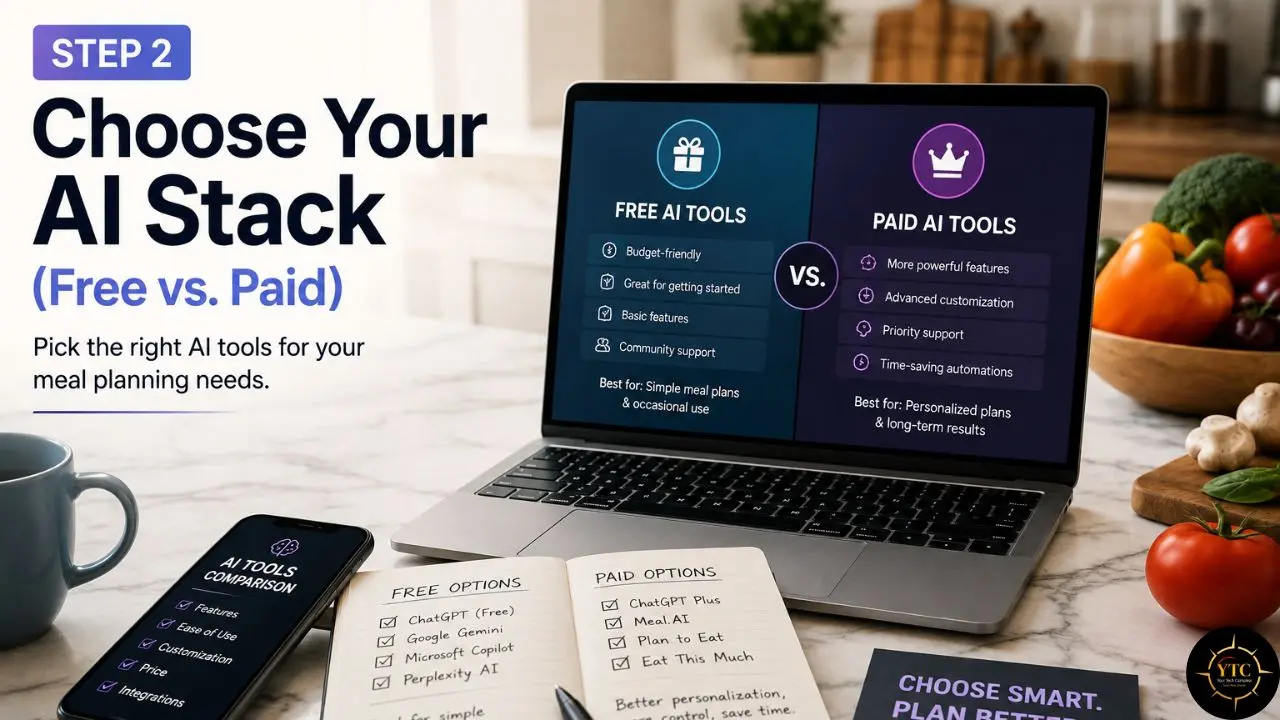
You have three approaches to choose from. General-purpose LLMs such as ChatGPT, Gemini, and Claude offer broad flexibility but require clearer prompts and more manual checking. They typically provide free basic access, while premium plans often cost around $20 per month and may offer higher usage limits, larger context windows, or additional models and features; exact access and pricing vary by service, region, billing cycle, and account.
Specialized apps such as Eat This Much and Mealime automate much of the meal-planning and nutrition-tracking process, but their prices and customization options vary. Eat This Much, for example, lists a $5-per-month equivalent for its annual plan, while monthly billing costs more.
Hybrid workflows, on the other hand, combine an LLM for planning with a nutrition tracker like Cronometer to track calories and nutrient totals.
Compared with specialized apps: General-purpose LLMs offer more control over ingredients, cuisines, household preferences, and unusual constraints, but they require better prompting and more verification. Specialized apps provide greater convenience and may calculate nutrients more consistently from structured food databases, although their recipes, ingredient options, and customization features can be more limited. The practical trade-off is control versus convenience, with price, regional availability, privacy, and the quality of each tool’s food database also worth considering. A tracker such as Cronometer can help cross-check nutrient totals, but it does not guarantee clinical suitability or allergy safety.
If you are debating which general-purpose model to use for meal planning, our detailed GPT-5.5 vs Claude Opus 4.8 comparison breaks down where each model excels in reasoning, instruction following, and structured output generation.
Step 3: Build the Prompt That Actually Works
Vague prompts often produce generic or repetitive results. “Give me healthy meals” provides too little context, so the AI may suggest familiar options without considering your budget, schedule, available ingredients, or household preferences. A practical meal-planning prompt should include your household details, hard constraints, available ingredients, cooking limits, desired variation, and output format. These fields are commonly recommended in meal-planning prompt guidance, although they do not guarantee accurate or practical results. Here is a template you can adapt:
“You are a budget meal planner. I am feeding [number] people in [location] at [currency][amount] per week. The budget covers [dinners only/all meals]. Dietary needs and foods to avoid: [list restrictions]. I have these pantry and refrigerator items, with approximate quantities: [list ingredients]. My available equipment is [list equipment]. Weeknight cooking time: [X] minutes. Weekend cooking time: [Y] minutes. Generate a 7-day dinner plan using realistic serving sizes and reusing suitable ingredients to reduce waste. Include at least two meals that use planned leftovers. For each meal, provide estimated servings, preparation time, and the ingredients used. End with a consolidated grocery list organized by store section and flag any assumptions, uncertain prices, or restrictions that need manual checking.”
The key to sustainable meal planning is thoughtful ingredient reuse rather than maximizing repetition. If you buy spinach for Monday’s salad, you might use the remaining amount in Wednesday’s smoothie and Friday’s pasta, but only if the quantities, storage time, and household preferences make that practical.
A well-constructed prompt can express this logic upfront, but the AI should still show how much of each ingredient each meal uses. For a family of four on an $80 weekly budget with 30-minute weeknight limits, this prompt structure can produce a useful first draft, but affordability and practicality depend on location, currency, what the budget covers, available equipment, and current food prices. Remember to review the final plan for portions, costs, cooking times, nutrition, and dietary safety before shopping.
Step 4: Generate, Review, and Refine
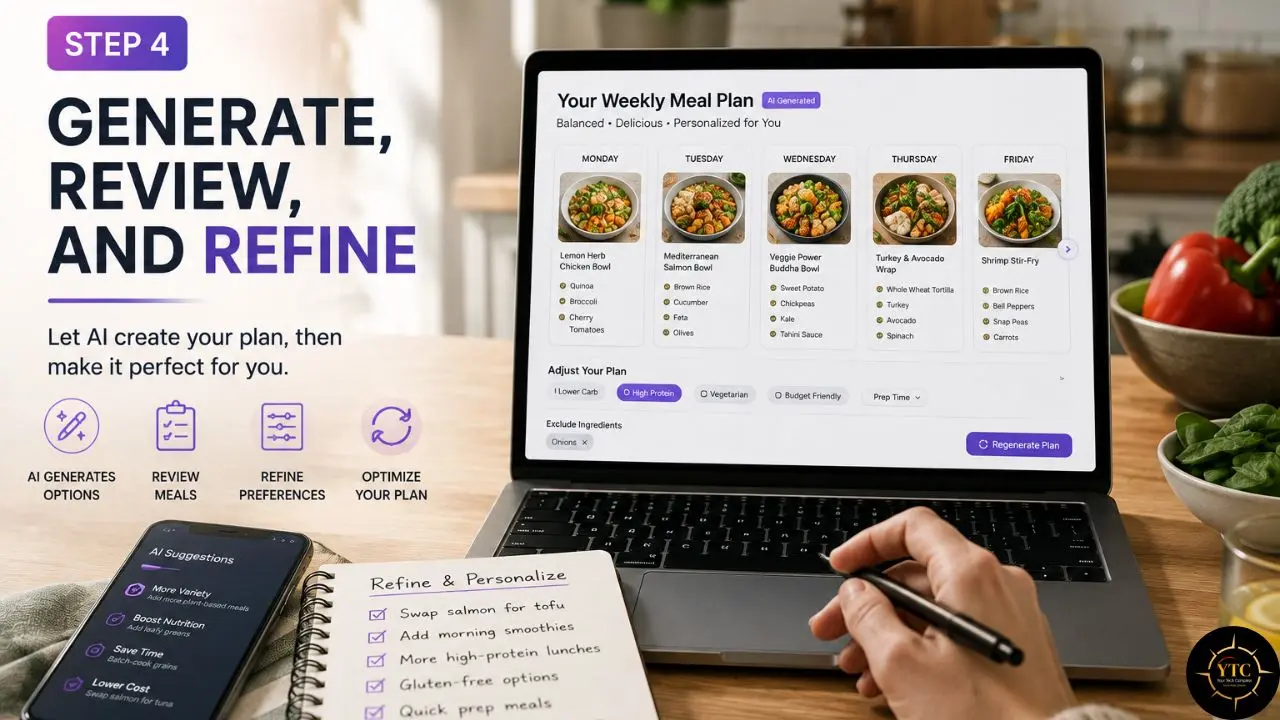
You should review every AI-generated plan before committing to it. Check for repeated meals, ingredients, cooking methods, and flavor profiles, not just identical recipe names. Also verify serving sizes, ingredient quantities, cooking times, missing or duplicated grocery-list items, unsuitable substitutions, allergen risks, and whether the plan fits your budget and equipment.
Do not assume that a plan is nutritionally balanced because it contains a variety of foods; important calorie, protein, fiber, micronutrient, and medical-diet requirements may need independent checking. AI-generated diet plans have produced significant nutritional errors in some evaluations, particularly for adolescents.
If something does not work, refine it iteratively: “Replace the quinoa bowl with a lentil-based meal that uses the same vegetables, stays within the original budget, and provides a similar amount of protein” is more useful than starting from scratch. You can also ask the AI to preserve the plan’s servings, cooking time, cuisine, and nutritional targets while changing one meal. This is where the conversational strength of LLMs can be useful. You are not placing an order; you are collaborating with a drafting assistant that still needs supervision.
Step 5: Convert to Shopping List and Calendar
The final step is operational. Ask the AI to combine duplicate ingredients, compare the list with your pantry inventory, adjust quantities for the required servings, and estimate costs using a stated retailer, currency, and date. Review the results for inconsistent units, missing ingredients, unsuitable package sizes, and items you already have.
Format the plan for Google Calendar, Todoist, or a printable PDF, or use a supported integration if available. If you use grocery delivery, check whether your chosen meal-planning app supports your preferred retailer, country, platform, and subscription plan; integrations and checkout features vary between services.
Some tools can turn meal plans into categorized shopping lists, but the final list should still be checked against the original recipes and your actual pantry. The goal is to reduce the effort between planning and shopping, not to make the process entirely frictionless. Without a final review, out-of-stock items, price changes, substitutions, and incorrect quantities can still derail the plan at the store.
The Best AI Meal Planning Tools Compared
General-Purpose LLMs
ChatGPT
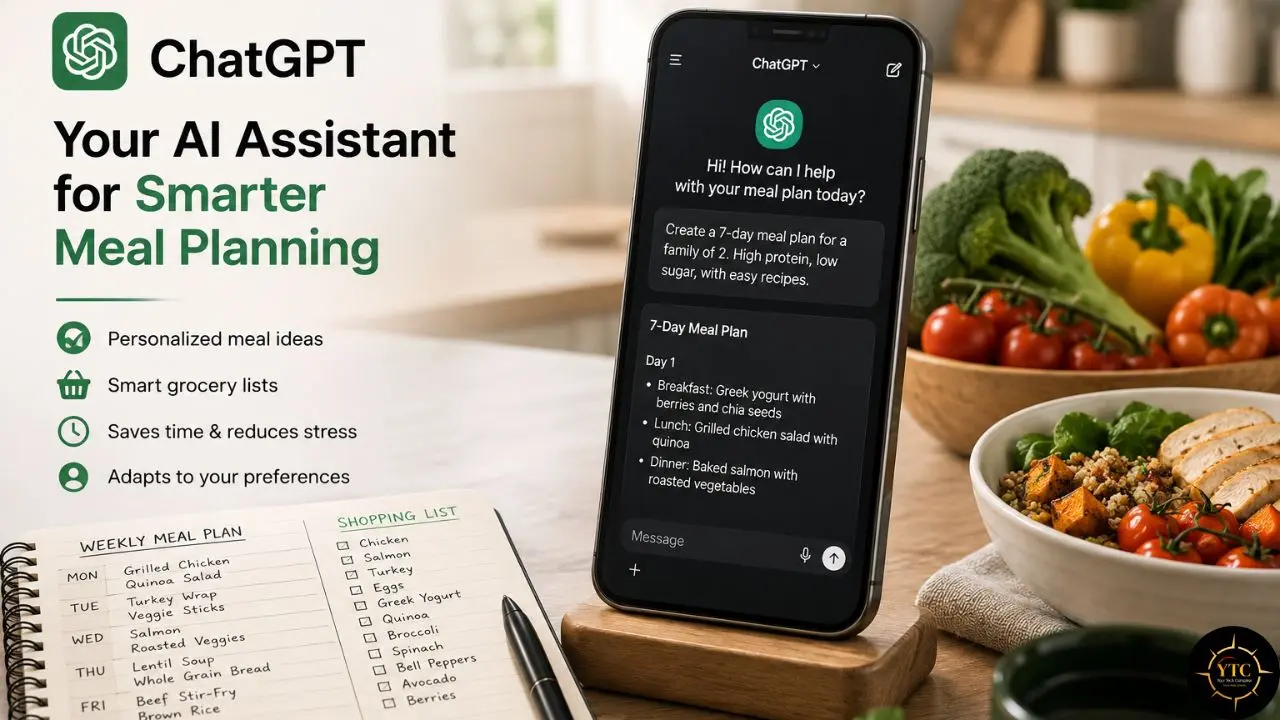
ChatGPT is a strong option for refining meal plans conversationally because you can revise a plan interactively and ask it to preserve or change specific constraints. Its flexibility does not guarantee accurate nutrition calculations: unless it is connected to a verified food database or nutrition-tracking tool, calorie and nutrient figures should be treated as estimates. Also, identify the exact ChatGPT model and plan being tested rather than describing GPT-4o as the current ChatGPT choice; GPT-4o was retired from ChatGPT on February 13, 2026, although API availability may differ.
Gemini
Gemini can be useful for vision-based tasks, such as inspecting a photograph of visible pantry items and suggesting recipes based on them. However, image recognition may miss ingredients, misread labels, or fail to estimate quantities and freshness, and its performance should not be described as universally superior without a task-specific benchmark. Google Calendar, Keep, and other Workspace integrations may also depend on the account, subscription, region, and feature availability, so export is not guaranteed for every user.
For a deeper analysis of Gemini’s current capabilities, see our Gemini 3.1 Pro review, while treating any product-review rankings as commentary rather than independent evidence.
Claude
Claude can be a useful choice for carefully phrased meal-planning revisions and for asking the model to identify assumptions or uncertainty. However, there is not enough general evidence to call Claude the most conservative or the safest model for nutrition claims, and Claude 3.5 Sonnet is no longer a current platform choice on Anthropic’s API.
If accuracy matters, compare the exact models on defined tasks (constraint adherence, ingredient recognition, nutrition calculations, grocery-list completeness, and revision quality) and independently verify the final plan. Comparative nutrition research shows that model performance varies by task and that even leading systems can produce substantial estimation errors.
Kimi
Kimi is worth considering when you need to provide long constraint lists, large pantry inventories, or multilingual and culturally specific meal-planning instructions. It can generate menus, revise recipes conversationally, and handle detailed inputs, but its meal-planning and nutritional accuracy should be evaluated rather than assumed.
Check whether the current Kimi model supports the image uploads, file handling, integrations, privacy settings, and regional access you need. As with other general-purpose LLMs, treat calorie and nutrient figures as estimates unless you verify them against a structured nutrition database.
For teams and users exploring alternative models beyond the Western big three, our GLM-4.7 Zhipu AI examines how Chinese LLMs compare on reasoning tasks and structured output.
Specialized Meal Planning Apps
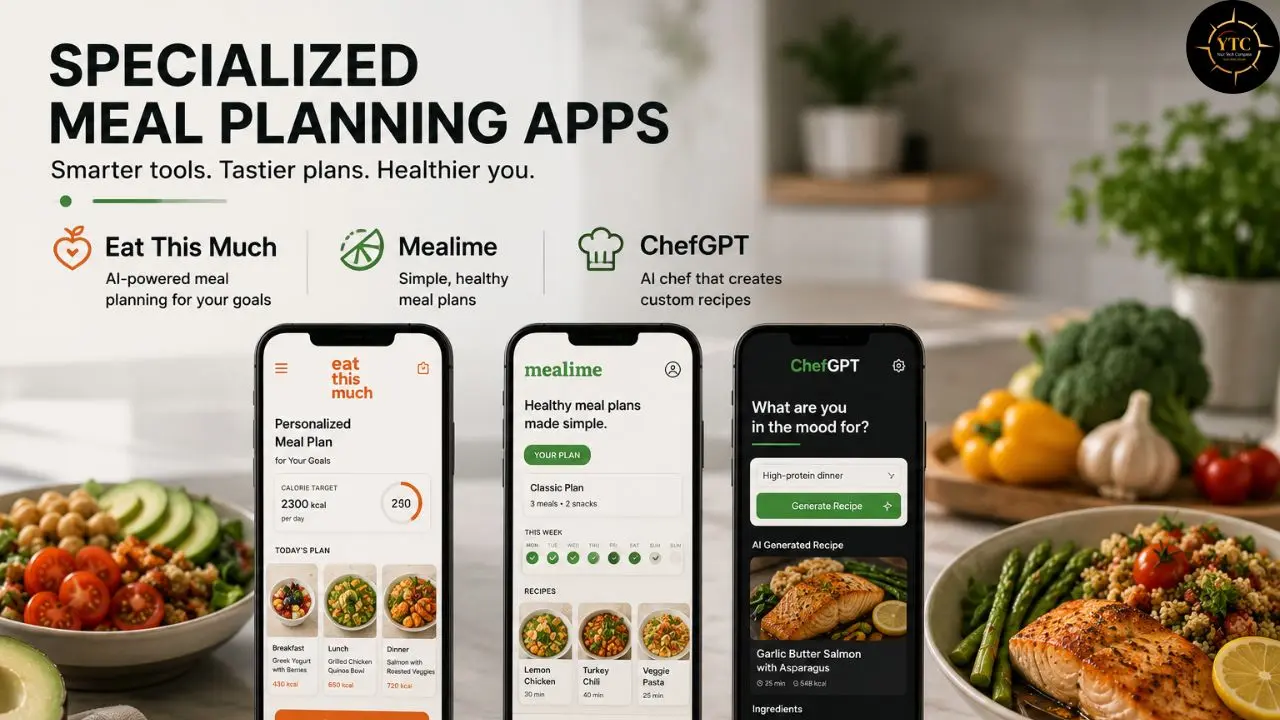
Eat This Much
It offers a free tier for generating daily meal plans, while weekly planning and expanded grocery-list features are available with the Premium tier. The annual plan costs the equivalent of $5 per month, while month-to-month billing costs more per month. Its automated planning works particularly well for personal calorie and macro targets, although users should review the results for variety, ingredient availability, and practicality.
Mealime
It provides fast, simple dinner plans through a free basic tier. Its optional Pro plan expands the recipe library and adds features such as nutrition information and additional customization. It is well suited to quick weeknight meals, but it offers less detailed control over macro targets and highly specific dietary requirements than more nutrition-focused planners.
ChefGPT
It offers pantry-based recipe and meal-planning features, with pricing and functionality varying across products, app versions, and subscription plans. Current listings show free access, in-app purchases, and recurring paid options rather than a standard one-time purchase of about $5. It can be a lightweight option for users who already understand their nutrition goals and mainly want recipe ideas, but verify whether the specific version supports photo uploads and do not treat its calorie or macronutrient estimates as independently validated.
Compared with planning entirely by hand: AI can reduce the time needed to draft a weekly meal plan and grocery list, but the savings vary by household and tool. Free options are available, while paid services commonly add a monthly or annual subscription. You should still allow time to review nutrition information, adjust impractical meals, handle substitutions, and update the plan when ingredients or prices change.
For more app comparisons and productivity tool reviews, browse our Apps and Tools category.
Advanced Techniques for Better Results
Macros, Calories, and Nutrition Tracking
You can prompt an AI system to target specific macronutrient distributions, such as 40/30/30, ketogenic ratios, or high-protein goals. However, a requested ratio does not guarantee that the final plan meets it accurately. AI systems may produce unsupported calorie estimates, overlook allergens, miscalculate portions, or suggest dietary choices that are unsuitable for people with medical conditions. A March 2026 study published in Frontiers in Nutrition compared AI-generated diet plans with dietitian-designed reference plans for adolescents and found substantial differences between them.
In that study, the AI-generated plans provided an average of 695 fewer kilocalories, 19.9 fewer grams of protein, 15.8 fewer grams of fat, and 114.6 fewer grams of carbohydrates than the dietitian reference plans. The plans supplied a higher proportion of energy from protein and fat and a lower proportion from carbohydrates, although whether a protein ratio is excessive depends on the specific nutritional guideline being applied. No single model consistently matched the dietitian’s plans across all nutrients. These findings apply specifically to the adolescent profiles and controlled scenarios studied, not to every AI-generated meal plan for every adult.
This is one of the most important limitations of AI meal planning. A system may confidently say that a dish contains 400 calories when the true amount is much higher because it guessed the quantity of oil, changed the serving size, or overlooked ingredients in a mixed recipe. Cross-reference AI-generated nutrition data using weighed ingredients, food labels, and a reputable database such as Cronometer, MyFitnessPal, or USDA FoodData Central. Treat AI calorie and nutrient estimates as starting points, not verified facts, and seek professional guidance for medical diets, adolescents, severe allergies, pregnancy, or other clinically sensitive situations.
Batch Cooking and Leftover Logic
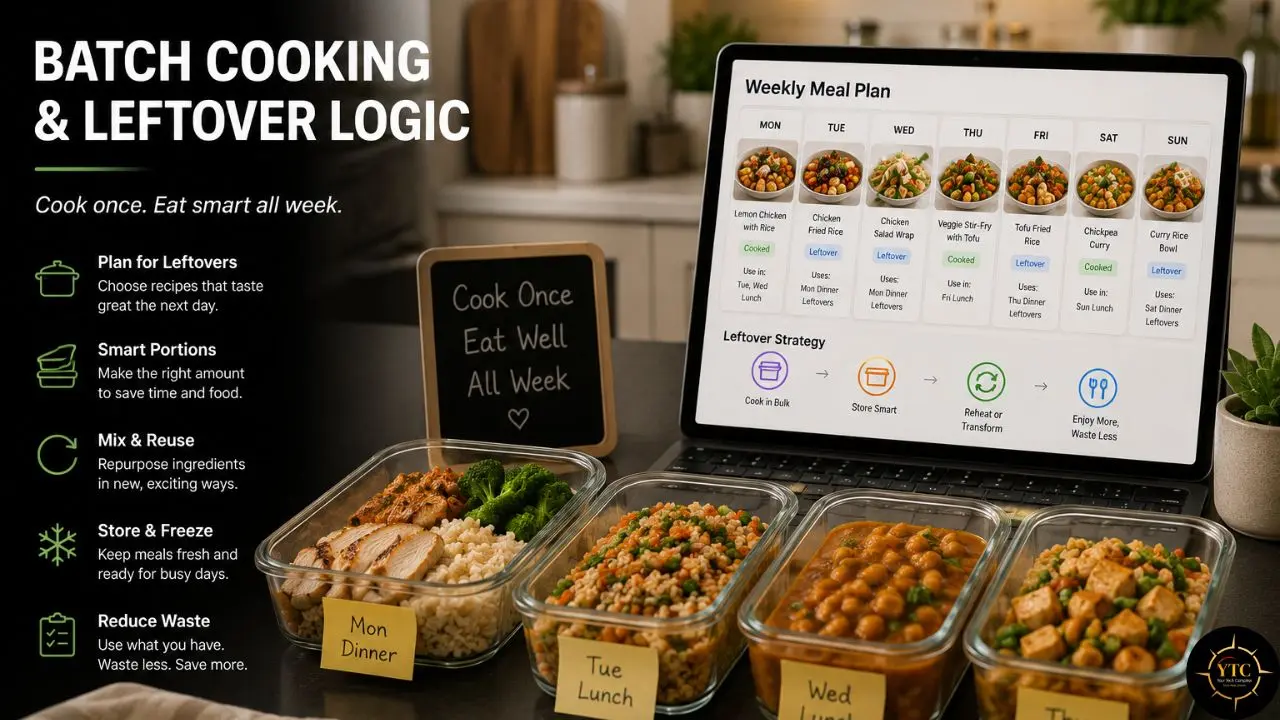
The smartest meal plans do not treat each day as an isolated event. Prompt the AI to design meals that share ingredients or transform leftovers into substantially different dishes. Roast a whole chicken on Sunday, use some of the meat in a salad on Monday, and reserve the remaining meat or bones for soup or stock later in the week.
This “cook once, eat three times” strategy can reduce repeated preparation, simplify shopping, and help use ingredients before they spoil, provided you batch-cook an amount your household will actually eat. Encode the logic directly into your prompts: “Design meals in which suitable proteins, grains, or vegetables carry over into at least one other dish. Include the quantities used, storage instructions, and the day by which each leftover should be eaten or frozen.”
Store cooked food promptly in suitable portions, label it with the preparation date, and account for storage life when assigning leftovers to later meals. Ingredient reuse should reduce waste without forcing the same flavor profile repeatedly, so ask the AI to vary seasonings, textures, and meal formats while preserving practical quantities. A batch-cooking plan saves time only when the portions, storage conditions, reheating steps, and household preferences are realistic.
Seasonal and Local Ingredient Integration
AI trained on global recipe datasets may suggest produce that is out of season, expensive, or difficult to find in your local market. Seasonal availability and prices vary by location, weather, imports, and the specific retailer, so strawberries in December may cost considerably more than they do during a local peak season, but the difference is not universally double. Reports from Lagos indicate that food prices can change substantially as supply conditions shift.
Regionalize your prompts explicitly: “Use produce in season in Lagos in August” or “Suggest recipes using ingredients commonly found in supermarkets in Nairobi.” For more practical results, also specify your city, currency, budget, preferred shops or markets, and acceptable substitutions. Without those constraints, you may receive attractive meal plans that are difficult, expensive, or impractical to shop for.
Honest Limitations (What Most Guides Won’t Tell You)
The Hallucination Problem in Nutrition Data
The nutrition-accuracy problem is not theoretical. A 2025 systematic review in the British Journal of Nutrition found that AI-based dietary assessment methods were more reliable for estimating energy and macronutrients than for determining micronutrients. Micronutrient validity was generally moderate to low because results varied according to the information sources, databases, and inputs used by the models. This makes nutrients such as vitamin B12, vitamin C, vitamin D, calcium, magnesium, potassium, and sodium particularly difficult to estimate accurately from incomplete dietary records or images. Weighed food records remain a stronger comparison method, although they require more time and effort.
Additional preliminary findings presented at NUTRITION 2026 found that four photo-based calorie-tracking apps underestimated the energy in controlled meals by approximately 250 to 345 kilocalories on average and underestimated fat by about 30 grams. A follow-up analysis suggested that low-carbohydrate, high-fat meals were particularly difficult for the apps, as they consistently underestimated their fat content. These findings were presented at a conference and should be treated as preliminary until published in a peer-reviewed journal.
The takeaway is clear: AI-generated nutrition data may be a useful rough starting point for healthy adults with general goals, but it is not clinically reliable by default. A system may confidently report that a dish contains 400 calories when the actual amount is much higher because it guessed the amount of oil, missed an ingredient, or misjudged the serving size. Cross-check nutrition information using weighed ingredients, food labels, and a reputable database, and do not let one positive result, such as a new model passing a nutrition quiz, suggest that the broader accuracy problem has been solved.
Cultural Blind Spots and Ingredient Availability
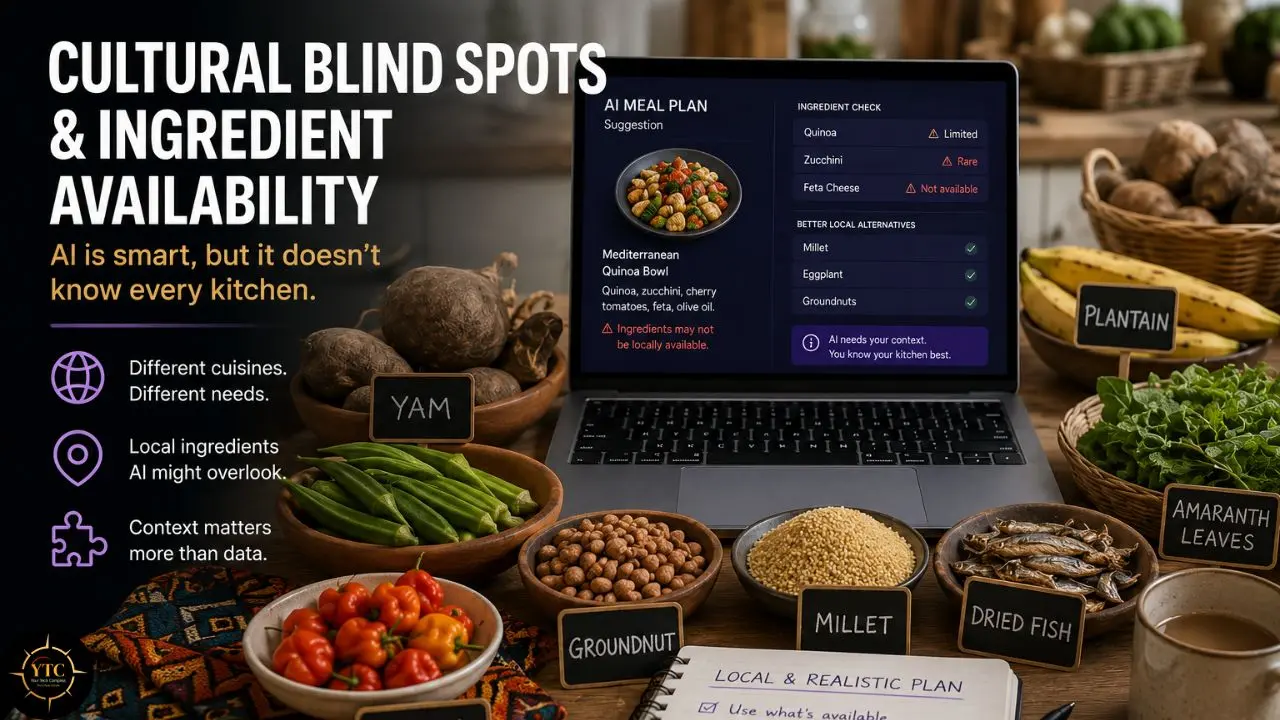
AI systems can reproduce imbalances in the recipe and food data used to develop them. Ask a chatbot for a Nigerian meal plan without specifying a region or cuisine, and it may return broad labels such as “African stew” or substitute familiar Western foods for local dishes. In field observations, publicly available multimodal models repeatedly misidentified foods such as Nigerian pounded yam, Ghanaian fufu, and Kenyan and Tanzanian ugali as mashed potato. Adding a brief cultural cue improved recognition in some cases, but it did not eliminate the underlying bias.
The models may also struggle with regional African, Asian, and South American ingredients when those foods are uncommon in the prompt or poorly represented in the system’s references. Fonio, ugu, amaranth, and teff may not appear in default suggestions, depending on the model, language, and task.
To improve the result, name the ingredients, cuisine, region, local terminology, and preferred substitutions: “Create a southeastern Nigerian meal plan using ugu and local staples” is more useful than “Give me an African meal plan.” Even with detailed instructions, review the output against culturally knowledgeable sources because contextual prompting can improve relevance without guaranteeing culinary authenticity.
The “Blank Slate” Trap
Most people do not notice this at first, but the difference between a generic meal plan and a useful one often comes from a few specific details about your household. Vague prompts tend to produce broad, repetitive suggestions because they leave the AI to infer your budget, cooking time, available ingredients, dietary needs, cuisine, and preferences.
General-purpose models may favor familiar ingredients and widely recognized recipes, but they do not necessarily choose them because they are universally safe or because doing so minimizes training-data error. If you want a plan that fits your kitchen, provide the relevant context and ask the AI to state its assumptions. Details such as your location, household size, pantry inventory, equipment, budget, food preferences, and regional cuisine can make the result more practical, although they do not guarantee nutritional accuracy or cultural authenticity.
Real-World Use Cases
- The Budget-Conscious Student: Feed one person on a defined weekly budget using affordable staples such as rice, beans, eggs, oats, and seasonal vegetables. AI can generate a plan that reuses suitable ingredients across multiple meals and produces a consolidated grocery list, but the budget will depend on your country, currency, store, package sizes, and whether it covers every meal.
- The Working Parent: Create quick meals with overlapping options for children and adults. One base can become two presentations, for example, a mild version for children and a spiced version for adults, using the same protein and starch, although allergies, textures, preferences, and additional preparation time still need to be considered.
- The Fitness Tracker: Generate high-protein meals around specified calorie and macronutrient targets, with a Sunday preparation schedule and optional workout-day adjustments. AI can organize meals around training sessions and rest days, but its calculations require verification, and post-workout timing and calorie reductions should reflect your goals, training load, and individual needs.
- The Food Waste Warrior: Build pantry-cleanout plans around ingredients that need to be used soon. You can photograph the fridge and ask the AI to identify visible items, combine them into recipes, and prioritize foods based on dates you provide. However, the system may miss ingredients, misread labels, or mistake freshness, so verify quantities, storage conditions, and expiry information before deciding what to eat.
Cost Breakdown: Free vs. Paid AI Meal Planning
The Real Monthly Math
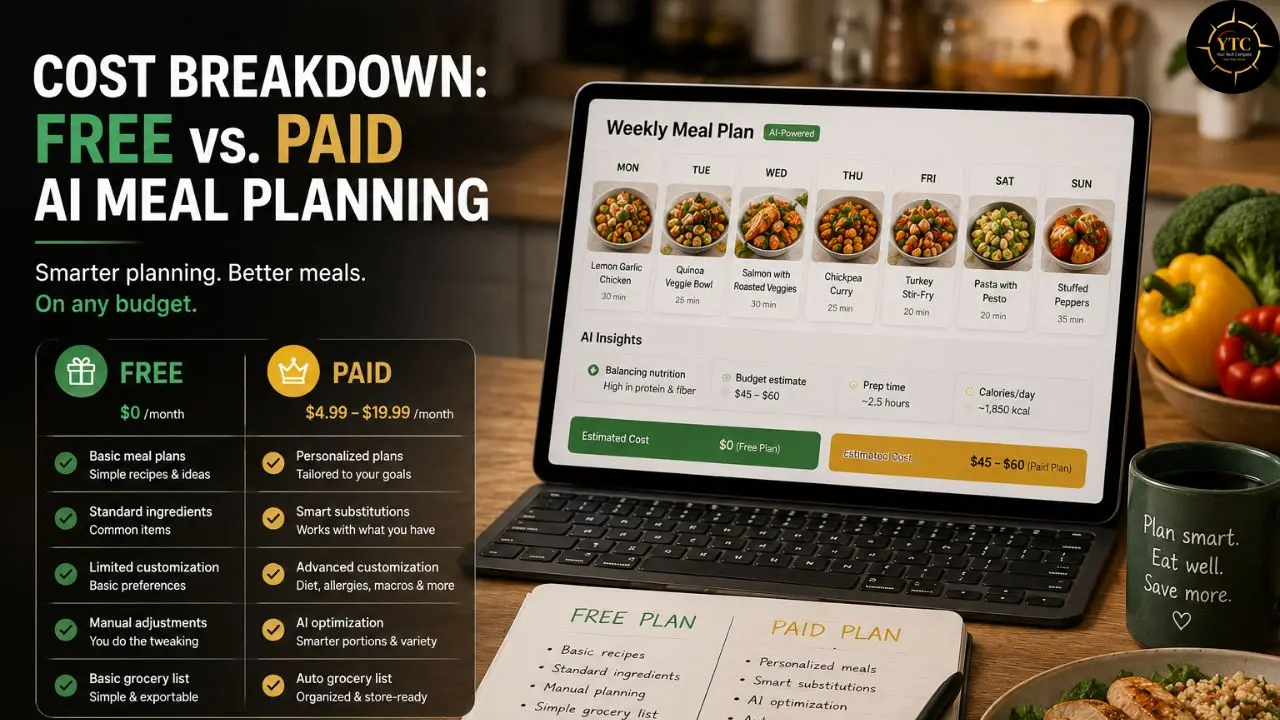
The free route uses a free tier of ChatGPT or Gemini alongside a manual shopping list in a notes app. The subscription cost can be zero, although usage limits and optional premium features vary by service. In addition, the time required depends on your household and workflow, but a realistic plan should allow time to review the AI’s suggestions and correct the grocery list rather than assuming a fixed 30-minute weekly total.
The mid-tier option uses a dedicated service such as Eat This Much or Mealime Pro. Eat This Much can cost about $5 per month when billed annually, while Mealime Pro is commonly listed at approximately $5.99 per month, although prices vary by region, platform, and billing cycle. These apps may reduce manual planning, but the time saved will depend on how much checking and customization your plan requires.
The premium tier may include a dedicated meal-planning service with advanced personalization, automated grocery lists, nutrition tracking, and broader household or dietary support. Grocery delivery can add separate costs, including retailer price differences, delivery charges, service fees, membership fees, and tips, so the total may rise substantially depending on how often you order and where you shop.
The practical trade-off is time versus money: Free LLMs and a notes app provide more control without a subscription, while dedicated apps automate more of the planning and list-building process. The best choice depends on whether the time saved and any reduction in food waste justify the subscription and delivery costs for your household.
Hidden Costs to Watch
Grocery delivery can cost more than shopping in person because some platforms apply item markups, while others add delivery, service, small-order, membership, or tip charges. The total increase varies by retailer, location, and order size, so do not assume a universal 15%-30% markup. Premium recipe ingredients such as truffle oil, specialty flours, imported cheeses, and premium proteins can also push your bill beyond an AI-generated estimate, particularly when they are sold in larger packages than the recipe requires.
Subscription creep is another cost to consider: you may start with a meal planner, add a nutrition tracker, then subscribe to a fitness app or grocery service. Several modest subscriptions can eventually add up to $50 per month, but the actual total depends on the services, billing plans, taxes, and currency you use.
Therefore, before subscribing, add up all recurring fees and compare them with the value of the time saved and any measurable reduction in food waste. Check grocery prices, delivery charges, service fees, tips, and package sizes separately from the meal-planning subscription so you can see what the workflow really costs.
Africa Accessibility: Meal Planning on a Budget
Data Costs and Connectivity
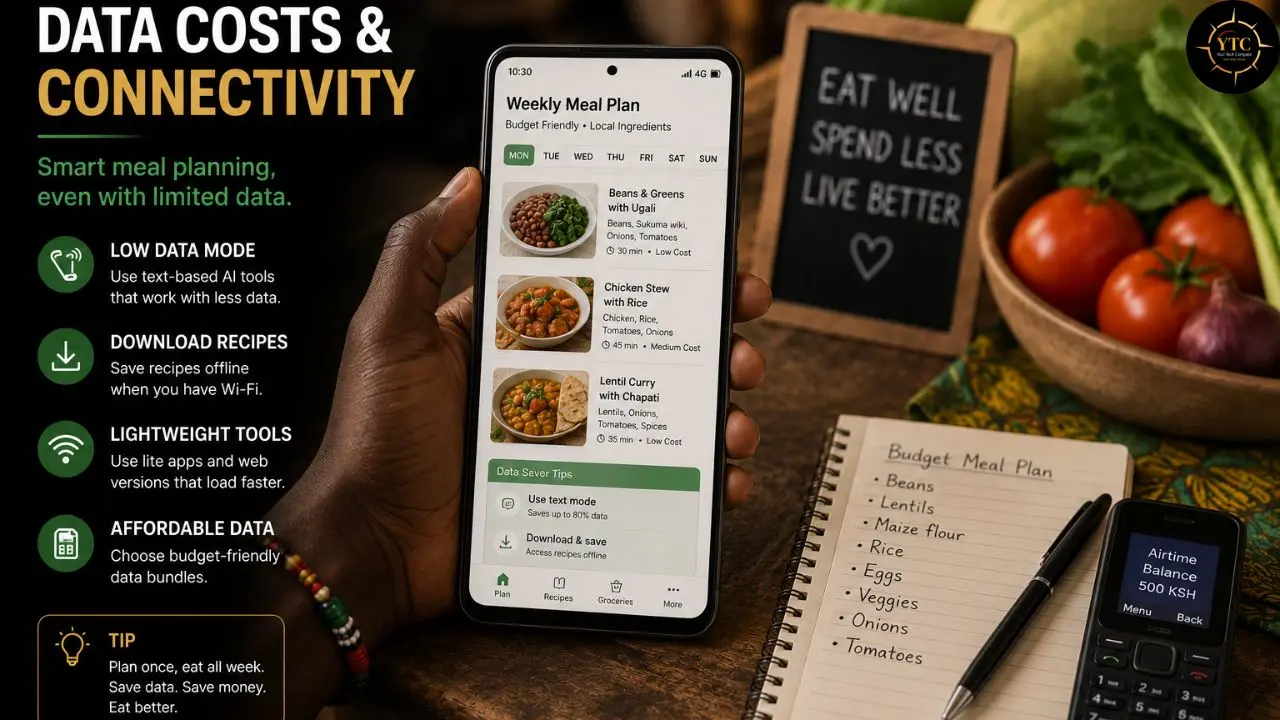
Data requirements vary by tool and feature. Cloud-based meal-planning apps typically need connectivity for AI generation, image uploads, food-database searches, account synchronization, and grocery-service integrations, while some can still display saved recipes or shopping lists offline. General-purpose LLMs also require an internet connection to generate new responses unless they are running on an offline device, but a completed plan can be downloaded and viewed without data. This distinction matters across Africa, where mobile-data prices and affordability vary considerably between countries.
The practical workaround is to generate and save your full weekly plan, recipes, grocery list, and relevant nutrition information over Wi-Fi before leaving home. Prefer text-first tools on metered connections, and avoid repeatedly uploading pantry photographs or using image-heavy apps unless necessary. In regions where data is expensive or connectivity is unreliable, one detailed LLM session followed by an offline notes app may be more practical than a continuously synchronizing service, although you will give up features such as live updates, shared lists, retailer integration, and cloud-based tracking.
Local Ingredient Realities
AI suggestions should be adapted to local markets. Quinoa may be expensive or less widely available in some African cities, while millet or fonio may be more affordable and locally familiar alternatives. However, these ingredients differ in taste, texture, cooking method, and nutrient profile, so they are not automatically interchangeable.
Kale may be locally grown in some regions but imported or less common in others; in Nigeria, ugu (amaranth leaves) may be more appropriate for certain dishes, although their availability varies by country and city. Regional food markets stock different combinations of fresh produce, packaged foods, dairy, meat, fish, and dry staples, so availability should be checked locally.
Prompt the AI with specific market context: “Use Nigerian market staples” or “Design meals around ingredients commonly available in Nairobi supermarkets.” Include your city, budget, preferred shops or markets, foods already in your pantry, and acceptable substitutions. This produces a plan that is more likely to be affordable and practical, but you should still check current prices, package sizes, and stock before shopping.
For more context on how African builders and consumers are navigating AI tooling and infrastructure, our AI in Africa category tracks the developments that matter most on the continent.
Who Should Use AI Meal Planning (and Who Shouldn’t)
Who should:
- People who experience decision fatigue around dinner and want help generating practical weekly options.
- Budget-conscious shoppers who want to organize purchases, reuse ingredients, and reduce unnecessary impulse buying.
- Fitness enthusiasts who track calories or macros and want structured meal ideas with varied protein sources, provided they verify the nutritional calculations.
- Families that need consistent weekly menus with options for different preferences, schedules, and spice tolerances.
- Anyone who has repeatedly tried manual meal planning and struggled to maintain it.
Who shouldn’t (yet):

- Individuals with eating disorders, diabetes, kidney disease, pregnancy-related dietary needs, or other conditions requiring individualized clinical guidance. AI may help format a dietitian-approved plan, but it should not determine the treatment plan independently.
- People who view cooking as pure improvisation and find advance planning restrictive.
- Anyone unwilling to verify AI-generated nutrition data using food labels, weighed ingredients, and a reputable or locally appropriate nutrition database.
- Households for whom a meal-planning subscription would strain the budget without clear evidence that it saves enough time, money, or food to justify the cost.
FAQs
Yes, it can help reduce food waste, duplicate purchases, impulse buying, and unnecessary delivery orders when you follow the plan and use accurate local prices. A well-constructed plan reuses suitable ingredients and accounts for what you already own. However, premium ingredients, large package sizes, delivery fees, service charges, and retailer markups can eliminate the savings. The biggest potential financial benefit is better purchasing and waste reduction, not automatic discount hunting.
It depends on your priorities. ChatGPT offers broad flexibility for unusual ingredients, regional cuisines, household preferences, and conversational revisions, but free access has usage limits, and its nutrition figures aren’t automatically verified against a dedicated food database. Specialized apps may automate weekly planning, nutrient calculations, grocery lists, and recurring schedules, but they may offer less flexibility and may charge a subscription fee. Choose ChatGPT for control and customization; choose a dedicated app for convenience and automation.
Use image input when available by photographing your fridge and pantry with the ChatGPT or Gemini mobile app, then provide a typed inventory with quantities, storage locations, and expiry dates. Prompt it: “Create a three-day meal plan using only these ingredients, prioritizing items that need to be used soonest. Do not assume ingredients that are not listed.” The AI may miss hidden items, misread labels, misunderstand quantities, or mistake freshness, so review its inventory before preparing the meals.
Yes, but with caveats. Broad categories such as vegan or keto are easier for AI to interpret than religious, medical, or allergy-related requirements. Halal and kosher planning requires ingredient-level and product-level verification because gelatin, animal-derived enzymes, alcohol-based extracts, shared equipment, and certification requirements may be overlooked. Always check labels and, where necessary, certification before relying on the plan.
There is no single best option for everyone. A free general-purpose chatbot may be the most flexible choice, while a free meal-planning app may be more convenient for recipes, pantry use, or shopping lists. ChefGPT offers free access alongside paid upgrades, but its pricing and features vary by product and plan rather than following a standard one-time $5 model. USDA FoodData Central is free and useful for checking nutrient values, serving sizes, and food metadata, but it is a database, not an automated meal-planning service.
Conclusion
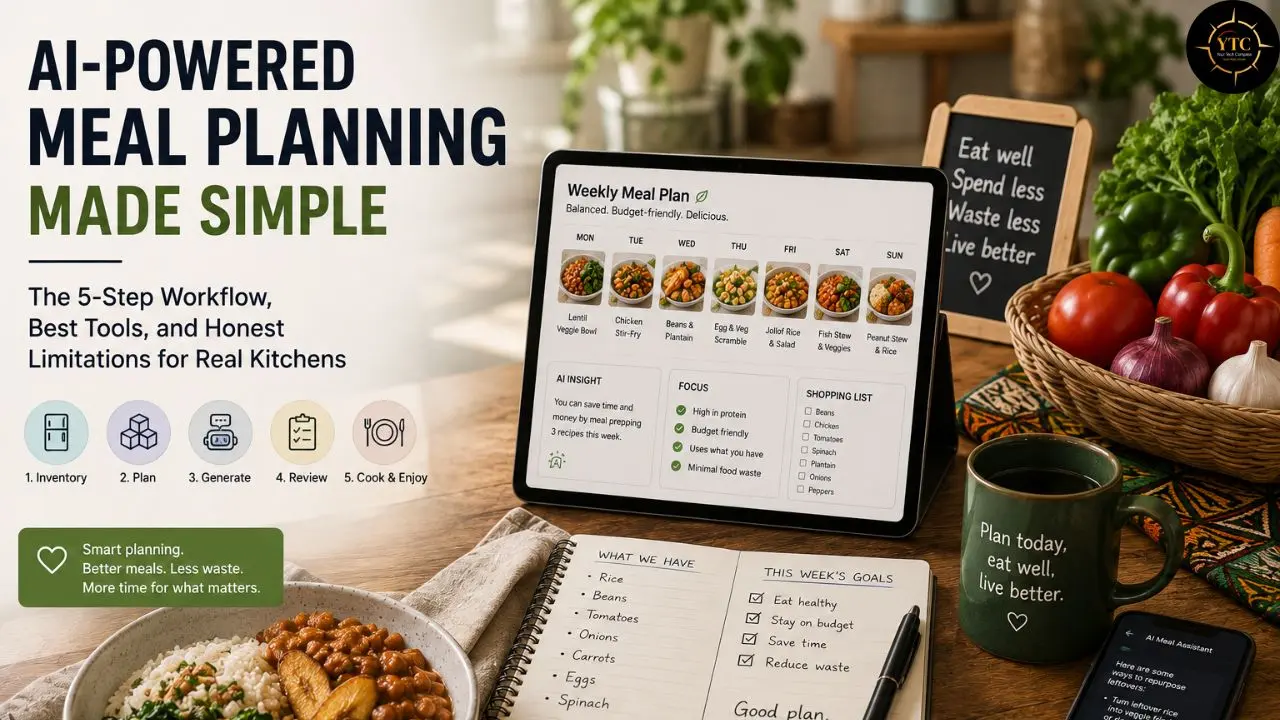
AI meal planning is not about replacing your judgment. It is about automating tedious tasks such as organizing your pantry, drafting menus, combining grocery-list items, and reducing unnecessary repetition, so you can focus on cooking and eating well. The five-step workflow, from pantry audit to shopping list, can reduce planning effort, but the time saved varies by household, tool, number of meals, dietary requirements, and amount of review required. The tools will continue to evolve, and nutrition databases may become more closely integrated, but better automation will not eliminate the need to check portions, prices, allergens, local availability, or clinical suitability. Right now, the best meal plan is the one you actually cook.
Pick a tool, write one detailed prompt this week, and refine the result as you use it. The goal is not a perfect plan; it is a consistent one that keeps you out of the drive-through lane. Start with a free LLM if it meets your needs, then consider a specialized app only when your results show you need more automation. Track your planning time, grocery spending, discarded food, takeout frequency, and subscription costs, and let that evidence determine whether the paid service is worthwhile. AI may help reduce food waste, but the benefit depends on whether the plan matches your real kitchen and habits.
If you are ready to take the guesswork out of your kitchen, explore more practical AI and lifestyle guides at YourTechCompass.com, where we test the tools so your dinner does not suffer.