Picture a trader in Abidjan with an Orange Money wallet and a supplier in Bouaké who wants payment in a personal MTN MoMo wallet. Can she send the money directly, and what should it cost? A BCEAO mandate that took effect on November 2, 2026, requires interoperable electronic money transfers within the eight-country West African Economic and Monetary Union to use the central bank’s PI-SPI platform. Domestic person-to-person transfers totaling no more than 8,000 CFA francs per day, per user and participating institution, must be free; the same pricing conditions become mandatory for transfers between member countries on June 1, 2027.
The stakes extend beyond West Africa: mobile money wallets processed more than $2 trillion globally in 2025, according to GSMA. This article examines how wallets connect, what Kenya and West Africa reveal about who sets the rules, where the MTN–Orange hub initiative stands, and who pays when transfer fees disappear. My argument is that commercial connections alone are not enough: regulators must help make interoperability broadly accessible and affordable.
Why Three Wallets Still Can’t Talk
Start with a definition, because the industry uses one word for several different things. Interoperability can mean wallet-to-wallet transfers, wallet-to-bank links, merchant payments, agent cash-in and cash-out, or cross-border transfers. A market can make progress on one layer and still fall short on another.
The scale makes those gaps expensive. The GSMA’s State of the Industry Report on Mobile Money 2026 counts 2.3 billion registered accounts worldwide, about $2.1 trillion in 2025 transaction value, and 174 live services in sub-Saharan Africa alone. Interoperable flows are growing faster than the whole: bank-to-mobile transfers hit $167 billion, mobile-to-bank $163 billion, and off-net P2P $85 billion, up 21%.
So why did operators resist? Closed loops kept float, fees, and customers within one network, and nobody voluntarily surrenders that position. Our analysis of mobile money evolution in Africa traces how those walled gardens hardened, while our mobile money in Africa guide covers the basics if you’re new to the sector.
Mobile Money Interoperability Layers
Layer | What it means | Status in 2026 |
|---|---|---|
Wallet-to-Wallet (off-net P2P) | Send from one provider’s wallet to another’s | $85 billion in 2025, up 21%; interoperable electronic-money P2P transfers within WAEMU must use BCEAO’s PI-SPI platform from November 2. |
Wallet-to-Bank | Move money between wallets and bank accounts | $167 billion in, $163 billion out; each grew by more than a third in 2025. |
Merchant Payments | Pay a shop that uses a different network | $155 billion in 2025, up 42%; PI-SPI includes an interoperable QR-code capability, though adoption is still developing. |
Agent Cash-In/Cash-Out | Withdraw at another provider’s agent | Still limited; Airtel Money users in Kenya still can’t cash out at M-Pesa agents. |
Cross-Border | Send across currencies and regulators | Still costly and fragmented. |
Source: GSMA, The State of the Industry Report on Mobile Money 2026; BCEAO Notice No. 0019.
Here’s the pattern to remember: the digital layers are opening, while cash is not. Cash remains the principal way money enters and leaves the mobile-money system, which is why the fight is moving to agents.
Why is the agent layer so stubborn? Agents hold float (the e-money balance they use to serve customers) as well as the cash needed for withdrawals, and their commissions often depend on that relationship. The GSMA counts 30 million registered agents, 11 million of them active monthly, handling $430 billion in cash-ins in 2025. Opening that network to rivals means rewriting the economics of thousands of small businesses, so agent interoperability is unlikely to arrive by decree alone.
How Wallets Actually Connect
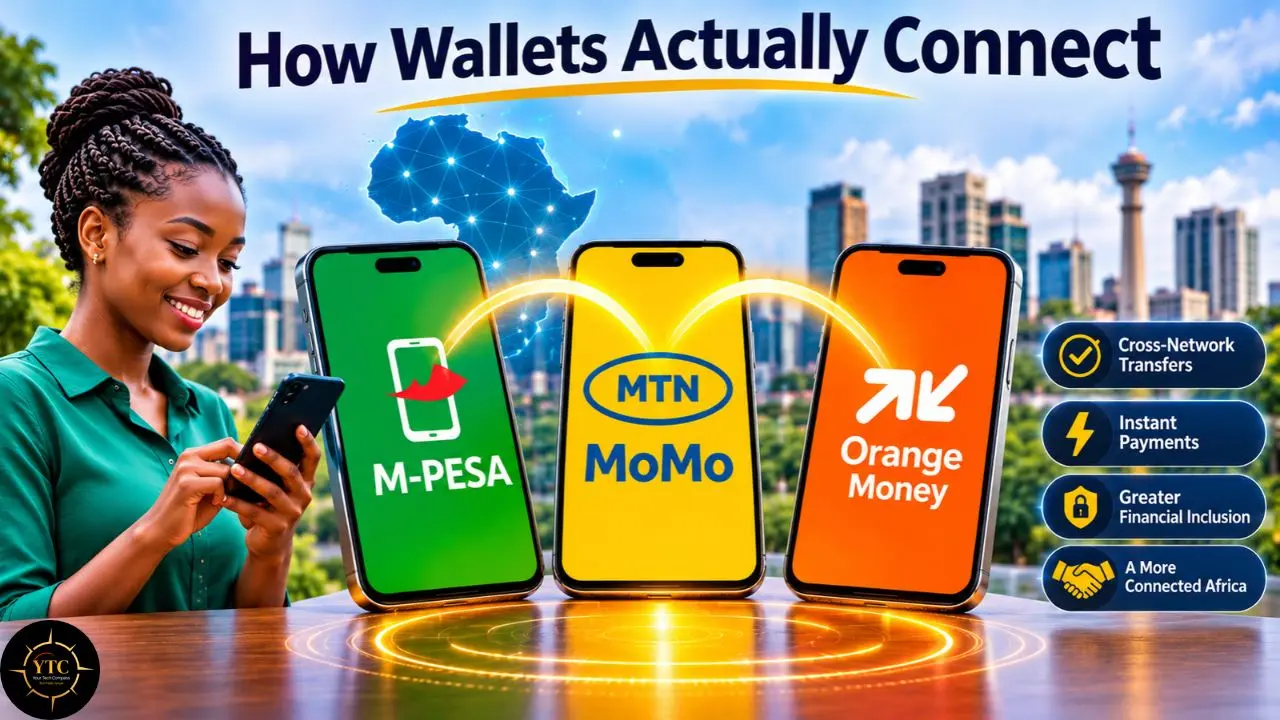
Under the hood, wallets can connect in several ways, and each model makes different trade-offs between speed, control, governance, and neutrality.
Model | How it works | Weak point | Example |
|---|---|---|---|
Bilateral Connection | Two providers connect directly | Becomes complicated as partners multiply | Mobile-money providers in Tanzania |
Private Hub | A shared scheme sits between providers | Needs buy-in from rivals | Mowali (MTN and Orange) |
National Switch | A central bank or industry body runs the rail | Requires coordination and political support | PI-SPI, PesaLink |
Regional Rail | Links national systems across borders | Needs aligned KYC and FX rules | PAPSS |
Bilateral deals can move quickly, but they multiply into a tangle. National switches take longer and require political coordination, yet they give every participant one rulebook. GSMA’s six-market research found that Tanzania and Madagascar succeeded when industry leaders negotiated terms among themselves, while Ghana and Uganda relied on different technical approaches, including private aggregators.
The plumbing matters more than the pitch decks. Settlement and prefunding decide who carries liquidity risk. Mismatched KYC rules decide who can send how much. Messaging standards decide whether systems can read each other’s data, which is why Nigeria’s central bank published a circular on migrating to ISO 20022 payment messaging in August 2025. Dispute-resolution mechanisms, finally, decide what happens when a transfer vanishes.
I think fraud liability is the unglamorous heart of this. GSMA identifies identity fraud, social engineering, insider fraud, and SIM-swap fraud among the sector’s major typologies, and an open rail can make fraud harder to contain across networks. Providers already lean on machine learning to flag unusual activity, and our AI in Africa coverage tracks that trend. For the companies building on these rails, our African fintech ecosystem guide maps who does what.
Kenya: The Incumbent’s Dilemma
Kenya shows what interoperability looks like when one provider dominates. M-Pesa and Airtel Money opened cross-network transfers in 2018. The sharper price cut came later: in December 2020, sending Ksh101 to Ksh500 from M-Pesa to Airtel Money dropped from Ksh44 to Ksh11, a 75% reduction approved by the Central Bank of Kenya. Safaricom also doubled the cross-network limit to Ksh70,000.
It sounds like a clean win. Even so, Airtel Money customers still couldn’t cash out at M-Pesa agents because agent interoperability never launched.
Merchants came later. Safaricom enabled Lipa na M-Pesa to receive payments from other networks in April 2022, following regulatory pressure. In January 2025, Safaricom and the Kenya Bankers Association proposed linking M-Pesa to PesaLink, the interbank switch connecting 39 banks. In September 2025, the central bank proposed reducing average mobile-money transfer charges from Ksh23 to Ksh10 by 2028.
Market share depends on the metric: a 2023 estimate put M-Pesa at 96.5%, while a TechCabal analysis in April 2026 said it had slipped to 90% in 2025 as Airtel Money gained ground.
My read is simple. When one provider holds nearly the whole market, openness often arrives through a mix of central-bank pressure and challenger competition, not market incentives alone. M-Pesa had little commercial reason to open the door, and the open door still has no agent in it.
West Africa: The Central Bank Forces the Issue
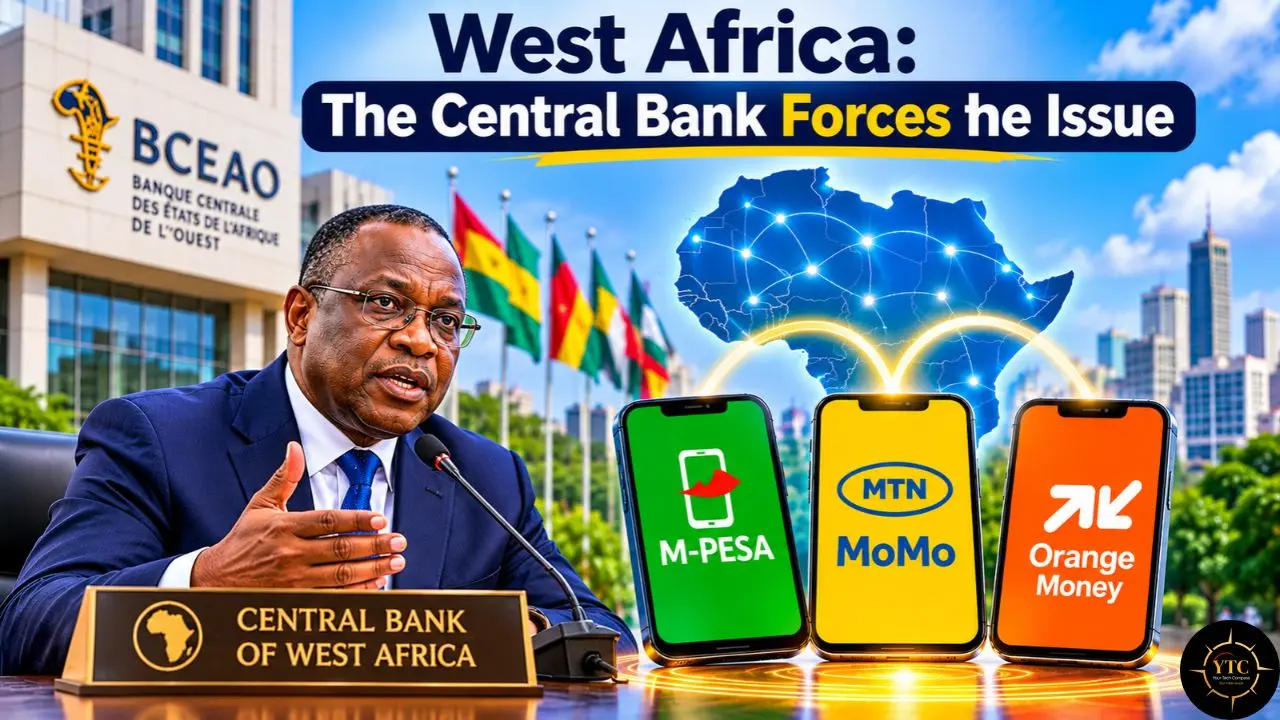
West Africa is where the political fight is loudest. The BCEAO launched PI-SPI, its instant-payment platform, in Dakar on September 30, 2025, after tightening licensing rules (Instruction 001-01-2024) and setting an August 31, 2025 cutoff for unlicensed payment providers.
The opening lists were telling. Wave, the low-fee challenger, sat out the launch, and MTN did not appear on the initial authorization list.
The central bank refused to blink. A June 25, 2026 decision, detailed in the BCEAO’s communiqué on the connection deadline, set September 30, 2026 as the final date for banks, e-money institutions, and payment institutions, and Wave joined on the deadline. PI-SPI now includes 175 participants authorized to open their services to the public.
Then came Instruction No. 020, signed October 8 and effective November 2. Domestic P2P transfers are free up to CFAF 8,000 per user per participating institution per day (about $14); fees above that are reportedly capped at 0.8%, and receiving money is free. Every interoperable P2P transfer must transit PI-SPI, and cross-border transfers inside the union follow by June 1, 2027. Wallet limits double to CFAF 4 million.
Run the numbers for the trader from the opening. Her CFAF 8,000 transfer to the supplier’s MTN MoMo wallet now costs nothing. If the supplier then cashes out at an MTN MoMo agent, the withdrawal fee may still apply. The transfer got cheaper, but the exit did not necessarily. That gap is the whole debate in miniature.
Now the friction. Orange Money has signaled that it expects transfers to become free, while arguing that withdrawal fees should remain in place to compensate the agents handling cash on the ground. The instruction does not address withdrawal fees or agent commissions, and reports note it leaves unclear whether the 0.8% applies to the whole transfer or only the excess. A second bottleneck looms: only 24 Business APIs are approved, and Ecobank is the only approved provider in Benin. Regulators can break a closed loop, I’d argue, but concentration tends to reappear one layer up.
MTN MoMo, Orange Money, and the Hub That Wasn’t (Yet)
Operators tried to solve this themselves first. In November 2018, Orange and MTN launched Mowali, a joint venture meant to let money move between their customers across 22 markets and more than 100 million accounts. It was built on Mojaloop, an open-source payment platform, and planned to start inside single monetary zones before tackling foreign exchange. Public evidence of Mowali operating at scale in 2026 remains scarce, so treat its status as unconfirmed.
MTN has since pursued openness on its own terms. At MWC Barcelona in early 2026, Group Fintech CEO Serigne Dioum described interoperability across 14 markets that spans wallets, banks, national switches such as GhIPSS and NIBSS, remittances, and merchant APIs, backed by SLAs and AI fraud detection. MTN says its fintech ecosystem, anchored by MoMo, processed transaction value topping $500 billion in 2025, a company-reported figure.
Meanwhile, capital is arriving. Airtel Money listed in London in October 2026 at £1.96 per share, a valuation of about £5.3 billion ($7 billion), with Airtel Africa keeping roughly 78%. Orange Money, by GSMA’s count, serves more than 100 million customers across 16 countries. Investors now price these wallets as platforms, which raises the stakes of mandated openness.
My Take: Voluntary hubs stall when members’ incentives diverge, and mandates move faster. The real question for MTN and Orange is whether they would rather compete on lock-in or on merchants and credit.
Cross-Border: Where the Real Wall Stands
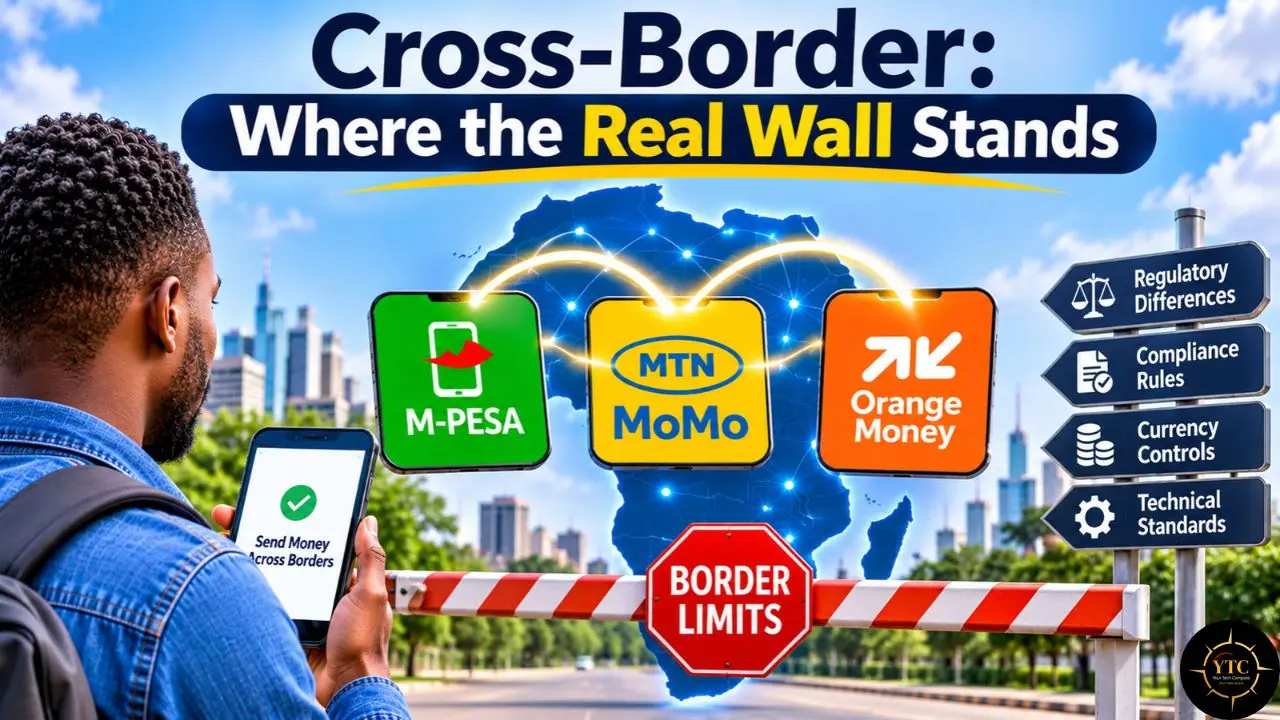
Domestic openness is the easy half. Crossing a border adds a second regulator, a second currency, and a second compliance rulebook.
The cost tells the story. Sub-Saharan Africa remains the most expensive region for remittances, with the cost of sending $200 averaging roughly 8.5% to 8.8% in 2025, well above the UN’s 3% target. Mobile money is generally cheaper than banks, but its cost still varies sharply by corridor, provider, and cash-out method.
The blockers are familiar: fragmented KYC and licensing, limited currency convertibility, FX controls, uneven AML/CFT enforcement, and national switches built only for domestic use.
Progress is real but slow. The East African Community’s payments master plan has moved into implementation, with Rwanda and Tanzania developing a proof of concept to link TIPS and RSwitch. Ghana and Rwanda announced linked payment systems and a license-passporting pilot in 2025. Onafriq and PAPSS launched a Nigeria–Ghana wallet corridor, although onboarding mobile-money providers onto PAPSS remains gradual.
For the mechanics, see our cross-border payments in Africa explainer, and for the commercial upside, our Africa cross-border payments market opportunity analysis.
Cross-Border Payment Status
The table below summarizes where each major corridor stands as of November 2026, and the primary blocker holding it back.
Region | Mechanism | Status (November 2026) | Main blocker |
|---|---|---|---|
Kenya | Bilateral deals, PesaLink | Wallet and merchant links live; M-Pesa–PesaLink link proposed | No agent interoperability |
WAEMU (8 countries) | PI-SPI central rail | Mandatory for interoperable electronic-money P2P transfers; 175 participants authorized | Cash-out fees, Business API access |
East African Community | Payments master plan | Early implementation; Rwanda–Tanzania proof of concept underway | KYC and FX alignment, settlement funding |
Ghana–Rwanda | Linked payment systems, license passporting | MOU signed in 2025; pilot stage | Implementation and regulatory alignment |
Nigeria–Ghana | PAPSS wallet corridor | Launched in 2026 | Gradual mobile-money onboarding |
PAPSS Corridors | Pan-African settlement | Gradual provider onboarding | Uptake and licensing |
Sources: EAC, Bank of Ghana, PAPSS/Onafriq, BCEAO, and operator announcements.
What Interoperability Does to the Money
Free transfers sound like pure consumer gain, but the cost does not disappear; it is redistributed. When regulators cap person-to-person (P2P) fees, revenue can migrate to cash-out, merchant payments, credit, and APIs. That shift has already started: in Senegal, Orange Money began applying the new transfer levy in December 2025, including on withdrawals above a specified daily threshold, and industry observers expect MTN, Orange, and Wave to place greater emphasis on merchant acquiring and business APIs.
Agents feel it next. GSMA warns that poorly calibrated fee caps can compress provider and agent margins, weaken investment incentives, and undermine the agent networks that make mobile money accessible in rural areas. The BCEAO instruction does not appear to address agent commissions directly.
Taxes compound the pressure: Senegal announced a 0.5% levy on money transfers and a 1.5% tax on merchant payments in August 2025, with the measures enacted in September; Mali added a 1% tax on mobile-money withdrawals in early 2025; and Ghana repealed its E-Levy in April 2025, after transaction taxes were associated with reduced digital-payment use and a shift back toward cash. Roughly three-quarters of registered accounts remain inactive in a given month, so shifting costs to the cash-out moment risks hurting the people the policy aims to help.
New front doors raise the stakes. Banks and fintechs increasingly route payments through chat, a trend our piece on WhatsApp banking and AI chatbots in Africa explores, and those channels work well only when the rails underneath are open.
What Operators, Fintechs, and Regulators Should Do

Regulators should pair fee caps with cash-out and agent rules, publish participant and Business API lists, align KYC across borders, and set dispute SLAs that bind every participant. Operators should compete on merchant services, credit, and useful data products rather than closed wallets and lock-in. Fintech builders should design around open APIs, plan for ISO 20022, and adopt the shared QR standard where it exists.
Country priorities differ. Nigeria should complete the rollout of ISO 20022 across its payment infrastructure. Ghana, with MTN already connected to GhIPSS, should extend interoperability from person-to-person transfers to merchant payments at scale. Kenya should address the remaining gaps in agent and cash-in/cash-out interoperability.
Watch four dates and documents next. First, how operators implement the BCEAO’s 0% to 0.8% fee range above the CFAF 8,000 daily threshold. Second, updates to the Business API list, which will show whether corporate access broadens beyond Ecobank in the smaller markets. Third, the June 1, 2027 deadline for cross-border transfers inside the union, and the June 30, 2027 extension for microfinance institutions. Finally, whether Orange Money’s push to preserve withdrawal fees survives political scrutiny. Those signals will tell you more than any press release.
FAQs
It lets customers of different providers transact directly, whether wallet-to-wallet, wallet-to-bank, merchant, agent, or cross-border, without needing to open an account with the recipient’s provider.
It depends on the corridor. M-Pesa and Airtel Money connect inside Kenya, but M-Pesa to MTN MoMo is not a universal link. Check your provider’s corridor list first.
The eight WAEMU countries (Benin, Burkina Faso, Côte d’Ivoire, Guinea-Bissau, Mali, Niger, Senegal, and Togo) require interoperable electronic-money transfers to route through PI-SPI from November 2, 2026. Kenya’s regulators pushed cross-network transfers in 2018, and Liberia launched an instant payments system in December 2025.
Not everywhere. In WAEMU, domestic P2P transfers up to CFAF 8,000 per day are free, and larger transfers can carry a fee of up to 0.8%, excluding taxes. Cash-out fees are separate and can rise.
It is the BCEAO’s interoperable instant payment platform, launched in September 2025, that connects banks, mobile-money operators, microfinance institutions, and fintechs across the eight WAEMU countries.
Partly. Afreximbank’s PAPSS enables cross-border payments in local currencies, with settlement through its pan-African clearing and settlement infrastructure. Mobile-money integration remains limited and is still developing.
Your Tech Compass Points Toward Open Rails

Closed wallets helped mobile money scale for two decades, and they now hold it back. The clearest lesson in this piece is who moved first: in Kenya, West Africa, and Liberia, central banks opened the rails, and operators followed under pressure. Technology rarely was the obstacle. Incentives were.
So where should you point your effort? If you run a wallet, plan for a market where basic transfers face fee pressure or are free within regulatory limits and compete on merchants and credit. If you build products, design for open APIs and ISO 20022 now. And if you set policy in Abidjan, Nairobi, or Monrovia, pair every fee cap with a plan for agents and cash-out. Our African Tech coverage will keep tracking who gets this right.
Money moves best when the map is clear, so chart your next move at YourTechCompass.com.