Picture a furniture importer in Nairobi who needs to pay a supplier in Lagos. In a conventional bank transfer, her bank converts shillings into U.S. dollars, routes the dollars through correspondent banks, then converts them again into naira on the other side. Every hop carries a fee, an FX spread, and a delay. By the time the supplier sees the money, settlement can take days, and a meaningful slice has disappeared. She did nothing wrong. The system simply was not built for her, and millions of African businesses, freelancers, and families absorb the same friction every week.
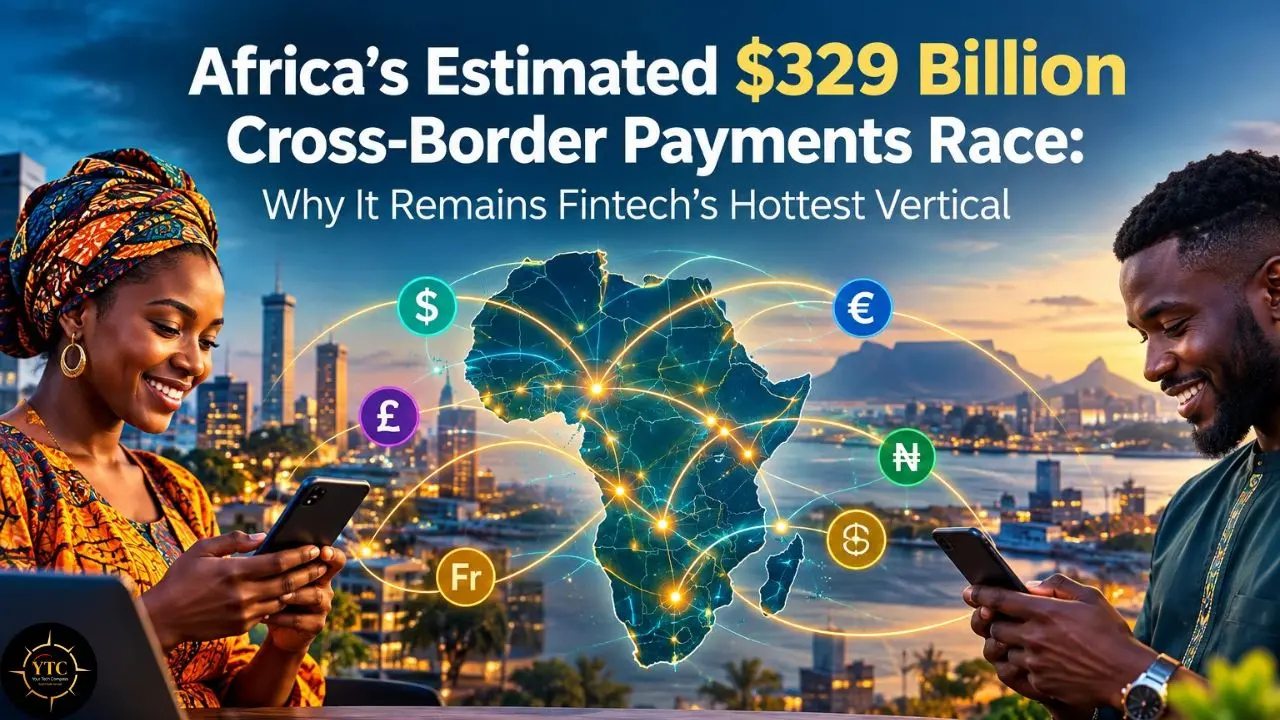
Here is the surprise: that friction is a major reason investors keep circling this vertical. According to Oui Capital, Africa’s cross-border payments market was estimated at $329 billion in 2025 and is projected to reach $1 trillion by 2035. In this guide, I break down where Africa’s cross-border money actually sits, why the rails remain so expensive, how PAPSS, mobile money, and stablecoins are rewiring them, and who stands to win. I also take a firm position. Durable value will accrue to infrastructure and compliance, not to the slickest consumer app. By the end, you will have a clear read on the opportunity, the risks, and what to do about both.
Where the Money Actually Sits
Start by separating two numbers that most headlines blur. Oui Capital values Africa’s cross-border payments market at about $329 billion in 2025 and projects roughly $1 trillion by 2035, a 12% compound annual growth rate. Remittances form a meaningful but smaller slice. Africa-wide inflows topped $92 billion in 2024, according to World Bank figures cited by the UN, while Sub-Saharan Africa alone received about $54 billion in 2023. Trade payments, business-to-business transfers, and treasury flows make up much of the remainder, and they rarely make the news.
Why does the distinction matter? Remittance apps and B2B payment infrastructure are different businesses with different margins. A remittance startup competes on the price of each transfer. A trade-payments platform competes on settlement speed, compliance, and FX access, and its customers pay for reliability rather than the cheapest fee. In practice, the commercial side of the market appears to represent the larger opportunity, though the exact split depends on how each estimate defines the market.
Real corridors give the figures a face. Kenya received roughly $4.8 billion in remittances in 2024, the highest in East Africa. South Africa illustrates the other side of the corridor: it is a major source of remittances to families in Zimbabwe, Mozambique, and Lesotho, even as it also receives inbound flows. Nigeria dominates inflows into Sub-Saharan Africa, with Ghana, Kenya, and Senegal also ranking among the largest recipients. Beyond the formal numbers, informal cross-border trade is substantial: in the Southern African Development Community, it has been estimated at 30% to 40% of total intra-regional trade, meaning a significant share of activity never reaches official statistics.
The takeaway is simple. Much of this opportunity involves moving existing money onto better rails, not inventing new demand. To see who builds those rails, the YTC African fintech ecosystem guide maps the players, and our earlier breakdown of cross-border payments in Africa covers the fundamentals. For ongoing coverage, our African fintech category tracks every new move.
Why the Rails Still Break
The Cost Problem
Sub-Saharan Africa remains the most expensive region in the world to send money to. The World Bank’s Remittance Prices Worldwide database puts the average cost of sending $200 to the region between roughly 8.5% and 8.8% in 2025, depending on the quarter. The global average sits near 6.4%, and the UN Sustainable Development Goal target is 3% by 2030.
The channel you pick changes everything. In the World Bank’s Q2 2022 data, banks charged about 11% on average, money transfer operators 5.2%, and mobile operators 3.5%. Intra-African corridors can look even worse: the World Bank has flagged corridors where a $200 transfer costs more than 20%.
So what? Cost is structural, not cosmetic. High fees push senders toward informal channels, and informal channels sit outside the reach of regulators and licensed fintechs alike.
The Fragmentation Problem
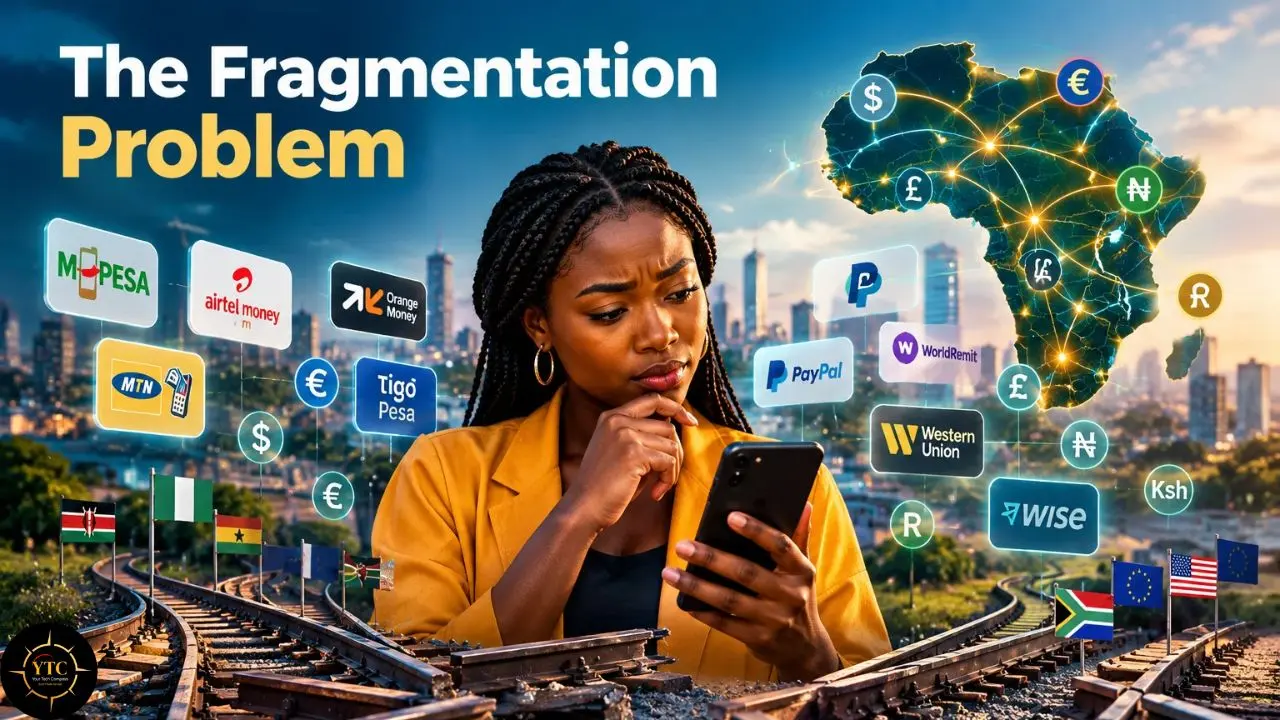
Africa runs on more than 40 national currencies, and most currency pairs lack direct liquidity. Payments therefore detour through U.S. dollars or euros, and Oui Capital estimates that those double conversions add about $5 billion in costs every year. Licensing regimes, FX controls, and capital-movement restrictions vary country by country, which compounds the delay.
For a small exporter, the result is plain. You wait, you lose margin on each conversion, and you cannot predict what the supplier will actually receive.
The Compliance Problem
According to Oui Capital, only about 55% of African jurisdictions allow full electronic KYC. A fintech can build a flawless product in Kenya and still wait months for onboarding rules in the next market. I would argue that compliance, not code, forms the real moat here. When roughly 45% of jurisdictions do not yet permit full digital onboarding, a portfolio of licenses is far harder to copy than a piece of software.
The Infrastructure Layer: PAPSS, Mobile Money and Stablecoins
Four rails now compete to fix these problems. Each solves a different piece, and none yet connects cleanly to the others.
PAPSS: The Public Rail
Afreximbank launched the Pan-African Payment and Settlement System in 2022, working with the African Union and the AfCFTA Secretariat. It exists to let payments settle in local currencies without the U.S. dollar or euro detour. Momentum has accelerated. In July 2026, the Bank of Central African States (BEAC) joined, lifting coverage to 28 countries and linking more than 190 commercial banks and fintechs through 16 payment switches. That move opens six CEMAC economies, including Cameroon, Gabon, and Chad, and a pilot with the BCEAO covering West Africa’s francophone bloc is due later this year. The 2025 launches of the PAPSS African Currency Marketplace and PAPSSCard widened the toolkit further.
Speed is the headline benefit. PAPSS-related technical documentation and participating banks point to settlement in roughly two minutes. Businesses trading under the AfCFTA gain the most, since they can pay a supplier in another country without routing through New York. The trade-off is that PAPSS connects banks and licensed providers, so the customer experience depends on each institution’s app.
My View: PAPSS is the most important rail on the continent, yet it will not win alone. Fintech front ends will decide how many people actually use it.
Mobile Money: The Private Rail
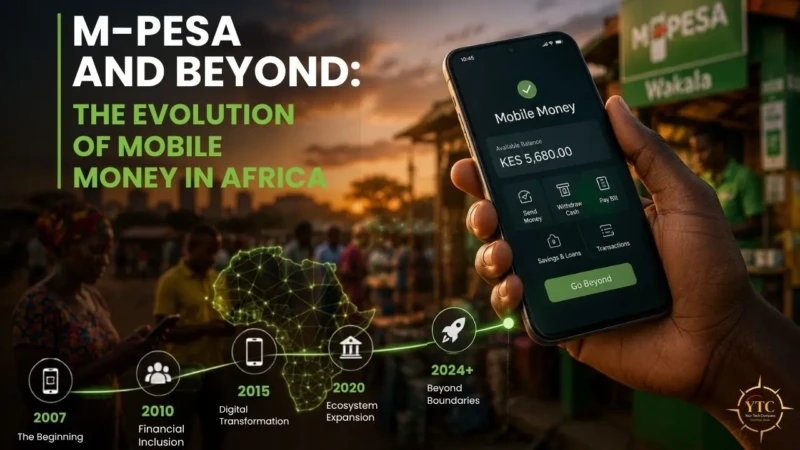
The GSMA’s State of the Industry Report on Mobile Money 2026 shows how deep this layer runs. Mobile money processed more than $2 trillion globally in 2025, a 23% rise, and $1.4 trillion of that moved through Sub-Saharan Africa, about 66% of global value. Monthly active accounts climbed 15% to 593 million. Separately, Oui Capital estimates that mobile money accounted for roughly 30% of Africa’s cross-border transfers in 2024.
Why does that matter? Mobile money reaches people who never opened a bank account, and it undercuts banks on price. The catch is interoperability. A wallet in Kenya does not talk to every wallet in Uganda or Tanzania by default. Our mobile money guide for Africa walks through which operators connect and which still sit in silos.
Instant Payments and Open Banking
Domestic rails matter because cross-border systems plug into them. AfricaNenda’s SIIPS 2025 report counts 36 instant payment systems across 31 African countries, processing 64 billion transactions worth nearly $2 trillion in 2024.
Nigeria’s central bank is rolling out open banking in phases through mid-2026, alongside a regulatory passporting program aimed at mutual license recognition with Ghana, Kenya, and South Africa. If passporting works, a license in one market could unlock several others, which would reshape fintech expansion costs.
Stablecoins: The Contested Rail
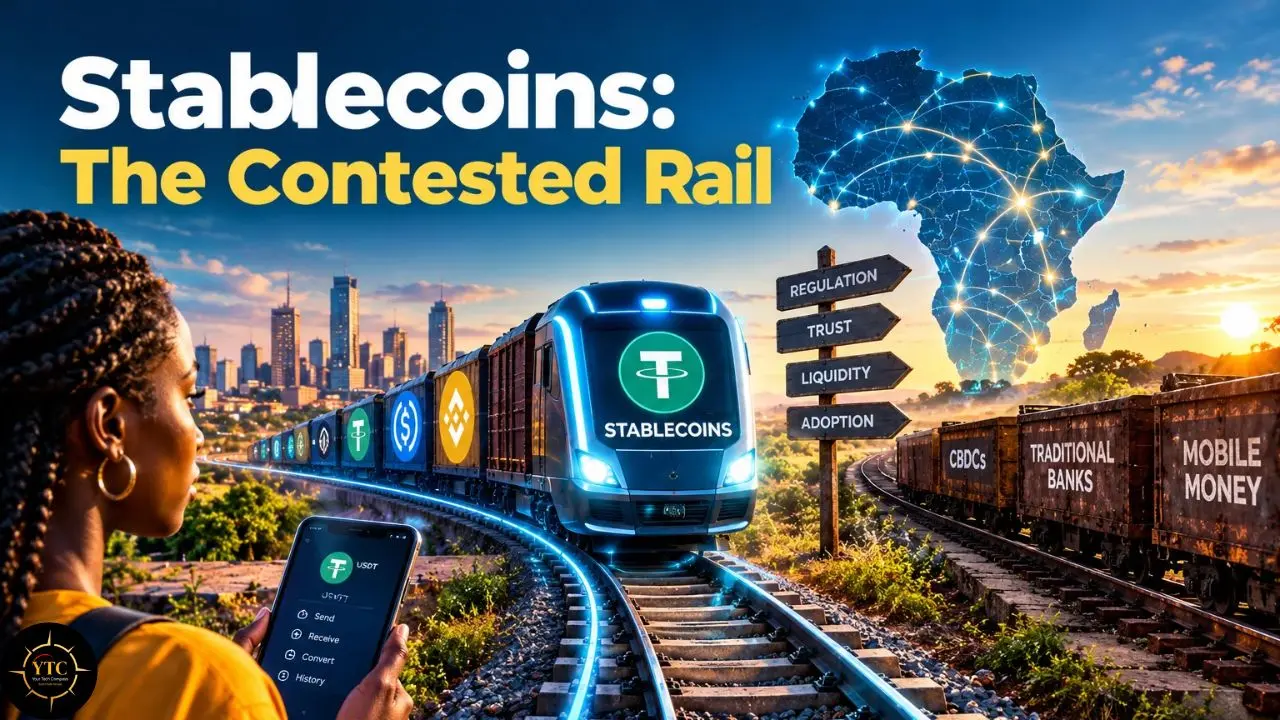
Stablecoins can reduce remittance fees by as much as 60% in well-regulated markets, according to Oui Capital, though realized savings depend on local on- and off-ramps, FX conversion, and compliance costs. Demand is real in dollar-scarce corridors. Regulation, however, shifts quickly. Nigeria’s Investments and Securities Act 2025 treats digital assets as securities and places them under the SEC, while the central bank has eased earlier restrictions on banks working with licensed crypto firms.
Kenya’s 2026 Virtual Asset Service Provider framework requires stablecoin issuers to hold at least 30% of customer funds in segregated accounts at local commercial banks. South Africa classifies crypto assets as financial products under the FSCA, and draft rules published in April 2026 would bring them into the capital-flow-management regime. Meanwhile, Standard Bank is building on- and off-ramps, and Absa has explored a gold-backed stablecoin.
I expect stablecoins to claim B2B corridors where dollar liquidity runs thin, while central banks keep them on a short leash. USD-pegged tokens can undermine currency controls, so regulators will not loosen the reins quickly.
How Africa’s Cross-Border Rails Compare
Rail | Typical Cost | Speed | Best For | Main Limitation |
Bank / Correspondent Network | Varies widely; World Bank global bank average for a $200 remittance was about 11% in Q2 2022 | Often one to several business days | Large corporates with established banking relationships | Double conversions, intermediary fees, and limited price transparency |
Money Transfer Operators | About 5.2% globally for a $200 transfer in Q2 2022 | Minutes to hours | Cash pickup and diaspora remittances | Agent-network costs and FX margins |
Mobile Money | About 3.5% globally for a $200 transfer in Q2 2022 | Seconds to minutes | Unbanked and underbanked recipients | Cross-network and cross-border interoperability |
Fintech APIs | Often 1.5% to 3.5%; selected stablecoin-funded or high-volume corridors can fall below 1% | Minutes to same day, corridor-dependent | SMEs, freelancers, platforms, and embedded finance | Licensing patchwork and corridor-specific liquidity |
PAPSS | Pricing set by participating banks and providers | Near-instant; about two minutes cited | Bank-to-bank intra-African trade | Bank-led user experience and uneven adoption |
Stablecoin Rails | Potentially up to 60% lower than traditional remittance channels in favorable corridors, according to Oui Capital | Minutes | Dollar-scarce B2B corridors and treasury flows | Regulatory volatility, FX controls, and on/off-ramp dependence |
Figures blend 2022 World Bank channel averages with more recent Africa-specific industry estimates. The World Bank figures describe the average cost of sending $200 globally by provider type, not Africa-specific corporate pricing. Treat all figures as directional rather than exact.
Who Is Winning, and Who Is Not
Flutterwave illustrates the infrastructure thesis well. The company says European fintech Norafirst reached more than 20 African markets through a single API and grew transactions 300% in six months. In the first half of 2025, Flutterwave processed nearly $1 billion for East Asian merchants, while the value processed through its Pay with Bank Transfer product rose 198% year on year. These are company-presented figures, so treat them with care. Even so, they show where the revenue lives: in the plumbing that other businesses plug into.
Consumer apps tell a different story. Chipper Cash and Afriex settle payments within minutes and can charge as little as 0% to 1% on eligible transfers, though FX spreads and receiving or cash-out fees can affect the all-in cost. That helps users, but it leaves almost no margin for the provider. The math is blunt. Pure fee-competition consumer remittance will consolidate, because a 0% to 1% price point rewards only the largest volumes. Infrastructure players with licenses across many markets keep pricing power.
For a wider comparison, our analysis of African fintech versus global giants explains how local operators defend their corridors, and the list of African fintech startups to watch in 2026 flags the next contenders. Another shift deserves attention. WhatsApp banking and AI chatbots are pulling payment initiation into chat, which changes how a customer starts a transfer. Behind that interface, AI in Africa increasingly means fraud screening and compliance automation, the unglamorous work that cross-border volume demands.
Where the Real Openings Are

Oui Capital identifies infrastructure plays worth more than $10 billion: interoperable API layers, decentralized FX liquidity pools, and PAPSS integrations. Its advice to founders goes further. Payments alone will not sustain a business, so successful operators layer trade finance, lending, and insurance on top of the transfer.
Consider a Kenyan flower exporter waiting days for settlement. That delay can tie up working capital and force a bridging loan. Faster settlement, paired with consent-based transaction history, can give lenders useful underwriting signals. TransUnion’s Mladen Čolić makes a similar argument: cross-border payment behavior can become a measurable attribute of creditworthiness for people outside the formal system. To see how lending economics play out locally, read our piece on digital lending in Nigeria. Caution belongs here too. Embedded credit multiplies default risk, and our look at BNPL regulation, defaults, and sustainability in Africa shows how quickly an unregulated credit product can sour.
If you are a founder choosing compliance, FX, or fraud tooling, our AI Unboxed category tests the AI tools that shorten that evaluation. Likewise, our broader African tech section tracks the policy shifts that decide which corridors open next.
Where the Rules Stand Across Key Markets in 2026
Market | Cross-Border Signal | What It Means for Builders |
Kenya | VASP Regulations 2026 gazetted on July 22; about $4.8 billion in remittances in 2024 | Stablecoin licensing now exists, but capital, reserve, and compliance requirements raise the cost of entry |
Nigeria | Investments and Securities Act 2025; SEC oversight of digital assets; reported open-banking rollout and license-recognition discussions | Clearer pathway for regulated digital-asset activity, though cross-border license recognition remains pending |
South Africa | Crypto assets classed as financial products; draft capital-flow-management rules published in April 2026 | Tighter oversight of cross-border crypto movements and compliance obligations |
CEMAC (six countries) | BEAC joined PAPSS in July 2026; CEMAC banks expected to connect progressively | New Central African corridors are opening, but adoption will depend on bank integration |
WAEMU (BCEAO) | PAPSS pilot with BCEAO reported for later in 2026 | Watch for a direct link to West Africa’s francophone bloc |
Risks That Could Slow the Thesis
Optimism needs a stress test. Regulatory divergence tops the list. FX controls and capital-movement limits vary by country, and a rule change can disrupt or constrain a corridor, particularly where licensing, FX approval, or settlement arrangements are involved. Stablecoin policy carries similar risk, since a reversal in one major market could strand infrastructure built around it.
Adoption is the quieter danger. PAPSS has built the rail, yet consumers and small businesses will not use it until their own bank or wallet exposes it. Concentration matters as well. A handful of corridors, such as those linking Nigeria, Kenya, and South Africa, carry much of the volume, so a shock in one can ripple through a platform’s revenue. Finally, the GSMA continues to flag a wide gender gap in mobile-money account ownership across most surveyed countries, which limits how much of the market digital rails can reach.
FAQs
Three forces stack up: more than 40 currencies, many of which lack direct liquidity; fragmented licensing and FX rules; and heavy reliance on bank and correspondent networks. Oui Capital estimates that double conversions alone add about $5 billion a year.
PAPSS is the Pan-African Payment and Settlement System, launched in 2022 by Afreximbank with the African Union and the AfCFTA Secretariat. It lets banks and licensed providers settle cross-border payments in local currencies, covering 28 countries after BEAC joined in July 2026. Actual availability depends on whether a customer’s bank or wallet is connected.
Oui Capital values it at about $329 billion in 2025 and projects roughly 12% compound annual growth toward $1 trillion by 2035. Remittances form a smaller part, with Africa-wide inflows above $92 billion in 2024.
Nigeria dominates inflows into Sub-Saharan Africa. Across the continent, Egypt, Nigeria, and Morocco receive the most, while Kenya, Ghana, and Senegal also rank among the larger recipients. Kenya received about $4.8 billion in 2024, the most in East Africa.
The answer depends on the country and the activity. Nigeria places digital-asset service providers under SEC oversight, Kenya gazetted VASP Regulations in July 2026, and South Africa treats crypto assets as financial products under the FSCA. Check the licensing status of both the provider and the specific service before you use it.
The cheapest route depends on your corridor and how you compare fees. Mobile money and fintech APIs often cost less than banks: GSMA found mobile-money remittances averaged 3.54% for a $200 transfer, below the global average. But compare the all-in cost, including FX spread, receiving fees, and cash-out fees. The World Bank’s Remittance Prices Worldwide tool lets you compare providers for a specific route before you send.
Reading the Compass Before the Corridor Opens
The numbers point in one direction. A $329 billion market, a projected 12% compound annual growth rate, and remittance fees that still average about 8% in Sub-Saharan Africa describe a vertical where the gap between what users pay and what better technology could cost remains wide. PAPSS, mobile money, and stablecoins each narrow that gap from a different angle. My view is that the winners will be the companies that connect them behind a license portfolio that competitors cannot replicate quickly.
If you build, start with compliance and corridor depth before you chase consumer growth. If you invest, back infrastructure and regulatory expertise over fee-cutting apps. However, if you shape policy, prioritize electronic KYC, license passporting, and PAPSS adoption, because those three levers can move more money than any single product launch. Pick one corridor, test it against the rules above, and expand only after it works.
Before you commit capital or code to the next corridor, check your bearings at YourTechCompass.com, where every African fintech route gets tested before we recommend it.